

 Travel Essentials
 Travel Essentials

Complete guide to Skyline Drive in Shenandoah National Park, including access points, seasonal highlights, activities, and travel planning tips.
 Travel Essentials
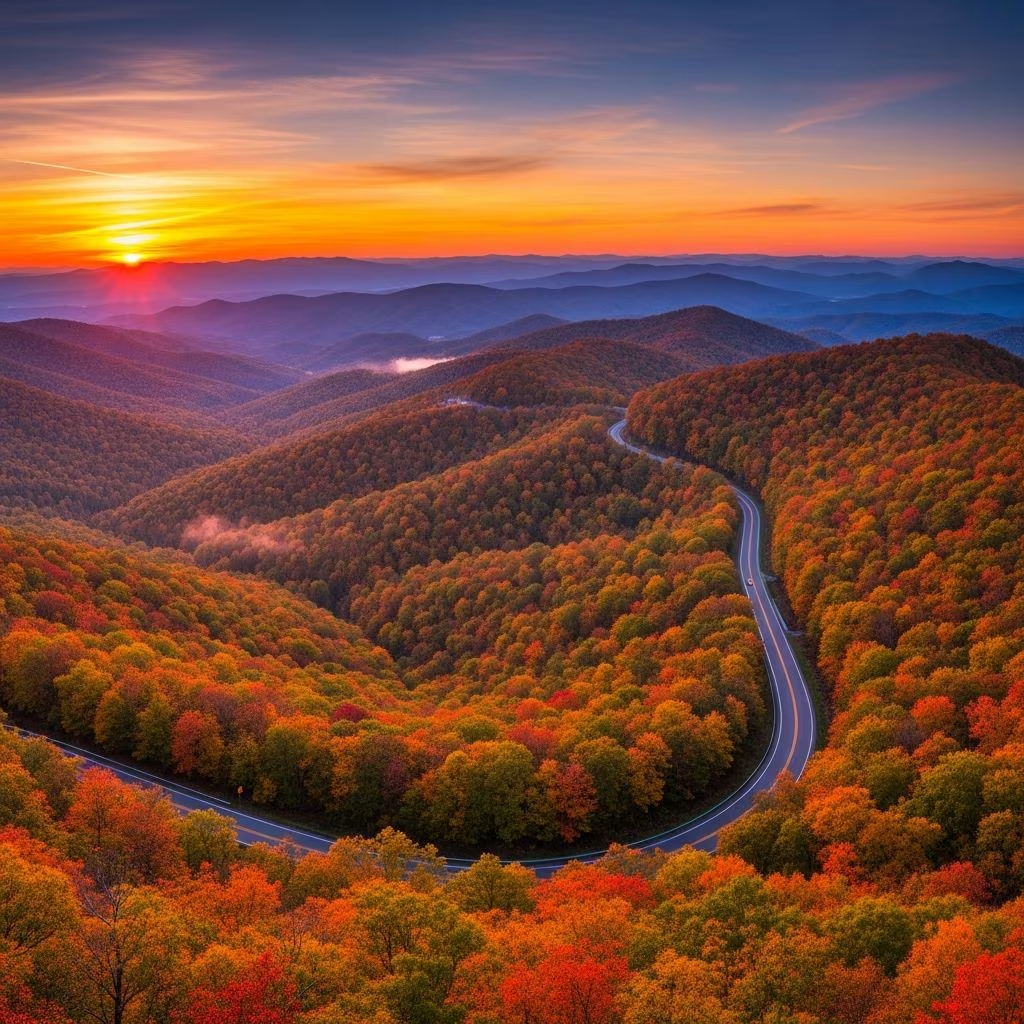
Skyline Drive represents one of America’s most iconic scenic thoroughfares, stretching 105 miles through the heart of Shenandoah National Park in Virginia’s Blue Ridge Mountains. This National Scenic Byway serves as the only public road traversing the entire length of the park, making it an essential corridor for visitors seeking to experience the dramatic mountain landscape. The route follows the crest of the Blue Ridge Mountains, offering visitors an elevated perspective on one of the nation’s most treasured natural corridors.
The drive’s northern terminus begins near Front Royal, Virginia, where it intersects with U.S. Route 340 and connects to Interstate 66. The southern endpoint at Rockfish Gap transitions seamlessly into the Blue Ridge Parkway, creating an extended scenic corridor that continues deeper into the Appalachian region. This strategic positioning makes Skyline Drive an ideal starting point or continuation for those exploring Virginia’s mountain heritage.
Planning a visit to Skyline Drive requires understanding the four primary entrance stations positioned along the route. Each access point provides distinct advantages depending on your starting location and intended duration of travel.
Park entrance fees apply at all four access points. The National Park Service advises against relying solely on GPS navigation to these stations, as mapping technology may provide inaccurate directions. Instead, visitors should follow official park directions and signage to ensure smooth entry.
Skyline Drive’s infrastructure incorporates distinctive features designed to enhance visitor orientation and safety throughout the journey. The road comprises a two-lane undivided highway with a posted speed limit of 35 miles per hour throughout most sections, encouraging drivers to experience the landscape at a leisurely pace. This moderate speed limit reflects the drive’s winding nature and the frequency of wildlife crossings that characterize the route.
Mileposts serve as the primary navigation system throughout Skyline Drive. Numbered cement posts positioned along the western side of the road increment from zero at Front Royal to 105 at Rockfish Gap. These markers appear in all park maps and informational materials, making them essential references for locating specific attractions, overlooks, and trailheads. The Big Meadows area, the park’s largest developed region, sits at mile 51, providing a natural midpoint for trip planning.
The drive typically requires three hours to complete under clear weather conditions, though travelers frequently extend this duration by stopping at overlooks and exploring trailheads. Skyline Drive operates 24 hours daily, seven days weekly, though inclement weather occasionally necessitates temporary closures for vehicle traffic. Even during closures, park access remains available to pedestrians entering through established entrance stations and boundary access points.
One of Skyline Drive’s defining characteristics involves its extensive network of scenic overlooks positioned strategically throughout the route. With 75 designated overlooks, visitors encounter viewpoints approximately every 1.4 miles on average, providing frequent opportunities to pause and absorb the landscape. These overlooks showcase contrasting vistas toward the Shenandoah Valley on the western side and the Piedmont region to the east, offering photographers and nature enthusiasts diverse compositional opportunities.
The overlooks range from modest pull-offs accommodating a handful of vehicles to larger parking areas with extensive viewing platforms and interpretive signage. Many overlooks feature elevated observation areas that provide perspectives unavailable from the roadway level. The variety of viewpoints throughout the drive allows visitors to observe how lighting conditions, atmospheric clarity, and seasonal changes transform the landscape throughout their journey.
Travelers along Skyline Drive ascend to elevations reaching 3,680 feet above sea level at the drive’s highest points. This elevation gain creates noticeable changes in air temperature, vegetation patterns, and atmospheric conditions throughout the journey. The varying elevations contribute to distinct ecological zones, where changes in flora and fauna become apparent as drivers progress northward or southward along the ridge.
The highest point within Shenandoah National Park, Hawksbill Mountain, reaches 4,051 feet in elevation. A dedicated parking area at Hawksbill Gap provides access to trails ascending this prominent peak, allowing visitors to experience even greater elevation and expanded panoramic views of surrounding terrain.
Skyline Drive serves as a gateway to diverse recreational pursuits extending beyond scenic observation. The route provides direct access to the Appalachian Trail, which runs through the park’s center, connecting hikers to one of America’s most significant long-distance pathways. Beyond hiking, visitors engage in horseback riding on designated trails, rock climbing at established areas, and cycling along the parkway during appropriate seasons and conditions.
The park incorporates various organized experiences including culinary events, stargazing programs, and wine or whiskey tasting activities. These specialized offerings appeal to visitors seeking educational or epicurean dimensions beyond traditional sightseeing. Campgrounds, visitor centers, and accommodations such as Skyland Resort and Big Meadows Wayside provide essential services and lodging options for multi-day visits.
Skyline Drive’s appearance transforms dramatically through seasonal cycles, with each period offering distinct visual characteristics. Autumn attracts the most visitors, particularly during peak foliage when deciduous forests display vivid reds, oranges, yellows, and purples across the landscape. The drive draws over 1.2 million annual visitors, with leaf-peeping season accounting for a substantial portion of this traffic. Fall colors typically peak in October, though exact timing varies based on weather patterns and elevation.
Spring introduces wildflowers dotting forest floors and meadows throughout the park, creating colorful understory displays beneath newly emerged canopy leaves. Summer provides verdant green vistas, extended daylight hours for extended exploration, and optimal conditions for trail hiking and outdoor recreation. Winter transforms the landscape into a stark study of geological formations and structural variety, with occasional snow creating dramatic scenic enhancements at higher elevations.
Shenandoah National Park hosts significant populations of black bears, white-tailed deer, wild turkeys, and numerous other woodland creatures that regularly cross Skyline Drive. These wildlife crossings present both opportunities for observation and safety considerations requiring driver attention. Visitors are advised to watch carefully for animals that may dart across the roadway unexpectedly.
Should travelers desire closer observation of wildlife, proper protocols involve completely exiting the road and remaining within vehicles. This approach protects both visitors and animals while preventing disruption of natural behaviors. The park’s wildlife populations represent essential components of the ecological community, and respectful observation practices maintain appropriate boundaries between human visitors and animal inhabitants.
Skyline Drive provides limited but essential services for travelers traversing its full length. Gasoline and diesel fuel with 24/7 pay-at-the-pump service are available at Big Meadows Wayside, positioned at mile 51. This central location ensures that visitors can refuel regardless of their direction of travel or time of day. Other services including dining, lodging, and supplies require advance planning, as options concentrate in specific developed areas rather than distributing throughout the entire 105-mile route.
The drive typically requires three hours under clear weather conditions without extended stops. However, most visitors spend considerably longer, frequently 6-8 hours or more, when including overlook visits, trail exploration, and dining breaks.
Yes, Skyline Drive generally remains open 24 hours daily throughout the year. Inclement weather occasionally necessitates temporary closures, but pedestrian park access typically remains available even during vehicle closures.
No, the National Park Service explicitly recommends against depending solely on GPS for locating entrance stations, as mapping technology frequently provides inaccurate directions. Official park directions and signage should guide visitors to entrance stations.
Travelers should maintain careful watch for wildlife crossings, as bears, deer, and turkeys regularly traverse the roadway. If closer observation is desired, visitors must completely exit the road and remain in their vehicles.
Autumn foliage typically peaks in October, though specific timing varies annually based on weather conditions and elevation. The park website provides foliage forecasts during fall seasons to help visitors plan timing.
