

 Travel Essentials
 Travel Essentials

Explore premier Western retirement destinations offering affordability, climate, amenities, and community vibrancy for your golden years.
 Travel Essentials
Planning for retirement involves numerous considerations beyond financial preparedness. The choice of location significantly impacts your quality of life, healthcare accessibility, social engagement, and overall retirement satisfaction. The American West offers diverse communities that cater to different retirement preferences, from mountain towns with outdoor recreational opportunities to desert communities with mild winters and vibrant cultural scenes.
Successful retirement communities share common characteristics that enhance the lives of older adults. These include access to quality healthcare facilities, affordable housing options, tax-friendly policies, recreational activities suited to various mobility levels, and strong social networks. The Western region presents unique advantages, including diverse topography, varied climates, and well-developed infrastructure in many communities specifically designed to accommodate retirees.
When evaluating potential retirement locations, prospective retirees should consider proximity to medical facilities with specialized geriatric care, cost of living relative to fixed income sources, climate preferences for health and comfort, accessibility to family members and friends, and the availability of cultural, educational, and recreational programs. Additionally, evaluating state tax policies regarding retirement income, property taxes, and sales taxes becomes crucial for long-term financial sustainability.
Western states offer remarkable climatic diversity. Some communities feature consistently mild temperatures year-round, reducing heating and cooling expenses while minimizing weather-related health risks. Others provide distinct seasons with moderate winters, appealing to those who enjoy seasonal changes without extreme weather challenges. High-altitude communities offer cooler summers and lower humidity, potentially beneficial for those with respiratory conditions, while lower-altitude desert towns provide warm, dry climates.
Climate impacts daily life significantly for retirees. Persistent cold weather can exacerbate arthritis and joint pain, while extreme heat poses risks for dehydration and heat-related illnesses. Moderate, predictable climates allow for consistent outdoor activities, supporting physical fitness and mental wellbeing. Air quality considerations are equally important, especially for those with asthma, COPD, or other respiratory conditions. Many Western communities, particularly those at higher elevations or away from urban centers, maintain excellent air quality throughout the year.
Real estate costs vary dramatically across Western retirement communities. Some towns offer surprisingly affordable housing, allowing retirees to purchase properties outright or maintain low mortgage payments. Others have experienced rapid appreciation, presenting challenges for those on fixed incomes. Understanding local real estate trends, property tax assessments, and homeownership costs helps determine long-term financial viability.
Beyond purchase price, prospective retirees should evaluate property taxes, insurance costs, maintenance expenses, and homeowners association fees. Some communities offer senior-specific housing options, including active adult communities featuring amenities like golf courses, fitness centers, and social clubs. Rental options provide flexibility for those uncertain about permanent relocation or preferring to avoid property maintenance responsibilities.
Proximity to comprehensive healthcare represents a paramount concern for retirees. Communities with hospitals offering emergency services, specialty clinics, mental health services, and rehabilitation facilities provide essential security. The availability of physicians accepting Medicare, specialists serving aging populations, and long-term care facilities ensures continuity of care as health needs evolve.
Research specific healthcare capabilities, including cardiology, orthopedics, gastroenterology, and neurology services. Verify physician credentials, hospital quality ratings from authoritative sources, and availability of urgent care clinics. Telemedicine accessibility supplements traditional healthcare in communities with limited specialist availability. Insurance acceptance, particularly Medicare and supplemental plans, directly impacts healthcare affordability.
Different Western states implement varying tax structures affecting retirement finances. Some states impose no income tax on Social Security, pensions, or investment income, significantly enhancing purchasing power for retirees. Property taxes, sales taxes, and estate taxes also vary substantially. Understanding these financial implications prevents unpleasant surprises and optimizes retirement resources.
Consulting with tax professionals familiar with retirement income planning ensures strategic decision-making. States offering favorable tax treatment for specific income sources may align better with individual retirement portfolios. Additionally, some communities offer property tax breaks for seniors, homestead exemptions, or reduced utility rates, further supporting financial sustainability.
Isolation poses significant health risks for older adults, affecting mental health, cognitive function, and overall longevity. Communities fostering strong social networks through clubs, volunteer opportunities, educational programs, and organized activities promote meaningful engagement. The cultural character of communities—whether sophisticated arts scenes, outdoor recreation emphasis, or agricultural heritage—attracts retirees with aligned interests.
Evaluate community gathering spaces, senior centers, volunteer opportunities, educational institutions offering classes for older adults, and interest-based clubs. Some communities feature lifelong learning programs through universities, cultural institutions hosting performances and exhibitions, and outdoor recreation organizations facilitating hiking, biking, gardening, and sports activities. Intentional social connection opportunities distinguish thriving communities from those offering only basic services.
The availability of recreational activities suited to various fitness levels encourages regular physical activity and social participation. Walking paths, fitness centers with senior-friendly programming, swimming facilities, golf courses, and outdoor recreation areas accommodate diverse interests and abilities. Cultural amenities including theaters, museums, art galleries, and music venues enrich daily life and provide intellectual stimulation.
Many Western communities capitalize on natural attractions—mountains, deserts, lakes, and national parks—offering opportunities for hiking, bird watching, photography, and nature appreciation. Some towns feature established arts communities with studios, galleries, and performance venues. Fitness enthusiasts find communities offering fitness classes specifically designed for older adults, including yoga, Pilates, water aerobics, and balance training.
Total cost of living extends beyond housing costs. Groceries, dining, utilities, transportation, and healthcare expenses accumulate significantly. Communities with affordable dining options, grocery stores, reliable public transportation or accessible driving conditions, and reasonably priced services enable retirees to stretch retirement dollars further. Comparing utility costs, particularly heating and cooling expenses, reveals substantial long-term savings in moderate-climate communities.
Transportation accessibility matters considerably. Communities with walkable downtown areas, public transit systems, and reasonable distances to essential services reduce dependence on vehicle ownership and maintenance. Some communities offer senior-specific transportation services, including medical appointment shuttles and grocery delivery programs. Rural areas requiring vehicle ownership can increase overall expenses compared to more compact communities offering walkability and transit options.
While adventure and new experiences appeal to many retirees, maintaining connections with family members and established friendships contributes significantly to retirement satisfaction. Evaluate proximity to major transportation hubs, flight accessibility to family locations, and potential for friends and family to visit your new community. Some retirees prioritize living near adult children or grandchildren, while others establish completely independent lives. Others seek communities with existing networks of friends and alumni groups from previous schools or workplaces.
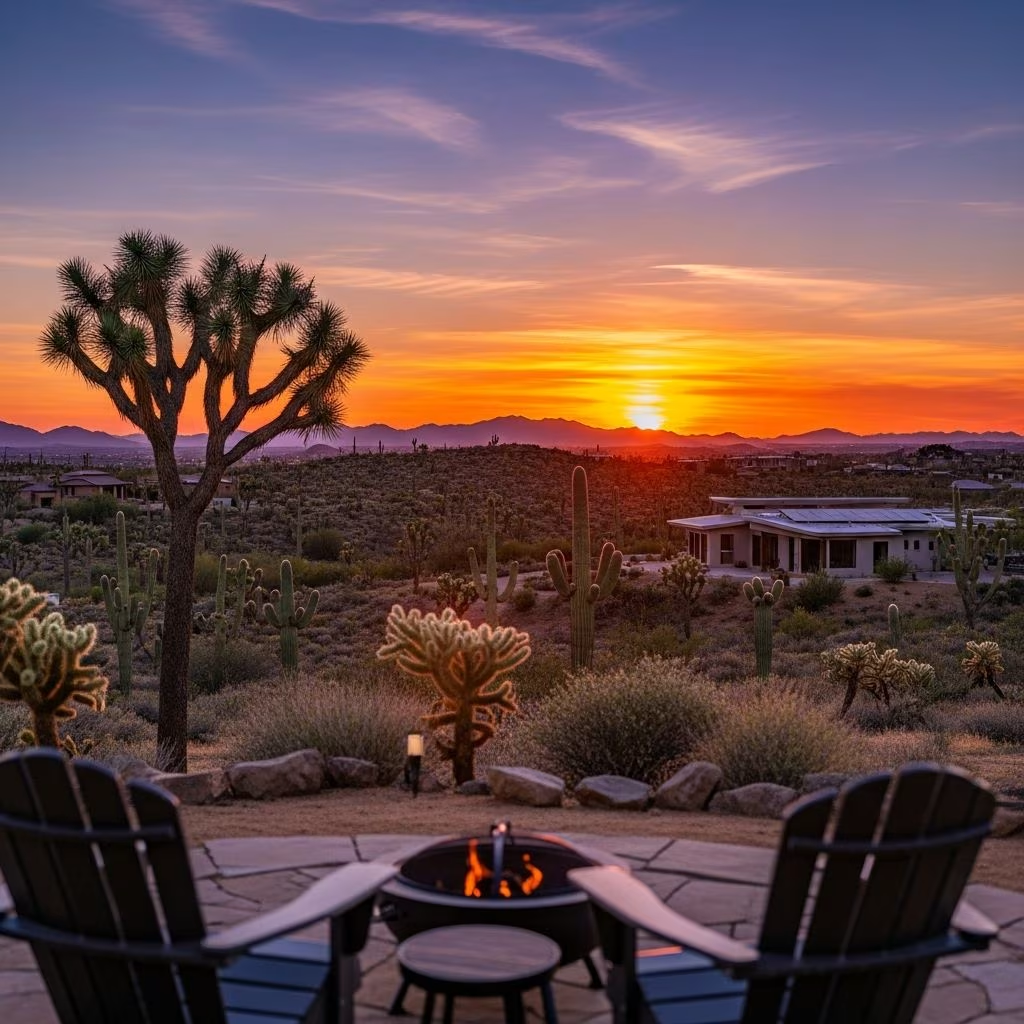
Numerous Western communities successfully blend affordability, natural beauty, healthcare accessibility, and engaging social environments. Desert communities in Arizona and Nevada offer warm winters and established retirement populations. Mountain towns in Colorado and New Mexico provide moderate climates, outdoor recreation, and cultural vitality. Communities in Northern California, Oregon, and Washington feature milder overall climates and strong cultural institutions. Texas communities attract retirees seeking warm weather, no state income tax, and affordable living costs.
Specific communities have earned recognition for retirement livability through combinations of factors. Established retirement communities often feature well-developed senior services, active social calendars, and populations with shared interests. Newer retirement destinations offer opportunities to build communities from scratch while accessing communities still developing reputation and cultural identity. Visiting potential communities for extended periods—ideally 2-4 weeks—provides realistic impressions of daily life, climate experience, and community compatibility.
No single community suits all retirees equally. Individual priorities—climate preferences, healthcare needs, activity levels, social preferences, family proximity, cultural interests, and financial capacity—dictate ideal locations. Some retirees thrive in active communities with constant programming and social engagement, while others prefer quieter environments enabling personal pursuits. Adventure-seeking retirees gravitate toward communities emphasizing outdoor recreation, while culture enthusiasts seek towns with vibrant arts scenes.
Creating a priority matrix listing essential factors, important considerations, and nice-to-have features helps organize decision-making. Weighting these factors according to personal values guides evaluation of specific communities. Trial stays in top candidate communities provide invaluable experiential data superseding theoretical analysis. Interviewing current residents offers authentic perspectives on daily life, community engagement, and satisfaction levels.
The decision to relocate during retirement deserves careful consideration and thorough research. Engaging with real estate agents familiar with retiree demographics, consulting with financial advisors regarding tax implications, and researching healthcare capabilities systematically eliminates major concerns. Visiting potential communities multiple times across different seasons—experiencing summer heat, winter conditions, spring activities, and fall beauty—reveals authentic environmental conditions throughout the year.
Many successful retirees start with temporary arrangements—renting for a season or year—before committing to permanent relocation. This approach reduces risk, enables relationship-building within communities, and permits assessment of long-term comfort. Establishing connections through volunteer work, class participation, club involvement, and neighborhood engagement facilitates community integration before full relocation commitment.
Several Western states offer exceptional affordability for retirees. States with no income tax on Social Security or pensions, combined with reasonable property taxes and housing costs, provide significant financial advantages. Texas, Nevada, and New Mexico frequently rank among the most affordable Western options, particularly in smaller towns outside major metropolitan areas.
Communities within reasonable distance of major metropolitan areas typically offer superior healthcare access. Phoenix, Denver, Portland, San Diego, and Salt Lake City regions feature comprehensive medical facilities, specialized geriatric services, and physician availability. Smaller communities often partner with regional medical centers ensuring access to advanced care when needed.
Individual climate preferences vary significantly. Moderate temperatures year-round, moderate annual precipitation, low humidity, and clean air quality characterize ideal retirements climates. Communities at moderate elevations (3,000-5,000 feet) often provide temperate conditions balancing seasonal variation with weather extremes avoidance.
Western communities span a wide affordability spectrum. While some popular destinations have experienced significant appreciation, many excellent retirement communities remain surprisingly affordable, particularly in secondary and tertiary markets. Researching specific communities rather than regional generalizations reveals actual housing costs and overall living expenses.
Absolutely—visiting extended periods proves invaluable for relocation decisions. Most communities welcome prospective residents, offer visitor information through tourism boards, and permit community exploration. Many communities host retiree visitation weekends or newcomer programs facilitating introductions and exploration.
| Community Factor | Desert Communities | Mountain Towns | Coastal Areas | Urban Adjacent |
|---|---|---|---|---|
| Climate | Warm, dry winters | Moderate, distinct seasons | Mild, ocean breeze | Varied by location |
| Housing Costs | Moderate to high | Variable | Generally higher | Variable |
| Healthcare Access | Good to excellent | Moderate to good | Excellent | Excellent |
| Social Activities | Active, diverse | Outdoor-focused | Cultural-rich | Comprehensive |
| Tax Friendliness | Very good | Variable | Variable | Variable |
