

 Travel Essentials
 Travel Essentials

Discover Gates of the Arctic National Park in Alaska: no roads, pristine ecosystems, epic hikes, and wildlife. The ultimate remote adventure for nature lovers.
 Travel Essentials
Hidden above the Arctic Circle in northern Alaska, Gates of the Arctic National Park and Preserve stands as the epitome of untouched wilderness. Spanning millions of acres in the Central Brooks Range, this park offers a raw, roadless expanse where nature reigns supreme. Designated as a national monument in 1978 and elevated to park status in 1980 under the Alaska National Interest Lands Conservation Act, it protects one of the last pristine ecosystems in the United States. With no trails, campgrounds, or visitor centers within its boundaries, it attracts only the most dedicated explorers—recording just 7,362 visitors in 2021 compared to millions at more accessible parks.
The story of Gates of the Arctic begins with efforts to safeguard Alaska’s wild heartlands. Initially established to preserve the dramatic Brooks Range, the park now encompasses about 8.4 million acres, with roughly 85% designated as wilderness—the third-largest such area in the U.S. This vast protected zone adjoins the Noatak Wilderness, creating the largest contiguous wildland in the nation. Federal lands dominate, but around 259,000 acres are held by Native corporations or the state, influencing access in certain areas.
Human history here dates back over 10,000 years, with Indigenous Nunamiut people maintaining a deep connection to the land. Today, their traditions blend with modern conservation, allowing limited hunting rights for shareholders of the Nunamiut Corporation. The park’s headquarters in Fairbanks and the Arctic Interagency Visitor Center in Coldfoot serve as gateways for information, open seasonally from late May to early September.
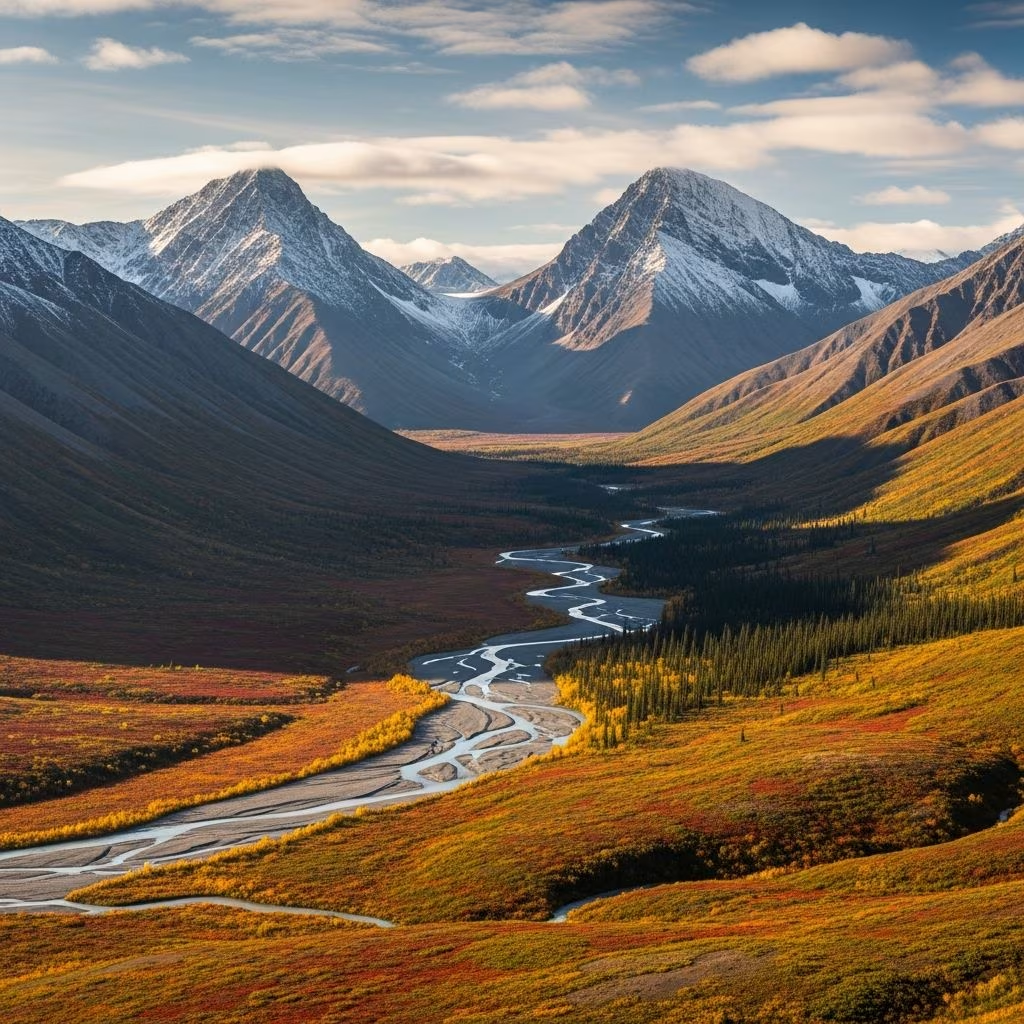
Imagine jagged peaks piercing the sky, glacier-sculpted U-shaped valleys, and wild rivers carving through the terrain—these define Gates of the Arctic’s landscape. The Central Brooks Range forms a formidable barrier, with elevations soaring above 8,000 feet. Rivers like the Noatak, John, and Kobuk flow freely, offering pack-rafting opportunities amid stunning vistas.
Seasonal magic amplifies the drama: endless summer daylight for midnight sun hikes and winter’s aurora borealis dancing over snowfields. Caribou herds follow ancient migration routes, while grizzly bears, wolves, and Dall sheep thrive in this intact ecosystem. The park’s remoteness preserves biodiversity, from Arctic foxes to peregrine falcons, making every sighting a thrill.
Gates of the Arctic earns its title as the least-visited U.S. national park not due to lack of allure, but sheer inaccessibility. No roads penetrate its core; the nearest highway, the Dalton, skirts five miles east. Bush planes from Fairbanks or Bettles drop visitors at remote airstrips, while floatplanes access river put-ins. Hiking in from the highway demands multi-day treks across tussock tundra.
This barrier filters crowds, ensuring solitude. In contrast to Grand Canyon’s 4.5 million annual guests, Gates sees thousands, fostering an intimate wilderness experience. Backpackers praise its purity: no maintained paths mean navigating by map, compass, and instinct amid grizzly country.
| Park Comparison | Annual Visitors (2021) | Roads/Trails | Accessibility |
|---|---|---|---|
| Gates of the Arctic | 7,362 | None | Bush plane/hike |
| Grand Canyon | 4.5 million | Extensive | Car access |
| Denali | 594,000 | Park road | Bus/shuttle |
Thrill-seekers flock to Gates for backpacking, the park’s signature pursuit. Multi-day routes like the Gates of the Arctic Traverse challenge with river crossings, boulder fields, and unpredictable weather. Pack-rafting combines hiking with paddling down silty glacial rivers, a hybrid adventure unique to Alaska.
Wildlife viewing peaks during caribou migrations, while fishing yields grayling and Arctic char. Winter offers dog-sledding and skiing, though extreme cold demands expertise. Photography captures ethereal light shifts, from golden tundras to starry nights.
Reaching Gates requires commitment. Fly commercially to Fairbanks, then charter a bush plane (costs $500-$2,000 per person). Popular drop-offs include Arrigetch Peaks or the Alatna River. From the Dalton Highway, hitchhikes or shuttles lead to trailheads like those near Wiseman.
Permits are unnecessary for day use, but backcountry camping is free-form—follow Leave No Trace principles. Bear-proof food storage is mandatory; grizzlies roam widely. Weather flips fast: summer highs hit 70°F, but hypothermia lurks in rain.
Gates teems with Arctic life. Brown bears fish salmon runs, moose browse willows, and wolves hunt in packs. Over 130 bird species include golden eagles soaring thermals. Plants range from cotton grass to dwarf willows, sustaining the food web.
Conservation focuses on climate threats: warming melts permafrost, altering habitats. Yet, the park’s wild status buffers change, preserving ancient patterns for study and awe.
Train rigorously: 20+ mile days with 5,000-foot elevation gains mimic conditions. Study topo maps (Nat Geo series recommended) and practice navigation. Health checks cover vaccinations; altitude isn’t an issue, but cold exposure is.
Group travel enhances safety—solo trips demand experience. Commercial outfitters like Northern Alaska Tour Company guide first-timers, easing logistics.
| Season | Weather | Activities | Pros/Cons |
|---|---|---|---|
| Summer (Jun-Aug) | 50-70°F, bugs | Hiking, rafting | Long days / Insects |
| Shoulder (May/Sep) | 30-60°F | Wildlife viewing | Fewer bugs / Shorter days |
| Winter (Dec-Mar) | -20 to 20°F | Skiing, aurora | Extreme cold / Limited access |
Hazards include hypothermia, bear encounters, and river fords. Carry a PLB (Personal Locator Beacon) for emergencies—no cell service exists. Water purification prevents giardia; boil or filter all sources.
Respect Native lands: easements may limit camping. Ethical travel sustains this fragile paradise.
No—advanced skills in navigation, survival, and fitness required. Opt for guided trips first.
Hike from Dalton Highway, but expect 20-50 miles to interior.
Fishing yes; hunting restricted to Nunamiut shareholders in park areas.
Dispersed anywhere, following regulations on Native lands.
None—pack in/out everything.
$2,000+ including flights, gear rental.
