

 Travel Essentials
 Travel Essentials

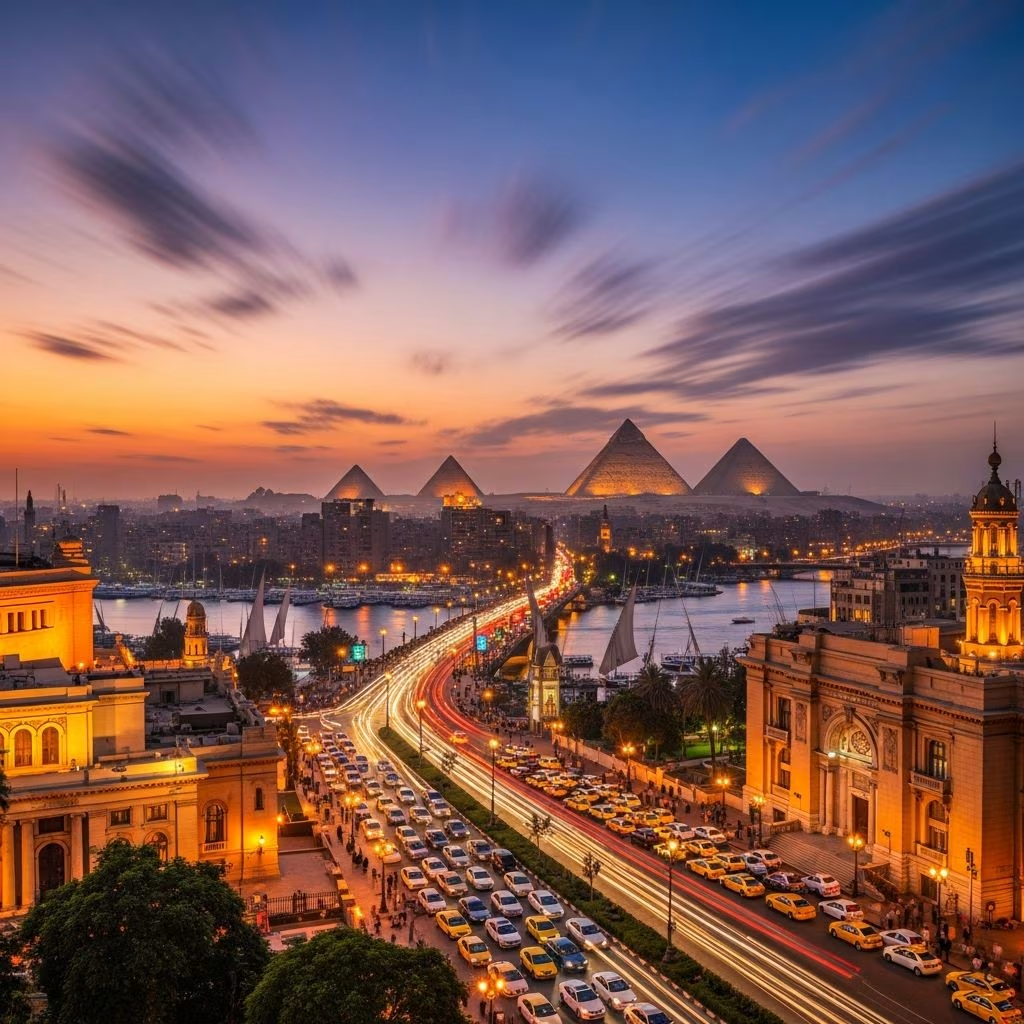
Navigate Cairo's top attractions from pharaonic monuments to Islamic heritage sites with this comprehensive 24-hour itinerary guide.
 Travel Essentials
Cairo stands as one of the world’s most historically rich destinations, where millennia of civilization converge within a bustling metropolitan landscape. For travelers with limited time, crafting an efficient itinerary requires strategic planning that balances the city’s most significant archaeological treasures with authentic cultural experiences. This guide outlines how to extract maximum value from a single day in Egypt’s captivating capital, ensuring you encounter the essential elements that define Cairo while gaining meaningful insights into both ancient and contemporary Egyptian life.
Before embarking on your Cairo adventure, understanding the city’s geographical organization proves essential for efficient movement. Cairo sprawls across both banks of the Nile River, with distinct neighborhoods each offering unique attractions. The western bank houses the famous necropolis complexes at Giza, while the eastern bank contains the downtown business district, Islamic quarters, and historic museums.
Transportation between attractions typically involves hiring private taxis or rideshare services, though traffic congestion can significantly impact travel times. Allocating buffer time between destinations—particularly when traveling to Giza—ensures you maintain your schedule. Early morning departures to major sites prove crucial for avoiding peak tourist crowds and experiencing monuments in optimal lighting conditions.
Beginning your Cairo day at the Giza plateau represents the most practical approach, as these monuments attract international visitors from sunrise onward. Plan to arrive shortly after the complex opens at 8 AM (7 AM during summer months) to maximize your exploration time before crowds intensify.
The Giza necropolis comprises three primary pyramids constructed during the Old Kingdom’s height:
Alongside these monumental tombs stands the Sphinx, an iconic limestone sculpture that has captivated observers for over four millennia. While many visitors consider entering the pyramids themselves, the interior passages typically offer limited rewards—narrow tunnels and cramped chambers that may prove claustrophobic for many travelers.
Instead of interior exploration, consider experiencing the pyramids from ground level, where you can appreciate their sheer scale and precision. Many visitors opt for camel rides across the Giza plateau, providing both a memorable experience and a traditional mode of desert transport that connects modern visitors with historical travel methods.
Following your Giza exploration, a short journey south brings you to Saqqara, home to revolutionary architectural achievements that predate the famous Giza monuments. The Step Pyramid of Djoser stands as humanity’s oldest monumental stone structure, representing a pivotal innovation in pyramid design and construction techniques.
The Step Pyramid’s distinctive appearance—with its stacked rectangular blocks creating a stepped silhouette—reflects the evolutionary development of pyramid architecture. Allocating approximately one hour to explore this complex allows sufficient time to appreciate the innovation represented by Djoser’s funerary complex while remaining on schedule for afternoon activities.
Preparing for your Saqqara visit by watching brief documentaries or listening to podcasts significantly enhances the experience, providing contextual understanding that transforms the site from impressive architecture into a compelling narrative of ancient Egyptian innovation.
Transitioning from pharaonic monuments to Islamic heritage sites represents one of Cairo’s most rewarding geographical shifts. Islamic Cairo encompasses neighborhoods developed primarily from the 14th century onward, preserving medieval Islamic architecture that UNESCO recognizes as a World Heritage Site.
The Citadel of Salah El-Din dominates this region, standing as a medieval fortification commanding panoramic views across Cairo’s expanse. This impressive structure housed Egyptian rulers for centuries and showcases Islamic military architecture at its finest. The alabaster-white Mosque of Mohammed Ali, located within the Citadel complex, ranks among Cairo’s most significant religious monuments, employing classical Ottoman architectural principles.
Climbing to the Citadel’s elevated positions rewards visitors with sweeping vistas encompassing historic Cairo’s dense landscape, the Nile River, and modern Cairo’s expanding development. This vantage point provides perspective on how contemporary urban growth contrasts with centuries-old heritage zones.
No Cairo visit achieves completeness without experiencing Khan Al Khalili, the city’s most renowned souk and one of the Arab world’s largest traditional markets. This dense marketplace occupies car-free lanes where centuries of commercial tradition continue virtually unchanged, creating an immersive cultural experience that extends beyond simple shopping.
The market’s characteristics include:
Walking through Khan Al Khalili’s narrow passages immerses visitors in authentic Cairo commerce, where negotiations remain expected and atmospheric density creates a sensory experience that photographs and descriptions inadequately capture. Allocate several hours to this exploration, allowing yourself to move slowly, observe local interactions, and potentially discover unexpected treasures among vendor stalls.
As your daylong exploration approaches completion, transitioning to riverside activities provides relief from walking and sightseeing while maintaining cultural engagement. The Nile River remains central to Cairo’s identity, offering multiple evening recreation options that reflect both traditional and contemporary leisure practices.
A traditional felucca sailboat ride represents Cairo’s most authentic riverside experience, allowing you to drift along the Nile using wind-powered navigation methods largely unchanged for centuries. Multiple felucca operators maintain boats at various Cairo locations. Downtown Cairo’s Corniche area near the Qasr El Nil bridge offers easily accessible boarding points where you can negotiate rental prices directly with boat captains. Alternatively, the quieter suburban location of Maadi, near the TGI Fridays, provides a greener, less congested environment for those seeking peaceful river experiences.
After your felucca ride, several evening destinations cater to different interests. The Cairo Opera House, located on Gezira Island’s southern tip, functions as Egypt’s premier cultural venue, hosting dance performances, musical concerts, and housing dedicated art and history museums. Even without attending a performance, visiting the elegant complex during sunset hours provides architectural appreciation and photographic opportunities showcasing Nile-side grandeur.
For more casual evening atmosphere, the Qasr El Nil bridge becomes a bustling social hub where families, couples, and friend groups gather for Nile viewpoints and casual dining. This location captures contemporary Cairo’s evening social patterns, providing insight into how modern Egyptians utilize public spaces for leisure.
Successfully executing a full Cairo day requires strategic eating decisions that balance time constraints with gastronomic experience. Beginning with breakfast near your first destination proves efficient—some restaurants near Giza offer table seating with direct pyramid views, combining meals with sightseeing.
Lunch timing between morning pyramid exploration and afternoon Islamic Cairo activities should account for travel duration and crowds. Street food vendors throughout Khan Al Khalili provide quick sustenance options, though hygiene considerations merit attention. Established restaurants adjacent to major attractions offer safer dining alternatives that rarely require extended time commitments.
Successfully condensing Cairo’s primary attractions into 24 hours demands attention to several operational details that significantly impact experience quality:
Budget considerations should account for taxi fares, entrance fees, guide services, meals, and felucca rental. While exact costs vary seasonally and based on negotiation, planning contingency funds prevents mid-day financial complications.
For visitors with particular interests, Cairo offers specialized evening activities that complement daytime sightseeing. A light and sound show at the Giza Pyramids, presented using theatrical projection and narration, provides a different perspective on these monuments and their historical significance. This performance-based experience appeals particularly to travelers who prefer structured entertainment to independent exploration.
Acknowledging the physical intensity of this itinerary proves important for realistic planning. Cairo’s climate, crowded conditions, and extensive walking demand physical preparation and realistic pacing. Rather than attempting to maximize every possible minute, building rest intervals ensures more enjoyable experiences and reduces the likelihood of fatigue-related injury or illness.
Travelers with mobility limitations should prioritize seated activities and services that minimize walking. The Cairo Opera House, felucca rides, and restaurant-based pyramid viewing provide substantial experiences without demanding extensive ambulation.
A 24-hour Cairo itinerary necessarily omits many significant attractions, including additional museums, neighborhoods, and cultural institutions. Rather than viewing this as inadequacy, consider your single day as an introductory foundation that may inspire return visits for deeper exploration. Coptic Cairo, the Egyptian Museum’s full collection, additional temple complexes, and residential neighborhoods each merit dedicated time that surpasses compressed itinerary schedules.
Recording observations, photographing locations, and documenting impressions creates personal records that enhance post-travel reflection and assist in planning potential future visits with more extended timeframes.
