

 Travel Essentials
 Travel Essentials

Explore Prague's finest attractions at no cost. From historic bridges to panoramic parks, experience the city's rich cultural heritage on a budget.
 Travel Essentials
Prague stands as one of Europe’s most captivating destinations, offering centuries of architectural splendor, cultural richness, and historical significance. Yet many travelers assume experiencing this enchanting capital requires substantial spending on entrance fees and guided tours. The reality tells a different story. The Czech capital rewards visitors who venture beyond typical tourist traps by providing an abundance of world-class attractions that remain entirely free. Whether you’re a first-time visitor or a seasoned traveler, discovering Prague’s complimentary offerings transforms your visit into an accessible yet unforgettable experience.
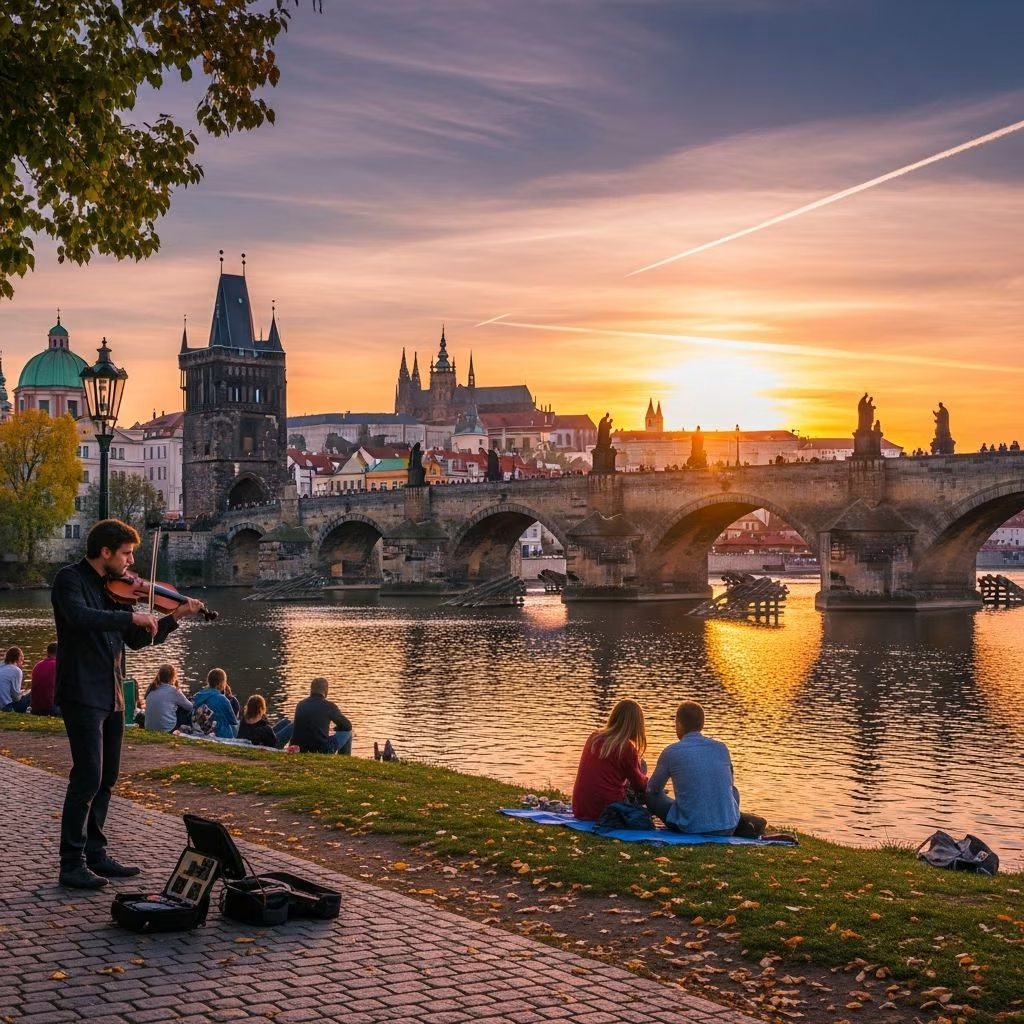
No journey through Prague is complete without traversing its most celebrated thoroughfare. This 650-year-old stone crossing connects the city’s major districts while serving as an open-air gallery and cultural gathering point. The bridge’s enduring appeal stems from its remarkable fusion of historical significance and living artistic atmosphere.
Walking across this medieval span provides layered experiences throughout different times of day. Morning crossings reward early risers with serene moments before crowds arrive, offering optimal photography conditions and peaceful reflection. The bridge’s golden-hued stonework catches the first light beautifully, revealing architectural details that disappear in daytime shadows. Street performers, musicians, and artists gradually populate the bridge as daylight hours progress, transforming it into a dynamic cultural marketplace. Evening crossings present perhaps the most magical experience, with setting sunlight illuminating both the bridge and the skyline, creating atmospheric conditions that justify the crowds gathered along its length.
The bridge’s aesthetic appeal lies in its carefully preserved baroque statuary—rows of saints and religious figures line both sides, each with distinct artistic merit and historical backstory. These sculptural elements reflect centuries of artistic evolution and religious devotion. Beyond the statues themselves, the bridge frames spectacular views of Prague’s most iconic structures on both riverbanks, providing natural composition for photographs and sketching opportunities.
Prague’s Old Town Square hosts one of Europe’s most intricate medieval mechanical devices, attracting thousands of observers each day. This astronomical clock represents a technical marvel from the 15th century, combining functional timekeeping with elaborate theatrical presentation.
The clock’s hourly performances, running from 9:00 to 23:00, draw crowds who gather specifically to witness its mechanical spectacle. The show involves animated figures, moving components, and precise timing that has astonished viewers for nearly six centuries. Understanding the clock’s historical context enriches appreciation of its complexity. Medieval craftspeople designed this mechanism without modern tools or materials, yet it continues functioning with remarkable precision.
Beyond the hourly shows, the astronomical clock serves educational functions, displaying multiple timekeeping systems including zodiacal information and seasonal indicators. Studying its face reveals symbolic meanings and mathematical principles that guided its creation. The surrounding square itself merits exploration, featuring Gothic and Baroque architectural examples and serving as Prague’s historic social and commercial heart.
Prague’s most significant public squares cost nothing to access, yet provide hours of exploration and cultural immersion. The Old Town Square functions as the city’s beating heart, where architectural styles span centuries and historical events shaped the city’s trajectory. Walking through these urban spaces allows visitors to appreciate civic planning, monument placement, and how communities organized themselves historically.
Wenceslas Square extends Prague’s historic character southward, offering a different atmospheric quality than the Old Town Square. This elongated plaza reflects Prague’s expansion beyond medieval boundaries and showcases architectural evolution through multiple periods. Street-level businesses, museums, and cultural institutions line the square, permitting free exploration of external features and architecture while shopping windows display local craftsmanship.
These public spaces function as social laboratories where residents and visitors mingle, creating an authentic sense of Prague’s contemporary culture beyond curated tourist experiences. Observing daily life in historic plazas provides insights into how modern Prague inhabitants interact with their heritage.
Letná Park occupies a plateau directly above Prague’s historic core, commanding sweeping perspectives of the entire cityscape. This 50-hectare green space combines natural features with carefully developed infrastructure, making it equally appealing for active exploration or passive relaxation.
The park’s elevation provides unobstructed sightlines across Prague’s bridges, spires, and river valleys. Optimal viewing occurs during golden hours—the first hour after sunrise and final two hours before sunset—when low-angle sunlight creates dramatic shadows and warm atmospheric effects. These times typically attract fewer crowds while providing superior visual conditions for photography and observation.
Letná’s infrastructure accommodates various activities without admission charges. Walking paths wind through forested sections, connecting multiple viewpoint platforms positioned to frame different aspects of the cityscape. Benches positioned throughout encourage contemplation and picnicking, with visitors welcome to bring food from local markets or shops. The park functions as a genuine local space where Prague residents exercise, socialize, and enjoy nature, offering visitors authentic glimpses of city life beyond tourist zones.
Prague Castle’s grounds occupy a significant urban territory, with many areas remaining completely free to explore despite the paid attractions within. The castle’s outer courtyards, gardens, and exterior features provide substantial content for visitors unwilling to pay interior admission fees.
The First Courtyard, accessible from the main entrance, hosts the ceremonial changing of the guard—a formal military tradition performed hourly from 5:00 AM until 11:00 PM. This spectacle provides entertainment and photo opportunities without cost. The Second Courtyard features baroque fountains, information centers, and open spaces suitable for sitting and observing architectural details. The Third Courtyard allows exterior viewing of St. Vitus Cathedral, one of Europe’s most magnificent Gothic structures, providing architectural appreciation without interior fees.
Seasonal considerations affect castle accessibility. Royal Gardens attached to the complex offer free admission during warmer months (April through October) but close during winter seasons. The Paradise Garden remains accessible year-round at no charge. Golden Lane, the historic thoroughfare where writer Franz Kafka briefly resided, can be observed free of charge after merchant stalls close for the day, when quieter conditions enhance the experience and reveal the lane’s authentic medieval character.
Petřín Hill, crowned by a distinctive structure resembling a miniature Eiffel Tower, offers extensive free exploration opportunities. This popular recreational destination features woodland pathways, cultivated rose gardens, and architectural landmarks spanning different historical periods.
The Hunger Wall, a fortified structure built in 1362, illustrates medieval approaches to public policy. Historical records suggest the wall was constructed not for military defense but as a public works project designed to provide employment and income during periods of economic hardship and famine. Walking atop or alongside this structure connects visitors to practical medieval governance concerns.
Reaching Petřín’s summit presents options accommodating different physical capabilities. Hiking the woodland trails offers exercise and intimate encounters with the environment. Alternatively, the funicular railway—a 19th-century engineering achievement itself—provides convenient ascent. For visitors holding valid one- or three-day public transport passes, the funicular operates as a free transportation addition rather than a separate paid attraction, making it strategically valuable for budget-conscious visitors.
Prague’s historic quarters invite wandering and exploration without formal tours or admission fees. The Jewish Quarter preserves centuries of cultural and spiritual heritage through streetscapes, building facades, and preserved architectural features. While interior museums charge admission, exterior exploration reveals historical context and aesthetic value.
Lesser Town, the historic neighborhood below the castle, features narrow cobblestone streets, hidden courtyards, and local establishments reflecting genuine Prague character. This residential district retains authentic atmosphere compared to heavily touristed areas, with architecture spanning from medieval to baroque periods visible in building designs and decorative elements.
Kampa Island, situated in the Vltava River, provides park spaces, riverside promenades, and contemporary sculptural installations visible entirely free of charge. The island’s southern tip frames photogenic perspectives toward Charles Bridge and Prague Castle, making it valuable for those seeking iconic compositions without paying for organized viewpoints.
Free walking tours represent Prague’s most accessible introduction to professional historical and cultural interpretation. These tours typically assemble at Old Town Square and follow routes through historically significant neighborhoods, with guides sharing architectural knowledge, historical narratives, and local anecdotes.
The “free” designation reflects a pay-what-you-wish model rather than truly costless experiences. Guides demonstrate expertise and enthusiasm, sharing stories about Prague’s complex history, architectural movements, and legendary figures. For first-time visitors, these tours provide contextual frameworks that enhance independent exploration, offering narratives that transform architectural features from interesting sights into coherent historical accounts.
While tips represent the guides’ primary compensation, these tours make professional guidance accessible to budget-constrained travelers. Visitors determine tip amounts based on satisfaction and personal capacity, making the experience adaptable to varying financial situations.
Prague’s free attractions remain accessible year-round, though seasonal variations affect experiences. Spring and autumn offer comfortable temperatures and reduced crowds compared to summer peaks. Winter transforms the city dramatically, with snow framing architectural features distinctly from warmer seasons. Spring blooms in cultivated gardens, particularly Petřín’s rose gardens, create seasonal attractions unavailable during other periods.
Summer’s extended daylight enables longer exploration sessions, though tourist crowds intensify competition for viewing positions at popular spots like Charles Bridge and Letná Park. Winter’s shorter days require strategic timing to maximize daylight-dependent activities like photography and sightseeing.
Visitors pursuing exclusively free attractions can structure multi-day itineraries covering Prague’s essential character without admission expenses. A three-day framework might encompass Old Town Square and astronomical clock observation (Day 1), castle grounds exploration and elevated viewpoints (Day 2), and hillside gardens plus historic neighborhoods (Day 3). This approach exposes visitors to architectural diversity, historical layers, and scenic variety while maintaining zero direct costs.
Strategic timing enhances experiences—morning visits to bridge crossings and elevated viewpoints provide superior atmospheric conditions and smaller crowds. Evening returns to the same locations reveal transformed character as lighting and human activity patterns shift. This strategy doubles exploration value by witnessing how spaces transform throughout daily cycles.
Many core attractions like Charles Bridge, public squares, external castle viewing, and parks carry zero admission charges. Interior museums and cathedral interiors require paid admission, but exteriors and grounds remain accessible. Free walking tours operate on tip-based models.
Early mornings provide smaller crowds and optimal lighting for photography. Golden hours (sunrise and sunset) create atmospheric conditions particularly valuable for hill viewpoints and bridge crossings. Avoiding peak summer months reduces competition for observation positions.
Transit passes provide strategic advantages for attractions like Petřín funicular, which becomes free with valid passes. However, most major free attractions require no transit credentials—only foot traffic and time.
Yes—comprehensive three-day itineraries utilizing exclusively free attractions showcase Prague’s essential character, architectural heritage, and scenic value without admission expenses.
Prague defies the misconception that experiencing Europe’s most captivating cities demands substantial expenditure. The Czech capital’s extensive free attractions, combined with accessible transportation and affordable food options, makes it genuinely welcoming to budget-conscious travelers. Whether spending weeks or days in this historic capital, visitors can compile memorable experiences anchored entirely around costless exploration of architectural heritage, historic neighborhoods, panoramic vantage points, and cultural spaces. Strategic planning, optimal timing, and curiosity about less-celebrated districts transform limited budgets into complete Prague experiences that rival expensive guided tours and museum admissions in richness and satisfaction.
