

 Travel Essentials
 Travel Essentials

Explore the world's top 10 parks and preserves, featuring stunning landscapes, diverse wildlife, and conservation success stories that draw millions annually.
 Travel Essentials
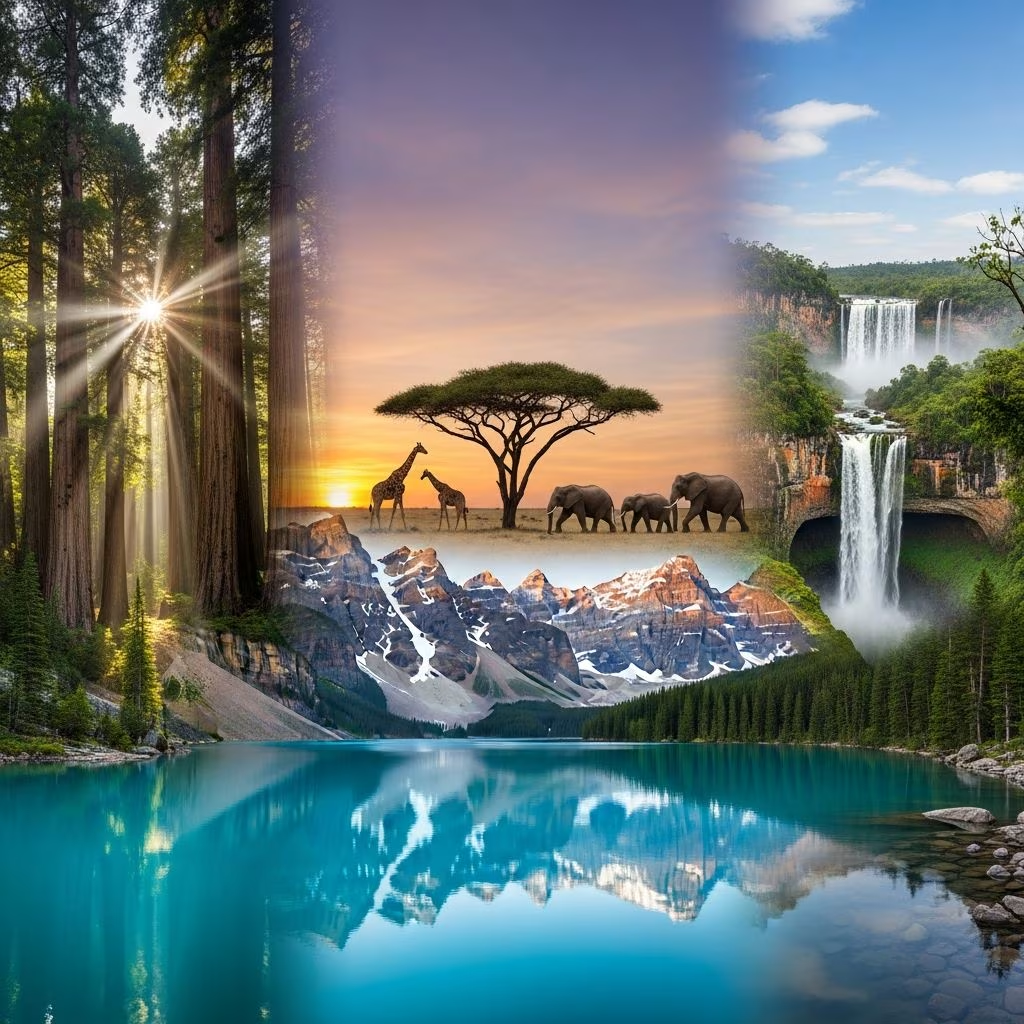
Earth’s national parks and preserves stand as vital sanctuaries, safeguarding ecosystems while inviting travelers to witness nature’s grandeur. These protected areas span continents, from arid dunes to glacial fjords, hosting unique flora, fauna, and geological marvels. This guide highlights **10 exceptional parks**, drawing on global acclaim for their beauty, biodiversity, and visitor appeal, supported by official conservation data and travel insights.
National parks preserve biodiversity hotspots and cultural heritage, with many established over a century ago. For instance, the U.S. National Park Service, formed in 1916, manages sites visited by millions yearly to balance enjoyment and protection. Globally, these reserves combat habitat loss, with places like Costa Rica dedicating 25% of land to conservation. Visitors flock for hiking, wildlife viewing, and immersive experiences, boosting ecotourism.
The **Grand Canyon** exemplifies natural artistry, carved by the Colorado River over 6 million years into a 277-mile chasm averaging 1 mile deep. Designated a UNESCO World Heritage site, it attracts over 5 million visitors annually, offering rim trails, rafting, and mule rides. Layered rock formations reveal Earth’s history, from ancient Vishnu Schist to recent Kaibab Limestone.
Key activities include the South Rim’s accessible viewpoints and the North Rim’s quieter hikes. Wildlife spans bighorn sheep, condors, and over 1,500 plant species. Sustainable tips: Use shuttle buses to minimize impact.
As the world’s first national park, established in 1872, **Yellowstone** spans 2.2 million acres across Wyoming, Montana, and Idaho. Famous for geysers like Old Faithful, it features the largest concentration of geothermal features globally, with half the planet’s active geysers. Bison herds, wolves, and grizzlies roam its meadows and forests.
Explore via boardwalks at Norris Geyser Basin or Lamar Valley for wildlife. Winter snowshoeing adds seasonal magic. Visitor stats show 4 million annual guests, emphasizing the need for ‘Leave No Trace’ principles.
**Serengeti** covers 5,700 square miles of savanna, famed for the Great Migration: 1.5 million wildebeest, zebras, and gazelles circling annually in search of rain-freshened grasses. Lions, leopards, and cheetahs hunt amid endless plains named ‘Siringet’ in Maasai, meaning ‘endless plains’.
Safaris peak July-October; hot-air balloon rides offer aerial views. Conservation efforts protect this ancient ecosystem, one of Africa’s largest.
The **Galápagos Islands**, a volcanic archipelago 600 miles off Ecuador, inspired Darwin’s evolution theory. This UNESCO site hosts unique species like giant tortoises, marine iguanas, and flightless cormorants, with 97% endemism. Strict visitor limits preserve its fragility.
Snorkel with sea lions, hike Sierra Negra volcano, or observe blue-footed boobies. Permits and guided tours ensure minimal disturbance.
Nestled in the Canadian Rockies, **Banff** boasts turquoise glacial lakes like Lake Louise amid snow-capped peaks. Established in 1885, it spans 2,564 square miles with grizzly bears, elk, and over 300 bird species.
Icefields Parkway drives reveal Athabasca Glacier; winter skiing contrasts summer canoeing. Parks Canada manages crowds for sustainability.
Dubbed “the most biologically intense place on Earth” by National Geographic, **Corcovado** on the Osa Peninsula shelters jaguars, tapirs, and scarlet macaws across 164 square miles of rainforest, mangroves, and beaches. Costa Rica’s ecotourism model shines here.
Trek the Sirena Station trail network; overnight in eco-lodges. Biodiversity includes 10,000 insect species per hectare.
**Yosemite** in California’s Sierra Nevada features granite monoliths like El Capitan and Yosemite Falls, North America’s tallest at 2,425 feet. Established in 1890, its 1,190 square miles include sequoia groves and High Sierra meadows.
Climbers scale sheer walls; hikers tackle Mist Trail. Reservations curb overcrowding at peak times.
**Namib-Naukluft** protects the world’s oldest desert, with Sossusvlei’s red dunes rising 1,000 feet. Spanning 19,200 square miles, it hosts oryx, springbok, and Welwitschia plants surviving millennia.
Hot-air balloons over Deadvlei; 4×4 quad biking. Minimal infrastructure preserves solitude.
This compact 4-square-mile gem blends rainforests, beaches, and reefs, teeming with monkeys, sloths, and toucans. Costa Rica’s top-visited park draws crowds for its accessibility.
Beach hikes spot white-faced capuchins; snorkel coral gardens. Entry limits and dawn visits beat heat and crowds.
In Patagonia, **Torres del Paine** stuns with granite towers, glaciers, and emerald lakes across 700 square miles. UNESCO-listed for guanacos, pumas, and Andean condors.
The W Trek (4 days) or full Circuit (8 days) challenge hikers. Refugios provide shelter; windproof gear essential.
Preparation ensures safe, responsible visits. Book permits early for Galápagos or Torres del Paine. Pack layers, sturdy boots, and binoculars.
| Park | Best Time to Visit | Top Activity | Annual Visitors (Approx.) |
|---|---|---|---|
| Grand Canyon | Spring/Fall | Rim Hike | 5M |
| Yellowstone | Summer | Geyser Viewing | 4M |
| Serengeti | Jul-Oct | Safari | 500K |
| Galápagos | Year-round | Snorkeling | 250K |
| Banff | Summer | Lake Canoeing | 4M |
Follow ‘Leave No Trace’: stay on trails, pack out waste, respect wildlife. Support local economies via guided tours. Climate change threatens glaciers and migrations—choose low-emission transport.
Great Smoky Mountains leads with 13 million visitors yearly, though our list focuses on global icons like Grand Canyon.
Many offer family-friendly trails; check for wildlife precautions and altitude in places like Torres del Paine.
Opt for shoulder seasons, camp, and use park shuttles. Free entry days exist in some countries.
Serengeti or Corcovado for safaris and biodiversity.
Glaciers in Banff recede; support conservation donations.
