

 Travel Essentials
 Travel Essentials

A comprehensive 10-day travel guide exploring Israel's spiritual landmarks, modern culture, culinary traditions, and historical significance across multiple regions.
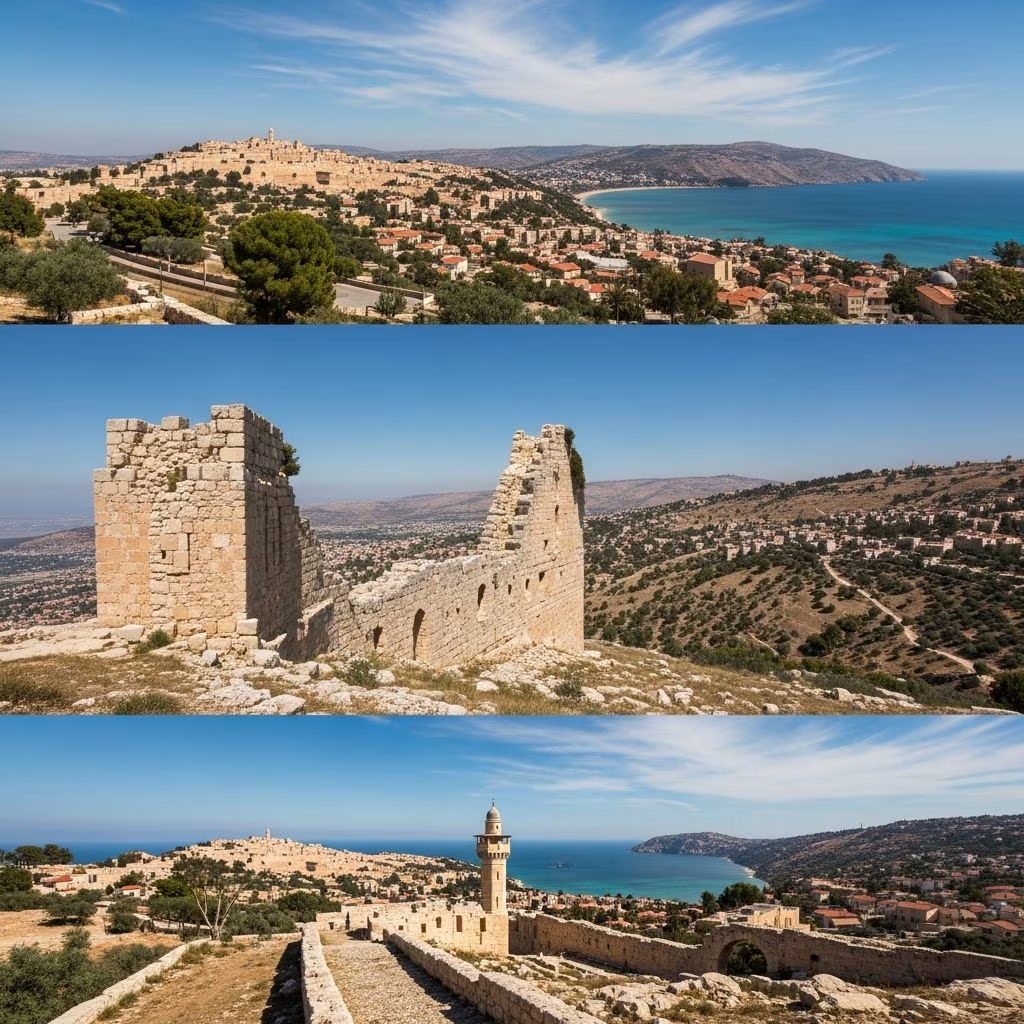 Travel Essentials
Israel stands as one of the world’s most compelling destinations, offering travelers an extraordinary blend of ancient spiritual significance and contemporary vibrancy. Spanning just over 8,000 square miles, this small nation encompasses thousands of years of history, multiple religious traditions, and a remarkably diverse population. A ten-day journey through Israel provides sufficient time to experience its most significant cultural and historical landmarks while also engaging with local communities and modern urban centers. This guide outlines a comprehensive exploration of Israel’s multifaceted character, from the bustling streets of Tel Aviv to the serene landscapes of Galilee, ensuring travelers gain meaningful insights into both the country’s past and its dynamic present.
Before embarking on a ten-day journey, it helps to understand Israel’s distinctive character as a crossroads of civilizations. The country encompasses diverse ecosystems—from Mediterranean coastlines to desert regions—and serves as a homeland to multiple ethnic groups and religious communities. Jerusalem, situated in the central highlands, functions as the spiritual heart of Judaism, Christianity, and Islam, making it essential to any comprehensive Israeli experience. Tel Aviv, by contrast, represents Israel’s secular, cosmopolitan identity with its thriving tech scene, contemporary art galleries, and beaches. Between these two cities and extending northward lie agricultural regions, historical sites, and small communities that collectively tell Israel’s intricate story. Understanding this geographical and cultural diversity allows travelers to approach their visit with informed expectations and deeper appreciation for the complexity of Israeli society.
Most international visitors arrive at Ben Gurion Airport, located between Tel Aviv and Jerusalem. Upon arrival, many travelers choose to spend their first nights in Tel Aviv to acclimate and explore Israel’s most cosmopolitan city before venturing to more historically charged locations. This approach allows for gradual immersion into the country’s contemporary culture.
First Day Activities:
Second Day Exploration:
The second day offers deeper engagement with Tel Aviv’s cultural offerings. Begin with a guided walking tour of Old Jaffa, the ancient port city that predates modern Tel Aviv by thousands of years. The winding cobblestone streets of Jaffa reveal centuries of archaeological layers and contemporary artistic communities. Visitors encounter galleries, studios, and restaurants housed in restored buildings that bridge past and present.
The Levinsky Market represents another essential Tel Aviv experience, showcasing the city’s multicultural character. This vibrant marketplace bursts with sensory experiences—the aroma of Middle Eastern spices, the colors of dried fruits and nuts, and the energy of vendors operating family businesses spanning generations. Engaging with market vendors provides authentic cultural connections and opportunities to sample traditional foods, from za’atar-spiced snacks to local cheese varieties. This market interaction illustrates how Israel’s diverse communities contribute to the nation’s contemporary identity through culinary traditions and commercial exchange.
Leaving the urban energy of Tel Aviv, travelers venture northward to explore regions central to Jewish mysticism, Christian tradition, and contemporary Israeli agricultural life. This northern journey introduces the country’s geographical and spiritual diversity.
Galilee Region Highlights:
Tzfat (also spelled Safed) sits in the mountainous Galilee region and functions as a center of Jewish mysticism and Kabbalah study. The city’s labyrinthine streets wind through neighborhoods where ancient synagogues sit beside artist studios, reflecting Tzfat’s dual identity as both a spiritual center and contemporary creative community. Visitors wander through narrow alleyways discovering the Artist Quarter, where local painters, sculptors, and craftspeople maintain studios and galleries. The spiritual atmosphere—enhanced by centuries of rabbinical study and meditation practices—contrasts with the vibrant creative energy, making Tzfat a unique location where ancient and modern sensibilities coexist.
From Tzfat, the itinerary includes visits to kibbutzim, collective agricultural communities that emerged as central to Israel’s founding vision. Modern kibbutzim operate quite differently from their predecessors, though communal values remain important. Visitors meet kibbutz members who explain the evolution of these communities, their agricultural innovations, and their role in contemporary Israeli society. Sharing a meal with kibbutz residents provides direct cultural exchange and insights into communal living philosophies.
Coastal and Wine Country:
The northern coastal area includes Caesarea, an ancient port city established by King Herod featuring Roman ruins and archaeological significance. Early morning visits to Caesarea National Park, before tour groups arrive, allow for more contemplative exploration of these remnants. The site’s architectural remains provide tangible connections to ancient Mediterranean civilization and Roman engineering achievements.
The Golan Heights region combines natural beauty with agricultural productivity. Wineries throughout this region produce acclaimed Israeli wines, reflecting both traditional viticulture and modern winemaking innovations. Wine tasting experiences in the Golan Heights introduce visitors to Israel’s growing reputation in the international wine community while providing opportunities to discuss the region’s agricultural challenges and triumphs.
Jerusalem represents the emotional and spiritual center of any Israeli journey, requiring at least two full days to experience its layered complexity. The city functions simultaneously as a religious capital for Judaism, Christianity, and Islam, a modern metropolitan area with contemporary infrastructure, and a contested political space where historical narratives compete for recognition.
Navigating the Old City:
The Old City’s walls enclose approximately one square kilometer containing sites sacred to multiple religious traditions. The Western Wall (Kotel) serves as Judaism’s most revered site, where visitors from around the world gather to pray and leave written prayers in wall crevices. The adjacent Temple Mount, known as Al-Haram Al-Sharif in Arabic, contains Islamic structures including the Dome of the Rock and Al-Aqsa Mosque, making this geography intensely meaningful to both Jewish and Muslim traditions. Christian pilgrims follow the Via Dolorosa, the traditional path Jesus walked toward crucifixion, ending at the Church of the Holy Sepulcher, believed by many Christians to contain both Golgotha and Jesus’s burial site. The Garden Tomb offers alternative Christian holy site interpretations, while the Garden of Gethsemane, with its ancient olive trees and peaceful atmosphere, provides quiet spiritual reflection space.
The Old City also contains four distinct quarters—Jewish, Muslim, Christian, and Armenian—each maintaining separate character while sharing the same ancient walls. Walking through these neighborhoods reveals different architectural styles, commercial activities, and community practices, illustrating how Jerusalem’s various populations maintain distinct identities within shared urban space.
New City and Modern Memorials:
Beyond the Old City walls, Jerusalem’s New City reflects modern Israel’s political institutions and historical consciousness. The Knesset building houses Israel’s legislative body, while nearby Supreme Court buildings represent judicial authority. The Menorah sculpture, incorporating symbols from ancient Jewish tradition, stands as a national symbol.
The Yad Vashem Holocaust Memorial and Museum occupies Mount Herzl and functions as Israel’s official Holocaust remembrance institution. The museum presents comprehensive documentation of Nazi persecution and genocide, including personal testimonies, archival materials, and artistic representations. The Valley of the Communities section commemorates destroyed Jewish communities across Europe. Visiting Yad Vashem requires emotional preparation and typically occupies several hours, as the experience profoundly affects most visitors. Understanding the Holocaust provides essential context for comprehending modern Israel’s founding and defensive posture.
The Israel Museum houses remarkable collections including the Shrine of the Book, which contains the Dead Sea Scrolls—ancient biblical manuscripts discovered in Qumran caves dating to the Second Temple period. These scrolls represent humanity’s oldest biblical texts and offer insights into ancient Jewish religious practices. The museum also features a model of Second Temple Jerusalem, allowing visitors to visualize the city as it existed before Roman destruction in 70 CE.
Traveling eastward from Jerusalem, the landscape transforms dramatically as elevation decreases toward the Dead Sea, Earth’s lowest point at approximately 1,300 feet below sea level. This region encompasses some of Israel’s most distinctive natural and historical features.
Masada and Desert Fortress Heritage:
Masada, a mountaintop fortress constructed by King Herod, rises dramatically from the Dead Sea’s northwestern shore. Ancient Jewish forces made their final stand here against Roman armies during the First Jewish Revolt (66-70 CE). The site’s archaeological remains include palace structures, storage facilities, and defensive walls. Cable cars transport visitors to the summit, though hiking trails offer more physically engaging approaches. Masada’s historical significance extends beyond archaeology; the fortress symbolizes Jewish resistance and national resilience, making it culturally important to Israeli identity.
Dead Sea Immersion and Natural Wonders:
The Dead Sea’s extreme salinity—approximately 34% salt content compared to 3.5% in ocean water—creates natural buoyancy that makes traditional swimming impossible. Visitors float effortlessly on the surface, an unusual and memorable experience. The mineral-rich waters offer purported therapeutic benefits, and nearby spas provide mud treatments and wellness services. Ein Gedi, a natural oasis in the desert, offers hiking trails through date palm groves and past freshwater springs where King David traditionally sheltered. The contrast between lush oasis and surrounding desert creates striking natural beauty and ecological interest.
Qumran Caves and Archaeological Significance:
The Qumran archaeological site, where Dead Sea Scrolls were discovered, provides insights into Second Temple Judaism and the sectarian community that inhabited the area. Cave explorations and museum exhibits help visitors understand how these ancient manuscripts survived two millennia in the desert’s dry conditions.
The final days balance significant religious and cultural sites with practical departure preparation. A day trip to Bethlehem, the biblical birthplace of Jesus, provides Christian pilgrims essential spiritual experiences.
Bethlehem Holy Sites:
The Church of the Nativity, believed to mark Jesus’s birth location, represents one of Christianity’s oldest churches. The church’s interior contains the Grotto of the Nativity, where tradition places the manger. Visiting during quieter hours allows for more contemplative experiences. Bethlehem’s Rachel’s Tomb, another significant Christian site, attracts pilgrims seeking spiritual connection.
Cultural Immersion and Local Engagement:
Final days should emphasize authentic cultural engagement. Mahane Yehuda Market in Jerusalem offers concentrated access to Israeli food culture, local merchants, and evening energy. Walking through the market with local guides provides recommendations for restaurants ranging from casual street food to fine dining establishments serving contemporary Israeli cuisine. Conversations with vendors, shopkeepers, and diners yield personal perspectives on Israeli life, concerns, and hopes.
Attending cultural performances—theater productions, concerts, or dance performances—provides artistic insights into contemporary Israeli creative expression. Many venues in Tel Aviv and Jerusalem present world-class productions reflecting Israel’s vibrant cultural scene.
| Category | Recommendation |
|---|---|
| Best Travel Season | October-November or March-April offer moderate temperatures; avoid July-August heat and winter rainfall |
| Transportation | Combination of guided tours, rental cars, and public transportation; domestic flights optional for time efficiency |
| Language | Hebrew is primary; English widely spoken in tourist areas; learning basic phrases enhances engagement |
| Dietary Considerations | Abundant kosher, halal, and vegetarian options; inform guides of dietary restrictions in advance |
| Cultural Sensitivity | Respect religious site protocols; modest dress required at certain locations; avoid photography in sensitive areas |
A ten-day Israeli journey offers transformative travel experiences combining historical significance, spiritual meaning, natural beauty, and cultural vitality. From Tel Aviv’s cosmopolitan energy to Jerusalem’s ancient sanctity, from Galilee’s spiritual centers to the Dead Sea’s geological uniqueness, Israel encompasses remarkable diversity within compact geography. Travelers emerge with deeper understanding of Middle Eastern history, religious traditions, and contemporary political complexities. Beyond historical and cultural knowledge, meaningful interactions with Israeli citizens—across ethnic, religious, and ideological divides—provide personal insights into how diverse populations navigate shared national experience. Such journeys challenge preconceptions, generate new questions, and often inspire ongoing engagement with Israeli culture, history, and contemporary developments.
