

 Travel Essentials
 Travel Essentials

Explore Mykonos's best free attractions, from historic architecture to scenic coastal walks and cultural landmarks.
 Travel Essentials
Mykonos has earned a reputation as a luxury destination where expense accounts are often tested and vacations can quickly become costly undertakings. However, beneath the veneer of high-end resorts and exclusive clubs lies an island richly layered with authentic experiences that require nothing more than curiosity and comfortable walking shoes. The charm of Mykonos extends far beyond its expensive nightlife venues and upscale dining establishments—it encompasses centuries of history, breathtaking natural landscapes, and cultural treasures that remain accessible to every visitor regardless of budget constraints.
The island’s geography and cultural heritage provide an exceptional foundation for cost-conscious travelers seeking meaningful engagement with Greek island life. From the moment you step onto Mykonos, you’ll discover that many of the most memorable experiences cost absolutely nothing. Whether you’re drawn to architectural exploration, historical discovery, or simply soaking in Mediterranean atmosphere, this guide unveils the island’s greatest offerings without requiring you to deplete your travel funds.
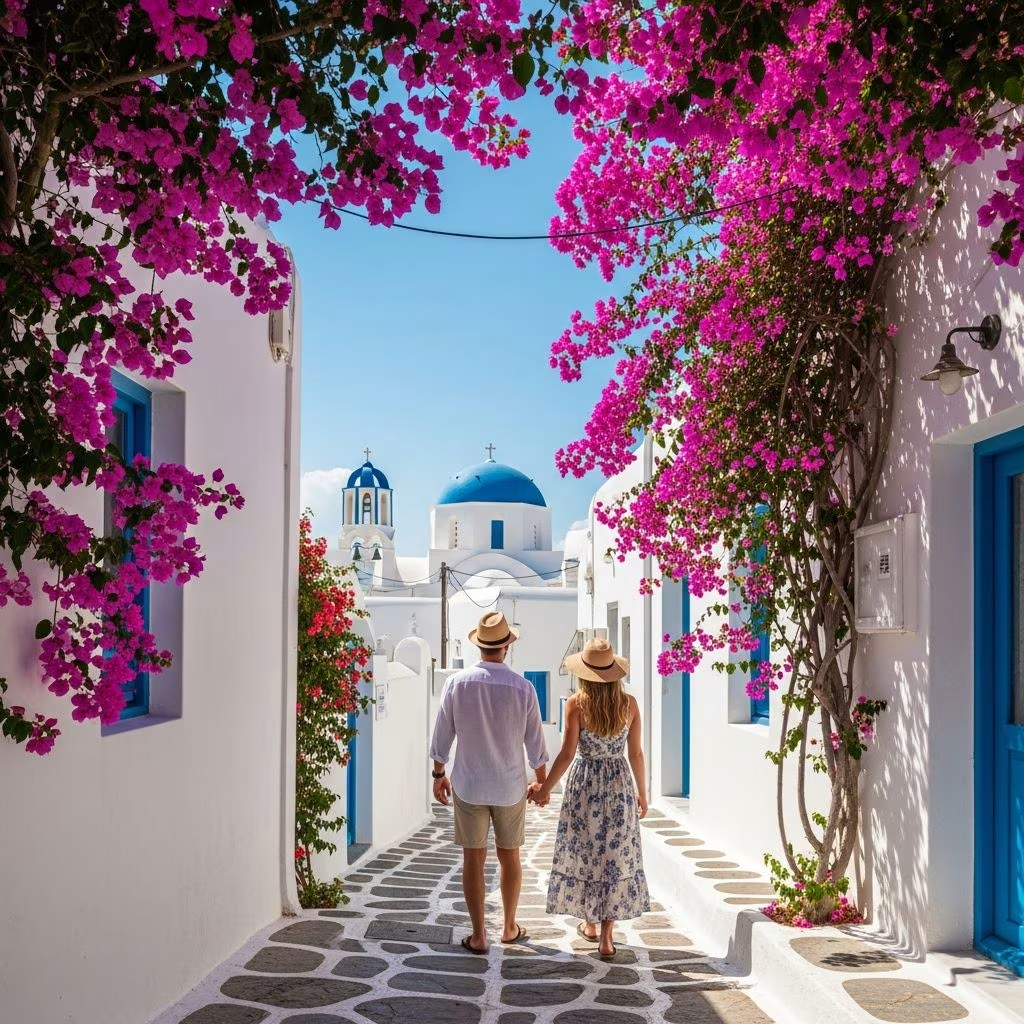
The most valuable experience Mykonos offers costs nothing but time and a willingness to embrace delightful disorientation. Mykonos Town, locally known as Hora, functions as the island’s spiritual and cultural epicenter—a place where narrow alleyways twist in seemingly impossible directions, creating an enchanting maze that rewards aimless wandering. The architectural character of this town represents an authentic Cycladic settlement, where whitewashed buildings create luminous corridors that frame glimpses of sea and sky.
Every corner presents visual discoveries: magenta bougainvillea cascades over courtyard walls, electric blue doors frame shadowy passages, and tiny squares emerge unexpectedly where locals gather in cafes. The town’s 17th-century quarter known as Little Venice exemplifies this enchantment, with waterfront buildings appearing to tumble directly into the harbor. Exploring these streets provides an unfiltered view of island life that no paid tour or museum exhibit can replicate. The sensory experience—the scent of jasmine, the sound of waves echoing through passages, the interplay of Mediterranean light and shadow—constitutes the authentic essence of Mykonos.
Mykonos possesses remarkable religious structures that document centuries of Byzantine and post-Byzantine history. The Holy Church of Panagia Paraportiani stands as perhaps the island’s most recognizable religious edifice—a striking white building that has become virtually synonymous with Mykonos itself. This church exemplifies the architectural evolution of the Cycladic islands, combining multiple construction periods into a singular, harmonious structure that welcomes visitors without demanding entrance fees.
Beyond this iconic church, the town contains numerous smaller chapels and churches scattered throughout the labyrinth of streets. Many remain open to visitors, providing quiet spaces for reflection and offering glimpses into Orthodox Christian traditions. The craftsmanship evident in the iconography and decoration of these structures reveals the deep religiosity that has characterized Mykonos for generations.
For those willing to venture beyond the town proper, the village of Ano Mera—situated approximately four miles east of Hora—hosts the 18th-century Monastery of Panagia Tourliani. This significant religious complex features marble sculptures and an impressive altar screen that demonstrates the artistic sophistication of island monasticism. The surrounding landscape, particularly near the 12th-century Monastery of Paleokastro, presents verdant settings where Mediterranean vegetation creates natural sanctuaries of serenity.
Understanding Mykonos requires glimpsing the lives of ordinary islanders before tourism transformed the economic and social landscape. The Mykonos Folklore Museum, housed within a restored 18th-century sea captain’s residence, documents this pre-tourism existence through carefully arranged artifacts and domestic arrangements. The seven rooms contain traditional costumes, religious feast menus, household implements, and family photographs that collectively narrate the evolution from agricultural and maritime subsistence to modern tourism economy.
Particularly compelling is Lena’s House, a separate 19th-century dwelling preserved precisely as its final residents left it. This intimate space reveals the spatial organization, furnishings, and domestic practices of earlier generations, providing anthropological insights that extend beyond mere historical documentation. The Agricultural Museum, located near the iconic windmills, further contextualizes island life by examining farming practices and rural traditions.
These institutions offer educational value without requiring paid admission, making them exceptional resources for visitors seeking cultural depth. The displays encourage contemplation about how rapid modernization has reshaped island communities and the ways traditional knowledge systems have been displaced or transformed.
Seven windmills overlook Mykonos Town from elevated terrain, their whitewashed structures commanding panoramic views across the harbor and surrounding seascape. These mills originally functioned in the practical economy of the island, grinding wheat into flour during periods when wind patterns permitted. Today they serve as both historical monuments and the most photographed architectural elements on Mykonos, visible from nearly every vantage point within the town.
Ascending to these structures provides several rewards simultaneously: the physical activity connects you with the island’s topography, the views encompass the entire harbor and surrounding islands, and the windmills themselves present compelling architectural studies. The structures’ condition and preservation status vary, but each retains character that photographs struggle to capture. The experience of standing among these mills at dawn—before tourists and crowds arrive—offers a contemplative connection with Mykonos’s working past.
The windmill area functions as an informal gathering space where travelers encounter other visitors, creating spontaneous social interactions that characterize independent travel experiences. Professional photographers frequently position themselves here during golden hour, and the atmosphere becomes almost ceremonial as sunset approaches.
Mykonos’s southern coastline offers an exceptional pedestrian route connecting some of the island’s most popular beaches. The walk between Platys Gialos Beach and Paradise Beach traverses approximately one hour of coastal terrain, maintaining proximity to the water while providing unobstructed views of the Aegean Sea. The trajectory of this walk captures distant islands including Paros and Naxos, creating a sense of orientation within the greater Cycladic archipelago.
This coastal promenade intersects with numerous secondary beaches, including Paraga, offering travelers flexibility in pace and duration. Cafes and tavernas line portions of the route, permitting rest intervals without requiring return to primary tourist zones. The walk represents one of the island’s most accessible ways to experience Mediterranean marine environments, witness seasonal variations in sea color and light, and observe how different beach communities maintain distinct identities within proximity to each other.
The walk works equally well in reverse direction, and timing can be adjusted to capture morning light, midday intensity, or evening illumination. The route accommodates varied fitness levels, as travelers can traverse complete distances or selected segments based on individual preferences and energy levels.
The Rarity Gallery operates as a rare free art venue within Mykonos Town, presenting contemporary and traditional artistic works across five themed rooms. Established in 1994, this gallery functions as a cultural counterweight to commercialized tourism, offering genuine artistic exploration in an intimate setting. The staff demonstrates knowledge and enthusiasm about displayed works, providing context that enriches visitor engagement.
Gallery space in Mykonos generally operates within commercial frameworks where artwork is offered for purchase. The Rarity Gallery’s free-access model creates exceptional opportunity to encounter artistic expression without consumption pressure. The thematic room organization facilitates intellectual engagement with curatorial perspectives and artistic traditions.
Beyond architectural and cultural landmarks, Mykonos offers natural attractions distributed across its geography. Ornos Beach presents accessible coastline with views toward neighboring islands, while Agios Sostis Beach maintains a more bohemian character that distinguishes it from commercialized beach clubs. Elia Beach extends further from town but rewards the extended journey with dramatic landscapes and fewer crowds.
Beach access throughout Mykonos remains free, though commercial enterprises offer lounger rentals, umbrellas, water sports, and dining services. Travelers can utilize public beach access to enjoy Mediterranean swimming and sunbathing without service purchases. The island’s topography permits varied beach experiences—some offering social environments with music and activities, others providing solitude and undisturbed natural beauty.
Mykonos experiences pronounced seasonal variations that significantly affect both atmosphere and accessibility. The peak summer months (July and August) bring maximum crowds, higher prices for services, and intense Mediterranean heat. Spring months (April-May) and autumn months (September-October) offer more moderate conditions with fewer tourists, making free exploration particularly rewarding during these periods.
Winter months (November-March) present challenges as many businesses reduce operating hours or close seasonally. However, winter also offers exceptional opportunities to experience Mykonos as a functional island community rather than tourist destination. The pace becomes measured, locals reclaim public spaces, and the fundamental character of island life becomes more apparent.
Successfully experiencing Mykonos’s free attractions requires minimal planning but benefits from basic orientation knowledge. The town’s apparent chaos actually follows logical patterns once you recognize major landmarks and understand that becoming lost constitutes part of the intended experience. Comfortable walking shoes remain essential, as cobblestone alleyways and varied terrain characterize most exploration routes.
Early morning visits to popular attractions—particularly the windmills and Little Venice—provide advantages in crowd avoidance and photographic conditions. Sunset timing offers alternative aesthetic experiences, with amber light transforming architectural surfaces and creating dramatic shadow patterns. Late afternoon exploration of the town’s interior spaces provides cooler temperatures during hot months.
Public spaces throughout Mykonos welcome visitor exploration without formal restrictions. However, respect for residential areas and awareness that some narrow passages serve local residents rather than tourists maintains the distinction between tourism and intrusion. Photography ethics become relevant when capturing human subjects or entering religious spaces—basic courtesy and permission-seeking demonstrate appropriate cultural respect.
The comprehensive free experience of Mykonos emerges through sustained engagement rather than rapid checkmark tourism. Rather than attempting to visit every free attraction in a single day, considering multi-day exploration permits deeper investigation and spontaneous discovery. The island reveals different character at varying times of day, during different weather conditions, and across different seasons.
Engaging with local residents, when appropriate, frequently leads to recommendations for overlooked attractions, quieter beaches, or authentic dining establishments that serve local communities rather than tourists. These informal connections often provide greater value than guidebook information and reflect the generous spirit that characterizes Greek hospitality traditions.
The true cost-free experience of Mykonos involves presence—moving through spaces attentively, observing how light changes surfaces, noticing seasonal vegetation patterns, and recognizing how island communities maintain continuity despite tourism transformation. This contemplative approach costs nothing but yields exceptional rewards.
