

 Travel Essentials
 Travel Essentials

Explore the biggest U.S. national parks by size, their unique landscapes, wildlife, and top activities for an unforgettable adventure in nature.
 Travel Essentials
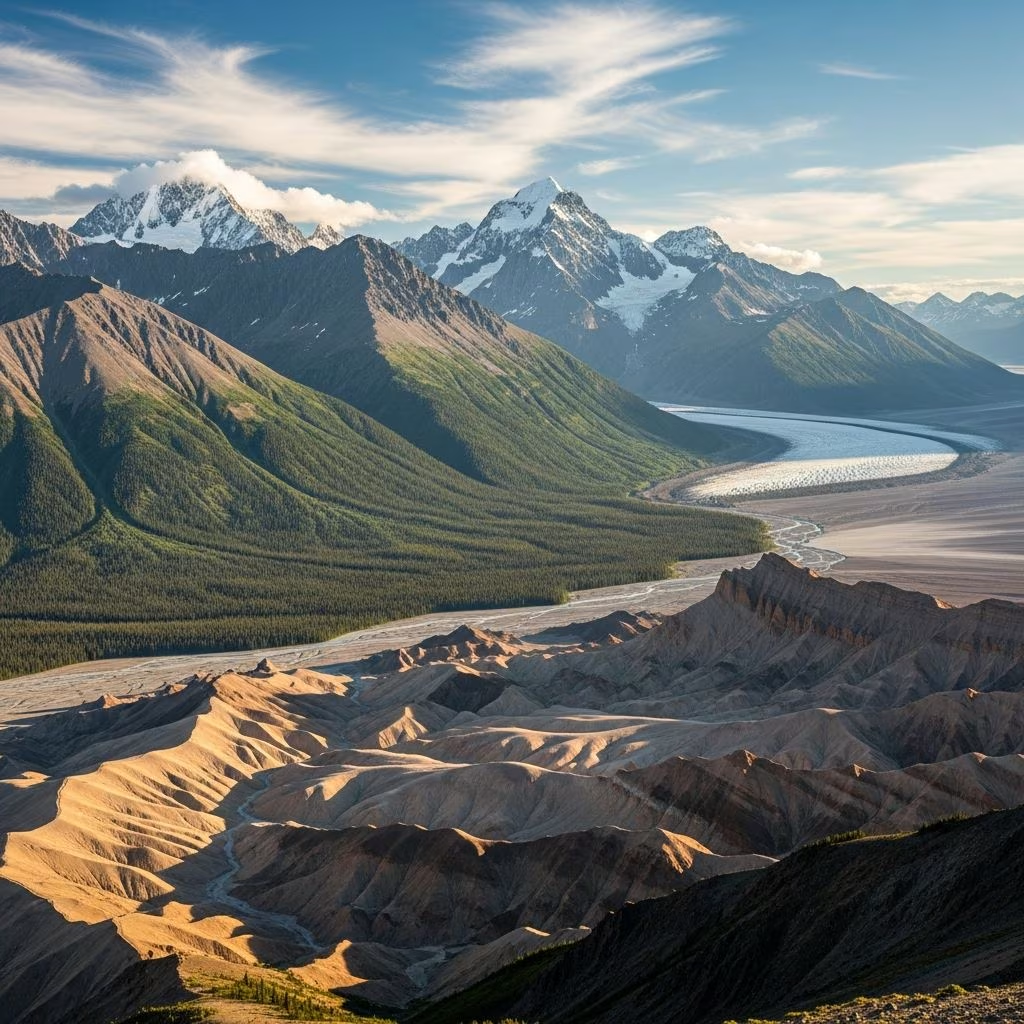
The United States boasts some of the world’s most expansive protected lands, where national parks preserve millions of acres of untouched wilderness. These **supersized sanctuaries** offer unparalleled opportunities to witness towering mountains, sprawling glaciers, deep canyons, and geothermal phenomena. Spanning primarily Alaska and the Lower 48 states, these parks dwarf everyday landscapes and rival entire countries in scale. From the glacier-dominated expanses of Wrangell-St. Elias to the dramatic depths of the Grand Canyon, they represent nature’s grandest expressions.
Size defines these parks, with Alaska dominating the list due to its remote frontiers. Wrangell-St. Elias National Park & Preserve leads at **13.2 million acres**, surpassing the combined areas of Yellowstone, Yosemite, and even Switzerland. This behemoth merges four mountain ranges, hosts North America’s highest peaks like 18,008-foot Mount Saint Elias, and conceals over a quarter of its terrain under ice while simmering with volcanic activity. Gates of the Arctic National Park & Preserve follows closely at around 8.4 million acres, embodying pure Arctic wildness without roads or established trails.
In the Lower 48, Denali National Park & Preserve covers 6.1 million acres, centered on its namesake 20,310-foot peak—the continent’s tallest. Katmai’s 4.7 million acres shelter famous brown bear gatherings at Brooks Falls. Wrangell-St. Elias’s scale allows for vast roadless zones teeming with wildlife, from grizzlies to Dall sheep, emphasizing the parks’ role in biodiversity conservation.
| Park Name | Size (Million Acres) | Key Feature | Location |
|---|---|---|---|
| Wrangell-St. Elias NP&P | 13.2 | Mount Saint Elias, glaciers | Alaska |
| Gates of the Arctic NP&P | 8.4 | Arctic wilderness, no roads | Alaska |
| Denali NP&P | 6.1 | Denali peak | Alaska |
| Katmai NP&P | 4.7 | Brooks Falls bears | Alaska |
| Grand Canyon NP | 1.2 | 1-mile-deep canyon | Arizona |
This table highlights the dramatic size differences, underscoring Alaska’s outsized contribution to America’s protected lands.
Alaska claims seven of the ten largest U.S. national parks, thanks to its vast, sparsely populated terrain. **Wrangell-St. Elias** stands out for its extremes: immense glaciers like the Bagley Ice Field contrast with the Wrangell Volcanic Field’s lava flows. Hikers tackle the challenging McKinley-Barometer Traverse, while pilots offer stunning aerial tours over jagged peaks. Wildlife thrives here, including moose, wolves, and mountain goats.
**Gates of the Arctic** demands true adventure, accessible only by bush plane or river float trips. Its Brooks Range features rugged valleys and permafrost tundra, home to caribou herds and grizzlies. Summer brings midnight sun for extended exploration, while winter auroras dance overhead.
**Denali** draws climbers and wildlife viewers to its taiga forests and alpine tundra. Spot grizzlies fishing salmon or wolves hunting Dall sheep from tour buses on the single park road. The mountain itself, often shrouded, reveals itself in clear weather for breathtaking vistas.
While smaller, parks like **Grand Canyon National Park** (1.2 million acres) stun with vertical grandeur. Carved by the Colorado River, it plunges a mile deep and stretches 277 miles long, revealing 2-billion-year-old rock layers in vivid reds and oranges. The North Rim offers solitude compared to the bustling South Rim, ideal for rim-to-rim hikes or rafting expeditions.
**Yellowstone National Park**, at 2.2 million acres, pioneered the system in 1872 as the world’s first national park. Its geothermal wonders include over 500 geysers, like Old Faithful erupting 55-185 feet, the rainbow-hued Grand Prismatic Spring, and bubbling mud pots. Bison herds roam meadows, and wolves prowl Lamar Valley.
**Sequoia and Kings Canyon National Parks** protect the planet’s largest trees. General Sherman Tree, at 84 meters tall and 10 meters wide, reigns as the biggest by volume. The Congress Trail winds through groves where sequoias have stood for over 3,000 years. Nearby, Kings Canyon’s glacial valleys rival Yosemite’s drama.
**Yosemite National Park** spans 1,100 square miles of Sierra Nevada splendor. Yosemite Valley’s granite monoliths—Half Dome and El Capitan—attract climbers worldwide. Waterfalls like Bridalveil (189 meters) and Vernal Falls cascade seasonally. Mariposa Grove houses 500 giant sequoias, including the Grizzly Giant.
These parks teem with life. Katmai’s Brooks Falls sees hundreds of brown bears feast on salmon in July, a spectacle captured in iconic photos. Yellowstone supports the reintroduced gray wolf, elk, and trumpeter swans. Great Smoky Mountains, though not the largest, boasts unmatched diversity with over 19,000 species across 800 square miles.
Options abound for all levels. In **Wrangell-St. Elias**, root-access cabin trips or flightseeing reveal icefalls and volcanoes. Denali’s bus tours spot ‘Big Five’ wildlife: grizzly, wolf, caribou, moose, Dall sheep.
Yellowstone’s boardwalks safely navigate geyser basins; Grand Canyon’s Bright Angel Trail descends to the river. Sequoia’s Giant Forest trails loop ancient trees, while Yosemite’s Mist Trail soaks hikers under Vernal Fall.
These parks face climate change, with glaciers receding and fires intensifying. The National Park Service manages crowds—Yellowstone sees millions yearly—urging Leave No Trace principles. Book permits early for backcountry; visit off-season for solitude.
Tips: Pack bear spray in Alaska; stay on trails near geysers; hydrate in deserts. Accessibility varies—rim views at Grand Canyon suit all, while remote parks require fitness and planning.
Wrangell-St. Elias National Park & Preserve at 13.2 million acres.
Yellowstone, with nearly 500 active ones.
Most are, but Alaska parks limit winter access due to weather; check NPS sites.
By bush plane, boat, or guided tours—no roads.
Spring or fall to avoid summer heat.
