

 Travel Essentials
 Travel Essentials

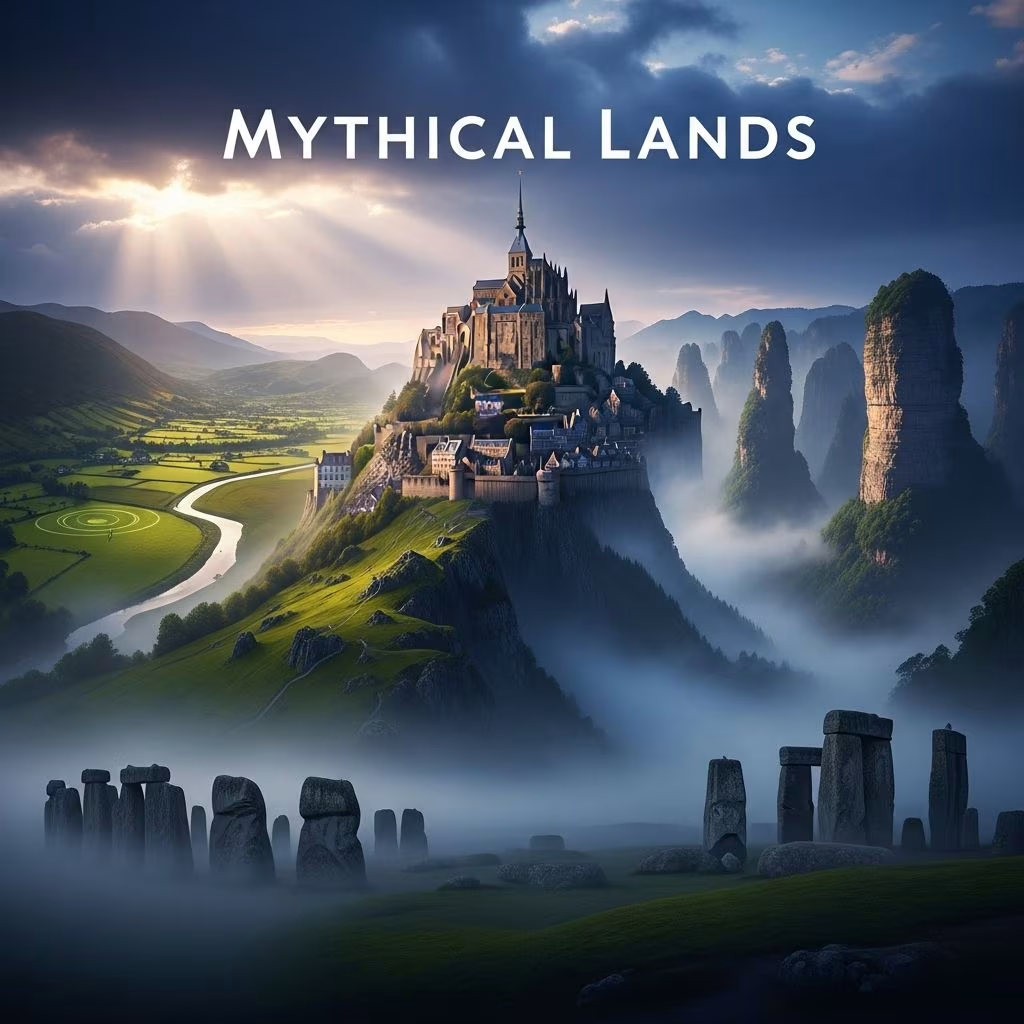
Discover 10 real destinations where myth and history meet, from Loch Ness and Mount Olympus to Machu Picchu and Angkor Wat.
 Travel Essentials
Across the globe, certain locations transcend their physical boundaries, becoming portals to stories of gods, heroes, monsters, and lost civilizations. These sites, rooted in oral traditions, epic poems, and archaeological discoveries, draw travelers eager to experience where fantasy intersects with reality. From towering mountains revered as divine abodes to deep lakes harboring elusive creatures, this guide highlights ten remarkable places that embody humanity’s enduring fascination with the supernatural. Each destination offers not just scenic beauty but a tangible connection to ancient narratives that continue to captivate modern imaginations.
These legendary spots serve as more than tourist attractions; they are living museums of cultural heritage. Visiting them allows immersion in the landscapes that shaped myths, often enhanced by stunning natural features like dramatic cliffs, vast waters, or sacred peaks. Many boast UNESCO recognition or ongoing excavations, blending adventure with education. Travelers report profound experiences, from hiking godly trails to boating in monster lore waters, fostering a deeper appreciation for global folklore.
Nestled in the rugged Scottish Highlands, this 23-mile-long lake plunges to depths over 750 feet, making it one of Europe’s largest by volume. Its fame stems from centuries-old tales of Nessie, a serpentine beast first documented in 565 AD by Saint Columba. Modern sonar scans and eyewitness accounts keep the mystery alive, drawing thousands annually to boat tours and the Loch Ness Centre. The surrounding glens offer hiking amid misty moors, where Celtic legends whisper through the wind.
Towering at 9,573 feet, this massif in northern Greece was the mythic throne of Zeus and the Olympian gods in Homer’s Iliad and Odyssey. Ancient pilgrims ascended its slopes for divine proximity, a tradition echoed in today’s treks through pine forests and alpine meadows. The nearby village of Litochoro provides access to trails leading to shelters with panoramic views, where hikers can ponder thunderous skies once attributed to godly wrath.
On Turkey’s northwest coast, Hisarlik hill reveals nine layered cities, one identified as Homer’s Troy from the Trojan War saga. Excavations since the 1870s uncovered walls matching epic descriptions, fueling debates on the war’s historicity. Visitors explore the site via wooden ramps, envisioning Achilles and Hector amid olive groves and the Dardanelles Strait, with nearby beaches offering a serene contrast to the storied bloodshed.
Africa’s second-highest peak at 17,057 feet, this extinct volcano holds sacred status for Kikuyu, Embu, Meru, and Maasai peoples. Legends describe it as the Ngai gods’ resting place, with peaks named for myths like Batian (leader) and Nelion (elephant). Climbers tackle routes like the challenging North Face, rewarded by glaciers and unique alpine flora, while base camps host storytelling sessions from local guides.
This southwestern peninsula is synonymous with Arthurian lore, from Tintagel Castle—reputed birthplace of King Arthur—to Dozmary Pool, where Excalibur was returned. Jagged cliffs and hidden coves inspired tales of Merlin and knights, complemented by world-class surfing at Fistral Beach. Wanderers trace the South West Coast Path, spotting seals that echo piskie (fairy) mischief in Cornish folklore.
England’s iconic prehistoric monument on Salisbury Plain consists of massive sarsens arranged in a circular enigma dating to 3000 BCE. Theories posit it as an astronomical calendar, healing site, or druidic temple, surrounded by burial barrows. Dawn solstice gatherings revive ancient rituals, with visitor centers offering VR reconstructions of Neolithic life amid rolling chalk downs.
Perched on Mount Parnassus slopes, this sanctuary was ancient Greece’s navel—center of the world—housing Apollo’s temple and the Oracle Pythia. Inscriptions and treasuries from across the Hellenic world attest to its prophetic fame. Ascend the Sacred Way past statues to the theater overlooking olive valleys, where echoes of divine utterances linger in the air.
In the remote Outback, this 1,142-foot monolith glows red at sunset, sacred to Anangu Aboriginal people. Dreamtime stories paint it as a serpent ancestor’s body or protector spirit against demons like Kurpany. Guided walks reveal rock art and waterholes, emphasizing cultural respect—no climbing since 2019—under vast starry skies pulsing with ancient songlines.
The world’s largest religious complex, this 12th-century Khmer masterpiece sprawls over 400 acres, symbolizing Mount Meru, Hindu gods’ cosmic mountain. Bas-reliefs depict epics like the Churning of the Ocean of Milk. Dawn light bathes its spires as monkeys scamper, with bike tours navigating vine-draped ruins evoking lost jungle kingdoms.
High in the Andes at 7,970 feet, this Inca citadel clings to cliffs, discovered in 1911. Legends tie it to Viracocha, creator god, with temples aligned to solstices. The Inca Trail hike culminates in sunrise views over terraced valleys, where condors soar as if guarding sacred Intihuatana stones.
To visit these sites, consider seasonal factors: summer for Highland hikes, dry seasons for African peaks. Book guided tours for lore insights, and respect cultural protocols like Uluru’s no-climb rule. Sustainable travel preserves these treasures for future seekers.
| Destination | Best Time to Visit | Key Activity | UNESCO Status |
|---|---|---|---|
| Loch Ness | May-Sep | Boat tours | No |
| Mt. Olympus | Jun-Oct | Hiking | Yes |
| Troy | Apr-Nov | Site exploration | Yes |
| Mt. Kenya | Jan-Mar, Jul-Oct | Climbing | Yes |
| Cornwall | May-Sep | Coast walks | Partial |
| Stonehenge | Year-round | Solstice events | Yes |
| Delphi | Apr-Oct | Theater views | Yes |
| Uluru | May-Oct | Cultural tours | Yes |
| Angkor Wat | Nov-Apr | Sunrise biking | Yes |
| Machu Picchu | May-Sep | Inca Trail | Yes |
Many blend history and exaggeration; Troy’s ruins support Homeric wars, while Nessie remains unproven folklore.
Stonehenge for accessibility and mystery, ideal for UK-based travelers.
Opt for eco-tours, low-season visits, and local operators to minimize impact.
Mount Kenya offers solitude compared to crowded icons like Machu Picchu.
Yes, with kid-friendly options like Loch Ness cruises or Uluru ranger talks.
