

 Travel Essentials
 Travel Essentials

Discover underrated US national parks like Canyonlands, White Sands, and Congaree, featuring stunning dunes, vast caves, and old-growth forests for uncrowded exploration.
 Travel Essentials
While iconic parks like Yellowstone and Yosemite draw millions annually, America’s national park system encompasses over 400 sites, many of which remain blissfully uncrowded. These hidden treasures offer profound natural beauty, rich history, and immersive outdoor experiences without the throngs of tourists. From vast dune fields to labyrinthine cave systems and pristine old-growth forests, lesser-known parks provide opportunities for solitude, adventure, and discovery. This guide highlights standout destinations, drawing on their unique geological wonders, biodiversity, and cultural significance to inspire your next journey.
Over 300 million visitors flock to the most popular parks each year, often leading to crowded trails and limited parking. In contrast, underrated sites see a fraction of that traffic, allowing deeper connections with nature. These parks preserve diverse ecosystems—from arid deserts to volcanic landscapes—and safeguard archaeological treasures. Benefits include easier access to backcountry areas, richer wildlife sightings, and transformative stargazing under unpolluted skies. National Park Service data underscores their ecological importance, protecting irreplaceable habitats and geological formations.
The American Southwest hosts some of the most striking yet underappreciated parks, where dramatic geology meets resilient ecosystems.
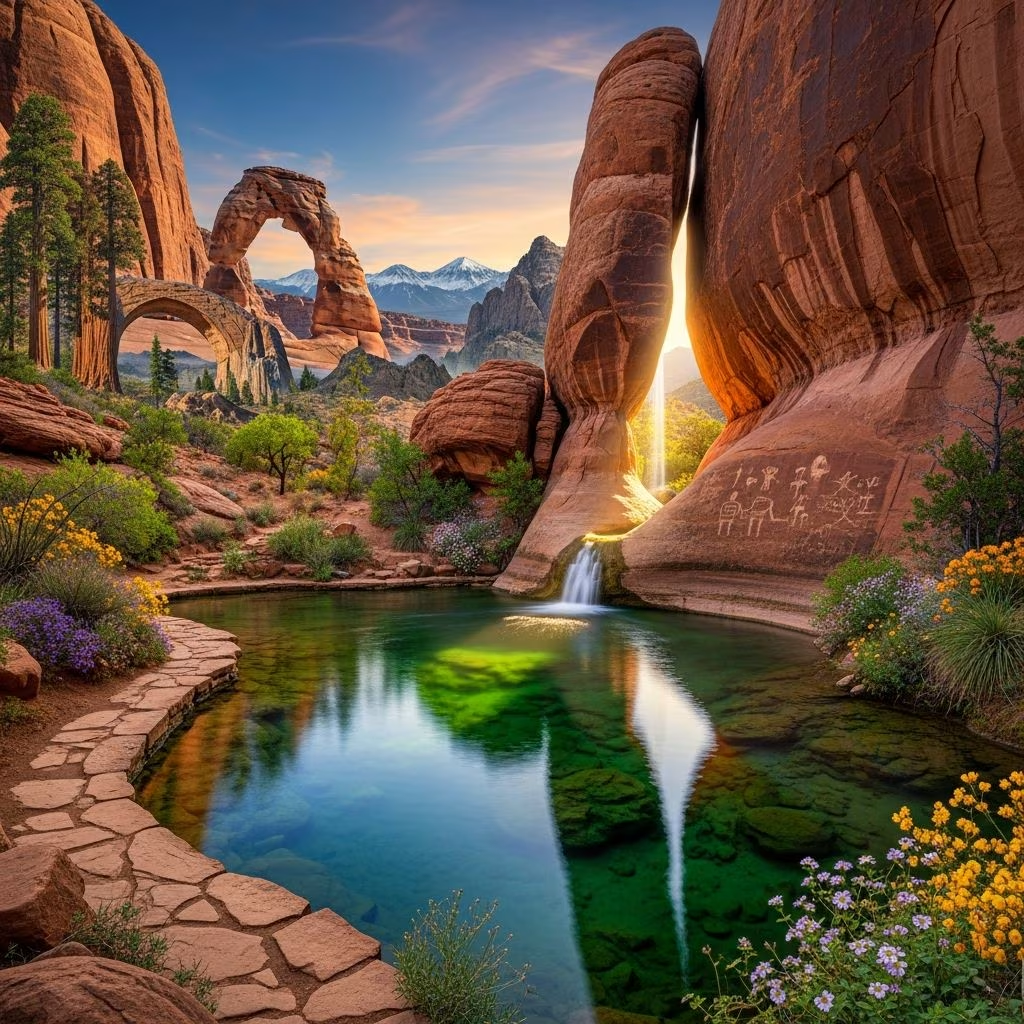
This expansive park in southeastern Utah reveals a labyrinth of canyons carved by the Colorado and Green Rivers. Its remote mesas, like Island in the Sky and The Needles, offer panoramic vistas and solitude. Hikers can explore Upheaval Dome, a mysterious crater possibly formed by a meteor impact or salt diapir. The park’s biological soil crust—delicate living carpets of microbes—stabilizes the soil and supports sparse vegetation. Backcountry permits enable multi-day treks through slot canyons and arches, ideal for adventurous souls.
Centered on the Waterpocket Fold, a 100-mile warp in the Earth’s crust, this park exposes colorful sedimentary layers from millions of years ago. Monoliths, domes, and petrified wood forests dot the landscape. Scenic Drive provides access to hikes like Cassidy Arch and Hickman Bridge. The park’s orchards, planted by early Mormon settlers, yield fruit in season for visitors to pick. Night skies here rival the darkest in the West, perfect for astronomy enthusiasts.
Recently elevated to national park status in 2019, White Sands boasts the world’s largest gypsum dunefield, spanning 275 square miles. These shimmering white dunes, remnants of an evaporated ancient sea, create surreal playgrounds for sand sledding and hiking. Alkali Flat Trail leads to the tallest dune at 60 feet. Sunset transforms the sands into a golden glow, while yucca and Apache plume adapt to the harsh environment. Spring wildflower blooms add vibrant color.
Beneath the surface and amid ancient volcanic activity lie parks that reveal Earth’s hidden dynamics.
Home to the longest known cave system globally—over 400 miles mapped—this park plunges visitors into colossal chambers adorned with stalactites and ancient fossils. Guided tours range from easy Historic Tour to wild crawls through tight passages. Above ground, 70 miles of trails wind through hardwood forests, supporting diverse wildlife. Artifacts from indigenous miners 4,000 years ago highlight human history.
A testament to recent volcanic activity, Lassen features hydrothermal areas with boiling mud pots, fumaroles, and the Bumpass Hell basin—North America’s largest hydrothermal zone after Yellowstone. Schonchin Butte offers hikes to a historic fire lookout amid lava flows from the Modoc War era. Lava tubes beckon explorers, while Cinder Cone provides a strenuous summit climb with sweeping views.
Lush forests and waterfronts provide serene escapes in these overlooked gems.
The largest intact old-growth bottomland hardwood forest in the U.S., Congaree harbors champion trees like loblolly pines exceeding 160 feet. Boardwalk Loop Trail immerses visitors in a bald cypress swamp teeming with fireflies in summer. Canoe trips on Cedar Creek reveal the canopy from below, with otters and woodpeckers abundant.
95% underwater, this park protects mangrove islands, coral reefs, and shipwrecks along Biscayne Bay. Snorkeling reveals colorful fish and sea turtles, while the Maritime Heritage Trail— the NPS’s only underwater archaeological path—explores 10,000 years of human presence. Paddling through mangroves offers birdwatching and solitude.
The North delivers rugged peaks, badlands, and grasslands far from mainstream routes.
Nicknamed the American Alps, this park boasts over 400 miles of trails amid glacier-clad peaks—the most of any lower 48 park outside Alaska. Diablo Lake’s turquoise waters reflect jagged summits. Backcountry permits unlock alpine meadows and cascading waterfalls, with black bears and goats common sightings.
Spanning three units across the badlands, this park inspired President Roosevelt’s conservation ethos. The South Unit’s 36-mile loop showcases painted canyons and bison herds. North Unit’s River Bend Overlook captures dramatic vistas, while Elkhorn Ranch evokes pioneer history. Petrified wood and prairie sunsets enchant visitors.
Layered sedimentary rocks from an ancient inland sea form otherworldly spires and pinnacles. Fossil beds yield saber-toothed cat remains, and bison roam the mixed-grass prairie. Notch Trail’s ladder climb rewards with sweeping views. Native American history permeates the Stronghold District.
| Park | Signature Activity | Best Season | Difficulty |
|---|---|---|---|
| White Sands | Sand Sledding | Spring/Fall | Easy |
| Mammoth Cave | Cave Tours | Year-round | Moderate |
| Great Basin | Stargazing | Summer | Easy |
| Congaree | Canoeing | Summer | Easy |
| North Cascades | Backpacking | Summer | Strenuous |
Great Basin National Park offers some of the darkest skies in the contiguous U.S., ideal for stargazing with minimal light pollution.
Yes, many like White Sands and Congaree feature easy trails and ranger programs suitable for all ages.
Opt for early mornings, explore less-visited units (e.g., North Unit in Theodore Roosevelt), and venture beyond paved roads.
Expect bison in Badlands/Theodore Roosevelt, sea life in Biscayne, and birds/mammals across sites; always maintain distance.
A $80 America the Beautiful pass covers entry to all sites for a year, or purchase per-park fees ($20-35/vehicle).
These parks’ allure lies in their tranquility, but rising awareness demands responsible tourism. Support by following guidelines, volunteering, or advocating for NPS funding. As visitation grows, their status as escapes from overtourism remains vital for mental recharge and biodiversity conservation.
