

 Travel Essentials
 Travel Essentials

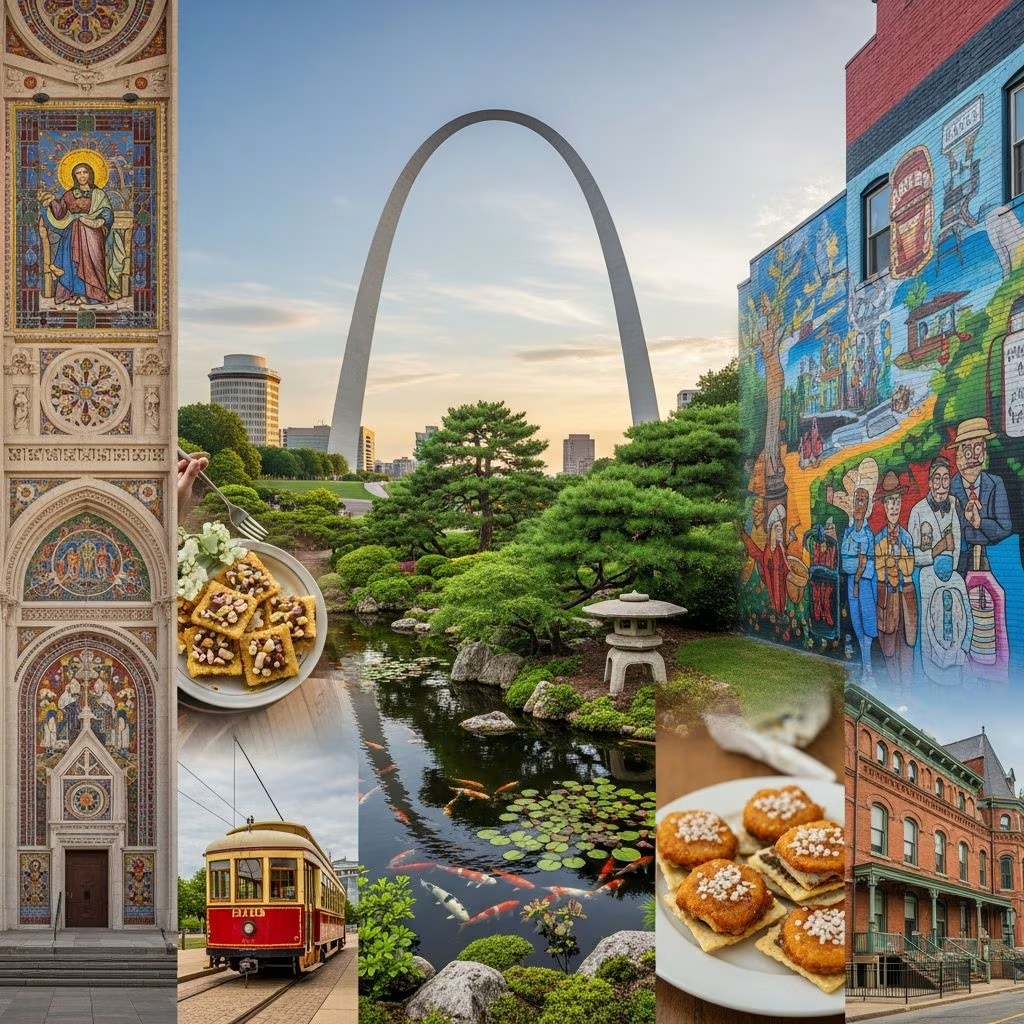
Discover St. Louis beyond the Arch with hidden gems like interactive sculpture gardens, historic cemeteries, vibrant murals, and neighborhood charm.
 Travel Essentials
While St. Louis is renowned for its iconic Gateway Arch and the Mississippi River waterfront, the city harbors numerous extraordinary destinations that escape the notice of most casual visitors. These lesser-known locations showcase the cultural depth, historical significance, and creative spirit that define Missouri’s largest city. Whether you’re interested in architectural marvels, public art installations, recreational venues, or cultural neighborhoods, St. Louis offers experiences that rival any major American destination.
One of St. Louis’s most distinctive attractions is a massive sculptural installation that combines artistic expression with interactive recreation. Located in the northern reaches of the city, this sculpture complex attracts visitors of all ages who come to experience its unique design and playful atmosphere. The installation features multiple oversized bronze creatures, each crafted with meticulous attention to detail and positioned to encourage climbing, jumping, and exploration.
The centerpiece sculpture towers 40 feet above ground and represents an aquatic reptile famous for its slow movements and ancient lineage. Five different species are depicted throughout the complex, including specimens known for their hard shells, soft exteriors, and distinctive markings. Visitors encounter educational elements integrated throughout the site, including a river map that provides geographic context to the surrounding region. The complex includes seven additional sculptural elements shaped like eggs, some positioned at precarious angles to challenge balance and coordination. This attraction demonstrates how public art can transcend traditional gallery spaces and become an integral part of community recreation and education.
Beyond its role as a final resting place, one of St. Louis’s most significant cemeteries functions as an open-air museum of the city’s industrial past and architectural heritage. Established as the first rural burial ground west of the Mississippi River, this cemetery introduced innovative design principles that influenced cemetery development throughout North America. The grounds span extensive acreage and feature hundreds of elaborate monuments, mausoleums, and sculptures crafted from marble, granite, and limestone.
The cemetery holds particular significance for students of American business history. Wealthy industrialists who amassed fortunes during the 19th and early 20th centuries chose this location for their elaborate tombs. The families who built brewing empires—including household names still recognized today—interred multiple generations within the cemetery’s borders. These ornate mausoleums represent the apex of funerary architecture and reflect the wealth and influence these families commanded during their lifetimes.
Beyond its historical significance, the cemetery functions officially as an arboretum, with thousands of mature trees representing numerous species. Among these botanical specimens is a particularly rare variety of redwood, a conifer typically associated with California’s coastal regions. Walking the pathways reveals not only architectural treasures but also natural beauty, making the location suitable for quiet reflection or historical research.
St. Louis’s principal railway station represents a remarkable chapter in American transportation history. When it opened in 1894, this facility held the distinction of being the world’s largest passenger railway terminal. The structure showcases architectural sophistication typical of the Gilded Age, featuring decorative elements that evoke luxury and permanence. Glazed terracotta bricks in deep green hues cover exterior walls, while interior spaces contain stained-glass windows that filter natural light into colorful patterns.
The facility once bustled with thousands of passengers daily, many embarking on westward journeys or returning from frontier adventures. Today, while the volume of rail passengers has diminished, the structure continues to serve civic purposes. A luxury hotel now operates within the restored building, allowing guests to experience the grandeur of the original design while enjoying contemporary amenities.
Within this historic structure exists an architectural curiosity that delights visitors and baffles acoustics enthusiasts. A particular archway possesses unusual acoustic properties where whispered conversations conducted at one location can be heard clearly at a distant point within the same structure. This phenomenon, known as a whispering arch, creates moments of wonder for those who discover it and encourages playful experimentation with sound transmission.
A distinctive mile-long stretch of riverfront infrastructure has transformed from utilitarian concrete into one of North America’s most dynamic public art galleries. Originally constructed as a floodwall protecting the adjacent Mississippi River valley, this barrier now serves as a constantly evolving exhibition space for contemporary mural art. The transformation began organically as local artists recognized the potential of the blank surface, gradually expanding into an organized project that now attracts professional artists from across the United States and international locations.
The murals undergo regular transformation as new artists arrive with fresh visions and innovative techniques. Unlike traditional public art programs that remain static for years, this installation embraces impermanence and continuous change. Visitors returning multiple times experience different visual landscapes, ensuring that each trip offers novel discoveries. The artistic diversity represented on the wall spans styles from photorealism to abstract expressionism, cultural perspectives from numerous communities, and subject matter addressing local history, social themes, and universal human experiences.
This urban art phenomenon has become a destination in its own right, attracting photographers, art students, and casual tourists seeking Instagram-worthy scenes. The location’s proximity to the Mississippi River and downtown district makes it accessible for visitors exploring the city’s waterfront areas.
The highest elevation point within St. Louis’s city limits crowns a neighborhood renowned for its cultural continuity and community spirit. This residential area, known colloquially as “the Hill,” maintains strong traditions rooted in Italian-American heritage and culture. Unlike many urban neighborhoods that experience demographic transitions across generations, this community has sustained its cultural identity for over a century.
Walking the neighborhood’s streets engages multiple senses: the aroma of yeast and baking bread emanates from specialty bakeries, Italian-language conversations drift from residential stoops, and the sight of elderly residents and young families interacting suggests a functioning multi-generational community. Restaurants line the main thoroughfares, offering cuisine ranging from traditional preparations to contemporary interpretations of Italian culinary traditions. Espresso bars serve as informal gathering spaces where neighbors maintain social connections and community news circulates organically.
A particular recreation facility within the neighborhood reflects the cultural values and recreational preferences of the Italian-American community. This garden venue hosts bocce tournaments and casual games, attracting participants across age groups and skill levels. The facility represents the integration of traditional Old World recreation within an American urban context, demonstrating how immigrant communities adapted cultural practices to their new environment.
A bridge spanning the Mississippi River represents a significant achievement in early 20th-century engineering. Completed in 1929, this structure initially served as a critical link for Route 66 traffic moving westward. The design incorporated five truss systems supporting ten spans positioned 55 feet above the river surface. The construction cost, approximately $2.5 million during the 1920s, represented an extraordinary financial investment for the period.
The bridge’s design reflects engineering principles developed during an era when innovation in transportation infrastructure attracted investment and celebrated engineering talent. Today, the structure stands as a monument to this historical period, though it no longer carries primary route traffic. The bridge has become a destination for heritage tourism and represents an important element of Route 66 history.
A unique circular track facility caters to cycling enthusiasts and professional athletes seeking training opportunities. Designed by an Olympic cyclist and legendary bicycle designer during the early 1960s, this outdoor venue features specifications that create significant technical challenges. The track measures one-fifth of a mile in circumference with banking angles reaching 28 degrees, requiring riders to develop specialized skills and techniques.
The asphalt surface has been maintained across decades, and the facility continues to attract competitive cyclists, amateur riders seeking new experiences, and curious tourists interested in experiencing the sensation of high-banking turns. The design reflects the golden era of American cycling and remains one of relatively few outdoor velodrome facilities in North America available for public use.
Most outdoor attractions are accessible year-round, though weather considerations apply. The interactive sculpture garden functions optimally during dry conditions, while the cemetery and riverfront art corridor benefit from pleasant temperatures. Spring and fall offer ideal conditions for exploration.
Most attractions mentioned operate free or at minimal cost. The cemetery welcomes visitors without charge, the mural corridor is publicly accessible, and neighborhood exploration requires no admission. Some specialized venues may have modest fees.
These attractions provide deeper insight into St. Louis culture, history, and community character. While the Gateway Arch offers iconic imagery, these alternatives reveal how residents actually experience and value their city.
Depending on time available and travel speed, most can be experienced within a day-long exploration itinerary. Prioritizing based on personal interests ensures satisfying experiences.
Visiting these lesser-known attractions requires minimal planning but benefits from advance research regarding locations, hours of operation, and seasonal considerations. Most sites are concentrated within accessible distances from downtown St. Louis, allowing for efficient routing.
Transportation options include personal vehicles, ride-sharing services, or public transit depending on the specific attractions. Parking availability varies by location, with some venues offering dedicated facilities while others rely on street parking.
The diversity of these attractions appeals to varying interests and demographics. Families appreciate interactive elements and open spaces, while historians find meaning in architectural preservation and cultural continuity. Art enthusiasts discover both traditional and contemporary expressions, while fitness-oriented visitors appreciate specialized recreation facilities.
St. Louis’s hidden attractions collectively reveal a city with remarkable depth beneath its well-known exterior. By venturing beyond mainstream tourist destinations, visitors discover how communities develop character, how history manifests in physical space, and how cultural traditions persist within modern urban environments. These experiences transform travel from passive consumption of iconic sites into active engagement with authentic place and community.
