

 Travel Essentials
 Travel Essentials

Discover underground destinations shaped by nature and history, from cenotes and salt mines to ancient cities and sacred caves.
 Travel Essentials
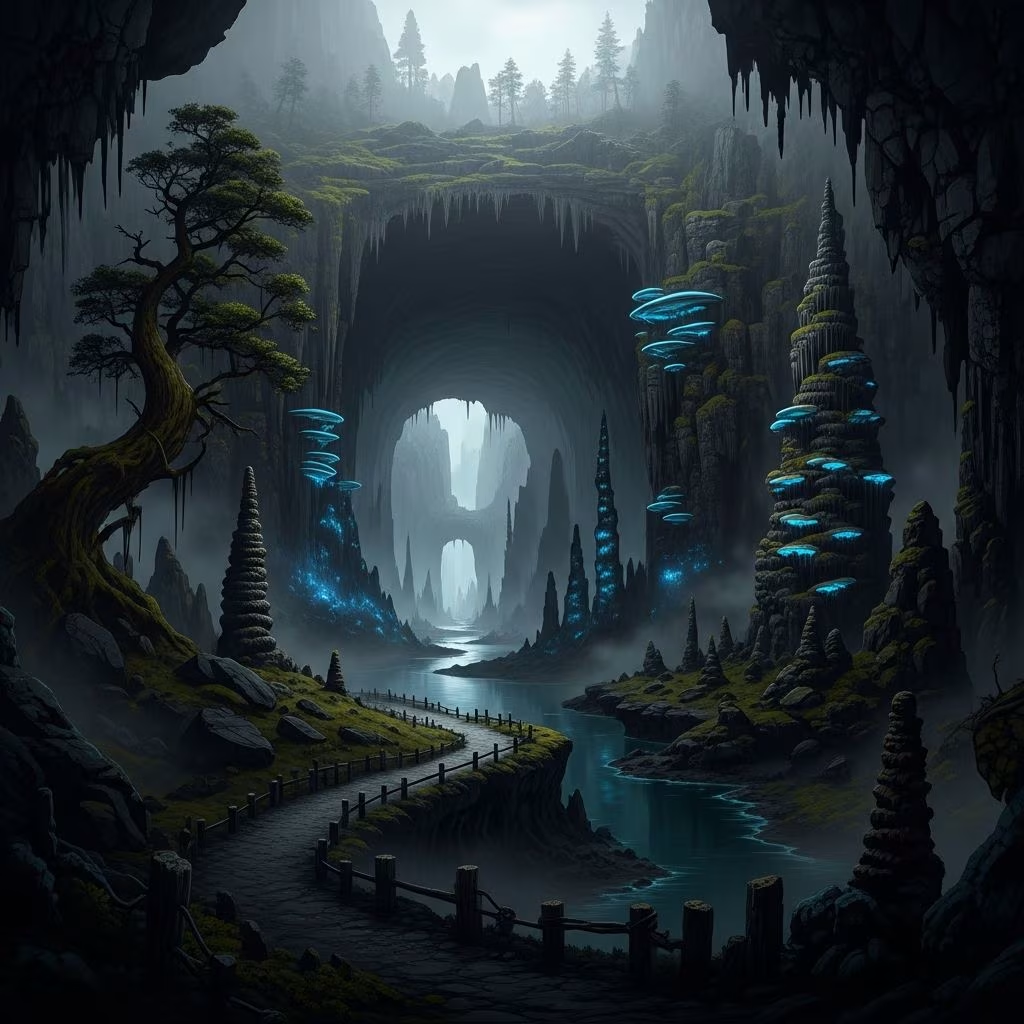
While most travelers focus on towering peaks and sprawling landscapes, an entirely different world exists beneath our feet. Underground destinations offer remarkable glimpses into geological marvels, historical significance, and architectural achievements that rival any surface attraction. From naturally formed caverns to deliberately engineered subterranean metropolises, these hidden realms provide unforgettable experiences that challenge our understanding of both nature and human capability.
Underground attractions captivate visitors for multiple reasons. These spaces often maintain constant temperatures, offer sanctuary from extreme weather, and preserve historical narratives that would otherwise remain inaccessible. Whether carved by water over millennia or excavated by human hands seeking valuable resources, subterranean environments tell stories that surface-level tourism cannot match.
The exploration of underground destinations has gained significant momentum in recent decades as tourism infrastructure has improved and accessibility has expanded. What once required specialized climbing equipment or archaeological expertise can now be experienced through guided tours and developed pathways, making these wonders available to a broader audience.
The Yucatán cenotes represent one of nature’s most spectacular achievements—massive natural sinkholes that pierce through limestone bedrock to reveal underground freshwater reserves. These formations began as underwater caves during the Pleistocene epoch. As sea levels dropped, the cave ceilings collapsed, creating openings to the groundwater below.
Among the most renowned is the sacred cenote at Chichén Itzá, descending 115 feet into the earth. This UNESCO World Heritage Site held profound spiritual significance for the Mayan civilization, serving as a portal between the earthly and divine realms. The Ik Kil cenote, situated within an archaeological park, presents a different experience—a natural swimming hole accessible via curving stone staircase that descends 48 meters into crystalline water surrounded by hanging vegetation.
Visitors can climb down to subterranean pools and experience the unique sensation of bathing in underground freshwater while gazing upward at sky visible through the natural opening above. This combination of adventure, natural beauty, and cultural heritage makes the cenotes essential destinations for travelers seeking meaningful underground encounters.
For those seeking a more extreme underground experience, Thrihnukagigur volcano in Iceland offers descent into an actual magma chamber. This dormant volcanic site allows adventurers to descend approximately 213 meters into Earth’s interior via specialized lift systems. The massive chamber reveals the raw geological processes that shape our planet, displaying multicolored rock formations and geothermal features that showcase volcanic geology in its most dramatic form.
Cappadocia, in central Turkey’s Anatolian plateau, contains no fewer than 36 underground cities carved into soft volcanic rock. Among these, Derinkuyu stands as the deepest and most impressive, descending approximately 85 meters below the surface. Discovered in 1963, this subterranean network once housed possibly more than 20,000 residents and contained all the functional elements of a surface city.
Exploration of Derinkuyu reveals living quarters, stables, churches, storage facilities, refectories, and wineries—a complete underground society developed across eight levels. The city’s creators engineered sophisticated ventilation systems, water management solutions, and defensive capabilities. This architectural achievement represents human ingenuity responding to environmental pressures, whether seeking protection from invaders or refuge from extreme climates.
The preservation of Derinkuyu allows modern visitors to understand how ancient peoples organized complex communities beneath the earth, demonstrating capabilities in urban planning and engineering that rival contemporary surface cities of their era.
Located nine miles outside Kraków, the Wieliczka Salt Mine has operated since the 13th century, producing table salt continuously until 2007. This vast complex extends across 185 miles of galleries with approximately 3,000 chambers spread across nine floors. What began as simple dark caves evolved into an elaborate labyrinth through centuries of extraction.
The mine contains spectacular salt-carved chambers, subterranean lakes of brine, and chambers descending 135 meters beneath the medieval town. Today, the first three floors welcome visitors who traverse tunnels and chambers where miners spent lifetimes extracting this precious mineral. The Wieliczka Salt Mine represents one of Poland’s most visited tourist attractions and holds UNESCO World Heritage status, testament to its cultural and historical significance.
In Transylvania, Romania, the Salina Turda salt mine documents over 2,000 years of human extraction efforts. Situated 120 meters below the surface, this facility’s chambers grew progressively larger as successive generations pursued the valuable mineral with basic hand tools.
Mining ceased in 1932, but the site’s story continued. During World War II, Salina Turda served as a bomb shelter, later functioning as a warehouse for cheese storage. In 1992, the location underwent transformation into an extraordinary amusement park within its subterranean chambers. Today, visitors encounter a Ferris wheel, bowling alley, miniature golf course, paddle boat lake, and halotherapy spa—all carved within the original mining chambers, with illuminated remnants of mining operations creating an otherworldly aesthetic.
The Salt Cathedral of Zipaquirá in Colombia represents perhaps the most ambitious artistic achievement within a subterranean environment. Carved 180 meters below Colombia’s surface from salt, rock, and minerals, this functioning Roman Catholic church accommodates approximately 3,000 worshippers each Sunday. The interior features chambers and tunnels illuminated with neon-blue and purple lighting, creating an ethereal, almost otherworldly spiritual atmosphere.
This cathedral demonstrates how subterranean spaces can serve contemporary religious and cultural purposes while honoring the engineering heritage of mining operations that created them.
Beneath Paris’s romantic streets lies a darker narrative—the Paris Catacombs, established in 1785 when city officials converted abandoned quarry tunnels into an ossuary to address cemetery overcrowding. Today, this subterranean necropolis contains the skeletal remains of nearly 6 million people, making it arguably the world’s largest grave.
The vast shadowy network contrasts starkly with the bustling Parisian surface above. Historical figures including King Charles X and Napoleon III visited these macabre corridors, drawn by fascination with mortality and urban infrastructure history.
London’s Churchill War Rooms operated as a secret underground command center during World War II, providing protected space for military strategic planning during devastating German air campaigns. These subterranean installations demonstrate how underground spaces become critical during historical crises, offering protection and operational capability when surface infrastructure becomes vulnerable.
A limestone cave system north of Kuala Lumpur underwent transformation over a century ago into the Batu Caves, a significant Hindu shrine dedicated to the deity Murugan. The complex features multiple chambers, with sculptures, religious artwork, and reliefs depicting scenes from the Ramayana available for visitor exploration. Dancers perform hourly at the site, and guided tours access Dark Cave, a subterranean passage extending over a mile in length accessible via a 272-stair ascent.
This integration of natural geological formations with spiritual practice demonstrates how underground spaces acquire profound cultural meaning across civilizations.
Naples, Italy contains approximately 2,400 years of history within its underground chambers. Greek quarrying operations excavated massive caverns from bedrock to construct surface city landmarks. Romans subsequently converted these quarries into sophisticated aqueduct networks supplying water to the expanding city. Napoli Sotterranea descends nearly 130 feet below surface level, revealing layers of geological and cultural history.
Discovered by two teenagers in 1907 while pursuing a cricket ball, the Crystal and Fantasy Cave in Hamilton Parish represents one of Bermuda’s most stunning natural wonders. This underground cavern features dramatic stalactites and crystal-clear water, accessible as part of broader Bermuda attraction experiences.
Underground attractions operate year-round, unaffected by surface seasonal variations. However, surface access routes may be impacted by weather. Summer months typically see higher visitor volumes, making advance reservations advisable for popular destinations.
As climate change increases surface temperature extremes and urban populations expand, subterranean environments gain strategic importance beyond tourism. Underground facilities offer climate-controlled spaces, geothermal heating potential, and preserved historical narratives. Progressive development of underground tourism infrastructure suggests these hidden realms will become increasingly accessible while maintaining preservation standards.
The combination of natural wonder, historical significance, and engineering achievement makes underground destinations compelling for diverse traveler interests. Whether motivated by adventure, cultural understanding, geological fascination, or spiritual connection, subterranean exploration provides experiences unavailable anywhere else on Earth.
Underground destinations represent more than mere curiosities—they constitute essential components of global cultural heritage and natural wonder. From ancient engineered cities to transformed industrial sites, from sacred geological formations to historical command centers, subterranean environments showcase both nature’s creative power and humanity’s remarkable achievements.
Exploring these hidden realms challenges conventional notions of travel, revealing that extraordinary experiences exist not only on distant peaks or pristine beaches but also in the depths beneath our daily existence. As access improves and preservation efforts continue, these underground wonders will increasingly feature in travelers’ itineraries, proving that the world below our feet deserves equal recognition with celebrated surface attractions.
