

 Travel Essentials
 Travel Essentials

Explore hidden gems in Germany favored by locals, from serene islands and medieval towns to alpine gorges and forested valleys, perfect for off-the-beaten-path travel.
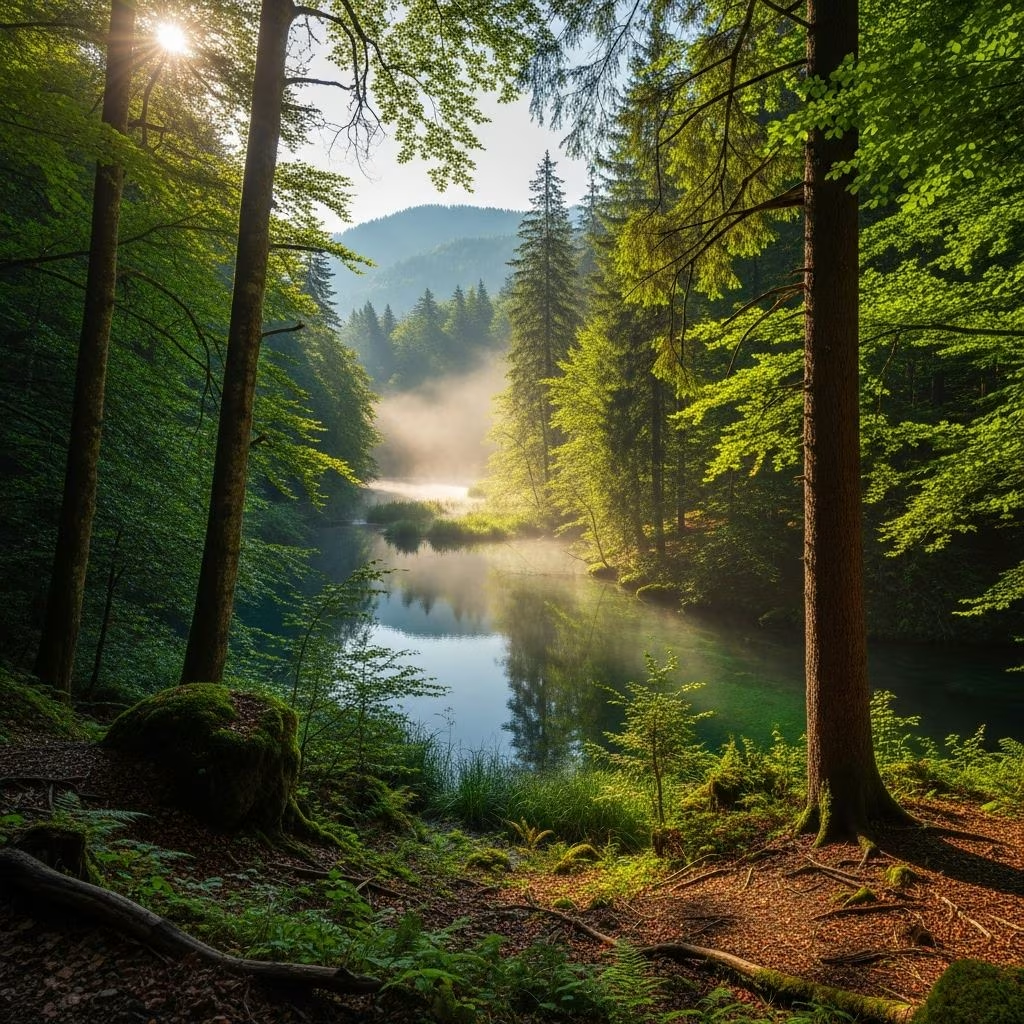 Travel Essentials
Germany captivates millions with its iconic cities like Berlin and Munich, yet locals cherish quieter corners that offer genuine charm without the tourist throngs. These under-the-radar destinations reveal the country’s diverse landscapes, from misty forests and pristine lakes to storybook villages and rugged coastlines. Venturing beyond the usual routes uncovers serene havens perfect for immersive experiences, whether hiking dramatic gorges, paddling through canal-laced woodlands, or wandering car-free islands. This guide highlights 12 standout spots, organized by region, with practical tips for planning your trip.
The north boasts windswept islands and forested waterways that feel worlds away from urban hustle. These areas thrive on natural beauty and cultural quirks, drawing residents for weekend escapes.
Off the Baltic coast near Rügen, Hiddensee stands out as a slender ribbon of land where vehicles are banned, fostering a peaceful rhythm of bike paths and sandy trails. Three quaint villages—Kloster, Vitte, and Neuendorf—dot the landscape, connected by dunes and beaches that have inspired artists for generations. Nobel laureate Gerhart Hauptmann summered here, and his former home now serves as a museum showcasing the island’s literary legacy. Cycle to Dornburger Höhe for sweeping views of the sea and marshes, or beachcomb for amber on uncrowded shores. Summer brings wildflowers and birdwatching, while ferries from Schaprode provide easy access. Locals favor it for its unspoiled vibe, ideal for detoxing from city life.
Just an hour south of Berlin, the Spreewald unfurls as a labyrinth of over 200 canals weaving through ancient forests and meadows. Known as the ‘Spree Forest,’ this UNESCO-recognized biosphere reserve lets visitors glide in traditional flat-bottomed kahnfahrten boats, poled by locals past willow-fringed waterways. Spot otters, kingfishers, and gurgling streams while tasting regional specialties like Spreewald gherkins—crisp pickles flavored with dill and spices. Lübbenau makes a charming base, with waterside inns and cycling paths linking villages. Spring and autumn offer fewer visitors and vibrant foliage, making it a top pick for nature immersion without the Rhine’s crowds.
Straddling Germany and Poland, Usedom lures locals with 25 miles of powdery sands backed by pine groves and imperial-era spas. Heringsdorf’s pier-lined promenade recalls grand 19th-century resorts, where Kaiser Wilhelm II vacationed. Rent a bike to explore dune trails or unwind in thermal baths. Summer peaks with water sports, but shoulder seasons reveal quiet imperial villas and seafood shacks serving fresh herring. It’s a hidden gem for those seeking coastal elegance minus Sylt’s hype.
Heartland Germany hides medieval marvels and Reformation echoes in half-timbered towns that time forgot. These spots blend history, wine, and folklore for authentic stays.
Nestled in the Erft Valley, this North Rhine-Westphalia gem preserves nearly intact 13th-century walls encircling cobblestone alleys and Romanesque spires. Half-timbered facades lean over narrow lanes, evoking a fairy-tale aura. Wander the old town’s 12 gates, climb towers for valley vistas, or picnic by the river. Once a brief outlet hub, it now reclaims quiet authenticity, beloved by locals for hiking in the nearby Eifel National Park. Year-round charm shines, especially during Christmas markets.
Where the Werra and Fulda meet to form the Weser, Hann Münden dazzles with over 500 half-timbered houses, Germany’s highest concentration. Timber frames in black-and-white patterns create a living museum, from Renaissance gables to baroque fountains. The Renaissance town hall boasts an astronomical clock chiming hourly spectacles. Locals flock here for summer festivals and winter markets, with riverside paths perfect for strolls. Nearby forests offer hiking, making it a versatile base.
In Westphalia, Freudenberg’s Alt-Freudenberg rows 100+ uniformly thatched, black-beamed cottages along a single street, resembling a film set. Built by Dutch settlers in the 18th century, this open-air museum village hosts weaving demos and local brews. Hike surrounding hills for panoramas, or visit in autumn for harvest fests. Its preserved uniformity captivates photographers and history fans.
The east preserves Sorbian traditions, Gothic spires, and Reformation sites amid vineyards and rivers, offering depth beyond Berlin’s buzz.
Often called the ‘Yellow City’ for its ochre buildings, Bautzen safeguards Sorbian heritage—a Slavic minority culture with bilingual signs and domed bread ovens. Climb the Reichenturm for views over the Spree, explore the castle’s labyrinthine alleys, and savor Sorbian soup. Year-round appeal includes medieval towers and festivals, drawing locals for authentic immersion.
Naumburg’s UNESCO-listed cathedral boasts intricate Gothic portals depicting medieval life, paired with Saale-Unstrut wine trails. Nearby Halle (Saale) honors composer Handel with his birthplace museum and the towering Red Tower. The Franckesche Stiftungen, a Baroque orphanage-turned-UNESCO site, reveals 18th-century education. These Saxony-Anhalt twins offer culture and vintages without fanfare.
Bavaria and beyond hide gorges, lakes, and Black Forest idylls where locals recharge amid peaks and pines.
A short stroll from Garmisch-Partenkirchen’s 1936 Olympic Stadium, this dramatic 700m gorge carves through cliffs with boardwalks hugging thundering falls. Family-friendly paths with footbridges offer misty views of emerald waters. Popular with German hikers, it’s less hyped internationally. Pair with picnics or nearby gorge treks for a full day.
Rhineland-Palatinate’s Ahr weaves through slate hills blanketed in red Pinot Noir vines, echoing Mosel beauty minus tourists. Paddle the river, hike trails, or tour cellars in half-timbered villages like Ahrweiler, with Roman roots. Summer and autumn harvest buzz with local festivals.
Baden-Württemberg’s Gengenbach enchants with a town hall facade turned giant Advent calendar. Cobblestone streets lead to cuckoo clock makers and trailheads into dense woods. Nearby Triberg plunges with Germany’s highest waterfalls.
Best Times to Visit: Spring (April-June) and autumn (September-October) balance mild weather and fewer crowds. Summer suits beaches and hikes; winter markets light up villages.
| Region | Top Spot | Key Activity | Access |
|---|---|---|---|
| North | Hiddensee | Biking dunes | Ferry from Schaprode |
| Central | Bad Münstereifel | Wall walks | Train from Cologne |
| East | Bautzen | Sorbian tasting | Train from Dresden |
| South | Partnach Gorge | Hiking | Bus from Munich |
Yes, gorges like Partnach and boat trips in Spreewald suit all ages with easy paths and gentle paces.
Germany’s rail pass (Eurail) covers trains; combine with bikes for under €100/week.
Try Spreewald pickles, Ahr reds, Sorbian stews—farm-fresh and affordable at markets.
Hiddensee and Hann Münden offer safe, walkable vibes with cafes for mingling.
Far less than Rhine Valley; weekends see locals, but midweek feels private.
