

 Travel Essentials
 Travel Essentials

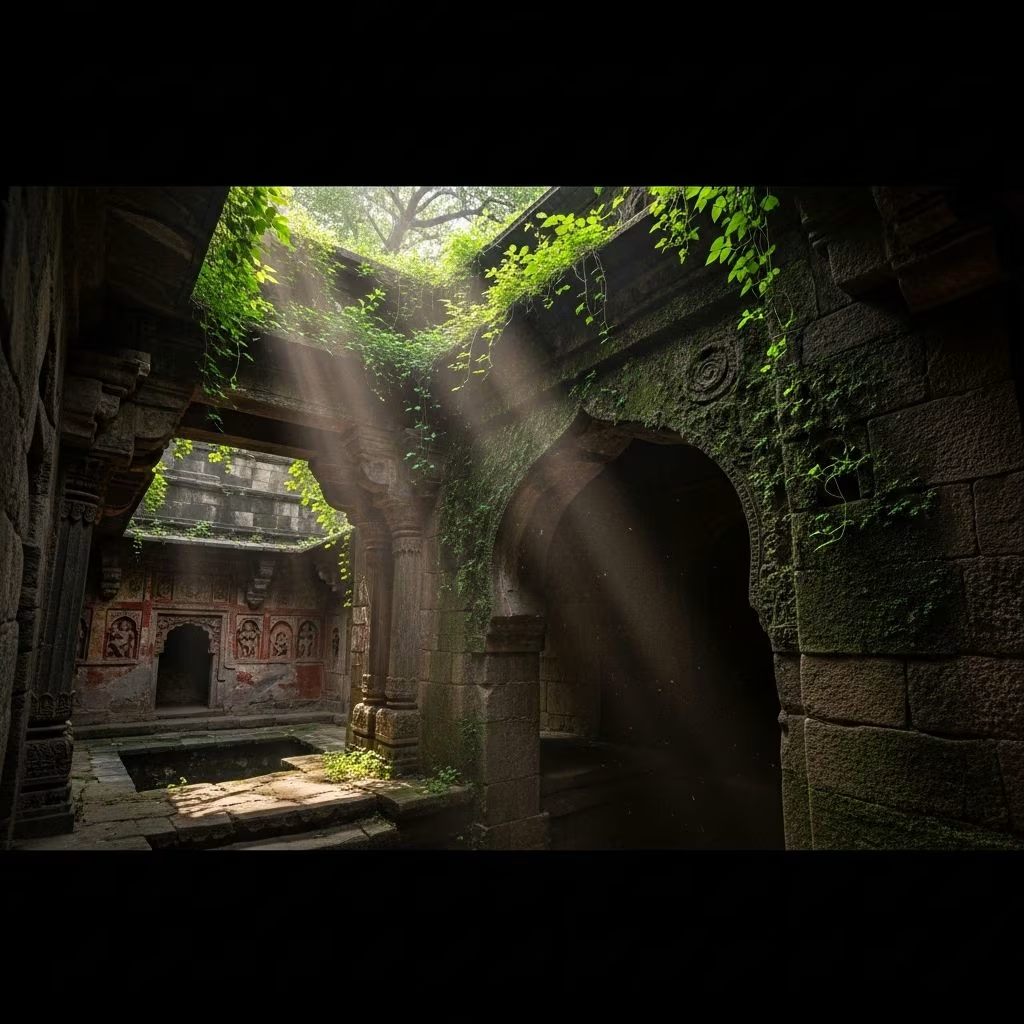
Explore lesser-known historical sites across India, featuring ancient caves, forts, temples, and Indus Valley ruins that reveal the nation's deep cultural heritage.
 Travel Essentials
India’s landscape is dotted with iconic landmarks that draw millions, but beyond these famous spots lie countless hidden treasures preserving the nation’s ancient past. These lesser-known historical sites offer travelers a chance to connect with forgotten eras through stunning architecture, intricate carvings, and mysterious ruins. From rock-cut caves echoing with ancient chants to sprawling forts whispering tales of lost kingdoms, this guide uncovers 12 remarkable destinations that deserve more attention. Each site reveals unique facets of India’s diverse heritage, spanning millennia and regions.
India’s rocky landscapes hide some of the world’s earliest artistic expressions, where prehistoric humans and ancient artisans left indelible marks. These sites stand as testaments to human ingenuity long before grand empires rose.
Nestled in Bihar’s rugged hills, the Barabar Caves represent India’s oldest surviving rock-cut architecture from the Mauryan era under Emperor Ashoka (273-232 BC). These four granite chambers—Karan Chaupar, Lomas Rishi, Sudama, and Vishva Zopari—were gifted to the Ajivika ascetics. What sets them apart is the mirror-like polish on their interiors, creating haunting echo effects that still mesmerize visitors today. The caves’ precise geometry and acoustic properties hint at advanced engineering skills, making them a profound stop for those tracing Buddhism’s roots.
In Madhya Pradesh near Bhopal, the Bhimbetka Rock Shelters form a UNESCO-recognized open-air museum of Paleolithic art. Over 700 shelters adorned with 30,000-year-old paintings depict hunting scenes, dances, and daily life in vivid reds, whites, and greens. Discovered in the 1950s, these shelters bridge the gap between Stone Age nomads and modern India, offering insights into early human migration and culture. Wander the natural galleries for an immersive journey into humanity’s dawn.
Hidden within Sanjay Gandhi National Park, Mumbai’s Kanheri Caves span from the 2nd to 9th centuries CE, evolving from traveler rest stops to elaborate Buddhist viharas under Mauryan and Kushan patronage. Over 100 caves feature intricate sculptures, stupas, and the towering Avalokiteshvara bodhisattva. Despite their proximity to a bustling metropolis, these rain-fed caverns remain serene, ideal for contemplation amid lush forests.
India’s forts and palaces often evoke Mughal splendor, but lesser-visited ones showcase regional dynasties’ grandeur through innovative designs and dramatic histories.
In Assam’s Sivasagar, the ruins of Kareng Ghar, the Ahom kings’ seven-story palace built over 400 years, exemplify Northeast India’s architectural prowess. Constructed from brick, stone, and wood, it once served as the kingdom’s nerve center. Legends speak of secret underground tunnels linking it to Talatal Ghar across the Dikhow River. Nearby, the boat-like Rang Ghar amphitheater hosted royal spectacles, while the Sivadol temple endures as a active Shiva shrine.
Perched in Himachal Pradesh’s Kangra Valley, this fort of the Katoch dynasty dates back over 3,500 years, making it one of Asia’s oldest. Ravaged by earthquakes and invasions, it still houses Katoch palaces, temples with intricate stonework, and panoramic Dhauladhar views. Just 20 km from Dharamshala, it’s accessible yet overlooked, perfect for exploring warrior clans’ legacies.
Dominating a sandstone plateau, Gwalior Fort blends Hindu, Jain, and Islamic influences across its 3-km walls. Home to Tomar and Mughal rulers, highlights include the vibrant frescoes of Man Singh Palace and ancient temples. Its layered history—from Pratihara origins to Scindia residency—makes it a microcosm of India’s turbulent past.
Sacred structures away from mainstream circuits reveal India’s spiritual depth through terracotta artistry, yogini worship, and hydraulic genius.
In Jharkhand’s Maluti village, 72 terracotta temples from the 17th-19th centuries, built by the Baj Basanta kings, depict Ramayana, Mahabharata, and daily life in exquisite detail. Weathered yet evocative, these clustered shrines form a forgotten sacred village, rewarding patient explorers with Bengal-style artistry.
Madhya Pradesh’s Mitawali, an 8th-century complex near Gwalior, honors 64 tantric yoginis in a circular ‘Durga-like’ temple atop a hill. Its wheel-shaped design and fierce deity carvings evoke esoteric rituals, standing as a rare Tantric survival amid Kachchhapaghata ruins.
Gujarat’s Rani Ki Vav stepwell, crafted in the 11th century by Queen Udayamati, plunges 20 meters with over 500 sculptures of deities, apsaras, and Vishnu avatars. Rediscovered in the 1940s and UNESCO-listed, this ‘inverted temple’ ingeniously stored water while serving as a royal retreat and worship site.
Harappan mysteries and maritime Buddhist outposts provide glimpses into India’s cradle civilizations and trade networks.
Haryana’s Rakhigarhi, one of the largest Indus Valley sites, yields skeletons, seals, and urban planning from 5000 BCE. Rajasthan’s Kalibangan reveals plowed fields, fire altars, and chessboard streets near the dried Ghaggar River, challenging narratives of nomadic Harappans.
Andhra Pradesh’s Thotlakonda hillock hosted a 3rd-century BCE to 3rd-century CE Buddhist complex with stupas, viharas, and Indo-Roman trade artifacts overlooking the Bay of Bengal. Gujarat’s Lothal, a 2400 BCE port, featured docks, warehouses, and bead factories, pivotal to Harappan commerce.
Tripura’s Unakoti (‘one less than a million’) boasts 7th-9th century rock reliefs of Shiva, Ganesha, and deities carved into Jampui Hills. Legend curses sculptor Kalu Kumar for unfinished work, leaving colossal faces emerging from jungle— a Shaivite masterpiece rivaling Ellora.
Visiting these sites requires preparation: check for guided tours, as many lack facilities. Best seasons vary—winter for northern deserts, monsoon for verdant Northeast. Respect sites by avoiding litter and flash photography. Combine with nearby attractions for efficient trips, like Kanheri with Mumbai hikes or Barabar with Bodh Gaya.
| Site | State | Era | Key Feature | Travel Tip |
|---|---|---|---|---|
| Barabar Caves | Bihar | 3rd c. BCE | Mirror polish & echoes | Combine with Nalanda |
| Bhimbetka | Madhya Pradesh | Paleolithic | 30,000-yr paintings | Near Bhopal airport |
| Kareng Ghar | Assam | 17th c. | 7-story ruins | Sivasagar base |
| Rani Ki Vav | Gujarat | 11th c. | Stepwell sculptures | Patan day trip |
| Unakoti | Tripura | 7th-9th c. | Giant rock faces | Agartala access |
Most are safe with basic precautions; remote ones like Unakoti benefit from local guides. Women travelers should visit in daylight groups.
Fees range INR 20-50 for Indians, higher for foreigners; some like Bhimbetka charge INR 25. Check ASI websites for updates.
October-March avoids extremes; Northeast shines post-monsoon.
Limited options; base in nearby cities like Sivasagar or Bhopal with homestays emerging.
Yes, via ASI or local operators; essential for context at Harappan sites.
