

 Travel Essentials
 Travel Essentials

Explore Ireland's stunning cliffs, ancient castles, vibrant pubs, and rich traditions through 12 compelling reasons that highlight why this Emerald Isle remains a top travel choice worldwide.
 Travel Essentials
Ireland, often called the Emerald Isle for its lush greenery, draws millions of visitors each year with its blend of dramatic natural beauty, deep-rooted history, and infectious spirit. Whether you’re seeking rugged coastlines, ancient stone circles, or the hum of traditional music in a cozy pub, this small island nation packs an extraordinary punch. In this guide, we delve into 12 standout reasons that make Ireland a must-visit, offering insights for first-timers and seasoned explorers alike.
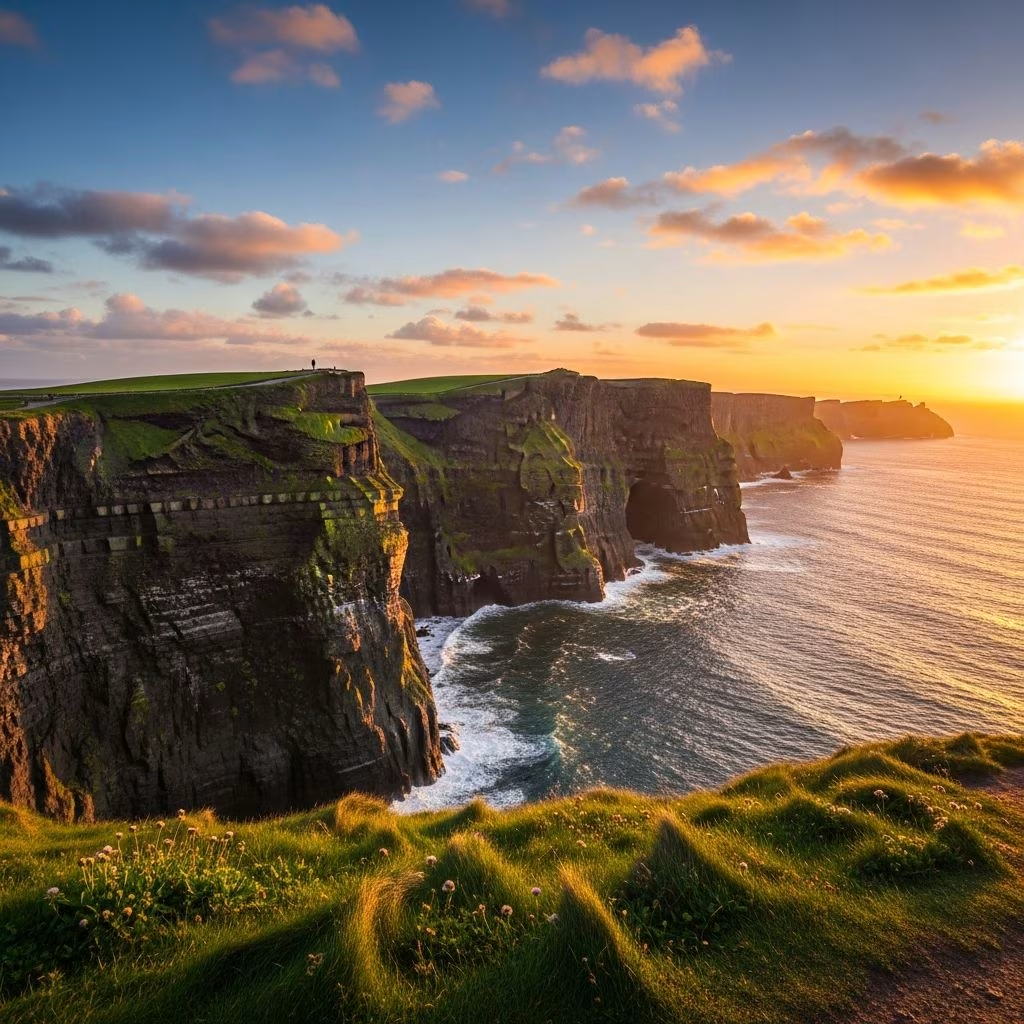
The Irish coastline stretches over 5,000 kilometers, featuring some of Europe’s most striking vistas. From the towering Cliffs of Moher in County Clare, rising 214 meters above the Atlantic, to the windswept beaches of Sligo, every stretch offers unique drama. Hike along the Wild Atlantic Way, a 2,500-kilometer route that showcases sea stacks, hidden coves, and crashing waves. Even on misty days, the interplay of ocean and sky creates a moody, photogenic paradise ideal for walkers and photographers.
Beaches here aren’t for sunbathing but for soul-stirring strolls. Places like Keem Bay on Achill Island boast horseshoe sands framed by mountains, while the Giant’s Causeway in Northern Ireland presents hexagonal basalt columns formed 60 million years ago—a UNESCO World Heritage site that feels otherworldly.
Ireland’s interior is a tapestry of emerald hills, stone walls, and wild meadows that inspired poets like Yeats. Drive through the Ring of Kerry or the Dingle Peninsula to witness sheep-dotted fields meeting the sky. These landscapes remain vibrant year-round, thanks to mild weather influenced by the Gulf Stream, making spring wildflowers and autumn golds equally enchanting.
Nature lovers revel in peat bogs, ancient forests like Killarney National Park—home to red deer and ancient oaks—and limestone pavements in the Burren, a karst wonderland blooming with arctic and Mediterranean plants side by side.
History permeates Ireland, with over 30,000 archaeological sites. The Rock of Cashel in Tipperary, a prehistoric hilltop crowned by a medieval fortress, offers chapels, round towers, and Celtic crosses dating back over 1,000 years. Newgrange in the Boyne Valley, older than the pyramids, is a passage tomb where the winter solstice sun illuminates its chamber—a testament to Neolithic engineering.
These sites aren’t museums; they’re woven into the living landscape, inviting exploration on foot or by bike.
No trip is complete without an Irish session—impromptu gatherings of fiddles, bodhráns, and voices in pubs. Dublin’s Temple Bar or Doolin’s traditional spots pulse with live music nightly. Pubs serve as community hearts, offering Guinness, storytelling, and craic (fun). Sample poitín, Ireland’s fiery moonshine, or join a céilí dance.
Year-round festivals like Fleadh Cheoil amplify this, drawing global musicians to towns like Drogheda.
Ireland birthed whiskey, and distilleries like Jameson in Midleton or Teeling in Dublin offer immersive tours. Learn pot still distillation, taste triple-distilled smoothness, and explore the Irish Whiskey Trail in counties Cork and Waterford. Bushmills, the oldest licensed distillery (1608), pairs history with tastings overlooking the Causeway.
| Distillery | Location | Highlight |
|---|---|---|
| Jameson | Midleton, Cork | World’s largest pot still |
| Bushmills | Antrim, NI | Oldest licensed distillery |
| Teeling | Dublin | Urban craft revival |
Modern Irish cuisine shines with seafood from Galway Bay, organic lamb from Connemara, and artisan cheeses. Michelin-starred spots like Chapter One in Dublin contrast with food markets in Cork. Try soda bread, oysters at Moran’s in Kilkee, or seaweed foraging tours. The slow food movement thrives here, rooted in family farms.
Influenced by Joyce, Wilde, and Heaney, Ireland hosts the Dublin Literary Award and Bloomsday celebrations. Wander Trinity College to see the Book of Kells, an illuminated manuscript from 800 AD. Poetry readings in cozy bookshops keep the tradition alive.
Horseback ride on Bunduff Beach, cycle the Great Western Greenway, or surf in Bundoran. National parks like Wicklow Mountains offer trails from easy lakeside paths to challenging summits. Golfers tackle links courses like Royal County Down, ranked world’s best.
Irish hospitality is legendary—strangers become friends over tea. Cities like Dublin and Galway are walkable, with efficient buses and DART trains. Driving reveals hidden gems, but remember left-side roads and narrow lanes. Solo travelers, especially women, feel safe.
Spring lambs and wild garlic, summer festivals, autumn colors, winter coziness by peat fires—Ireland suits every season. Fewer crowds in shoulder months mean better deals and authentic vibes.
Rent a compact automatic car for the Ring of Kerry (179 km loop) or Causeway Coastal Route. Stop at sheep bridges, fairy forts, and viewpoints. Pre-book ferries for island hops like Aran Islands.
From Celtic crosses to fairy trees (protected by law), Ireland’s folklore enchants. Visit Brú na Bóinne for solstice rituals or Skellig Michael, a monastic island from Star Wars.
Best Time: May-September for warmth; avoid peak July-August crowds.
Getting Around: Fly into Dublin or Shannon; rent cars via international firms.
Budget: €100-200/day including lodging, food, attractions.
Packing: Layers, waterproofs, sturdy shoes—weather changes fast.
Moderate; hostels from €30, B&Bs €80-120, pubs affordable. Book ahead for savings.
Yes for countryside; cities are walkable. Opt for automatics if manual-unfamiliar.
Mild (5-20°C), rainy—pack for all conditions.
Yes, seamless; use pound sterling there.
Absolutely—castles, beaches, farms engage all ages.
