

 Travel Essentials
 Travel Essentials

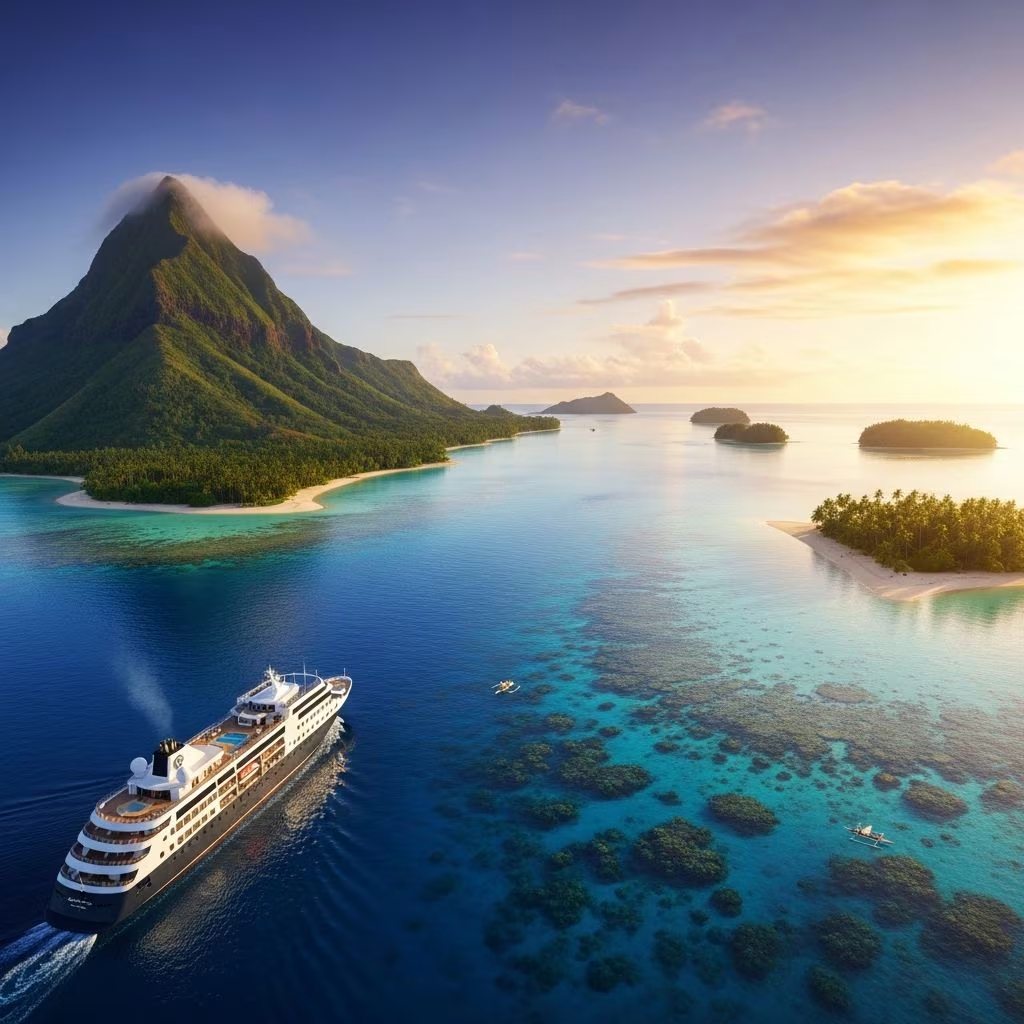
A comprehensive 14-night itinerary through Tasmania and New Zealand, featuring iconic destinations, natural wonders, and cultural experiences across the South Pacific.
 Travel Essentials
The South Pacific region offers some of the world’s most remarkable travel experiences, combining dramatic natural landscapes with rich cultural heritage. A 14-night journey through Tasmania and New Zealand presents an ideal opportunity to witness the diverse beauty of this corner of the world. This route encompasses three captivating islands, each offering distinct attractions ranging from colonial history to fjord scenery and urban sophistication.
This comprehensive itinerary spans across 14 nights and encompasses travel through three major island territories. The journey begins in Australia’s largest city before crossing the Bass Strait to Tasmania, then traversing the Tasman Sea to explore both the South Island and North Island of New Zealand. The routing maximizes exposure to diverse ecosystems, architectural styles, and cultural experiences.
Travelers will encounter everything from Victorian-era buildings to geothermal wonders, pristine fjords to art deco streetscapes. The combination of these destinations creates a well-rounded Pacific experience that appeals to history enthusiasts, nature lovers, and urban explorers alike.
The journey commences in Sydney, Australia’s most iconic destination. This metropolitan hub serves as the entry point for travelers and offers substantial attractions worthy of initial exploration. Sydney’s harbor is dominated by two architectural landmarks that have become synonymous with the city itself—the distinctive shell-shaped opera venue and the engineering marvel of the harbor crossing.
Beyond these famous icons, Sydney provides access to world-class beaches that define the Australian coastal lifestyle. The city’s neighborhoods offer diverse dining, shopping, and entertainment options. Visitors can explore waterfront promenades, visit cultural institutions, or simply experience the laid-back atmosphere that makes this destination consistently rank among global travel favorites.
Sydney serves as an optimal departure point for longer voyages into the South Pacific, with modern port facilities and excellent transportation connections.
Following departure from Sydney, the journey crosses the Bass Strait to reach Tasmania, Australia’s island state located off the southern coast. This crossing represents a significant geographical and cultural shift, as Tasmania possesses a distinctive character shaped by its unique history and geography.
Tasmania’s founding and development as a penal colony provides substantial historical interest for visitors inclined toward cultural tourism. The island’s colonial past has left architectural and archaeological evidence that contributes to its appeal as a heritage destination. Understanding this history adds depth to explorations of coastal settlements and heritage sites throughout the island.
The convict history has been preserved in multiple locations, offering visitors opportunities to learn about this transformative period in Australian history. This aspect of Tasmania’s past intersects with natural heritage, creating unique tourism experiences that combine education with outdoor exploration.
Tasmania’s fauna presents exceptional opportunities for wildlife observation and naturalist interests. The island hosts species found nowhere else on Earth, making it a significant destination for ecotourism. The combination of pristine wilderness areas and accessible viewing opportunities appeals to travelers with varying levels of outdoor experience.
The island’s geographic isolation has fostered unique evolutionary development, resulting in distinctive ecosystems. Visitors can encounter wildlife in both protected park settings and more remote wilderness areas, depending on their interests and physical capabilities.
The voyage across the Tasman Sea separates Australia from New Zealand, representing the longest segment of open ocean travel during this journey. This crossing provides time for rest and reflection while traveling between two distinct nations with separate political systems, cultures, and landscapes.
The Tasman Sea has historically been one of the world’s most challenging maritime passages, though modern vessels navigate it routinely. The crossing itself offers opportunity to experience the vastness of the South Pacific Ocean and the maritime heritage of this region.
New Zealand’s South Island encompasses dramatic mountainous terrain, including some of the Southern Hemisphere’s most impressive fjord systems. The journey through South Island destinations reveals the geological complexity and natural beauty that characterizes this region.
Milford Sound functions as the primary entry point to Fiordland National Park, one of New Zealand’s most visited natural attractions. This fjord system represents one of the world’s most spectacular coastal formations, with steep cliffs rising directly from deep water. The combination of mountain peaks, waterfalls, and marine life creates an environment unlike most other temperate regions.
Visitors to Milford Sound experience multiple ecological zones within a concentrated area. The fjord’s accessibility through various tour options accommodates different physical abilities and time constraints. Photography opportunities abound throughout the day as lighting conditions change dramatically.
Dunedin presents a striking contrast to natural attractions through its impressive collection of Victorian-era buildings. This southern city developed during New Zealand’s gold rush period, attracting architects and settlers who constructed buildings reflecting contemporary European styles. The streetscapes preserve this architectural heritage, making Dunedin valuable for heritage tourism.
Beyond architecture, Dunedin serves as a cultural and educational hub, hosting museums, galleries, and research institutions. The city’s compact size allows visitors to explore major attractions on foot while experiencing local neighborhoods and commercial districts.
Akaroa occupies significance in contemporary popular culture through its use as a filming location for major motion pictures. The landscape surrounding this small town inspired filmmakers seeking dramatic New Zealand scenery, creating recognition among fans of fantasy cinema.
Beyond cinematic associations, Akaroa possesses historical importance as one of the few French colonial settlements in New Zealand. This heritage influences the town’s character, cuisine, and cultural atmosphere. The harbor setting provides scenic coastal experiences and marine wildlife opportunities.
Picton functions as the primary terminus for connections between South Island and North Island. This port town serves practical transportation functions while offering its own coastal charm and access to nearby natural attractions. The town’s location makes it strategically important for itineraries incorporating both islands.
The North Island presents entirely different characteristics from the South Island, with significant geothermal activity, agricultural lands, and urban development. The journey through North Island destinations reveals New Zealand’s geographic and cultural diversity.
Napier has gained recognition as one of the world’s most intact art deco cities, following reconstruction after a devastating 1931 earthquake. The architectural rebuilding created a cohesive urban environment that showcases 1930s design principles. Visitors can explore commercial districts, residential areas, and waterfront developments all reflecting art deco aesthetics.
This distinctive architectural character attracts design enthusiasts, photographers, and history buffs. The city’s compact downtown allows visitors to appreciate the urban design on foot. Annual events celebrate the art deco heritage, drawing international visitors interested in architectural history.
Tauranga’s primary value for many travelers lies in its proximity to geothermal attractions in the Rotorua region. This central North Island area features active geysers, hot springs, and thermal pools that showcase the region’s unique geology. The geothermal features range from commercialized attractions to more remote natural pools.
The thermal springs offer recreational opportunities including bathing in naturally heated waters and experiencing Maori cultural interpretations of geothermal landscapes. The contrast between temperate coastal areas and geothermal inland regions demonstrates New Zealand’s geological diversity.
Auckland, referred to as the City of Sails due to its maritime culture and prominence of sailing activities, concludes the itinerary with urban sophistication and cosmopolitan experiences. As New Zealand’s largest metropolitan area, Auckland offers dining, shopping, cultural institutions, and entertainment options.
The city’s waterfront development creates accessible public spaces combining recreation with urban amenities. Multiple harbors and islands accessible from the city provide escape options for visitors preferring natural settings. The cultural diversity of Auckland’s population influences its food scene, festivals, and entertainment options.
| Day | Location | Primary Activities |
|---|---|---|
| 1 | Sydney | Arrival, harbor exploration, iconic landmark visits |
| 2 | At Sea | Bass Strait crossing, ocean transit |
| 3 | Hobart | Tasmania arrival, harbor exploration, cultural sites |
| 4 | Tasmania Exploration | Island excursions, heritage sites, natural features |
| 5-6 | At Sea | Tasman Sea crossing |
| 7 | Milford Sound | Fjord exploration, Fiordland National Park |
| 8 | Dunedin | Victorian architecture, cultural institutions |
| 9 | Akaroa | Coastal scenery, cultural heritage, marine wildlife |
| 10 | Picton | Interisland transfer point, coastal exploration |
| 11 | Napier | Art deco architecture, heritage exploration |
| 12 | Tauranga | Geothermal experience preparation |
| 13 | Auckland | Urban exploration, cultural activities |
| 14-15 | Auckland/Departure | Final exploration, departure preparation |
This itinerary incorporates multiple transportation modes including international flights, cruise travel, and local transportation. Understanding each transportation segment helps travelers prepare appropriately and maximize comfort. Cruise-based itineraries provide accommodation consistency while island-to-island movements are handled by maritime vessels or inter-island flights depending on the specific itinerary variation.
The Southern Hemisphere experiences opposite seasons from the Northern Hemisphere. Summer months (December-February) offer warmest temperatures and longest daylight hours, while winter (June-August) brings cooler temperatures and potential weather challenges. Seasonal variations affect both comfort and specific activity availability, influencing optimal travel timing for different interests.
Travelers should prepare for variable weather conditions encountered across multiple climate zones. Layered clothing accommodates temperature variations from coastal areas to inland regions. Appropriate footwear for both urban exploration and natural area access ensures comfort throughout the journey. Waterproof gear protects against frequent precipitation in some regions.
Summer months (December-February) offer optimal weather, while shoulder seasons (October-November and March-April) provide pleasant conditions with fewer crowds. Winter months feature acceptable weather for most activities but reduced daylight hours and some weather variability.
Yes, this 14-night outline provides a framework adaptable to different time periods and specific interests. Some travelers extend stays in particular locations while shortening time in others. The itinerary can be adjusted to emphasize outdoor activities, cultural experiences, or specific attractions based on preferences.
This itinerary accommodates various fitness levels, as attractions range from easily accessible urban areas to challenging wilderness hikes. Most primary destinations are accessible to individuals with limited mobility, though specific activities may require greater capability. Travelers can select participation levels based on their abilities.
English is the primary language in Australia and New Zealand, making communication straightforward for English-speaking travelers. Indigenous languages including various Maori dialects are spoken in New Zealand and hold cultural significance, though English remains the practical travel language.
Visa requirements depend on travelers’ citizenship and apply separately for Australia and New Zealand. Most developed nations’ citizens require visas, though specific requirements vary. Electronic travel authorities or visa-free arrangements exist for citizens of certain countries. Individual travelers should verify requirements well in advance.
