

 Travel Essentials
 Travel Essentials

Discover how to experience Manchester's vibrant culture, historic landmarks, and world-class museums completely free. A complete guide to zero-cost activities.
 Travel Essentials
Manchester stands out as one of the United Kingdom’s most accessible destinations for travelers operating on limited budgets. The city offers an impressive array of cultural, historical, and recreational experiences that require no entrance fees whatsoever. Whether you’re interested in art, architecture, natural spaces, or industrial heritage, Manchester provides pathways to authentic exploration that cost nothing to enjoy.
The city’s commitment to free public access reflects a broader cultural initiative in the UK. Unlike many European cities where museum entries carry substantial costs, Manchester’s major institutions operate under a generous public access model. This approach democratizes culture and ensures that economic circumstances don’t determine whether visitors can engage with world-class collections and historic sites. The museums and galleries maintain their operations through government funding, charitable contributions, and voluntary donations from visitors.
This accessibility philosophy extends beyond traditional museums to encompass public spaces, historic buildings, and community venues. Manchester’s approach recognizes that cultural engagement strengthens communities and enriches the visitor experience, creating a city where discovery happens on equal terms for everyone.
Manchester’s museum landscape represents one of the city’s greatest assets for budget-conscious visitors. The Museum of Science and Industry occupies a sprawling complex within restored Victorian buildings and provides extensive exhibitions covering textile production, steam power, computing, and industrial innovation. Visitors can explore multiple galleries without any admission requirement, making it possible to spend several hours understanding how Manchester shaped the modern industrial world.
The Manchester Museum similarly welcomes visitors without charge and houses extensive collections spanning natural history, world cultures, and decorative arts. Travelers can view Egyptian mummies, geological specimens, textile collections, and ethnographic objects from across the globe. The People’s History Museum focuses specifically on social movements and political activism within Britain, offering insights into labor history, civil rights campaigns, and democratic struggles.
For art enthusiasts, The Whitworth gallery provides access to significant collections of paintings, drawings, prints, and contemporary works without requiring payment. The National Football Museum celebrates the sport’s history and cultural significance, allowing visitors to engage with Manchester’s deep connection to football heritage at no cost.
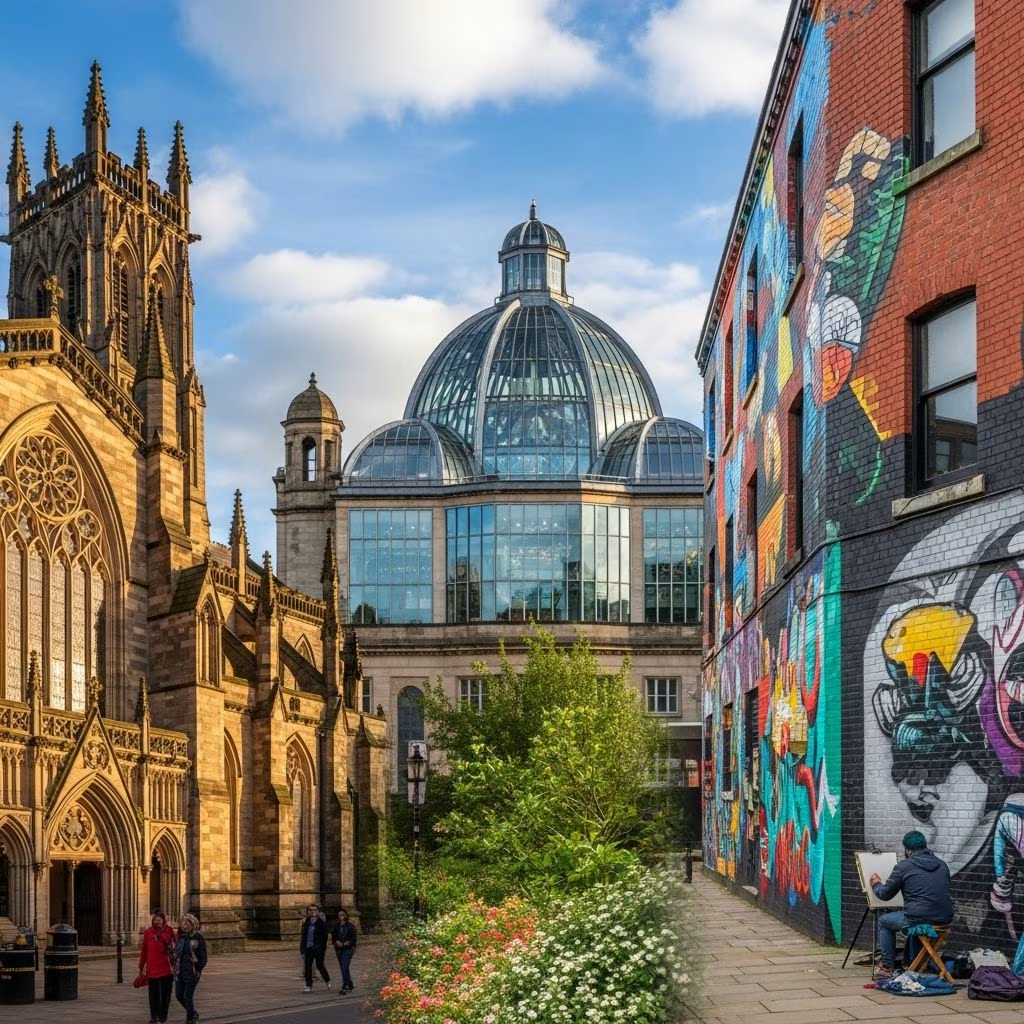
Beyond museum walls, Manchester’s physical fabric tells compelling historical narratives through free exploration. Manchester Cathedral, constructed beginning in 1215, represents one of the finest examples of medieval ecclesiastical architecture in Northern England. The building features exceptional woodwork and hosts regular free classical music concerts accompanied by refreshments. Visitors can examine the Hanging Ditch Bridge within the cathedral grounds, the oldest existing structure in Manchester dating to the 14th century.
The John Rylands Library stands as perhaps the most architecturally stunning venue on the free-access circuit. This Victorian Gothic Revival masterpiece contains rare books and manuscripts within breathtakingly beautiful interior spaces. The reading rooms, with their soaring ceilings and ornate decoration, provide an unforgettable aesthetic experience regardless of whether visitors engage with the collections.
Castlefield represents Manchester’s most historically layered neighborhood, containing Roman ruins dating back nearly two thousand years alongside Georgian and Victorian industrial structures. The Castlefield Viaduct, a massive Victorian engineering achievement, looms over this district and can be explored and photographed without restriction.
Manchester’s parks provide respite from urban environments while offering recreational and naturalistic experiences. Heaton Park encompasses 250 acres and features ornamental gardens, walking trails, and woodland areas. A substantial lake within the park allows for observation of waterfowl and aquatic life. While certain activities like boat rentals involve fees, simple walking and outdoor recreation remain completely free.
The Rochdale Canal offers a 3.5-kilometer walking route through the city, following waterside paths that reveal industrial heritage alongside contemporary urban renewal. This structured walk provides exercise, photography opportunities, and changing perspectives on Manchester’s landscape.
RHS Garden Bridgewater presents horticultural displays and cultivated garden spaces open without admission charges. Visitors can explore themed garden areas, observe plantings designed for different seasons, and enjoy peaceful outdoor settings.
Chinatown represents one of Manchester’s most distinctive districts, featuring vibrant street signage, historic buildings, and cultural markers that reflect the community’s heritage. Walking through this neighborhood costs nothing and provides visual interest, architectural variety, and cultural immersion.
Manchester’s city center contains numerous public squares, statuary, and commemorative installations. Sculptures honoring Alan Turing and other notable figures populate public spaces, creating outdoor galleries accessible to all. Street-level exploration reveals murals, architectural details, and urban design elements that document the city’s evolution.
The Lowry arts complex in Salford Quays contains 2,000 square meters of gallery space dedicated to 20th-century painter LS Lowry’s extensive output. The building itself, a photogenic contemporary structure, merits visits for its architectural form and waterside setting. Many temporary exhibitions and cultural events scheduled at the associated theaters occur without charge, though advance checking of schedules is advisable.
| Attraction | Type | Hours | Best For |
|---|---|---|---|
| Manchester Museum | Natural History & Culture | Daily 10am-5pm | Egyptian artifacts, textiles |
| Science and Industry Museum | Industrial Heritage | Daily 10am-5pm | Technology, engineering history |
| Manchester Cathedral | Historic Architecture | Mon-Sat 9:30am-4pm, Sun noon-4pm | Medieval woodwork, concerts |
| John Rylands Library | Victorian Architecture | Mon-Fri 10am-5pm, Sat-Sun 11am-4pm | Gothic revival interiors |
| Heaton Park | Outdoor Recreation | Dawn to dusk year-round | Walking, picnicking, lake views |
A strategic approach to visiting Manchester without spending on attractions yields a rich, comprehensive experience. Beginning with Castlefield’s Roman ruins and industrial landscape provides historical context for understanding the city. From there, the Museum of Science and Industry offers several hours of engagement. Afternoon visits to either the Manchester Museum or John Rylands Library provide artistic and intellectual substance.
Combining indoor museum experiences with outdoor exploration ensures physical variety and prevents fatigue from prolonged gallery time. The canal walk connecting various neighborhoods provides natural transitions between major attractions while allowing observation of Manchester’s ongoing urban transformation.
Public transportation options, including certain free or discounted bus routes, may reduce overall costs beyond just attraction fees. Planning visits around free events and concerts at venues like Manchester Cathedral multiplies available experiences.
Most free museums accept walk-in visitors, though certain special exhibitions or busy periods may recommend advance reservation. Checking individual venue websites confirms current policies and helps plan timing around crowd levels.
Most museums and galleries permit personal photography without flash, though certain collections or special exhibitions may restrict image capture. Always verify current policies upon arrival or through venue websites.
Spring and summer months offer optimal conditions for park visits and canal walks, though autumn provides dramatic foliage and spring displays blooming arrangements. Parks remain accessible year-round, adapting to seasonal weather patterns.
Manchester’s free attractions include substantial family-friendly options, with parks offering playgrounds, museums featuring interactive exhibits, and outdoor spaces accommodating strollers and young explorers.
While admission to major attractions costs nothing, visitors still require resources for food, accommodation, and transportation. Strategically grouping nearby attractions minimizes travel costs. Many neighborhoods contain multiple free sites within walking distance, reducing fare expenses. Bringing packed food and picnicking in parks substantially cuts meal expenses compared to restaurant dining.
Utilizing public libraries for information and rest reduces pressure on other budget categories. Some venues offer voluntary donation systems rather than mandatory charges, allowing visitors to contribute according to their means and preferences.
Seeking free events and performances scheduled at various venues throughout the year provides additional cultural engagement beyond permanent collections. Local cultural organizations frequently announce temporary exhibitions, concerts, and presentations that cost nothing to attend.
Manchester’s commitment to free cultural access reflects democratic principles and inclusive social values. By removing financial barriers to cultural engagement, the city enables residents and visitors from all economic backgrounds to participate in artistic, historical, and intellectual experiences that enrich human understanding.
The breadth and quality of Manchester’s free offerings challenge assumptions that experiencing world-class culture requires substantial expenditure. Exploring a major UK city completely without spending on attractions demonstrates how public institutions and civic spaces create value for entire communities, not merely privileged subsets.
Whether visiting for a day or extended period, Manchester proves that meaningful, memorable experiences emerge from thoughtful exploration of freely accessible spaces, historic architecture, and public collections.
