

 Travel Essentials
 Travel Essentials

Discover remote and peaceful destinations across the United States that offer authentic experiences away from crowded tourist hotspots and commercialized attractions.
 Travel Essentials
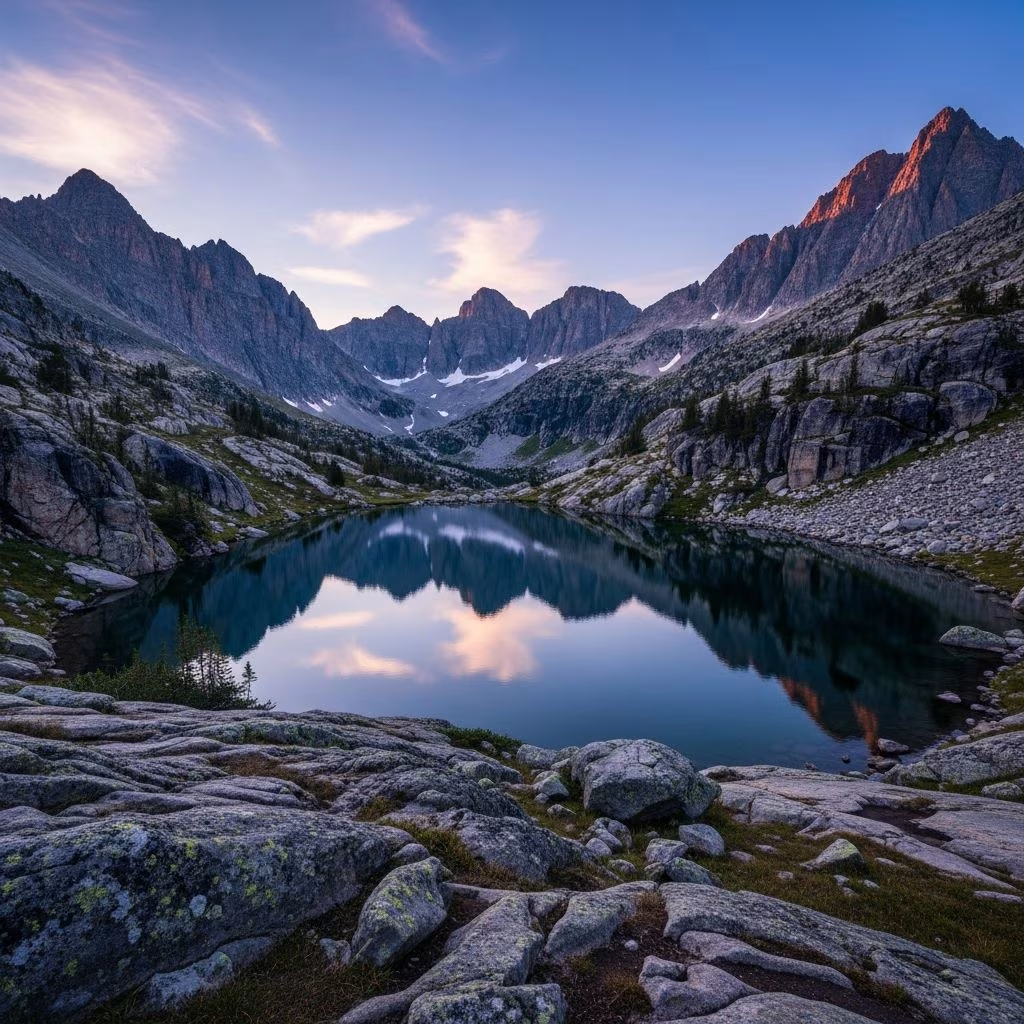
The United States offers an abundance of stunning natural landscapes and charming communities, yet many travelers find themselves navigating congested pathways and overpacked visitor centers at the nation’s most famous destinations. For those seeking genuine connection with the American landscape and a respite from commercial tourism infrastructure, numerous alternatives exist throughout the country that provide equally compelling experiences without the overwhelming presence of crowds. These lesser-known locations preserve the authentic character of their regions while offering visitors the opportunity to engage meaningfully with the environment and local culture.
The phenomenon of overtourism has transformed many iconic American locations, where parking difficulties, trail congestion, and limited availability of accommodations have become significant challenges. Visitors increasingly recognize that exploring alternative destinations can yield richer experiences and more authentic encounters with natural and cultural features. The solution lies not in abandoning travel to these regions, but rather in redirecting attention toward the many remarkable places that remain relatively undiscovered by mainstream tourism.
These quieter alternatives frequently offer superior infrastructure for outdoor recreation, fewer environmental pressures from concentrated visitor traffic, and opportunities to support local economies in communities that genuinely welcome tourism. Furthermore, traveling during shoulder seasons or to less-publicized locations often results in more affordable accommodations and better value across hospitality services.
The western United States contains exceptional geological formations and scenic vistas that rival the popularity of Zion and Grand Canyon. Capitol Reef National Park in Utah showcases towering red cliffs, slot canyons, and ancient petroglyphs within an environment far less congested than neighboring parks. The park’s diverse terrain accommodates various skill levels, from gentle valley walks to challenging backcountry routes through colored badlands and narrow waterways.
Montana’s eastern badlands present an entirely different character from the mountainous western portions of the state, offering dramatic erosional features, abundant wildlife viewing opportunities, and vast stretches of wilderness where solitude becomes the defining characteristic. Visitors to this region can experience authentic ranch culture, witness paleontological significance through exposed geological layers, and access numerous trails without encountering substantial visitor congestion.
Alaska represents perhaps the ultimate destination for those seeking genuine isolation within the United States. Coldfoot, positioned in Alaska’s interior far north of the Arctic Circle, provides an extreme wilderness experience where settlements remain tiny and the landscape dominates human presence entirely. This remote community serves as a base for experiencing pristine Arctic environments, observing wildlife in natural habitats, and understanding how isolation shapes human communities.
The town’s minimal infrastructure and extreme weather patterns create an authentically challenging travel experience that appeals to adventurous visitors prioritizing solitude and natural immersion over comfort and convenience. The surrounding wilderness encompasses thousands of square miles with minimal human development, offering unparalleled opportunities for backcountry exploration and wildlife observation.
The Pacific Northwest contains numerous destinations that capture the region’s characteristic blend of mountain scenery, temperate rainforest, and waterfront beauty without drawing massive visitor populations. Bellingham, Washington, positioned approximately thirty minutes from the Canadian border, exemplifies this balance, offering a compact downtown with excellent dining and cultural institutions, surrounded by outdoor recreation opportunities including hiking, kayaking, and mountain biking.
The city’s location within easy reach of North Cascades National Park provides additional advantages for visitors seeking varied experiences. North Cascades itself remains among the least visited major national parks, despite offering dramatic alpine scenery, numerous waterfalls, and backcountry routes that rival more famous parks. The northern sections of the park provide particularly peaceful environments, while communities like Stehekin serve as gateways to extensive wilderness areas.
| Destination | Location | Primary Feature | Best Season | Crowd Level |
|---|---|---|---|---|
| Capitol Reef National Park | Utah | Red rock formations, canyons | Spring/Fall | Minimal |
| North Cascades National Park | Washington | Alpine scenery, waterfalls | Summer | Low |
| Voyageurs National Park | Minnesota | Lakes, water recreation | Summer | Minimal |
| Big Bend National Park | Texas | Desert, mountains, rivers | Fall/Winter | Minimal |
| Mammoth Lakes | California | Alpine resort, hiking | Fall | Low |
Coastal destinations offer distinctive appeal for visitors seeking seaside experiences without oceanfront congestion. Chincoteague Island, Virginia, located approximately two hours north of Virginia Beach, provides a more relaxed and economical beach alternative compared to heavily developed vacation centers. The island maintains authentic maritime character through its fishing culture, wild pony herds, and preserved natural habitats.
Channel Islands National Park, situated off the Southern California coast between Santa Barbara and Los Angeles, ranks among California’s least-visited national parks despite remarkable ecological significance. The archipelago requires boat access, which naturally limits visitor numbers while providing an authentic island exploration experience. The islands harbor unique plant and animal species found nowhere else, creating exceptional opportunities for naturalists and photographers.
The American West contains numerous charming mountain communities that have preserved historic character while offering contemporary amenities. Crested Butte, Colorado, originated as a mining community and retains downtown architecture reflecting that heritage alongside modern outdoor recreation infrastructure. The town serves as a hub for mountain biking in summer months and skiing during winter, yet maintains a more relaxed atmosphere than well-known resort destinations like Jackson Hole.
Mammoth Lakes, positioned in California’s Eastern Sierra region, functions as a ski resort town that remains less congested than Lake Tahoe and comparable mountain destinations. The fall season proves particularly attractive when alpine wildflowers have completed blooming, leaving golden larches and aspen groves to dominate the landscape, while summer offers exceptional hiking and camping conditions.
Beyond the flagship national parks, the American system encompasses numerous protected areas that remain relatively unknown to mainstream tourism. Voyageurs National Park in Minnesota, located near International Falls, functions primarily as a water-based park where lake recreation predominates. The park’s remote setting and water-access orientation naturally restrict visitor numbers to those specifically seeking such experiences.
Big Bend National Park, encompassing remote Texas wilderness, extends across approximately 150 miles of hiking trails through terrain ranging from desert flats to river canyons to mountain ranges. The park’s isolated location and challenging access make it less appealing to casual visitors, while serious outdoor enthusiasts appreciate precisely these characteristics. Visitation peaks during fall and early spring when temperature moderates, making summer and winter the optimal periods for experiencing near-total solitude.
Seasonal variations significantly impact crowd levels at popular destinations. Spring and early summer represent optimal periods for many coastal and island destinations before summer vacation travel intensifies. Camden, Maine, exemplifies this pattern, remaining manageable and relaxed from April through June and again in mid-September, while July and August witness substantial increases in visitor traffic.
Mountain destinations show inverse seasonal patterns, with winter ski seasons drawing crowds to resort towns while summer months provide opportunities for less crowded hiking and exploration. Higher elevations in regions like the Eastern Sierra escape peak tourism during late fall when changing aspens and larches create exceptional color displays alongside minimized visitor presence.
Beyond natural attractions, certain American destinations preserve cultural heritage and indigenous traditions while remaining outside mainstream tourism circuits. Jayuya, positioned in Puerto Rico’s Central Mountains, carries particular significance as an Indigenous epicenter where Taíno heritage dominates local identity. The region contains museums celebrating this heritage alongside ancient petroglyphs, offering cultural immersion opportunities unavailable at more commercially developed tourist destinations.
According to historical records, native Taíno populations sought refuge in these mountain regions during periods of Spanish colonial pressure, and contemporary Jayuya maintains this historical consciousness through dedicated preservation efforts. Visitors to the area encounter distinctive soundscapes dominated by coqui frog choruses and roaming roosters rather than commercial entertainment venues, creating an authentic Caribbean experience disconnected from resort culture.
Destinations qualify as crowd-free when they receive significantly lower visitor numbers compared to nationally recognized tourist attractions, typically fewer than 1 million annual visitors for major parks or fewer than 50,000 during peak season for smaller communities. These locations maintain adequate infrastructure while avoiding the congestion that diminishes visitor experiences at heavily trafficked sites.
Accessibility varies considerably depending on specific locations. Some remote areas, particularly national parks with established visitor centers, offer accessible facilities alongside backcountry routes designed for various skill levels. However, the most isolated destinations inherently present physical challenges and may lack comprehensive accessibility accommodations. Visitors with specific requirements should research individual destinations thoroughly and contact park services for detailed information.
Optimal timing varies by geographic region and destination type. Generally, spring and early fall represent shoulder seasons when weather remains favorable while summer vacation crowds have dispersed. Winter months appeal to visitors seeking extreme isolation, though weather challenges and reduced services require substantial planning and experience.
Quieter destinations often depend more substantially on visitor spending within communities than heavily trafficked sites where tourism becomes diffused across numerous commercial operators. Local accommodations, restaurants, and businesses frequently maintain family ownership and emphasize quality over volume, creating more sustainable economic relationships with visitors.
The United States contains abundant destinations capable of providing exceptional travel experiences while maintaining the solitude and authenticity that defines genuine exploration. From Utah’s red rock formations to Alaska’s Arctic wilderness, from Pacific Northwest mountain communities to Caribbean island heritage sites, quieter alternatives exist throughout the nation for travelers willing to venture beyond established tourist circuits. These destinations preserve natural and cultural features while offering visitors opportunities to connect meaningfully with landscapes, communities, and themselves. By redirecting travel patterns toward these lesser-known locations, visitors simultaneously enhance personal experience quality while supporting local economies and reducing environmental pressures on overtaxed popular destinations.
