

 Travel Essentials
 Travel Essentials

A comprehensive guide to experiencing Greenland's remote fjords, UNESCO heritage sites, and authentic Inuit culture on an immersive 16-day expedition cruise.
 Travel Essentials
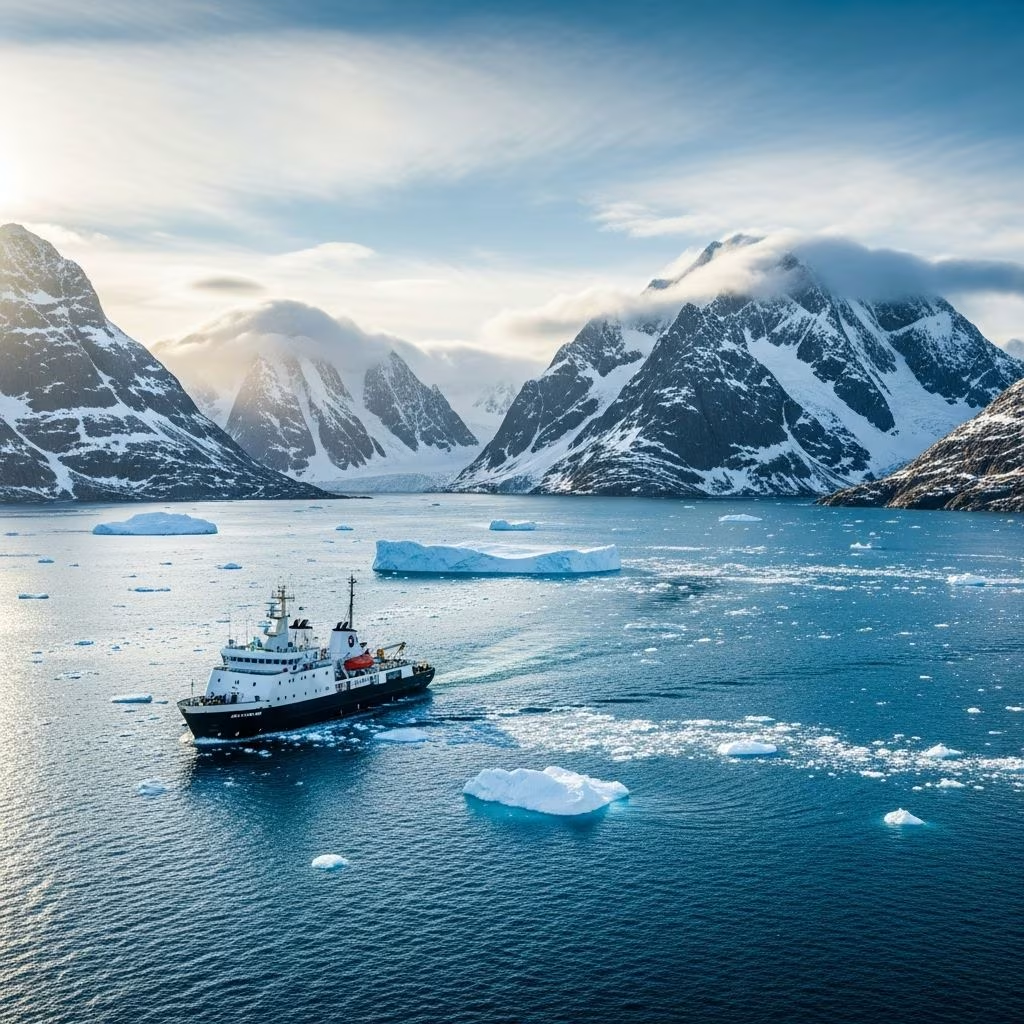
Greenland represents one of Earth’s last true frontiers, a land where vast ice sheets meet dramatic fjords and centuries-old traditions persist in remote settlements. For adventurers seeking authentic Arctic experiences, a 16-day expedition through Greenland’s coastlines and communities offers an unparalleled opportunity to witness nature on an extraordinary scale while connecting with Indigenous Inuit cultures. These carefully curated journeys combine comfortable expedition vessels with active exploration, allowing travelers to experience the raw beauty of the Arctic without sacrificing modern amenities.
Modern expedition cruising has transformed the way visitors explore Greenland. Unlike traditional tourism that remains confined to popular ports, contemporary Arctic expeditions utilize specially equipped vessels and expert teams to navigate challenging waters and access remote locations. The integration of advanced technology with respectful cultural engagement creates transformative travel experiences that balance adventure, learning, and environmental stewardship.
The choice of ship fundamentally shapes your Arctic experience. Leading expedition operators deploy hybrid-powered vessels equipped with specialized features designed for polar exploration. These ships typically incorporate electric propulsion systems, reducing environmental impact while maintaining efficient movement through varying ice conditions. Onboard infrastructure includes kayaking equipment, underwater drones for marine observation, and small boats designed for navigating narrow fjords and accessing shallow waters where larger vessels cannot venture.
Modern expedition ships balance exploration capabilities with passenger comfort. Your floating base will feature multiple restaurants offering refined cuisine, spa facilities for relaxation between active days, fitness centers, and comprehensive libraries or science centers dedicated to Arctic geology, ecology, and cultural studies. The combination of technical expedition capacity with hospitality amenities ensures that days of intensive exploration are balanced with opportunities for rest and reflection.
Most Greenland expeditions embark from Reykjavik, Iceland’s vibrant capital, positioned strategically as the gateway to Arctic exploration. Before boarding your vessel, consider extending your journey to experience Iceland’s iconic natural attractions. The Golden Circle route showcases powerful waterfalls, geothermal hot springs, and geysers that provide compelling context for understanding Arctic geology. These preparatory experiences establish a geological framework that enhances your understanding of Greenland’s dramatic landscapes.
The Denmark Strait crossing represents your introduction to open Arctic waters. Spanning the expanse between Iceland and Greenland, this passage exposes travelers to authentic oceanic conditions. The Expedition Team utilizes this transit time productively, conducting briefings on wildlife identification, Arctic navigation protocols, and guidelines for respectful interaction with Indigenous communities. Onboard naturalists begin detailed explanations of the region’s unique ecology, preparing guests for observations ahead.
Greenland’s initial landing points introduce you to settlements where traditional lifestyles intersect with contemporary Arctic living. These communities have maintained strong connections to hunting, fishing, and seasonal subsistence practices despite modernization. Local residents welcome expedition visitors, offering authentic cultural experiences that extend beyond staged presentations.
Village visits often include participation in traditional social gatherings—notably the kaffemik, a day-long communal gathering centered on food, conversation, and storytelling. These intimate encounters provide opportunities to learn directly from community members about their adaptation to extreme environments, traditional practices, and contemporary challenges facing Arctic populations. Such interactions create meaningful cross-cultural connections and foster understanding of Arctic life beyond romanticized perceptions.
Disko Bay represents a cornerstone destination for Greenland expeditions, recognized by UNESCO as a World Heritage Site. This marine environment supports exceptional biological productivity, hosting abundant seabird populations and diverse marine mammals including whales and seals. The bay’s waters carry massive icebergs calved from the Ilulissat Glacier, creating a dynamic seascape that shifts continuously with tidal and seasonal forces.
The Ilulissat Icefjord extends inland, creating one of the planet’s most visually dramatic glacier landscapes. Giant icebergs exhibit extraordinary color variations—brilliant whites, translucent blues, and deep grays—as light interacts with ice density and crystalline structures. The icefjord’s UNESCO designation reflects its geological significance as a globally important system demonstrating contemporary glacial processes and climate dynamics. Photography enthusiasts find endless composition opportunities among these dynamic frozen sculptures.
Expedition teams employ flexible tactics for icefjord exploration based on weather and ice conditions. Zodiac boat tours navigate among icebergs at water level, providing perspectives impossible from ship decks. Kayaking opportunities allow paddlers to drift silently among ice formations, observing seals and seabirds without the disturbance created by motorized vessels. Shoreline treks explore tundra ecosystems and access viewpoints overlooking the glacial landscape.
Voyages toward Greenland’s northern regions approach the expedition’s most challenging environments. Vaigat Sound represents the northernmost destination, where Arctic conditions intensify and ice presence becomes increasingly unpredictable. This unforgiving landscape demands flexibility from expedition leadership, as weather patterns and ice formation determine accessible sites on any given day.
Camp Frieda and similar remote landing sites provide access to pristine tundra ecosystems supporting specialized Arctic wildlife. Musk oxen, Arctic foxes, and ptarmigans inhabit these sparse landscapes, adapted to extreme conditions through specialized physiological and behavioral traits. Glacier approaches reveal the dynamic nature of ice, demonstrating how these massive formations continuously shift, calve, and reform. The silence of these remote locations creates profound psychological experiences, connecting travelers to the fundamental power of untamed wilderness.
Greenland’s marine ecosystems support iconic Arctic wildlife. Whales—including minke and humpback species—migrate through these waters seasonally, and expedition teams employ trained naturalists to identify cetaceans and explain their ecological roles. Seals rest on ice floes, some species specializing in navigating pack ice while others prefer coastal habitats. Seabirds including auks, eagles, and other species demonstrate remarkable adaptation to Arctic marine environments.
The Expedition Team implements rigorous protocols ensuring wildlife observation respects animal welfare and Arctic ecosystem integrity. Rather than pursuing animals, teams position vessels and small boats to allow wildlife observation on animal terms. This approach typically yields more authentic behaviors and minimizes stress on sensitive populations. Expert naturalists provide detailed ecological context, explaining predator-prey relationships, migration patterns, and climate change impacts on Arctic fauna.
The 60-mile Prince Christian Sound creates one of Greenland’s most visually striking passages. Granite mountains rise dramatically from sea level, their gray stone faces contrasting sharply with brilliant white glaciers and deep blue waters. The sound’s geography creates a natural corridor that funnels water masses and concentrates marine life, making it consistently productive for wildlife observation.
Navigation through Prince Christian Sound depends critically on sea ice conditions. Accumulating ice may occasionally prevent passage, requiring expedition rerouting to Cape Farewell, Greenland’s southernmost point. The leadership team makes such determinations based on real-time ice monitoring and expert assessments. Alternative routes typically offer compensatory wildlife and geological attractions, ensuring expedition experiences remain exceptional regardless of specific routing.
Modern expedition cruises integrate comprehensive educational programming throughout voyages. Science centers aboard vessels provide detailed geological, meteorological, and biological information contextualizing observations. Expert naturalists conduct lectures on Arctic ecosystems, climate science, and Greenlandic geography, building knowledge frameworks that enhance excursion experiences.
Many expeditions include citizen science opportunities, allowing passengers to contribute to genuine scientific research. Participants may document wildlife sightings, collect marine samples, or assist with environmental monitoring. Such engagement transforms passengers from observers into contributors, deepening investment in Arctic conservation and scientific understanding.
Expedition vessels offer comfortable staterooms with modern amenities including private bathrooms, heating systems, and panoramic windows optimizing Arctic viewing. Multiple dining venues serve cuisine ranging from casual to fine dining, incorporating fresh local ingredients when available. Relaxation facilities including saunas, heated pools, and spa services provide physical recovery between active expedition days.
The daily rhythm balances structured activities with flexibility for individual pursuits. Early mornings typically feature wildlife observations on outer decks before breakfast. Daytime usually involves excursions—kayaking, zodiac tours, or shore treks—guided by experienced expedition staff. Afternoons allow onboard downtime, meals, and educational sessions. Evenings feature naturalist presentations, cultural programming, or social dining connecting expedition participants.
Successful Arctic expeditions require proper preparation and appropriate equipment. Layered clothing systems utilizing technical fabrics provide thermal protection while managing moisture and allowing flexibility for varying conditions. Waterproof outerwear protects against ocean spray and precipitation. Sturdy hiking boots with proper traction navigate icy and uneven terrain safely. Sunglasses, sunscreen, and lip protection address intense Arctic sun reflection from ice and water surfaces.
Physical preparation enhances expedition enjoyment. While expeditions accommodate varied fitness levels, activities such as glacier trekking and kayaking benefit from baseline cardiovascular conditioning. Flexibility and balance training reduces injury risk during boat transfers and shoreline navigation.
Responsible Arctic expedition operators prioritize ethical engagement with Indigenous communities and environmental protection. Pre-departure briefings establish protocols for respectful cultural interaction—understanding sacred sites, requesting permission before photography, and recognizing that communities are not exhibitions but living cultures managing contemporary challenges.
Environmental stewardship encompasses waste management, fuel efficiency, wildlife disturbance minimization, and adherence to Antarctic-style expedition protocols even in Arctic contexts. Operators increasingly implement carbon offset programs and support Arctic research initiatives advancing climate understanding and environmental protection.
| What is the best time for Greenland expeditions? | Late spring through early autumn (June-September) offers extended daylight and accessible conditions. Summer months maximize wildlife viewing and cultural community engagement opportunities. |
| Do I need Arctic expedition experience? | No. Expeditions accommodate participants with varying experience levels. Professional guides manage technical activities while ensuring safety and enjoyment for all fitness levels. |
| What wildlife will I encounter? | Common sightings include whales, seals, Arctic foxes, musk oxen, seabirds, and white-tailed eagles. Specific wildlife encounters vary by season and location. |
| Are there onboard medical facilities? | Yes. Expedition vessels maintain medical clinics with trained staff and equipment for managing common medical situations. Serious emergencies may require evacuation to Iceland or Denmark. |
| What is included in expedition costs? | Typically includes accommodation, meals, excursions, expert naturalist guidance, and educational programming. International flights, pre-expedition accommodation, and personal travel insurance are typically separate. |
A 16-day Greenland expedition represents far more than tourism—it constitutes an immersive encounter with Earth’s Arctic frontiers and the cultures adapted to these extreme environments. The combination of spectacular natural landscapes, wildlife encounters, and authentic cultural engagement creates enduring memories and deepened understanding of Arctic ecology and indigenous resilience. Modern expedition cruising makes such journeys accessible while maintaining rigorous environmental and cultural standards, ensuring that Arctic exploration contributes positively to conservation and cross-cultural understanding rather than exploitation.
