

 Travel Essentials
 Travel Essentials

Explore Germany's premier national parks, featuring stunning landscapes, unique wildlife, and outdoor adventures across mountains, forests, and seas.
 Travel Essentials
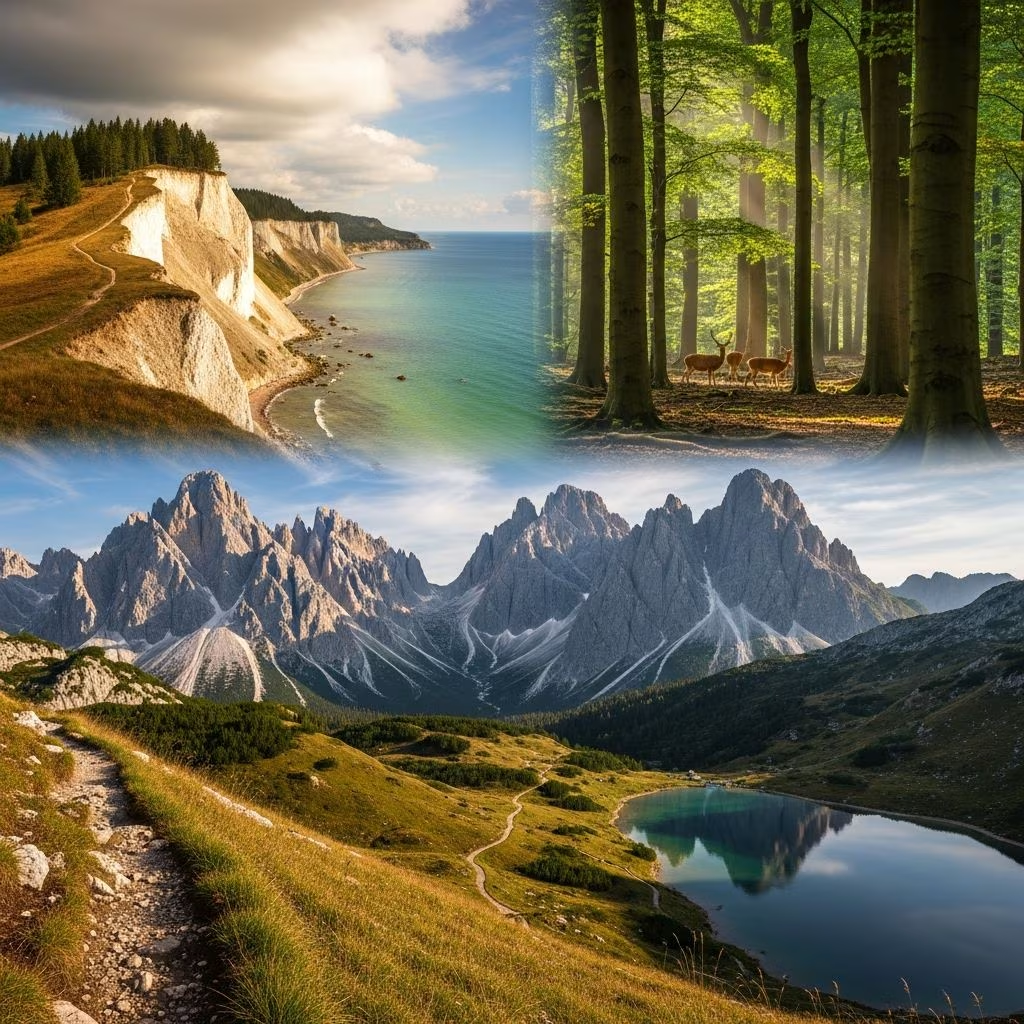
Germany boasts 17 national parks that protect over 1% of its land, offering a mosaic of ecosystems from rugged Alps to tidal flats. These protected areas safeguard biodiversity while providing endless opportunities for hiking, wildlife viewing, and serene escapes. Whether you’re drawn to towering mountains, dense woodlands, or coastal wetlands, Germany’s parks deliver unparalleled natural beauty.
The southern regions of Germany, particularly Bavaria, host some of Europe’s most dramatic landscapes. These parks combine high peaks, crystal-clear lakes, and thriving alpine meadows, attracting climbers and photographers year-round.
Nestled in the Bavarian Alps, Berchtesgaden spans 210 square kilometers and features Germany’s second-highest mountain, the Watzmann at 2,713 meters. The iconic Königssee lake, with its emerald waters and sheer cliffs, is a highlight, accessible by electric boats that preserve the area’s tranquility. Trails like the Jenner cable car route offer panoramic views, while winter brings ski opportunities. Home to chamois, eagles, and ibex, it’s a prime spot for wildlife enthusiasts.
Germany’s first national park, established in 1970, covers 243 square kilometers along the Czech border. Known for its primeval mixed forests, it shelters lynx, otters, and Europe’s largest wildcat population. The Lusen and Rachel peaks provide challenging hikes with treetop boardwalks for birdwatching. In autumn, the foliage explodes in color, making it ideal for photography.
Central Germany’s parks preserve ancient deciduous woods and rolling hills, many recognized by UNESCO for their ecological value. These areas emphasize low-impact tourism with extensive trail networks.
The wild core of the Schwarzwald spans 12,000 hectares of heather moors, glacial lakes, and coniferous forests. Hellental valley and the Ravenna Gorge showcase cascading waterfalls and rare flora. Over 400 kilometers of trails cater to all levels, with cross-country skiing in winter. Unique microclimates support diverse species, from woodpeckers to wild boar.
Straddling Lower Saxony and Saxony-Anhalt, this 1,470-square-kilometer park features the Brocken peak, steeped in folklore. Deep valleys, bogs, and mixed forests host lynx reintroduction programs. The Harzer Hexenstieg trail weaves through mystic landscapes, perfect for autumn hikes amid golden hues.
A UNESCO site, Hainich protects Germany’s largest continuous beech forest at 16,000 hectares. The star attraction is the Baumkronenpfad, a 44-meter-high treetop walkway offering canopy views and wildlife spotting, including rare bats and deer. Family-friendly with educational centers.
This 57-square-kilometer UNESCO beech forest gem surrounds Lake Edersee. Primeval woods dominate, with trails revealing orchids and woodpeckers. Water activities on the lake complement forest hikes, blending serenity with adventure.
Northern parks focus on marine and wetland ecosystems, vital for migratory birds and unique coastal dynamics.
Three parks—Schleswig-Holstein, Hamburg, and Lower Saxony—protect 1,500 kilometers of tidal flats, a UNESCO site teeming with seals, spoonbills, and shellfish. Mudflat hiking tours reveal this dynamic world, where tides shift landscapes daily. Boat trips from Husum or List offer seal sightings.
In Mecklenburg-Vorpommern, 322 square kilometers of lakes and reeds form Europe’s largest inland delta. Canoeing on the Müritz lake and otter spotting are highlights, with 250 bird species including cranes.
On Rügen Island, chalk cliffs like the Königsstuhl rise 118 meters over the Baltic. The Königsstuhl National Park Center provides insights into this 30-square-kilometer wonder, with stubwald forests and sea eagles. Hike the Königsstuhl trail for breathtaking sea views.
Bridging land and sea, this 805-square-kilometer park features lagoons, peninsinsulas, and beaches. Kayaking through shallow waters reveals otters and sea eagles in a pristine coastal setting.
Germany’s only rock national park, spanning 93 square kilometers along the Elbe, boasts sandstone towers and table mountains. The Malerweg (Painter’s Way) trail offers vertigo-inducing views and climbing routes. Bastei Bridge is an iconic spot for sunrise hikes.
At the Polish border, this 75-square-kilometer floodplain hosts Europe’s largest inland delta, buzzing with 300 bird species during migration. Floodplain forests and meadows provide serene walks.
In Rhineland-Palatinate, 110 square kilometers of volcanic craters, lava flows, and beech woods shelter wolves and lynx. The URFT reservoir adds scenic beauty to 500 kilometers of trails.
Germany’s newest (2024), this 98-square-kilometer park in Rhineland-Palatinate features slate mountains and wild rivers, promoting rewilding with beavers and peregrine falcons.
Germany’s parks are accessible by efficient trains and buses, with many offering free entry but fees for cable cars or boats. Best visited May-October for hiking; winter for snow sports. Follow ‘leave no trace’ principles, book permits for wild camping, and check apps like Komoot for routes.
| Park | Size (sq km) | Key Activity | Best Season |
|---|---|---|---|
| Berchtesgaden | 210 | Hiking/Lakes | Summer |
| Bavarian Forest | 243 | Wildlife | Autumn |
| Black Forest | 120 | Trails | All year |
| Harz | 1,470 | Skiing | Winter |
| Saxon Switzerland | 93 | Climbing | Spring |
Germany has 17 national parks covering diverse terrains.
Most parks permit leashed dogs on designated trails; check specific rules.
Hainich’s treetop walk and Jasmund’s cliffs are kid-friendly.
Wild camping is restricted; use designated sites or huts.
Lower Oder Valley or Harz, both under 3 hours by train.
