

 Travel Essentials
 Travel Essentials

Maximize your Cusco weekend with our comprehensive guide covering key attractions, local markets, dining, and practical travel tips for an unforgettable Peruvian adventure.
 Travel Essentials
Cusco stands as one of South America’s most captivating destinations, blending thousands of years of Inca heritage with Spanish colonial architecture. Located high in the Peruvian Andes at approximately 11,000 feet above sea level, this historic city serves as the gateway to countless archaeological wonders and cultural experiences. A weekend in Cusco offers enough time to navigate the city’s most significant landmarks, immerse yourself in local traditions, and understand why this UNESCO World Heritage Site continues to draw travelers from around the globe.
The city’s unique position as both an ancient Inca capital and a Spanish colonial center creates an atmosphere unlike anywhere else. Walking through Cusco’s narrow cobblestone streets reveals layers of history at every turn, from precisely fitted Inca stonework that supports colonial buildings to bustling plazas where indigenous traditions remain vibrant. Understanding Cusco requires appreciating this duality—the meeting point where two civilizations, two architectures, and two ways of life converge into something entirely distinctive.
Before stepping into Cusco, travelers should understand that altitude significantly impacts the experience. The city sits at 11,150 feet, which means oxygen is thinner and physical exertion feels more demanding. Most visitors experience some form of altitude adjustment, ranging from mild headaches to more noticeable breathlessness.
Preparation begins before arrival. Flying into Cusco rather than arriving overland allows your body slightly more time to acclimate during the first day. Upon arrival, resist the urge to rush into strenuous activities. Instead, plan your first hours to be relatively relaxed, focusing on light exploration near your accommodation.
Once in the city, several strategies accelerate acclimatization:
Begin your Cusco adventure by exploring the Qoricancha, known in English as the Temple of the Sun. This structure represents one of the most important religious sites in the Inca Empire, though what visitors see today combines original Inca foundations with a Spanish colonial church built directly atop them. The contrast between the precisely fitted stone walls of the Inca construction and the European architectural additions above creates a powerful visual metaphor for Cusco itself.
The temple’s original splendor is difficult to imagine—Spanish chroniclers documented that the interior walls were once covered in gold sheets, and the courtyard contained golden statues of animals and plants. While these treasures disappeared centuries ago, the exceptional stonework remains. Notice how the massive stones fit together without mortar, cut so precisely that a knife blade cannot slide between them. This engineering achievement predates European contact and demonstrates the sophisticated knowledge possessed by Inca builders.
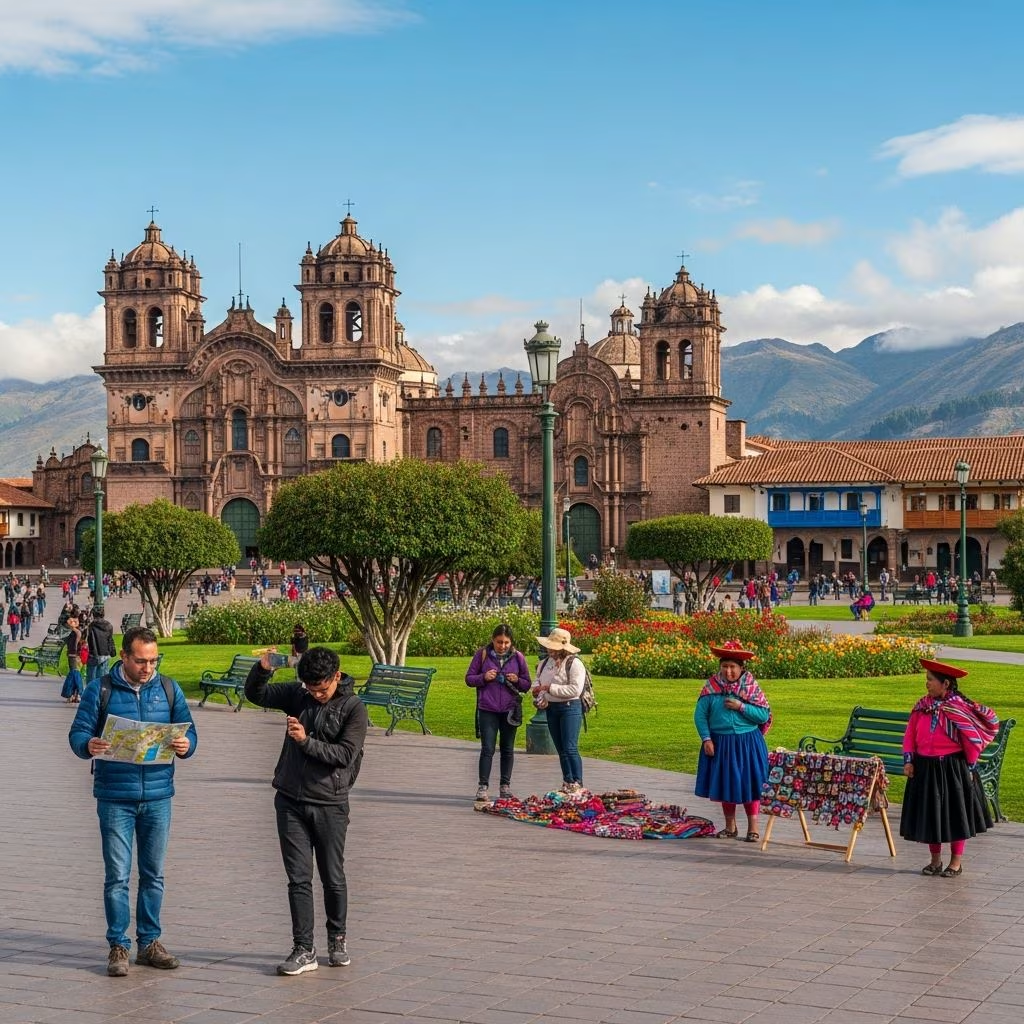
Make your way to the Plaza de Armas, Cusco’s ceremonial heart and primary gathering space. Known locally as the Plaza Mayor, this expansive square showcases the city’s most impressive colonial architecture. The plaza is ringed by the Cathedral, the Church of the Society of Jesus (Iglesia de la Compañía de Jesús), and numerous colonial mansions featuring characteristic arched doorways and ornate stonework.
The Cathedral merits extended exploration. Its construction took nearly a century, and the blended architectural styles reflect the long building process. Inside, you’ll discover religious art combining Spanish and indigenous themes, representing the cultural synthesis that defines Cusco.
Spend time observing the plaza’s daily rhythm. Quechua women dressed in traditional clothing pose with their llamas and lambs for tourist photographs, a practice that represents both cultural continuity and economic adaptation. Street vendors sell alpaca garments, jewelry, and textiles. Musicians and artists fill the space with music and color. The plaza pulses with activity from morning until well after dark, making it ideal for extended observation and photography.
Exit the main plaza and explore the surrounding laneways, particularly Hatun Rumiyoc Street, an ancient Inca cobbled road featuring the famous twelve-angled stone—a perfectly cut block that fits precisely into the surrounding wall without mortar. This single stone exemplifies Inca mastery of stonework and represents one of Cusco’s most photographed elements.
Next, venture to San Pedro Market, a sensory experience that reveals authentic local life. Unlike tourist-oriented markets, San Pedro functions as a genuine commercial hub where residents purchase daily groceries. The market overflows with produce rarely seen outside Peru: cherimoya fruits, purple potatoes, quinoa, and fresh herbs used in traditional Andean cooking. Fresh tropical fruits, local cheeses, and traditional breads like pan chuta fill vendor stalls. The alpaca textile section offers blankets, shawls, and scarves made from fine wool, with prices substantially lower than tourist shops.
Purchase items for a simple lunch or snacks. Many market stalls offer prepared foods—fresh juice, empanadas, or ceviche—providing an authentic eating experience alongside cultural immersion.
As afternoon transitions to evening, make your way to the San Blas district, located uphill from the main plaza. This neighborhood represents Cusco’s creative and artistic heart, distinct from the more tourist-focused downtown areas. San Blas features steep, winding streets, bohemian cafes, independent galleries, and boutique shops operated by local artists and craftspeople.
The district’s character differs fundamentally from the colonial core. While downtown Cusco caters heavily to tour groups, San Blas maintains a more intimate, neighborhood feel. You’ll find vegetarian and vegan restaurants alongside traditional Peruvian establishments. Art studios offer classes ranging from painting to pottery, available to visitors interested in hands-on cultural participation. Galleries showcase work by emerging and established Andean artists.
Continue ascending to the San Blas Church and its adjacent viewpoint, the Mirador de San Blas. This location provides the most spectacular panoramic vista of Cusco, particularly stunning during sunset. From this vantage point, the city spreads beneath you, with the surrounding mountains creating a dramatic backdrop. The light as the sun descends creates ideal photography conditions, with soft golden hues illuminating the colonial architecture below.
Return to the city center as darkness falls. Cusco offers excellent dining options ranging from traditional Peruvian cuisine to international fare. For a quintessential Cusco experience, order a pisco sour—a cocktail made from pisco (Peruvian brandy), lime juice, egg whites, and Peruvian bitters. This drink represents Peru’s cocktail heritage and appears on menus throughout the city. Local beer brands like Cusqueña also deserve exploration.
Given your early morning activities planned for day two, avoid excessive alcohol consumption and retire at a reasonable hour to maximize rest before your tour.
Day two requires an early wake-up call. Book a guided tour of the major archaeological sites located in the hills above Cusco. These sites—Sacsayhuamán, Q’enqo, Puka Pukará, and Tambomachay—represent different aspects of Inca civilization and engineering. Your tour guide provides crucial context for understanding these ruins and their significance within the broader Inca historical narrative.
Sacsayhuamán, the most impressive site, features massive stone walls constructed from enormous blocks fitted together without mortar. The precision and scale of construction astonish visitors—some stones weigh over 100 tons, yet fit so perfectly that tools cannot pass between them. The site originally served as a fortress and ceremonial center, commanding views over Cusco valley. Standing within these structures creates visceral understanding of Inca engineering capabilities.
The archaeological tour typically includes lunch in a local community, offering opportunities to interact with residents and understand contemporary Andean life. This provides balance between ancient history and present-day culture.
For those extending their weekend, the Sacred Valley offers remarkable archaeological sites complementing Cusco’s ruins. The valley contains dozens of Inca sites, markets, and communities, with Pisac being the closest to Cusco. This valley represents the agricultural heartland of the Inca Empire and provides stunning mountain scenery.
Pisac Inca Ruins showcase agricultural terraces, ceremonial sites, and administrative buildings. The site’s position high above the valley floor demonstrates Inca sophistication in selecting locations that optimized both functionality and sacred geometry. A descent from Pisac passes through contemporary Andean communities where visitors may observe llama and alpaca herds—wild relatives called vicuñas still inhabit the region.
First-time visitors should stay near Plaza de Armas or San Blas. These neighborhoods position you centrally, within walking distance of major attractions while offering easy access to restaurants, shops, and services. Both areas feature accommodations ranging from budget hostels to luxury hotels, allowing flexibility based on travel preferences and budget.
Cusco is highly walkable, though the high elevation makes some visitors tire more quickly than at sea level. Narrow cobblestone streets characterize the historic center, making comfortable walking shoes essential. For longer distances or when altitude fatigue sets in, taxis are affordable and readily available. Many tours include transportation, eliminating navigation concerns for organized activities.
The dry season from May through September offers clear skies ideal for both sightseeing and hiking. These months provide the best conditions for photographing the city and mountains without rain. However, Cusco welcomes visitors year-round, with each season offering distinct advantages.
Peru uses the Peruvian sol as its currency. Budget-conscious travelers find Cusco extremely affordable—meals at local restaurants cost a fraction of North American or European prices, and accommodations range from very inexpensive to luxury options. Tours and activities are similarly reasonably priced compared to developed nations.
Two days provides adequate time to experience Cusco’s primary attractions and understand the city’s character. However, three or more days allow for deeper exploration, including Sacred Valley day trips or more leisurely engagement with museums and neighborhoods. Most travel advisors recommend minimum three days for a comprehensive experience, though weekenders can accomplish substantial exploration in two days through strategic planning.
Traditional Peruvian cuisine features prominently. Try ceviche (raw fish in citrus marinade), lomo saltado (stir-fried beef), and causa (potato terrine). Quinoa, native to the Andes, appears in various preparations. Vegetarian and vegan options are increasingly available, particularly in San Blas. Local fruits and markets offer opportunities to sample regional specialties not found internationally.
Budget depends on accommodation and dining choices. Mid-range travelers can experience Cusco on $50-100 daily, including accommodations, meals, and activities. Budget options start around $30 daily, while luxury travelers can spend $200+. Tours range from $30-150 depending on length and exclusivity.
While independent exploration of the city center is straightforward, guided tours provide invaluable context for understanding archaeological sites and Inca history. Many travelers combine self-guided city exploration with organized tours for specific attractions like Rainbow Mountain or Sacred Valley sites.
A weekend in Cusco offers concentrated exposure to one of the world’s most historically significant and culturally rich destinations. The combination of remarkably preserved Inca structures, Spanish colonial architecture, vibrant contemporary culture, and dramatic mountain settings creates an experience that resonates long after departure. Whether you’re a history enthusiast, adventure seeker, or cultural explorer, Cusco rewards visitors with memories and insights that extend far beyond the typical weekend getaway. The key lies in careful planning, respect for the altitude, and openness to engaging authentically with both the city’s historical treasures and its living communities.
