

 Travel Essentials
 Travel Essentials

A comprehensive weekend itinerary for exploring Cologne's iconic landmarks, local Kölsch beer tradition, spa culture, museums, and trendy districts.
 Travel Essentials
Cologne stands as one of Central Europe’s most compelling destinations for a short getaway, offering an intoxicating blend of architectural marvels, centuries-old traditions, and contemporary cultural energy. The city’s strategic location along the Rhine River, combined with its reputation as a creative hub, makes it an ideal choice for travelers seeking substance beyond typical tourist circuits. Whether you’re arriving for your first visit or returning to explore deeper, a carefully planned two-day visit reveals layers of history, local authenticity, and unforgettable experiences.
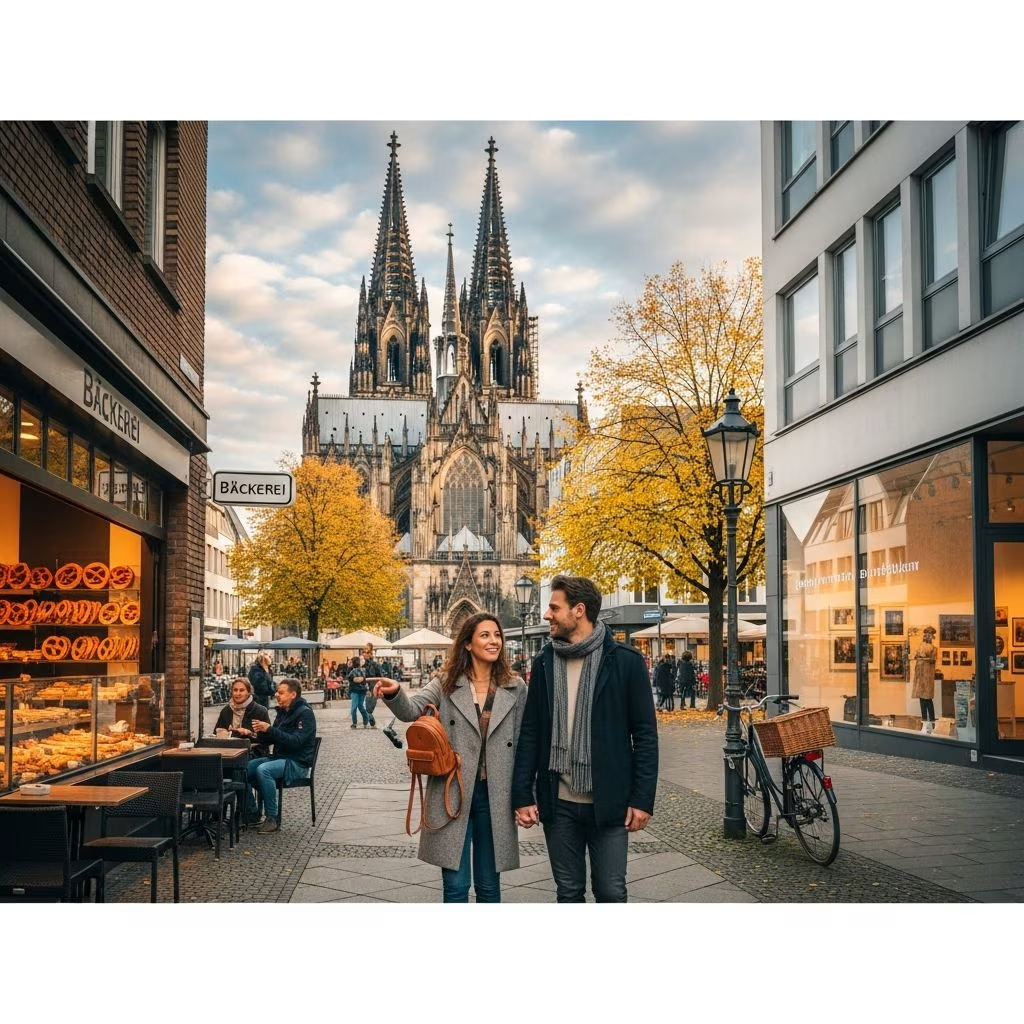
Begin your exploration at the Cologne Cathedral, the city’s most recognizable symbol and a testament to over eight centuries of architectural ambition. This Gothic masterpiece rises dramatically from the Old Town, its twin spires dominating the skyline and serving as an orientation point throughout your visit. The interior reveals treasures accumulated over generations, including the renowned Shrine of the Three Kings, a reliquary that draws pilgrims and art enthusiasts from across the globe. Medieval stained-glass windows cast colored light across the sacred space, while a striking contemporary work by artist Gerhard Richter demonstrates the cathedral’s commitment to honoring both tradition and innovation.
For those comfortable with heights, the 533-step ascent to the south spire rewards climbers with panoramic vistas encompassing the Rhine’s meandering path, the city’s varied rooflines, and the surrounding landscape extending toward distant hills. The climb itself becomes a meditation on the cathedral’s scale and the builders’ ambitions. Access to the cathedral grounds costs nothing, though the tower climb carries a modest fee, making this an accessible entry point into Cologne’s historical core.
Immediately behind the cathedral stands the Hohenzollern Bridge, an iron railway structure transformed into a cultural phenomenon. What began as practical infrastructure has evolved into an open-air gallery of human connection, with countless love locks adorning its railings—couples from around the world have inscribed their names and affirmations on these small metal tokens. The bridge itself offers an excellent vantage point for photographing the cathedral and experiencing the riverside atmosphere from a different angle.
Crossing the bridge leads to the Köln Triangle, one of the city’s tallest modern buildings featuring an observation deck. This contemporary counterpoint to the cathedral’s ancient stone provides dramatic elevated perspectives of the city below, particularly striking during midday when light reflects sharply off the Rhine. The contrast between viewing the cathedral from this modern vantage and contemplating modern architecture from within the historic district encapsulates Cologne’s ability to honor its past while embracing its present.
The Altstadt (Old Town) unfolds as a network of narrow, winding lanes lined with reconstructed half-timbered buildings and contemporary shops. This district was largely destroyed during World War II but has been thoughtfully rebuilt to restore the medieval character. Walking these cobblestone streets connects you to centuries of daily life—locals have negotiated these same passages for generations, though the specific buildings surrounding you represent post-war restoration efforts informed by historical documentation.
The Roman-Germanic Museum provides essential context for understanding Cologne’s deeper history predating the cathedral by over fifteen hundred years. Established as the Roman city of Colonia Agrippina, the settlement’s strategic position on the Rhine made it a crucial commercial and military outpost. Museum displays include artifacts ranging from pottery to sculpture, culminating in the Cologne Treasury, a remarkable collection of Roman gold jewelry and precious objects that illuminate the city’s ancient prosperity.
The Rhine Promenade offers respite from urban density and provides authentic local experience. Unlike designated tourist attractions, this linear park accommodates Cologne residents pursuing everyday leisure—couples strolling hand-in-hand, groups relaxing with beverages, cyclists commuting along designated paths. The promenade spans both river banks, with the west side running adjacent to the city proper while the east side transitions into parkland, particularly south of the Severinsbrücke.
German open container laws enable a distinctive social practice: locals purchase beverages and settle onto the grass for unhurried conversation and people-watching. This casual riverside culture, often underrepresented in tourism guides, reveals how Cologne residents actually spend leisure time. The view of the cathedral illuminated as evening approaches adds romantic dimension to this simple activity.
The Belgian Quarter (Belgisches Viertel) represents Cologne’s contemporary cultural vitality, housing galleries, independent shops, restaurants, and entertainment venues that attract both residents and culturally-minded visitors. The neighborhood’s name references its historical role as a residential area for workers and merchants, though current demographics and aesthetics differ substantially from historical patterns. Contemporary murals and street art demonstrate ongoing creative engagement with the urban environment.
Belgian and international cuisine dominates the restaurant landscape, with establishments ranging from casual bistros to more refined dining experiences. This represents a deliberate culinary distinction from traditional Cologne beer hall culture. After dinner, venues like Gewölbe and Sixpack provide dance and music entertainment, with Sixpack’s multi-decade history making it particularly representative of neighborhood continuity. Schaafenstraße consolidates LGBTQIA+ venues, including Die Mumu and surrounding bars, creating a distinct entertainment district reflecting the city’s progressive character.
Cologne’s spa and wellness facilities reflect German bathing traditions influenced by Scandinavian practices, emphasizing relaxation and naturalistic body attitudes that may surprise some international visitors. Claudius Therme stands as the premier example, offering thermal pools maintained at varying temperatures, outdoor saunas, professional massage services, beauty treatments, and terrace areas overlooking surrounding areas. The facility’s design encourages unhurried movement between different temperature zones, promoting both physical relaxation and mental disengagement from routine pressures.
This wellness approach contrasts sharply with spa experiences in other cultures, prioritizing therapeutic benefit over luxury aesthetics. The relaxed attitudes toward nudity common in German bathhouse culture reflect philosophical rather than prurient perspectives on the human form. Many international travelers report that experiencing this cultural norm firsthand produces understanding and appreciation rather than discomfort, becoming a memorable component of immersion in German life.
Breakfast options preceding spa visits range from serious espresso at Espresso Perfetto to leisurely breakfast experiences at gay-friendly establishments like Café Rico, with its relaxed atmosphere and attentive service. Funk Haus near the main train station offers another welcoming option for those prioritizing convenience and accessibility.
Rheinpark constitutes a substantial green oasis providing respite from urban density and offering Rhine views from landscaped vantage points. The park’s size and varied features support multiple activity types: families with children, fitness enthusiasts jogging designated paths, and leisurely strollers occupy the same space without conflict. From certain areas, the cathedral remains visible across the river, maintaining visual connection to the city’s iconic center.
The Sculpture Park, maintained at no charge, features installations by internationally recognized artists including Anish Kapoor. These large-scale works occupy outdoor spaces, creating unexpected artistic encounters. Rather than confining art to museum walls, this approach embeds cultural expression within the landscape, encouraging casual discovery. The contrast between monumental historical architecture and contemporary sculptural forms reinforces Cologne’s commitment to artistic expression across temporal styles.
The Schokoladenmuseum offers more than typical product marketing, tracing chocolate’s journey from ancient Mesoamerican origins through European adoption and contemporary global production systems. Interactive elements enable visitors to create personalized chocolate bars, observing how professional chocolatiers develop custom combinations. The museum’s focal point—an enormous chocolate fountain—provides theatrical visual spectacle while offering complimentary samples, creating memorable sensory experiences.
This institution represents a broader Cologne commitment to experiential tourism, transforming industrial and culinary history into engaging educational content. The museum’s location in the Südstadt district requires deliberate transit, introducing visitors to residential neighborhoods beyond the central tourist core.
Kölsch deserves particular attention as it represents not merely a beverage but a cultural institution specific to this geographic region. This specialty cold ale, brewed exclusively within Cologne’s boundaries under strict traditional standards, arrives in distinctive 0.2-liter glasses—smaller than international beer servings and designed to keep beverages cold during consumption. The narrow glass shape and reduced volume encourage rapid refills, facilitating the social ritual of continuous conversation and community building around beer hall tables.
Authentic beer hall experiences occur at establishments like Brauhaus Peters and Früh am Dom, which serve as neighborhood gathering places rather than tourist attractions designed around authenticity performance. These venues host regular patrons, businesspeople conducting informal meetings, and multi-generational groups, creating genuinely mixed social environments. Specialized beer tours, such as those offered by Kölsch Crew, provide historical and cultural context for this tradition, visiting multiple establishments over two-hour experiences and introducing visitors to the philosophy underlying this local institution.
| Activity/Venue | Cost Range | Time Required | Best For |
|---|---|---|---|
| Cologne Cathedral (tower climb) | Free (€6 tower) | 1-2 hours | Architecture enthusiasts, photographers |
| Roman-Germanic Museum | €10 | 1.5-2 hours | History buffs, cultural exploration |
| Claudius Therme | €18-25 | 2-4 hours | Relaxation, wellness seekers |
| Schokoladenmuseum | €11 | 1.5-2 hours | Food lovers, interactive experiences |
| KölnTriangle observation deck | €3 | 45 minutes | Views, photography |
| Kölsch beer tour | €20-30 | 2 hours | Beer culture enthusiasts, groups |
The central areas encompassing the cathedral, Old Town, Belgian Quarter, and Rhine Promenade are generally walkable, though comfortable shoes prove essential due to cobblestone streets. Tram and subway systems provide efficient alternatives for longer distances, and the city remains compact enough that most major attractions lie within reasonable traveling distance.
Spring and early autumn offer pleasant weather for outdoor activities and riverside walking. Summer attracts larger crowds but enables full enjoyment of parks and open-air venues. Winter provides quieter exploration and festive atmosphere during holiday seasons. The city’s major Carnival celebration preceding Ash Wednesday transforms Cologne into an intensely festive environment for visitors seeking that specific cultural experience.
English proficiency among service workers, particularly in tourism sectors, is generally sufficient for visitors. However, learning basic greetings and common phrases enhances interactions and demonstrates cultural respect. German directness in communication sometimes startles visitors accustomed to different service styles, but reflects cultural norms rather than rudeness.
Budget varies substantially based on accommodation choices and dining preferences. Modest estimates suggest €150-250 daily including mid-range accommodation, meals, museum admissions, and local transit. More luxurious approaches easily exceed these figures, while budget travelers may remain below them through strategic choices.
These suggested itineraries provide framework rather than prescription. Individual travelers discover authentic Cologne experiences through wandering, spontaneous interactions, and personal interests. The city’s combination of monumental heritage sites, contemporary cultural vitality, distinctive local traditions, and riverside beauty creates multiple entry points for connection. Whether prioritizing historical understanding, artistic exploration, wellness pursuits, or simply experiencing how Germans spend leisure time, Cologne accommodates diverse travel philosophies and returns genuine cultural rewards to attentive visitors.
