

 Travel Essentials
 Travel Essentials

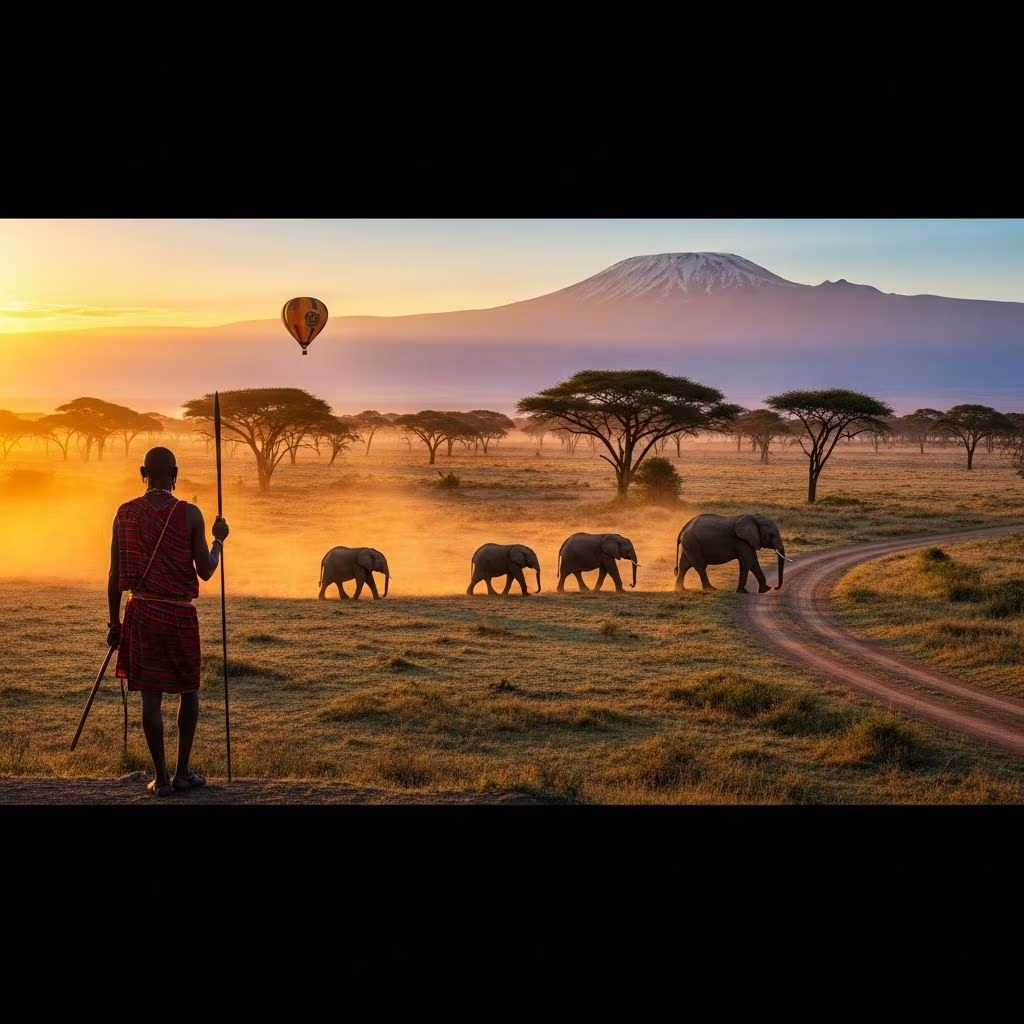
A comprehensive guide to planning the perfect 14-day Kenya itinerary, covering safari parks, cultural sites, and coastal destinations.
 Travel Essentials
Planning a fortnight-long journey through Kenya presents an incredible opportunity to experience one of Africa’s most diverse and vibrant destinations. With careful planning and strategic scheduling, two weeks in Kenya allows travelers to venture beyond the typical safari experience, incorporating cultural immersion, geological wonders, and coastal relaxation. Whether you’re a first-time visitor or a seasoned safari enthusiast, understanding how to structure your time across Kenya’s varied landscapes ensures you capture the essence of this remarkable country.
Kenya’s appeal lies in its remarkable geographic variety within a relatively compact nation. From the bustling urban center of Nairobi to the expansive wildlife reserves of the north, the dramatic formations of the Rift Valley, and the white-sand beaches along the Indian Ocean coast, Kenya offers distinct experiences that can be meaningfully combined within a 14-day window.
The country’s strategic location and well-developed tourism infrastructure make it relatively easy to transition between different regions. Most major destinations are accessible by road or domestic flights, allowing travelers to maximize their time experiencing new environments rather than spending excessive hours in transit.
Arriving in Nairobi, Kenya’s capital and primary international gateway, provides an excellent foundation for understanding the country’s contemporary culture and history. Rather than rushing directly to wildlife reserves, dedicating your initial days to urban exploration offers valuable context for your safari experiences.
Nairobi’s urban landscape reflects Kenya’s modern development and cultural complexity. The city hosts numerous museums, galleries, and cultural institutions that chronicle the nation’s paleontological significance, colonial history, and contemporary artistic movements. Walking tours through various neighborhoods reveal how traditional and contemporary lifestyles coexist within the metropolitan area.
During this period, consider:
This initial immersion into Kenyan urban life provides context that enriches your subsequent safari experiences and wildlife encounters. Understanding the human dimension of Kenya enhances appreciation for conservation efforts and community-based tourism initiatives you’ll encounter in protected areas.
The heart of a two-week Kenya itinerary typically focuses on experiencing the country’s world-renowned wildlife reserves and national parks. Rather than concentrating all safari time in a single location, distributing your days across multiple ecosystems provides comprehensive understanding of Kenya’s biodiversity and distinct habitats.
Kenya’s northern regions, including Samburu Reserve and areas surrounding Mount Kenya, offer distinct wildlife viewing opportunities less crowded than southern reserves. These regions feature unique species adapted to arid and semi-arid environments, including specialized antelopes, camels, and birds found nowhere else in Kenya.
The dramatic landscapes of the north, with their volcanic formations and sparse vegetation, provide stark visual contrast to other Kenyan ecosystems. Spending 2-3 days in these regions allows for productive wildlife viewing while supporting conservation efforts in less-visited areas.
Stretching north to south through Kenya’s interior, the Great Rift Valley represents one of Earth’s most significant geological features. Multiple national parks and game reserves dot this dramatic landscape, each offering specialized viewing opportunities.
Lake Nakuru, famous for its concentrations of flamingoes and diverse birdlife, provides a different safari experience than traditional big-game reserves. The shallow soda lakes scattered throughout the Rift Valley create unique ecosystems supporting species adapted to these specialized environments.
Hell’s Gate National Park offers the opportunity to hike through dramatic gorges alongside wildlife rather than viewing exclusively from vehicles. The park’s towering cliffs, geothermal features, and population of giraffes, zebras, and buffalo create opportunities for active engagement with the landscape.
The Maasai Mara represents Kenya’s most famous wildlife destination and warrants 3-4 days of your two-week itinerary. This expansive national reserve encompasses over 1,500 square kilometers of protected grassland, supporting the highest concentration of wildlife in Kenya.
The reserve’s ecosystem supports the full range of East African megafauna, including lions, leopards, elephants, buffalo, and zebras. Early morning game drives and evening safaris maximize wildlife viewing opportunities, with experienced guides positioning vehicles for optimal observation of predator-prey interactions and seasonal migrations.
Complementary activities in the region include:
The final phase of your Kenya journey transitions from landlocked wildlife reserves toward the Indian Ocean coast. This geographical shift provides psychological relief from intensive safari activities while maintaining engagement with Kenya’s natural environments.
Tsavo represents one of the world’s largest national parks, sprawling across multiple thousand square kilometers of diverse habitats. Despite its immense size and wildlife populations, Tsavo receives fewer international visitors than the Maasai Mara, offering less crowded game viewing experiences.
The park’s diverse environments—from open grasslands to acacia woodlands and volcanic landscapes—support distinct wildlife populations. Tsavo’s remoteness and spatial dimensions provide safari experiences emphasizing wilderness immersion over concentrated wildlife viewing.
The transition toward Kenya’s Indian Ocean coast marks a deliberate shift in activity pace and experience. Mombasa, Kenya’s primary coastal city, serves as the entry point to beach destinations offering rest and relaxation following intensive safari activities.
Coastal Kenya features distinct attractions beyond beach lounging, including historical sites, water sports, and marine ecosystems. Fort Jesus, a UNESCO World Heritage Site constructed during the Portuguese colonial period, provides historical context for understanding coastal Kenya’s complex past.
Beach accommodations range from luxury resorts to boutique properties, offering various price points and amenities. Selecting beachfront properties allows for unstructured time, sunset observation, and gradual acclimatization following the excitement and activity of safari regions.
Travelers prioritizing cultural engagement over wildlife viewing can structure their two weeks around Kenya’s historical sites and cultural heritage. Nyeri Region offers access to Kikuyu cultural homeland and historical sites related to colonial Kenya’s complex history. Museums throughout the country chronicle paleontological discoveries, independence movements, and contemporary Kenyan society.
Kenya’s position on major avian migration routes and its diverse habitats support over 1,000 bird species. Visitors interested in ornithology can structure their itinerary around premier birdwatching destinations, including Lake Elementaita’s flamingo concentrations, the Taita Wildlife Conservancy, and Mount Kenya’s cloud forest species.
Beyond traditional safari and beach activities, Kenya offers diverse adventure opportunities including hiking, rock climbing, water sports, and horseback riding. Integrating these activities into your itinerary provides active engagement with Kenyan landscapes while accommodating various fitness levels and preferences.
Kenya’s road infrastructure connects major destinations reasonably well, though drive times between regions require significant time allocation. Early morning departures maximize daylight hours and allow midday arrivals permitting afternoon activities. Alternatively, domestic flights between major destinations reduce travel time, though increasing overall trip costs.
Kenya’s climate varies by region and season, affecting wildlife visibility and travel comfort. The dry seasons (July-October and January-February) generally provide optimal game viewing as animals concentrate around water sources. However, Kenya’s tourism infrastructure operates effectively year-round, accommodating travelers with flexible scheduling.
Kenya offers accommodation spanning luxury lodges, mid-range hotels, tented camps, and budget hostels. Safari regions feature specialized camps with experienced naturalist guides, while urban and coastal areas provide conventional hotel accommodations. Selecting accommodations balances budget constraints with desired comfort levels and experience authenticity.
| Days | Primary Location | Focus Activities |
|---|---|---|
| 1-3 | Nairobi | Urban exploration, museums, wildlife centers |
| 4-6 | Rift Valley Lakes | Lake Nakuru, Hell’s Gate, geological observation |
| 7-10 | Maasai Mara | Game drives, cultural visits, balloon safaris |
| 11-12 | Tsavo/Coastal Region | Eastern wildlife, historical sites |
| 13-14 | Beach Destination | Relaxation, coastal exploration, departure preparation |
Two weeks allows meaningful engagement with multiple Kenyan regions and diverse experiences. While additional time permits deeper exploration of specific areas, 14 days accommodates safari activities, cultural experiences, and beach relaxation when itinerary planning prioritizes strategically.
Kenya welcomes visitors year-round, with dry seasons (July-October, January-February) offering optimal wildlife viewing. Rainy seasons feature lush landscapes and lower tourism density, though some remote areas may become temporarily inaccessible.
Two-week Kenya costs vary significantly by accommodation choices, activity selections, and dining preferences. Budget travelers may spend $1,500-2,500 excluding international flights, while mid-range travelers typically spend $2,500-5,000, and luxury itineraries may exceed $5,000.
Consult travel medicine professionals before departure regarding vaccinations and health precautions. Yellow fever vaccination may be required depending on your origin country and specific travel regions within Kenya.
Kenya’s strategic location facilitates travel to neighboring Tanzania, Uganda, and Ethiopia. However, maximizing Kenya’s experiences typically requires dedicating your full two weeks to this single country rather than dividing time across multiple nations.
Successful two-week Kenya journeys balance structured activities with spontaneous opportunities for observation and discovery. Allowing flexible time within each region permits meaningful engagement with local communities, unplanned wildlife encounters, and personal reflection on your experiences.
Engaging with professional guides enhances wildlife understanding and facilitates access to remote locations and specialized knowledge. Photographers should prioritize lighting conditions and optimal positioning, understanding that wildlife photography requires patience and timing.
Respecting wildlife and natural environments through responsible tourism practices ensures sustainable enjoyment and supports conservation initiatives protecting Kenya’s ecological heritage for future generations.
