

 Travel Essentials
 Travel Essentials

Discover key trends, budget considerations, and best practices shaping corporate travel strategies in 2026, from sustainability initiatives to technology adoption.
 Travel Essentials
The corporate travel landscape continues to evolve as organizations balance cost management, employee satisfaction, and sustainability objectives. As we move deeper into 2026, business travel spending demonstrates resilience with projected global expenditure reaching approximately $1.62 trillion, reflecting consistent year-over-year growth across major markets. This sustained momentum underscores the enduring importance of in-person business engagement despite technological advancements in virtual communication. Travel managers worldwide are recalibrating their strategies to address emerging challenges and capitalize on new opportunities reshaping how professionals conduct business across borders and time zones.
Corporate travel budgets are experiencing measured expansion across global markets. Overall corporate travel budgets are expected to rise 5% in 2026, with regional variations reflecting different economic outlooks and travel demand patterns. European travel managers demonstrate particular optimism, forecasting a 5.8% budget increase, while their U.S. counterparts estimate more conservative growth at 4.9%. This disparity reflects differing regional economic conditions and recovery patterns following market stabilization in recent years.
Within the accommodation sector, hotel volumes are projected to increase by 6.3%, while room rates are expected to climb by 3.9%. Since business travel traditionally accounts for 50% to 70% of total hotel demand, these figures suggest potential 10% growth in corporate room revenue. The airline sector anticipates moderate fare increases of 2–3%, driven primarily by sustained demand and fuel cost considerations. United States business travel spending alone is expected to exceed $329 billion, maintaining the 4–5% annual growth trajectory established since 2023.
Survey data from corporate travel managers overseeing approximately $5 billion in global hotel and air travel spending reveals substantial optimism about market conditions. Approximately 61% of surveyed travel managers expressed either “very optimistic” or “somewhat optimistic” sentiments regarding 2026 prospects, a notable increase from the 50% positive outlook recorded in mid-2025 surveys.
One of the most significant shifts transforming business travel patterns is the integration of leisure activities into corporate trips, commonly termed bleisure travel. This phenomenon reflects broader changes in work flexibility and organizational approaches to employee engagement and retention. Approximately 54% of hybrid business travelers undertook an average of two bleisure trips during 2024, according to recent corporate travel and expense research. Additionally, around 60% of business travelers are deliberately extending their trips to incorporate leisure activities, demonstrating widespread adoption of this hybrid approach.
Organizations are anchoring business trips strategically to hybrid work schedules, often combining scheduled office days with remote work flexibility while incorporating abbreviated business travel. This approach enables companies to demonstrate commitment to multifunctional trips that serve dual purposes: accomplishing essential business objectives while providing employees with opportunities for personal enrichment and stress reduction.
The flexibility inherent in distributed work arrangements facilitates extended trip durations without compromising productivity. Employees can now structure their work schedules to complete business obligations while enjoying leisure time, creating a more holistic travel experience. This evolution appeals particularly to younger talent segments, contributing to improved recruitment and retention outcomes while enhancing overall employee satisfaction metrics.
Environmental, social, and governance (ESG) considerations have become central to corporate travel policy development and supplier selection processes. Organizations increasingly recognize that travel programs represent significant opportunities to advance sustainability objectives and reduce organizational carbon footprints. The concept of “proximity power”—prioritizing regional and domestic travel to nearer destinations—has gained substantial traction within corporate planning frameworks.
Companies are shifting toward proximity-based travel strategies as they adapt to hybrid work models, emphasizing efficiency, sustainability, and cost-effectiveness simultaneously. This approach reduces transportation-related emissions while minimizing travel time and associated expenses. Organizations are implementing carbon tracking mechanisms, expanding low-emission transportation options, and partnering exclusively with environmentally conscious suppliers committed to sustainable practices.
The alignment of travel programs with ESG requirements extends beyond environmental considerations to encompass social responsibility and governance practices. Travel policy modifications reflect commitment to measurable sustainability targets, with organizations setting ambitious carbon reduction goals and monitoring compliance through comprehensive tracking systems. This trend represents a fundamental reshaping of travel procurement processes, where sustainability performance becomes a primary vendor evaluation criterion.
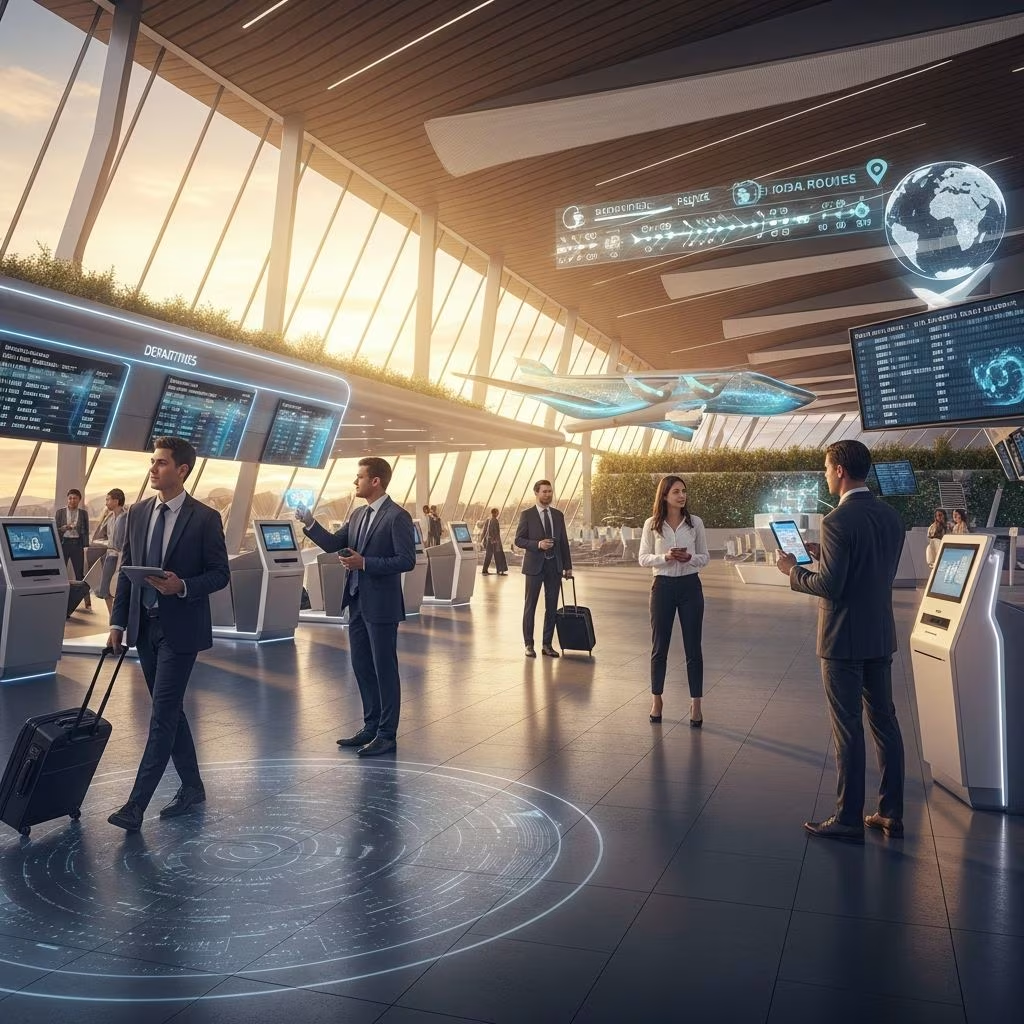
Artificial intelligence and automation technologies are revolutionizing business travel management, delivering substantial improvements in efficiency, compliance, and user experience. AI-driven tools facilitate intelligent booking systems and integrated expense management platforms, automating policy enforcement and consolidating travel and expense tracking into unified interfaces. These technologies enable organizations to identify cost optimization opportunities, monitor policy compliance automatically, and streamline the entire travel management workflow.
Smart travel devices and ergonomic AI-enabled wearables represent an emerging market segment projected to exceed $170 billion by 2030. These technologies enhance traveler productivity and comfort during extended trips, offering real-time health monitoring, schedule management, and personalized recommendations that improve the overall travel experience.
Biometric technologies are increasingly prevalent at airports and transportation hubs worldwide. Retinal scanning, facial recognition systems, and touchless check-in processes are becoming standard features of modern travel infrastructure, significantly reducing processing times and enhancing security protocols. These innovations streamline the travel experience while maintaining robust security standards and reducing bottlenecks at critical transportation nodes.
Business travelers are exhibiting changing transportation preferences reflecting both practical considerations and evolving sustainability consciousness. Shorter, more frequent business trips are increasingly replacing extended international journeys, delivering better cost optimization and risk management outcomes while reducing carbon emissions. This pattern reflects organizational recognition that multiple targeted trips often achieve business objectives more effectively than prolonged international expeditions.
Rail travel is emerging as a strategic transportation choice for business travelers, particularly in regions with well-developed rail infrastructure. Rail options offer cost advantages compared to air travel over medium distances, enhanced comfort characteristics, and reduced environmental impact. Organizations are incorporating rail transportation into broader travel optimization strategies, recognizing its potential to deliver superior value across multiple performance dimensions.
Route selection algorithms powered by artificial intelligence are automating optimization processes, reducing manual planning requirements, and identifying cost-effective alternatives that might otherwise escape consideration. These systems evaluate multiple variables including transportation costs, travel time, environmental impact, and schedule flexibility to recommend optimal routes aligned with organizational priorities and individual traveler preferences.
While virtual meeting technologies revolutionized business communication patterns in recent years, their impact on business travel volumes appears to have stabilized. Current projections indicate only 8% of travel volume will shift permanently to virtual formats in 2026, a substantial decrease from the 29% shift anticipated in surveys conducted during earlier post-pandemic years. This convergence suggests organizations have reached an equilibrium between virtual and in-person engagement, recognizing distinct value propositions each modality offers.
Face-to-face meetings continue demonstrating irreplaceable value for relationship building, negotiation, complex problem-solving, and team cohesion. Organizations are reaffirming their commitment to in-person engagement despite virtual meeting availability, recognizing that human connection delivers competitive advantages virtual communication cannot replicate. This recognition supports sustained investment in business travel infrastructure and budgeting priorities across most organizational sectors.
Group travel for team offsites, conferences, and incentive programs is experiencing robust growth, with year-over-year increases reaching 8–10%. This expansion reflects organizational commitment to experiential learning, team development, and strategic gatherings that strengthen organizational culture and facilitate knowledge sharing. Extended-stay bookings are similarly increasing as more workers blend business and leisure, with average trip lengths rising approximately 10% since 2023.
Global events, including the 2026 FIFA World Cup and major industry conferences, are generating concentrated demand for business travel to specific destinations during designated periods. These events create premium pricing environments and heightened demand for accommodation and transportation services, requiring advance planning and strategic booking decisions by travel managers.
| Trend Category | Key Characteristics | Organizational Implications |
|---|---|---|
| Sustainability Integration | Carbon tracking and low-emission transportation prioritization | Enhanced supplier partnerships and policy realignment |
| Bleisure Expansion | Extended trips combining work and leisure activities | Improved employee satisfaction and talent retention |
| Technology Adoption | AI booking systems and biometric check-ins | Streamlined operations and improved compliance monitoring |
| Proximity Focus | Shorter trips to regional destinations | Cost optimization and reduced environmental impact |
| Group Travel Growth | Increased conference and offsite attendance | Enhanced team development and organizational cohesion |
Organizations planning business travel budgets for 2026 should anticipate several key cost drivers. Transportation and accommodation expenses continue rising, though at moderate rates compared to recent inflationary periods. Sustainability initiatives require investment in carbon tracking systems, partnerships with eco-conscious providers, and potentially higher costs associated with premium sustainable options.
Technology investments in AI-powered travel management systems and biometric integration represent significant upfront expenditures that deliver long-term operational efficiencies and cost savings. Regional travel expansion requires geographic diversification of preferred vendor networks and supplier relationships, potentially increasing negotiation and management complexity.
Bleisure travel growth necessitates policy clarification regarding personal leisure time coverage, trip extension guidelines, and accommodation arrangements that accommodate extended stays. Clear policy frameworks prevent confusion while enabling organizations to maximize benefits from flexible work arrangements and employee engagement opportunities.
Approximately 54% of hybrid business travelers took an average of two bleisure trips in 2024, with around 60% of all business travelers deliberately extending trips to include leisure activities.
Overall corporate travel budgets are projected to increase 5% in 2026, with European markets forecasting 5.8% growth and U.S. markets estimating 4.9% expansion.
Global business travel spending is forecast to reach approximately $1.62 trillion in 2026, with U.S. business travel spending expected to exceed $329 billion.
Only 8% of travel volume is expected to shift permanently to virtual formats in 2026, down from 29% anticipated in earlier post-pandemic surveys, indicating virtual and in-person engagement have reached equilibrium.
Organizations are aligning travel programs with ESG requirements, prioritizing proximity travel to closer destinations, implementing carbon tracking systems, and partnering with environmentally conscious suppliers.
AI-driven tools automate booking systems, manage expenses, monitor policy compliance, optimize route selection, and provide personalized travel recommendations, substantially improving efficiency and cost management.
Successfully navigating 2026’s business travel landscape requires organizations to balance multiple competing priorities: cost management, sustainability commitments, technology adoption, and employee satisfaction. Travel managers should conduct comprehensive policy reviews ensuring frameworks address bleisure arrangements, sustainability targets, and technology integration strategies. Vendor relationships should emphasize partnerships with providers demonstrating sustainability commitment and technology capability aligned with organizational objectives.
Investment in AI-powered travel management systems delivers measurable returns through improved compliance, cost optimization, and streamlined operations. Organizations should prioritize sustainability initiatives while recognizing that environmental responsibility increasingly influences client relationships, employee recruitment, and competitive positioning within respective industries.
The convergence of work flexibility, sustainability consciousness, and technological advancement is fundamentally reshaping business travel in 2026. Organizations that strategically address these trends while maintaining focus on essential business objectives will maximize value from corporate travel investments while supporting employee engagement and organizational culture development.
