

 Travel Essentials
 Travel Essentials

Explore curated eclipse cruise options departing in August 2026, featuring expedition and luxury vessels positioned for optimal celestial viewing across multiple global routes.
 Travel Essentials
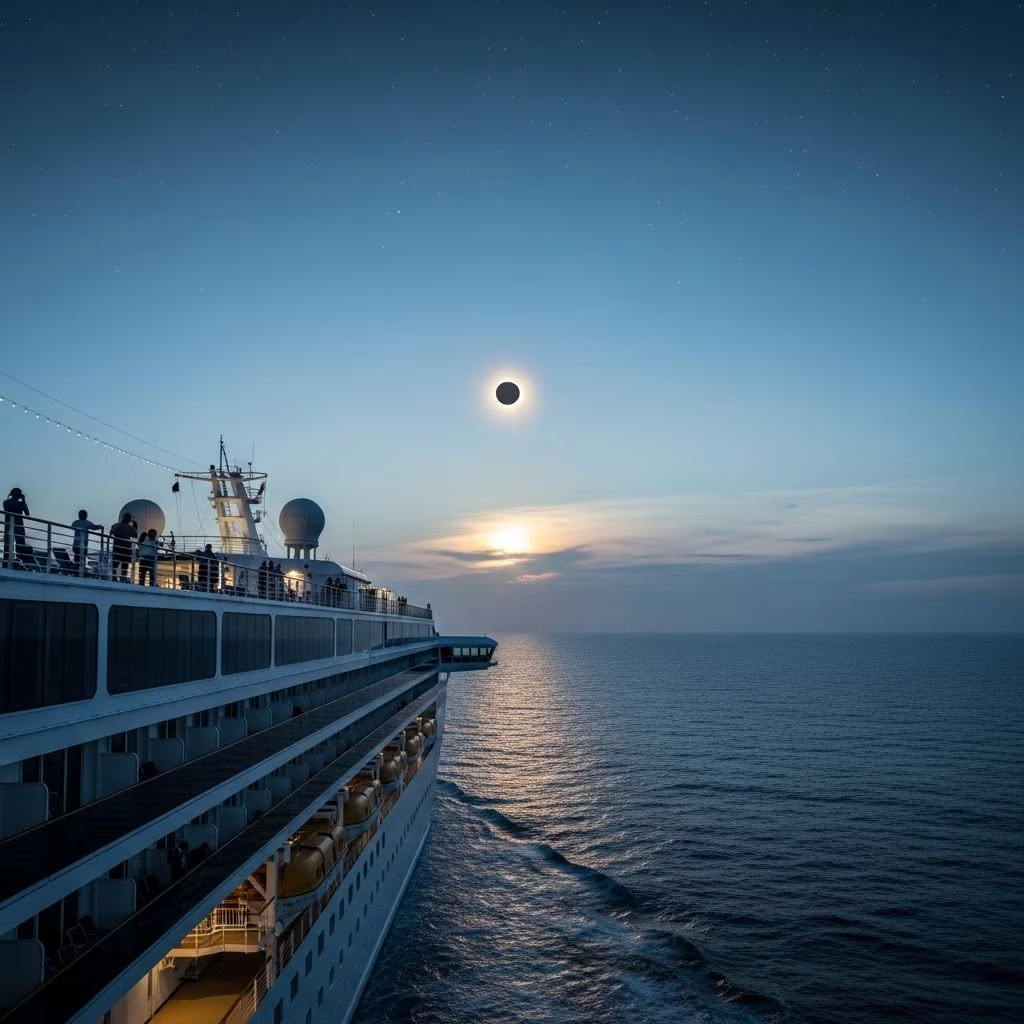
The 2026 total solar eclipse presents a rare opportunity for travelers to witness one of nature’s most spectacular astronomical phenomena. Unlike land-based viewing locations, cruise ships offer distinct advantages: unobstructed ocean horizons, weather flexibility through repositioning capabilities, and the absence of ground-level crowds. As August 2026 approaches, numerous cruise lines have developed specialized itineraries designed to position vessels directly in the eclipse’s path of totality, promising viewers approximately two minutes and eighteen seconds of uninterrupted celestial drama.
Ocean-based eclipse viewing eliminates many challenges associated with terrestrial observation. Spectators aboard vessels benefit from unobstructed sightlines across open water, avoiding the sight-line obstruction common in land-based gatherings. Ships can execute course adjustments based on real-time weather forecasting, ensuring optimal cloud-free positioning during the eclipse moment. Additionally, cruise experiences integrate expert astronomical guidance, specialized equipment demonstrations, and community atmosphere with fellow eclipse enthusiasts, transforming a celestial event into a comprehensive travel experience.
Cruise lines have invested substantially in positioning their fleets directly within the totality zone. Most major itineraries concentrate operations across three geographic regions: Mediterranean and Iberian waters, Northern European territories encompassing Iceland and the British Isles, and Arctic-adjacent locations including Greenland and Svalbard archipelago.
Mediterranean eclipse cruises represent the most geographically accessible option for international travelers. These voyages leverage established cruise infrastructure while positioning vessels off the Spanish and Portuguese coastlines where totality occurs on August 12, 2026. Multiple cruise operators have designed itineraries combining cultural exploration with eclipse observation, allowing passengers to experience European heritage alongside the celestial event.
Departure ports for Mediterranean eclipse cruises typically include Barcelona, Rome, and Athens, allowing passengers to embark from various European gateways. Ships remain positioned in open waters off Spain’s coast during the August 12 eclipse moment, providing passengers with unobstructed viewing opportunities while simultaneously maintaining the comfort and amenities of luxury cruise accommodations.
Arctic and sub-Arctic eclipse voyages cater to adventurous travelers seeking unique viewing locations combined with pristine environmental experiences. These itineraries navigate complex waterways through Iceland, Greenland, and Norwegian fjords, combining geological exploration with astronomical observation. Expedition-style vessels, typically smaller and more maneuverable than traditional cruise ships, navigate these specialized routes with enhanced environmental sensitivity and specialized crew expertise.
| Region | Vessel Type | Duration Range | Key Destinations |
|---|---|---|---|
| Iceland and Nordic Seas | Expedition and traditional cruise ships | 10-15 days | Reykjavik, Greenland ports, Norwegian coastline |
| Greenland and Arctic | Small expedition vessels | 12-35 days | Longyearbyen, Northeast Greenland, Svalbard |
| British Isles and Northern Europe | Traditional and expedition cruises | 10-14 days | London, Edinburgh, Belfast, Icelandic ports |
Arctic expeditions offer dramatically different viewing environments compared to Mediterranean voyages. Passengers experience midnight sun phenomena, glacial landscapes, and wildlife encounters while positioning for eclipse observation. These voyages demand higher physical tolerance for variable weather conditions and extended periods at sea, appealing to experienced adventure travelers seeking comprehensive polar experiences alongside celestial events.
Multiple cruise operators have developed distinct eclipse-themed programming reflecting their brand identities and operational specializations. Premium lines emphasize expert astronomical guidance and luxury amenities, while expedition operators focus on environmental interpretation and remote destination access. Understanding individual cruise line approaches helps travelers match voyage characteristics with personal preferences and viewing priorities.
Premium cruise lines distinguish their eclipse offerings through on-staff astronomers, advanced celestial observation facilities, and curated educational programming. These vessels typically feature dedicated planetariums or observation theaters where professionals explain eclipse mechanics, historical eclipse events, and modern astronomical research. Passengers receive specialized equipment, photographic guidance, and post-eclipse analysis sessions conducted by qualified space professionals. Luxury accommodations, specialty dining experiences, and exclusive enrichment activities complement the eclipse-focused itineraries, justifying higher per-diem pricing for passengers prioritizing comprehensive learning experiences.
Expedition cruise operators leverage intimate ship sizes and specialized capabilities to access remote viewing locations inaccessible to conventional cruise vessels. Small-ship operations navigate Arctic waters, coastal Greenland fjords, and Northern European waterways impossible for larger tonnage vessels. These voyages emphasize naturalist-guided environmental education, interaction with Arctic indigenous communities, and hands-on exploration of pristine ecosystems. Eclipse observation integrates within broader expedition frameworks, positioning the celestial event as a highlight rather than the sole journey focus.
Successful eclipse viewing from cruise ships requires sophisticated navigational planning and real-time meteorological assessment. Cruise lines employ dedicated meteorologists who continuously monitor weather patterns throughout August, coordinating with captains regarding optimal positioning adjustments. Ships maintain flexibility to deviate from standard routing to avoid cloud formations while remaining within totality’s geographic boundaries. Passengers remain informed through daily briefings, evening presentations, and dedicated eclipse information channels describing current positioning status and predicted eclipse conditions.
Viewing itself requires minimal specialized equipment beyond ISO-certified eclipse glasses. Cruise lines distribute appropriate protective eyewear and provide detailed instruction regarding safe viewing techniques. Most vessels designate specific deck areas for concentrated observation, though passengers enjoy flexibility to position themselves throughout accessible outdoor spaces. Guided viewing experiences typically commence thirty minutes before eclipse initiation, continuing through totality and into post-eclipse phases spanning several hours total.
Eclipse cruises extend beyond passive observation, incorporating comprehensive educational frameworks that enhance understanding of celestial mechanics and astronomical significance. Daytime seminars feature space professionals discussing eclipse science, historical eclipse documentation, and modern eclipse research methodologies. Evening planetarium shows contextualize eclipse events within broader astronomical knowledge, explaining lunar orbital mechanics and solar physics underlying eclipse phenomena. Photography workshops prepare interested passengers for capturing eclipse images using personal equipment, addressing camera settings, composition techniques, and post-processing approaches.
Educational programming typically intensifies during the twenty-four hours preceding eclipse occurrence, featuring final preparation sessions, safety reviews, and community gathering activities fostering shared anticipation. Post-eclipse programming allows passengers to process their experiences through discussion forums, photography sharing sessions, and astronomer-led reflection conversations exploring the profound psychological and emotional dimensions of witnessing astronomical events.
Eclipse cruise pricing reflects demand concentration and specialized operational requirements. Voyages departing in August 2026 command premium pricing relative to standard cruise itineraries, with seven-day Mediterranean cruises ranging from four to eight thousand dollars per cabin, while premium vessels and extended Arctic expeditions approach fifteen to thirty thousand dollars. Early booking typically provides superior cabin selection and marginal pricing advantages, as remaining availability diminishes throughout 2025 and early 2026.
Travelers should account for additional expenses beyond advertised cruise fares. Gratuities, beverage packages, specialty dining, shore excursions, travel insurance, and pre-cruise transportation collectively represent significant supplementary costs. Many operators offer package pricing incorporating flights, pre-cruise hotel accommodations, and post-cruise experiences, simplifying financial planning while occasionally providing modest savings relative to à la carte booking.
Travel insurance specifically addressing eclipse cruise participation warrants consideration, given extended international transit, specialized medical evacuation requirements for remote Arctic voyages, and potential itinerary modifications responding to weather or operational challenges.
International eclipse cruise participation necessitates careful documentation planning. Passengers require valid passports with minimum six-month validity beyond cruise completion dates. Many itineraries include ports in multiple countries, demanding comprehensive visa documentation well in advance of departure. Arctic expeditions accessing Canadian Arctic territories and Greenlandic waters involve additional governmental requirements beyond standard cruise documentation.
Health considerations vary dramatically between Mediterranean and Arctic voyages. Mediterranean cruises present minimal special health requirements beyond standard vacation precautions. Arctic expeditions, conversely, involve extended periods in remote locations with limited immediate medical intervention options. Passengers should undergo health assessments confirming fitness for Arctic environmental exposure, including tolerance for cold temperatures, variable barometric pressure, and limited shore access. Medical professionals should review medication requirements and prescribe necessary preventive medications addressing motion sensitivity, altitude adjustment, or environmental illness prophylaxis.
Physical conditioning assists passengers in optimizing Arctic expedition experiences. While vessels accommodate various mobility levels, Zodiac excursions and environmental activities demand reasonable physical capability for boarding small watercraft, navigating uneven terrain, and tolerating extended outdoor exposure. Passengers should honestly assess their capabilities and communicate any limitations to cruise operators during pre-departure planning.
Eclipse tourism’s rapid expansion raises legitimate environmental stewardship concerns, particularly regarding Arctic and Greenlandic voyages. Travelers should prioritize cruise operators demonstrating genuine environmental commitment through operational practices, waste management systems, fuel efficiency improvements, and community engagement frameworks respecting local Arctic indigenous populations. Responsible operators implement passenger education addressing Arctic environmental fragility, wildlife interaction protocols, and environmental impact minimization strategies.
Passengers can contribute positively through conscious choices including waste reduction, wildlife observation ethics, community respect during port visits, and post-voyage environmental advocacy. Eclipse experiences inspire profound connections to natural phenomena and planetary systems; channeling this inspiration toward environmental stewardship honors the experience’s transformative potential.
While cruise ships maintain operational flexibility for cloud avoidance, weather uncertainties persist. Most cruise lines offer no refunds specifically for obscured eclipse viewing, though some provide partial cruise credits or complimentary future voyage discounts. Comprehensive travel insurance addressing eclipse-specific contingencies provides financial protection against disappointing viewing conditions.
Yes, eclipse cruises welcome families and provide age-appropriate educational programming. Children benefit from interactive eclipse science activities, junior naturalist programs, and family-friendly viewing experiences. Younger children may require special eclipse glasses and supervised viewing assistance, which cruise lines typically accommodate.
Early booking throughout 2025 optimizes cabin selection, pricing, and shore excursion availability. Most desirable sailings demonstrate substantial advance bookings, with limited remaining inventory by spring 2026. Booking within twelve to eighteen months of departure generally provides acceptable options; waiting until closer to August 2026 may restrict selections to less-desirable cabin categories or fully booked itineraries.
Specialized photography requires DSLR or mirrorless cameras with solar filters, telephoto lenses, and tripod support. Cruise lines provide detailed photographic guidance and sometimes arrange equipment rentals for passengers preferring not to travel with specialized gear. Smartphone eclipse photography remains viable using eclipse glasses as impromptu solar filters, though results remain limited compared to dedicated astronomical cameras.
