

Travel Essentials26 New UNESCO World Heritage Sites Added in 2025
Explore the 26 new UNESCO World Heritage Sites inscribed in 2025, highlighting global cultural and natural treasures across 170 countries.
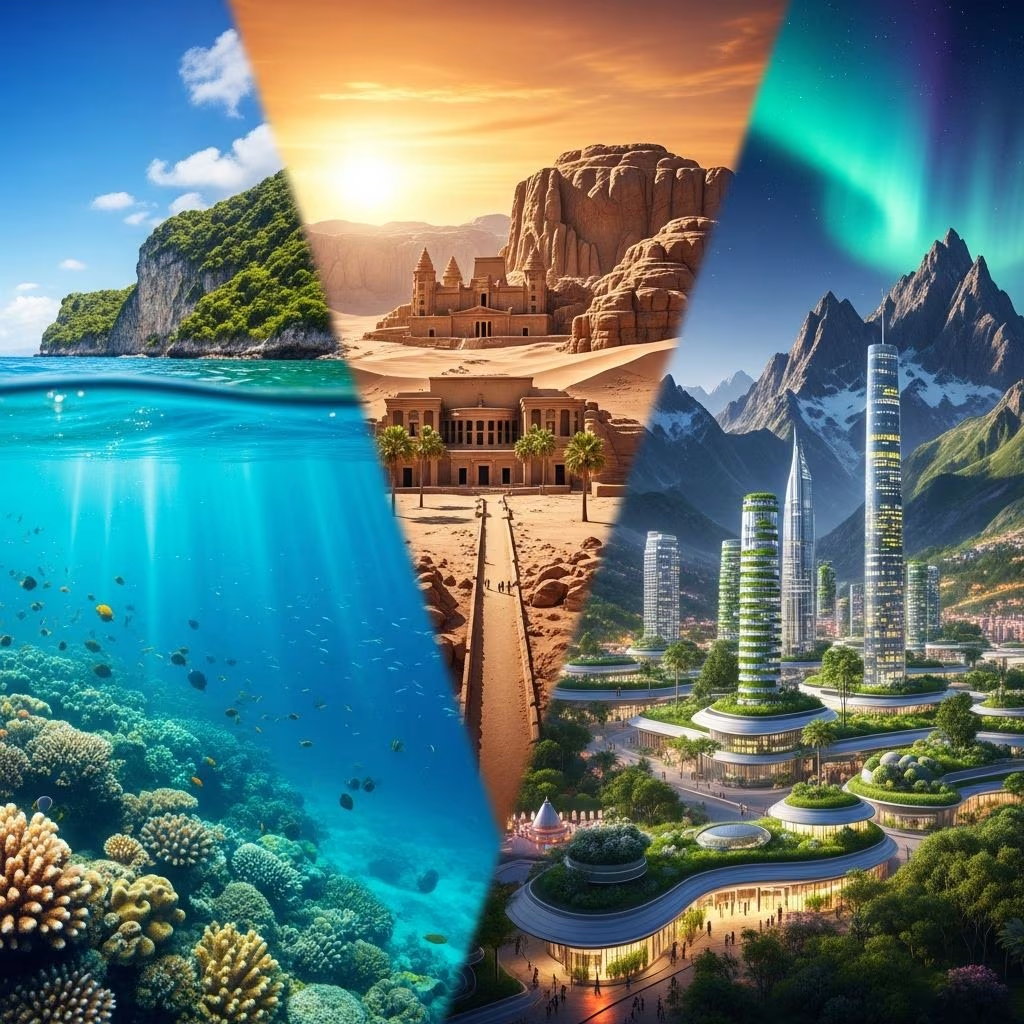
Travel EssentialsThe year 2025 marked a significant expansion of UNESCO’s prestigious World Heritage List with the addition of 26 extraordinary sites. These inscriptions, decided during the 47th session of the World Heritage Committee held in Paris from July 6 to 16, elevated the total to 1,248 properties across 170 countries. Comprising 21 cultural, four natural, and one mixed site, this year’s selections underscore humanity’s diverse legacies, from prehistoric rock art to imperial palaces and vibrant ecosystems.
Understanding UNESCO’s World Heritage Designation
UNESCO designates sites as World Heritage for their outstanding universal value, encompassing cultural, natural, or mixed attributes that represent shared human achievements or natural phenomena. Nominated by countries and evaluated rigorously, these sites receive international protection and recognition. In 2025, out of 32 nominations, the committee prioritized properties reflecting prehistory, African heritage, and collective memory, bringing enhanced conservation focus amid challenges like climate change.
Nearly a third of the new sites link to prehistory, vital for tracing human evolution. African representations grew notably, with four new entries raising the continent’s total to 112 sites. Guinea-Bissau and Sierra Leone submitted their inaugural nominations, promoting list universality.
Europe’s Timeless Treasures Join the List
Europe contributed several iconic additions, blending royal extravagance, ancient settlements, and geological marvels.
- Palaces of King Ludwig II of Bavaria, Germany: Neuschwanstein, Linderhof, Schachen, and Herrenchiemsee embody 19th-century romanticism with fairy-tale architecture amid alpine landscapes. Built 1864-1886, they symbolize eclectic artistry and royal vision.
- Minoan Palatial Centres, Greece: These Bronze Age complexes reveal early European civilization’s sophistication in architecture and administration.
- Megaliths of Carnac and Shores of Morbihan, France: Over 3,000 prehistoric standing stones form Europe’s largest megalithic collection, dating back 6,000 years, offering insights into Neolithic rituals.
- Møns Klint, Denmark: Dramatic chalk cliffs and fossil-rich forests highlight 55-million-year-old geological history alongside cultural narratives.
- Funerary Tradition in Prehistory of Sardinia, Italy, and Denmark: Shared prehistoric burial practices connect Mediterranean and Nordic ancient communities.
- Sardis and Lydian Tumuli of Bin Tepe, Türkiye: Ancient Lydian capital with royal tombs traces early monetary and urban innovations.
Africa’s Rising Heritage Spotlight
Africa shone brightly in 2025, with sites nominated by local communities emphasizing indigenous stewardship and resilience. Three sites exited the ‘In Danger’ list, signaling conservation successes in Madagascar, Egypt, and Libya.
| Site | Country | Key Features |
|---|---|---|
| Coastal and Marine Ecosystems of Bijagós Archipelago – Omatí Minhô | Guinea-Bissau | Untouched islands sheltering endangered turtles and mangroves; first nomination for the nation. |
| Diy-Gid-Biy Cultural Landscape of Mandara Mountains | Cameroon | Terraced villages and fortifications showcasing adaptive architecture. |
| Mount Mulanje Cultural Landscape | Malawi | Granite peaks intertwined with sacred myths and biodiversity. |
| Sierra Leone’s Debut Site | Sierra Leone | Historic landscapes marking the country’s entry. |
These additions, alongside extensions like the South Africa-Mozambique transboundary park spanning nearly 4,000 km², bolster regional protections.
Asia’s Ancient Echoes and Sacred Paths
Asia’s new sites span dynastic tombs, petroglyphs, and spiritual routes.
- Xixia Imperial Tombs, China: Nine mausoleums and 271 subordinate tombs reflect a multicultural empire blending Chinese traditions with unique legacies.
- Petroglyphs along Bangucheon Stream, Republic of Korea: Prehistoric engravings depict human-animal interactions from millennia ago.
- Cultural Heritage Sites of Ancient Khuttal, Tajikistan: Silk Road-era fortresses and mosques illuminate medieval Central Asian trade.
- Maratha Military Landscapes, India: Twelve fortifications pivotal to the Maratha Empire’s military prowess.
- Prehistoric Sites of Khorramabad Valley, Iran: Caves and settlements unveiling Paleolithic life.
- Mount Kumgang – Diamond Mountain, DPRK: Mixed site with granite peaks and Buddhist temples embodying spiritual harmony.
The Americas: From Rivers to Routes
In the Americas, natural canyons and colonial paths earned recognition.
- Peruaçu River Canyon, Brazil: A natural wonder hosting over 2,000 species and prehistoric rock shelters with vital art.
- Colonial Transisthmian Route of Panamá: 16th-18th century paths linking Atlantic and Pacific, key to global trade.
- Archaeological Ensemble of 17th Century Port Royal, Jamaica: Sunken pirate city remains revealing colonial maritime history.
- Wixárika Route through Sacred Sites to Wirikuta, Mexico: Indigenous pilgrimage trail to peyote deserts, preserving Huichol traditions.
Oceania and Beyond: Indigenous Endurance
- Murujuga Cultural Landscape, Australia: World’s largest collection of ancient petroglyphs, over 50,000 years old, sacred to Ngarluma and Yindjibarndi peoples.
- Cambodian Memorial Sites: Transformed Khmer Rouge prisons into peace symbols.
- Rock Paintings of Shulgan-Tash Cave, Russia: 14,000-year-old Paleolithic art in Bashkiria.
Implications for Conservation and Tourism
These designations mandate enhanced protections against threats like urbanization and climate impacts. UNESCO’s focus on prehistory and Africa fosters global equity in heritage representation. Travelers gain access to bucket-list destinations, but responsible tourism is crucial to preserve authenticity.
Extensions, such as transboundary parks, promote cross-border cooperation, vital for migratory species and shared histories.
Frequently Asked Questions (FAQs)
What criteria must a site meet for UNESCO World Heritage status?
Sites must demonstrate outstanding universal value under cultural (monuments, landscapes), natural (geological, biodiversity), or mixed criteria, supported by robust management plans.
How many World Heritage Sites exist post-2025?
1,248 sites in 170 countries: 972 cultural, 235 natural, 41 mixed.
Why the emphasis on African sites in 2025?
To enhance universality, with first-time nominations and removals from the Danger List highlighting progress.
Can visitors access all new sites immediately?
Most are open, but check local guidelines; remote or protected areas may have restrictions.
What role does climate change play in these decisions?
The committee addressed its impacts, prioritizing vulnerable prehistoric and coastal sites.

References
- These are the 26 new Unesco World Heritage sites for 2025 — The Independent. 2025-07-16. https://www.independent.co.uk/travel/news-and-advice/new-unesco-heritage-sites-2025-b2789855.html
- UNESCO Adds 26 New World Heritage Sites Highlighting African Heritage — ArchDaily. 2025. https://www.archdaily.com/1033248/unesco-adds-26-new-world-heritage-sites-highlighting-african-heritage-and-shared-prehistory
- UNESCO World Heritage: 26 new sites inscribed — UNESCO. 2025-07. https://www.unesco.org/en/articles/unesco-world-heritage-26-new-sites-inscribed-0
- New Inscribed Properties (47COM) — UNESCO World Heritage Centre. 2025. https://whc.unesco.org/en/newproperties/
- 26 new UNESCO World Heritage sites inscribed — United Nations. 2025. https://www.un.org/en/delegate/26-new-unesco-world-heritage-sites-inscribed
- World Heritage List — UNESCO World Heritage Centre. 2025. https://whc.unesco.org/en/list/
More in Travel Essentials
Travel Essentials
Travel Essentials200+ Disney Instagram Captions for Magical Park Photos
Travel Essentials
