

 Travel Essentials
 Travel Essentials

Explore Cusco's architectural wonders, artisan markets, and high-altitude landscapes across three transformative days of cultural immersion and discovery.
 Travel Essentials
Cusco stands as one of South America’s most captivating destinations, perched at 11,000 feet above sea level in the Peruvian highlands. This ancient city, once the heart of the Inca Empire, seamlessly blends pre-Columbian heritage with Spanish colonial architecture, creating a unique cultural tapestry that draws visitors from around the world. A three-day visit provides sufficient time to acclimate to the altitude, explore the city’s major historical sites, wander through vibrant neighborhoods, and participate in distinctive local experiences that reveal how tradition persists in modern Peru.
Understanding the challenges of Cusco’s elevation is essential for planning a successful visit. The city’s altitude presents a genuine concern that requires thoughtful preparation rather than dismissal. Upon arrival, your body needs time to adjust to reduced oxygen levels, which can cause headaches, fatigue, and difficulty sleeping. Rather than filling your first day with ambitious itineraries, prioritizing rest and hydration creates a foundation for enjoying subsequent days without discomfort.
Medical professionals recommend consuming generous quantities of water throughout your first 24 hours in the city. Many visitors find that chewing coca leaves—a traditional local remedy used for centuries—provides genuine relief from altitude-related symptoms. These leaves contain mild compounds that locals have relied upon for generations to manage the physiological demands of high-altitude living. Local pharmacies stock coca tea as well, offering an accessible alternative for those hesitant about chewing leaves directly.
Beyond these immediate steps, moving slowly through your first day allows your body’s red blood cell production to increase naturally. Avoid strenuous exercise, alcohol consumption, and heavy meals during your initial hours. Instead, gentle walking combined with frequent rest periods on benches throughout the city’s plazas enables gradual acclimation while still allowing you to experience Cusco’s atmosphere.
Begin your Cusco journey at Plaza de Armas, the city’s expansive central square that has served as the community’s gathering point for centuries. This plaza’s defining characteristic is its openness—the absence of tall buildings allows Cusco’s distinctive blue sky to dominate your view, creating a sense of space unusual in city centers. The surrounding architecture showcases Spanish colonial influence, with arcaded passageways lining three sides of the square, providing shaded areas for browsing shops and resting.
Spend time simply sitting on a bench, observing the constant flow of both tourists and locals moving through the square. This seemingly passive activity actually serves important functions: your body continues acclimating while you absorb the city’s unique energy. Notice how local vendors, typically indigenous women in traditional dress, interact with visitors. Photography opportunities abound, though always ask permission before photographing people.
The Cathedral dominating the plaza’s eastern edge showcases religious architecture that blends indigenous and European influences in unexpected ways. Inside, the painting of the Last Supper incorporates guinea pig on the apostles’ plates—a detail that illustrates how Peruvian artists adapted European religious iconography to reflect local foodways. This artistic fusion represents the broader cultural synthesis visible throughout the city.
After resting and hydrating, seek out Florencia y Fortunata, a women-led specialty coffee establishment that provides carefully prepared beverages using locally sourced beans. Supporting women-owned businesses has become increasingly important in Cusco’s tourism economy, and this café exemplifies the quality available beyond tourist-oriented establishments.
Adjacent to the coffee shop, Augusta Espacio operates as a cultural center showcasing contemporary Peruvian art alongside educational programming. This venue bridges historical understanding with modern artistic expression, revealing how Cusco’s creative communities interpret their heritage through contemporary mediums.
The Museo de Arte Precolombino, positioned near Plaza Nazarenas, houses one of the most carefully curated collections of pre-Inca and Inca artifacts in Peru. Objects dating back 3,000 years provide tangible connections to civilizations that flourished before Spanish arrival. Walking through these galleries offers context for understanding the architecture, textiles, and craftsmanship visible throughout the city.
As darkness falls, the Cuzco Planetarium offers an engaging experience focused on astronomical knowledge valued by Inca civilizations. The presentation explores the Cruz del Sur (Southern Cross) constellation and introduces Inca concepts of dark constellations—areas between stars that held significance in pre-Columbian astronomy. Even with partial cloud cover, the planetarium’s projection beneath its dome provides intellectual stimulation and demonstrates how ancient peoples understood their celestial environment differently than modern Western traditions.
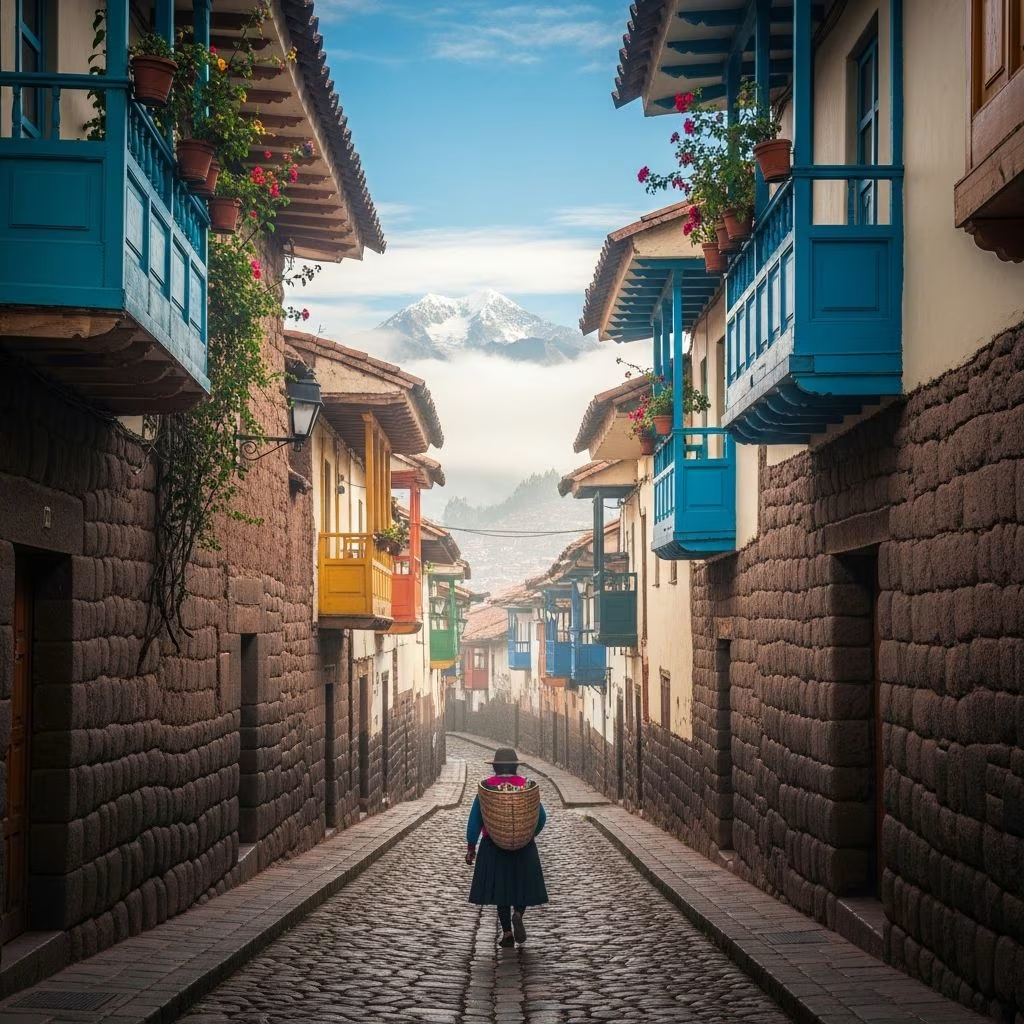
San Blas occupies the hillside rising steeply from the Plaza de Armas and has functioned as an artisan neighborhood since Inca times. The steep cobblestone streets mean the walk requires physical effort, particularly given your continued altitude adjustment, but the aesthetic rewards justify the exertion. Buildings throughout San Blas incorporate enormous Inca stonework as their foundations—a visible legacy of Spanish conquistadors literally building European structures atop Inca ruins.
The famous twelve-angled stone represents one of Cusco’s most photographed architectural elements. This precisely carved stone, fitted into a Spanish colonial building’s foundation without mortar, exemplifies Inca engineering expertise. The stone’s multiple angles demonstrate construction sophistication that European masons initially struggled to replicate.
San Blas hosts numerous small businesses reflecting the neighborhood’s craftsperson heritage. HILO specializes in innovative unisex clothing pieces that blend traditional design elements with contemporary aesthetics. HJK offers sustainably produced alpaca sweaters—a material that Peruvian fashion continues to celebrate internationally. These establishments represent how Cusco’s artisans have adapted traditional production methods to contemporary markets while maintaining quality standards.
The neighborhood’s numerous small cafés provide venues for extended conversations with local proprietors who frequently possess deep knowledge about neighborhood history and cultural practices. Casa Siete, a women-led establishment, offers personalized services focused on creating memorable souvenirs rather than mass-produced items.
Xapiri Underground serves uniquely prepared beverages featuring ingredients like cacao combined with turmeric, creating flavors that evoke Amazonian forests. This establishment illustrates how Cusco’s food and beverage sector draws inspiration from Peru’s diverse ecosystems beyond the highlands.
San Blas Market offers insight into how locals actually provision themselves, contrasting with tourist-oriented commercial spaces. The market’s vegetarian restaurant serves authentic Peruvian dishes at prices reflecting local economics rather than tourist markups. This venue provides opportunity to consume traditional food prepared according to methods used by Cusco residents rather than restaurants optimized for international palates.
Your third day should include structured visits to major archaeological sites that shaped Cusco’s historical significance. The Temple of the Sun, known as Qorikancha or Convento de Santo Domingo, represents one of the most sacred Inca locations. Historical records indicate that during the height of Inca civilization, this temple’s walls and floors featured covering of pure gold and silver. Spanish conquest resulted in systematic removal of these precious metals, leaving only the stone structures visible today.
The architectural precision evident in Qorikancha’s stonework demonstrates engineering achievements that continue astonishing visitors centuries later. The building’s strategic location, near the city center, reflects its religious and political importance within Inca civilization.
San Pedro Market occupies a physical space distinct from the artisan markets of San Blas, functioning primarily as a wholesale and retail market serving local residents. Here you’ll encounter medicinal herbs and crops reflecting traditional Peruvian pharmacopeia, alongside conventional produce and prepared foods. Juice vendors throughout the market offer freshly prepared beverages combining fruits unfamiliar to many international visitors.
The market’s surrounding neighborhood contains architectural details and street vendors revealing how commerce operates beyond formal tourist zones. This area feels less curated than central tourist districts, providing glimpses of ordinary Cusco life.
Plaza Regocijo, a smaller plaza near the city center, provides tranquil space for observing daily life without the constant activity of Plaza de Armas. Sitting on benches watching people move through the plaza offers time for reflection on experiences accumulated across your three days. Several cafés surrounding the plaza feature upstairs balconies providing elevated perspectives on street-level activity.
Concluding your three days with sunset views from the San Cristobal hilltop church provides an elevated conclusion to your Cusco experience. A brief taxi ride transports you to this prominent landmark visible from the city center. The panoramic view encompasses Cusco’s architecture, surrounding mountains, and the landscape extending toward the Sacred Valley. This perspective synthesizes your three-day experience, revealing the city’s position within the broader Andean geography.
Cusco’s layout requires some navigation planning, though walking comprises the primary transportation method for visitors. The city’s cobblestone streets, while picturesque, demand attention to foot placement, particularly for those unaccustomed to uneven surfaces. Comfortable, broken-in walking shoes with good traction are essential equipment.
Taxis provide affordable transportation when distances exceed comfortable walking ranges or when altitude fatigue necessitates assistance. Negotiating fares before entering vehicles avoids surprises, and using official taxi services rather than street hailing enhances safety. Uber operates in Cusco, offering transparent pricing familiar to international travelers.
Peru’s culinary reputation attracts food-focused travelers, and Cusco offers opportunities to experience both traditional and innovative Peruvian cuisine. However, visitors managing altitude adjustment should approach unfamiliar foods cautiously. Restaurants catering to international visitors typically offer safer options for digestive systems acclimating to altitude and regional cuisine.
Local specialties worth sampling include ceviche (fresh fish cured in citrus), lomo saltado (stir-fried beef), and various potato preparations reflecting Peru’s biodiversity in tuber cultivation. These dishes provide authentic culinary experiences without presenting excessive digestive challenges.
Cusco experiences distinct wet and dry seasons, though the city remains visitable year-round. The dry season (May through September) offers clearer skies and lower precipitation, creating optimal conditions for outdoor exploration and photography. The wet season (November through March) brings afternoon rainfall, though mornings typically remain clear. Hurricane-force winds occasionally occur at higher elevations during the wet season, affecting outdoor activities.
Selecting accommodations near the city center minimizes transportation requirements during your three-day visit. Proximity to Plaza de Armas enables walking to most major sites, reducing fatigue during altitude adjustment. Mid-range hotels offer quality balancing comfort with cost-effectiveness, while luxury properties provide additional amenities for those prioritizing convenience.
Cusco’s indigenous communities maintain cultural practices rooted in centuries of tradition. Respectful engagement means seeking permission before photographing people, supporting indigenous-owned businesses, and approaching cultural sites with appropriate reverence. Understanding that Cusco isn’t merely a tourist destination but an inhabited city where residents conduct daily lives promotes more meaningful interactions and ethical tourism practices.
