

 Travel Essentials
 Travel Essentials

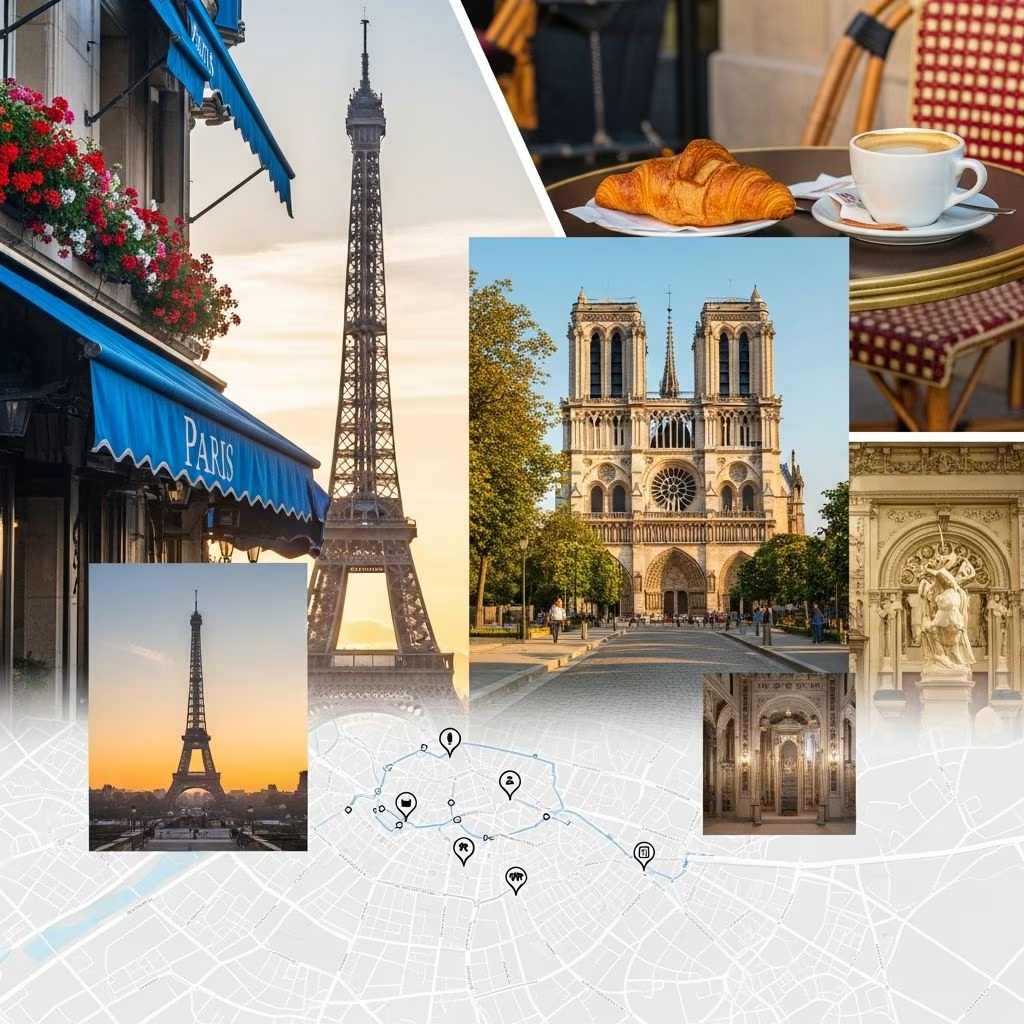
A comprehensive 3-day Paris itinerary balancing famous attractions with authentic experiences, designed for first-time visitors seeking maximum impact in minimal time.
 Travel Essentials
Planning a three-day visit to Paris requires careful consideration of what truly matters to you as a traveler. While the city’s endless attractions could occupy weeks of exploration, condensing your experience into 72 hours demands strategic prioritization. This guide presents a thoughtfully structured approach to experiencing Paris’s most compelling destinations, ensuring you capture both the iconic moments and authentic local experiences that define this remarkable city.
Before embarking on your three-day adventure, understanding Paris’s geographic organization proves invaluable. The city’s arrondissements, or districts, radiate from the center in a spiral pattern, each offering distinct characteristics and attractions. The Seine River cuts through the city, creating natural divisions and serving as a navigational reference point for visitors. Most major attractions cluster within accessible proximity to one another, making logical routing essential for efficient time management.
Public transportation in Paris is exceptionally efficient, comprising an extensive metro system, bus network, and river ferry services. Purchasing a multi-day transit pass can significantly reduce transportation costs while simplifying navigation. Walking remains one of the most rewarding ways to experience Paris, as strolling through neighborhoods reveals details that rushed transportation cannot. Comfortable footwear becomes a practical necessity rather than a luxury consideration.
Begin your Parisian journey at the Eiffel Tower, the city’s most recognizable structure. Arriving early provides multiple advantages: shorter queues, better lighting for photography, and fewer crowds competing for visual access. You have flexibility in how you engage with this monument. Ascending the tower offers panoramic city views, though this requires advance ticket reservations. Alternatively, experiencing it from ground level—whether through photography at Champ-de-Mars, the sprawling park at its base, or a peaceful picnic—provides equally meaningful engagement without the time investment or expense.
The second floor of the Eiffel Tower presents the optimal vantage point for observing Paris’s layout and identifying other landmarks. Timing your tower visit for late afternoon allows you to witness the transition from daylight to evening, culminating in the tower’s hourly light show that commences at 8 PM. This creates a magical conclusion to your first day exploration.
After experiencing the Eiffel Tower, redirect your energy toward the Luxembourg Gardens, a sprawling green space that epitomizes Parisian leisure culture. This historic garden, established in the 17th century, offers respite from urban intensity while providing opportunities for genuine people-watching. Parisians of all ages gather here to relax, study, and socialize. Spending time in this environment provides authentic cultural immersion that transcends typical tourist activities.
From the gardens, a 30-minute walk through the Saint-Germain-des-Prés neighborhood leads to the Hôtel des Invalides, a vast complex dedicated to French military history and heritage. This institution houses the Army Museum and serves as the burial site of Napoleon Bonaparte. The architectural grandeur and historical significance make this an essential stop for understanding French historical context.
Conclude your first day by dining in a neighborhood restaurant rather than tourist-oriented establishments. The arrondissements surrounding your daytime exploration offer authentic bistros where locals gather. Experiencing Parisian cuisine in genuine settings—not in establishments targeting international visitors—provides culinary authenticity that enriches your overall experience.
The Louvre, the world’s largest art museum, demands strategic planning to maximize your limited time. Rather than attempting comprehensive coverage, identify specific collections that genuinely interest you. The museum closes on Tuesdays, so verify your visiting day accordingly. Booking skip-the-line tickets in advance prevents substantial queue times. Early morning arrival provides optimal conditions for art appreciation, as galleries remain less crowded before mid-morning.
The Louvre’s magnitude can overwhelm first-time visitors. Consider joining a guided tour rather than navigating independently, as expert commentary contextualizes artworks and prevents the disorienting experience of wondering which pieces merit attention among thousands of options.
Adjacent to the Louvre, the Palais-Royal offers a striking contrast to the museum’s interior crowds. This palace courtyard, featuring elegant arcaded galleries and a tranquil fountain area, provides a serene setting for reflection and photography. The nearby Tuileries Garden extends from the Louvre westward, offering another expansive green space for walking and people-watching. Place de la Concorde, Paris’s largest public square, marks the gardens’ western terminus and presents remarkable architectural and historical significance.
The Champs-Élysées, Paris’s most famous avenue, stretches from Place de la Concorde toward the Arc de Triomphe. This 1.9-kilometer boulevard combines world-class shopping, cafés, and entertainment venues. While commercial establishments dominate the streetscape, the architectural grandeur and historical importance justify dedicated exploration time. Window shopping proves as rewarding as actual purchases for many visitors.
The Arc de Triomphe stands at the Champs-Élysées’s terminus, an imposing monument commemorating French military victories. Ascending this structure reveals another perspective of Paris’s layout, with twelve radiating avenues extending from this central point. The architectural engineering alone justifies the climb.
Begin your final day in the Marais, a historically Jewish neighborhood that has evolved into an eclectic blend of medieval architecture, boutique shopping, and vibrant cultural spaces. Place des Vosges, enclosed by harmonious arcaded buildings, represents one of Paris’s most architecturally coherent squares. The adjoining Maison Victor Hugo provides insight into the literary giant’s Parisian life and creative process.
The Marais’s narrow streets host independent galleries, vintage clothing boutiques, and quirky shops reflecting contemporary Parisian creativity. This neighborhood captures a different Paris than the monumental structures dominating earlier days—one defined by artistic expression and youthful energy.
The Centre Pompidou, a deliberately provocative modern structure featuring exposed mechanical systems and bright industrial aesthetics, stands in stark contrast to traditional Parisian architecture. Designed in the 1970s, this cultural center houses contemporary art, performance spaces, and design collections. Its exterior plaza provides exceptional people-watching opportunities and free entertainment.
Place du Tertre, positioned in the Montmartre neighborhood at elevated terrain, presents the city from an entirely different perspective. Local artists display their work here, creating an open-air gallery atmosphere. The spiritual centerpiece of Montmartre, the Basilica of Sacré-Cœur, dominates the skyline from this vantage point.
Montmartre embodies Paris’s romantic reputation through its hillside geography, artistic history, and intimate cafés. This neighborhood historically attracted bohemian artists, writers, and performers seeking affordable studio space and creative community. While gentrification has transformed the neighborhood considerably, echoes of this artistic heritage remain tangible. The Basilica of Sacré-Cœur, accessible by climbing steep stairs or funicular railway, offers panoramic city views during twilight hours. Evening exploration here captures the neighborhood’s atmospheric qualities, particularly as streetlights illuminate the narrow alleys.
The Moulin Rouge cabaret, legendary for Belle Époque performances and contemporary entertainment, anchors this neighborhood’s entertainment legacy. Whether you attend a performance or observe the venue’s exterior, this establishment represents an important chapter in Parisian cultural history.
Multiple transit pass options accommodate different travel patterns. The Paris Visite pass provides unlimited metro, bus, and train access for specified durations, often proving more economical than individual tickets. The Paris Museum Pass grants entry to numerous cultural institutions, potentially offering savings for visitors planning intensive museum visits. Research these options based on your specific itinerary to maximize value.
French cuisine exists across multiple price points and authenticity levels. Lunch typically costs considerably less than dinner at equivalent restaurants. Neighborhood bistros, identified by hand-written menus posted externally, generally offer better value and more genuine experiences than establishment advertising heavily to tourists. Boulangeries throughout the city provide exceptional pastries and sandwiches for budget-conscious travelers.
Advance reservation for popular attractions prevents disappointment and lengthy waits. Many museums and monuments offer online booking systems allowing time-slot selection. Popular restaurants, particularly those serving evening meals, benefit from advance reservations made days ahead.
Paris’s climate varies significantly across seasons. Spring and fall offer moderate temperatures ideal for walking exploration. Summer brings crowds and occasional heat, while winter provides fewer tourists but potentially challenging weather conditions. Packing layers permits comfortable adjustment to variable conditions.
Understanding basic French phrases enhances interactions with locals and demonstrates cultural respect. Learning key terms for polite greetings, requests, and appreciation elevates your travel experience considerably. While English is increasingly prevalent in tourist areas, effort to communicate in French generates noticeably warmer responses.
While capturing memories through photography holds value, prioritizing direct experience over documentation ensures deeper engagement with locations and moments. Designate specific photography times, allowing remainder periods for undistracted observation and reflection.
Versailles merits substantial time investment—ideally a full day—making it challenging to incorporate meaningfully into a compressed three-day itinerary. If you prioritize Versailles, consider allocating one complete day to this destination, potentially reducing in-city exploration. Early arrival and strategic routing through palace sections optimizes limited time.
Arriving at museums when they open minimizes queues. Visiting major monuments in early morning or late afternoon avoids peak crowds. Evening hours in neighborhoods like Montmartre provide different atmospheric qualities than daytime exploration.
Authentic experience depends more on approach than duration. Eating in local restaurants, walking through neighborhoods without rushing, sitting in cafés for extended periods, and minimizing guidebook dependence creates genuine cultural engagement regardless of timeframe.
Budget varies substantially based on accommodation choices, dining preferences, and attraction selections. Budget travel accommodates museum passes, metro passes, modest dining, and hostel accommodation. Mid-range travel includes boutique hotels and restaurant meals. Luxury travel incorporates upscale dining, exclusive experiences, and premium accommodations. Research specific options aligned with your preferences.
Three days in Paris presents sufficient time for experiencing the city’s iconic landmarks while engaging with authentic cultural elements. Strategic planning, realistic expectations, and flexibility permit meaningful exploration without excessive rushing. Rather than attempting comprehensive coverage of everything Paris offers, identifying your genuine interests and allocating time accordingly produces greater satisfaction than superficial visits to numerous attractions. Whether your passion involves art history, architecture, culinary exploration, or bohemian atmosphere, Paris accommodates diverse travel styles and interests within a three-day timeframe. Approach your visit with openness to unexpected discoveries, recognition that return visits permit deeper exploration, and appreciation for the remarkable concentration of human achievement, creative expression, and historical significance that defines this extraordinary city.
