

 Travel Essentials
 Travel Essentials

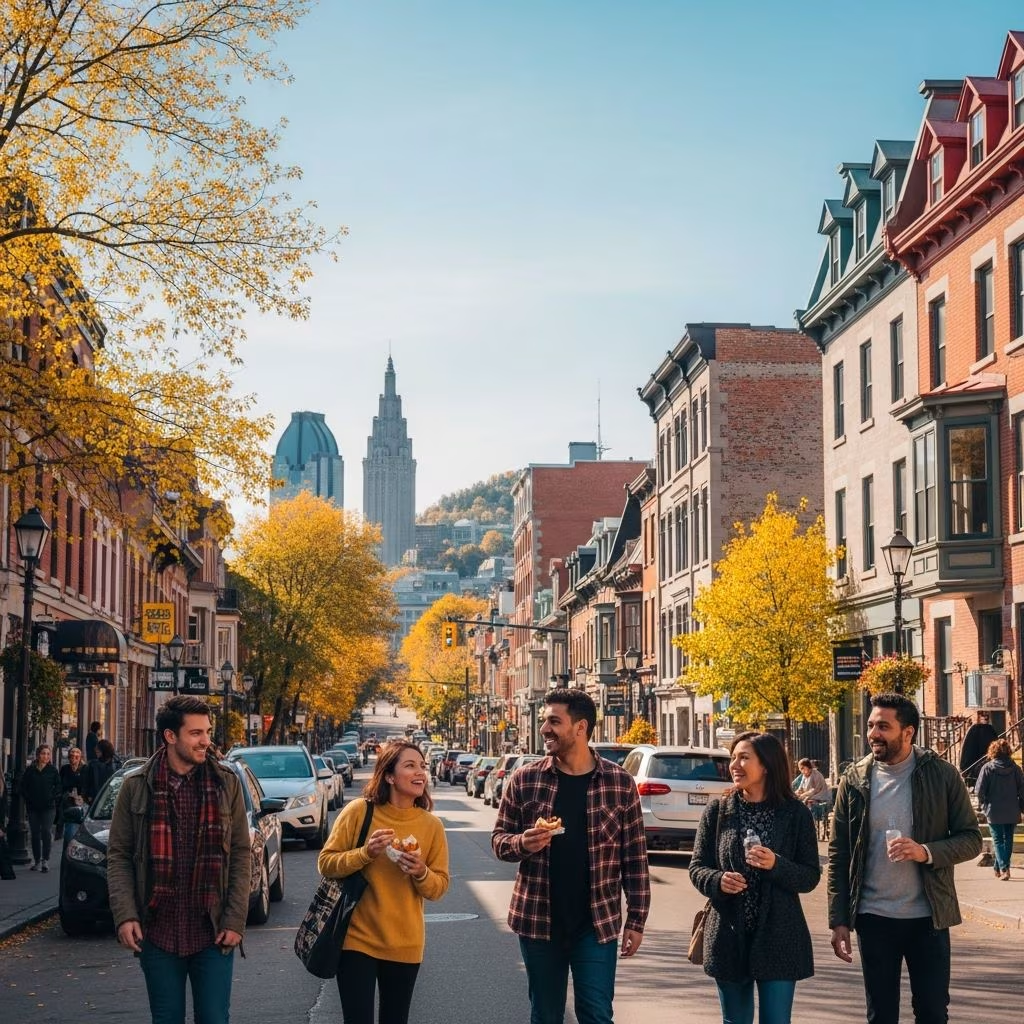
Experience Montreal's vibrant culture, stunning parks, and rich history through free walking tours, festivals, museums, and community gatherings available year-round.
 Travel Essentials
Montreal stands as one of North America’s most vibrant and culturally rich cities, yet many travelers assume that experiencing its magic requires substantial financial investment. The reality is quite different. This cosmopolitan hub offers an impressive array of experiences that cost nothing at all, from community gatherings to world-class parks and cultural institutions that welcome visitors without admission fees.
Whether you’re a first-time visitor or a seasoned traveler, discovering Montreal’s free offerings allows you to immerse yourself in authentic city life while preserving your travel budget for other priorities. The city’s commitment to public spaces, community engagement, and cultural accessibility means that some of the most memorable Montreal experiences are entirely free.
One of the most effective ways to understand Montreal’s complex past is through guided walking tours that explore the historic Old Montreal district. These tours, available at no cost to participants, provide expert narration about the city’s evolution from a colonial trading post to a modern metropolis. Tour guides bring history alive by sharing stories of the diverse characters who shaped the city—from early sailors and religious figures to military personnel and wealthy merchants.
The architectural landscape of Old Montreal itself serves as a visual timeline, with 18th and 19th-century buildings creating an atmosphere that transports visitors to earlier centuries. Walking these streets independently is free, but guided tours add depth and context that individual exploration might miss. Reservations for these tours are typically required, and while the tours themselves cost nothing, guides appreciate gratuities as they rely on tips as primary compensation.
The Old Montreal area also provides excellent opportunities for self-guided exploration, allowing visitors to admire historic facades, cobblestone streets, and riverside views without any financial outlay. This neighborhood forms the foundation of understanding Montreal’s cultural identity.
On summer Sundays, a remarkable phenomenon occurs at the base of Mount Royal near the George-Étienne Cartier statue. Thousands of drummers, dancers, musicians, and spectators gather for the legendary Tam-Tams—a free-form percussion celebration that has thrived for more than four decades. Beginning around midday and continuing into the evening, this spontaneous gathering creates an energetic, multicultural atmosphere that epitomizes Montreal’s creative spirit.
The Tam-Tams represent far more than casual music-making; they embody community values of artistic expression, cultural sharing, and public gathering. Participants range from accomplished musicians to enthusiastic amateurs, and spectators enjoy the performances from the surrounding grass or while having picnics. The event seamlessly blends multiple cultural traditions and musical styles, creating a unique experience that cannot be replicated elsewhere.
Beyond the musical performances, the Tam-Tams area provides natural gathering space within Parc du Mont-Royal, making it an ideal destination for those seeking cultural engagement and community connection. Visitors can arrive anytime during the afternoon or early evening and stay as long as desired.
Montreal’s parks system offers extensive natural experiences within an urban setting. Parc du Mont-Royal, locally known simply as “la montagne” (the mountain), encompasses 200 hectares of wooded trails, scenic viewpoints, and peaceful spaces. The park’s elevation provides respite from city streets while offering panoramic vistas from key viewpoints like the Kondiaronk Belvedere.
Hiking or walking through Mont-Royal’s trails accommodates all fitness levels, from leisurely strolls along main pathways to more challenging terrain for experienced hikers. The park’s diverse ecosystems support native flora and fauna, and seasonal changes create different visual experiences throughout the year. Many visitors combine park exploration with attendance at the Tam-Tams or visits to nearby cultural sites.
Beyond Mont-Royal, other major parks provide distinct experiences. Parc La Fontaine features two ponds, landscaped gardens, and the Théâtre de Verdure, which often hosts free performances during summer months. Located on an island within the St. Lawrence River, Parc Jean-Drapeau offers cycling opportunities, including the chance to ride around the Formula 1 Grand Prix circuit. The park also contains Jardin des Floralies, a small botanical garden that remains a local favorite despite limited public awareness.
Additional green spaces like Parc Frédéric-Back and Parc-nature de l’Île-de-la-Visitation provide opportunities for longer excursions and nature immersion without entrance fees. The Governor’s Garden, situated behind the historic Château Ramesay near the Old Port, offers quieter contemplative spaces ideal for lunch breaks or peaceful reflection.
Montreal’s neighborhoods each possess distinctive character and visual appeal that rewards exploration on foot. Downtown’s iconic Place Ville Marie and the neighboring Ring provide architectural interest, while the Esplanade Tranquille offers a rooftop garden experience across 7,000 square feet. Chinatown presents an entirely different sensory experience, with narrow streets, specialty shops, bubble tea venues, and traditional bakeries creating an immersive cultural environment.
The city’s network of pedestrian-only streets transforms during warmer months, with venues like Wellington Street in Verdun, Avenue Duluth, and Mont-Royal Avenue on the Plateau hosting open-air dining, impromptu entertainment, and community activities. These streets function as social gathering spaces where the rhythm of city life slows and street-level engagement increases.
Art Public Montreal’s curated walking itineraries guide visitors through the city’s public art installations, from monumental sculptures in Old Montreal to multi-story murals across various neighborhoods. Many itineraries include free podcast accompaniment featuring expert commentary and historical context. This self-guided approach to art appreciation combines physical activity with cultural enrichment.
Montreal’s festival calendar provides continuous opportunities for free cultural engagement throughout the year. The Quartier des Spectacles and Place des Festivals serve as primary venues for these events, offering interactive art installations, innovative performances, and live music programming without admission charges.
Summer months bring particular abundance, including the International First Peoples’ Festival during August’s first two weeks, featuring Indigenous artists and cultural presentations from Canada and worldwide sources. The M.A.D Festival celebrates fashion through street animations and open-air showcases. La Virée classique, presented by the Orchestre symphonique de Montréal, provides dozens of classical music concerts throughout August.
The Mtl en Arts festival transforms Sainte-Catherine Street East in the Village neighborhood into an open-air gallery, merging visual art with public space activation. Seasonal programming ensures that opportunities for free cultural engagement remain available regardless of visit timing.
Montreal’s art gallery landscape includes numerous venues offering free admission. The Belgo building in downtown contains five floors of contemporary art galleries, including Galerie Hugues Charbonneau and SKOL, among others. Downtown locations also feature the Leonard & Bina Ellen Art Gallery, Galerie de l’UQÀM, Ellephant, Artexte, and VOX.
Neighborhood galleries throughout the city—including Bradley Ertaskiran in Saint-Henri, Arsenal in Griffintown, Blouin-Division in Griffintown, and multiple galleries in Mile End (Galerie Simon Blais, Centre Clark, Dazibao, Optica) and Little Italy (GalerieERGA)—welcome visitors without charging entrance fees. This decentralized gallery network encourages exploration of different neighborhoods while supporting local artistic communities.
Several museums also offer free admission on designated occasions or for specific visitors. The Montreal Museum of Fine Arts, Musée d’art contemporain de Montréal, McCord Stewart Museum, and Canadian Centre for Architecture periodically provide free access programming, making high-quality cultural experiences accessible to broader audiences.
Montreal’s public markets provide free visual and sensory experiences while supporting local food producers. Atwater Market and Jean-Talon Market, the city’s most famous, showcase seasonal produce, specialty foods, baked goods, and artisan products. Browsing represents a legitimate free activity, though purchasing items would incur costs. The markets also function as cultural gathering spaces where neighborhoods congregate and communities intersect.
Visitors can enjoy observing market dynamics, learning about local food traditions, and discovering regional specialties without purchasing requirements. Many travelers combine market exploration with waterside picnicking using food purchased elsewhere, maximizing the free experience.
Montreal’s Underground City (Ville Souterraine) comprises a 32-kilometer pedestrian network connecting downtown buildings and transit stations. This subterranean realm offers window-shopping opportunities, people-watching, and public art observation without admission charges. During inclement weather, the Underground City provides climate-controlled exploration alternatives to outdoor activities, making Montreal accessible regardless of seasonal conditions.
Effectively experiencing Montreal’s free offerings requires minimal planning beyond typical travel logistics. Comfortable walking shoes become essential given the emphasis on pedestrian exploration and trail hiking. Checking festival schedules in advance helps maximize timing of visits to coincide with specific programming. Many activities remain available year-round, though summer months offer the most abundant options, particularly for outdoor gatherings and festivals.
Combining different activity types—such as morning park exploration, afternoon gallery visits, and evening festival attendance—creates diverse and satisfying days without financial strain. Montreal’s compact geography and excellent public transportation system make navigating between free attractions straightforward.
The city welcomes budget-conscious travelers and provides sufficient free experiences to sustain weeks of interesting activities. Whether seeking historical education, cultural engagement, natural beauty, or community connection, Montreal delivers accessible experiences that define the city’s essential character and cultural vitality.
