

 Travel Essentials
 Travel Essentials

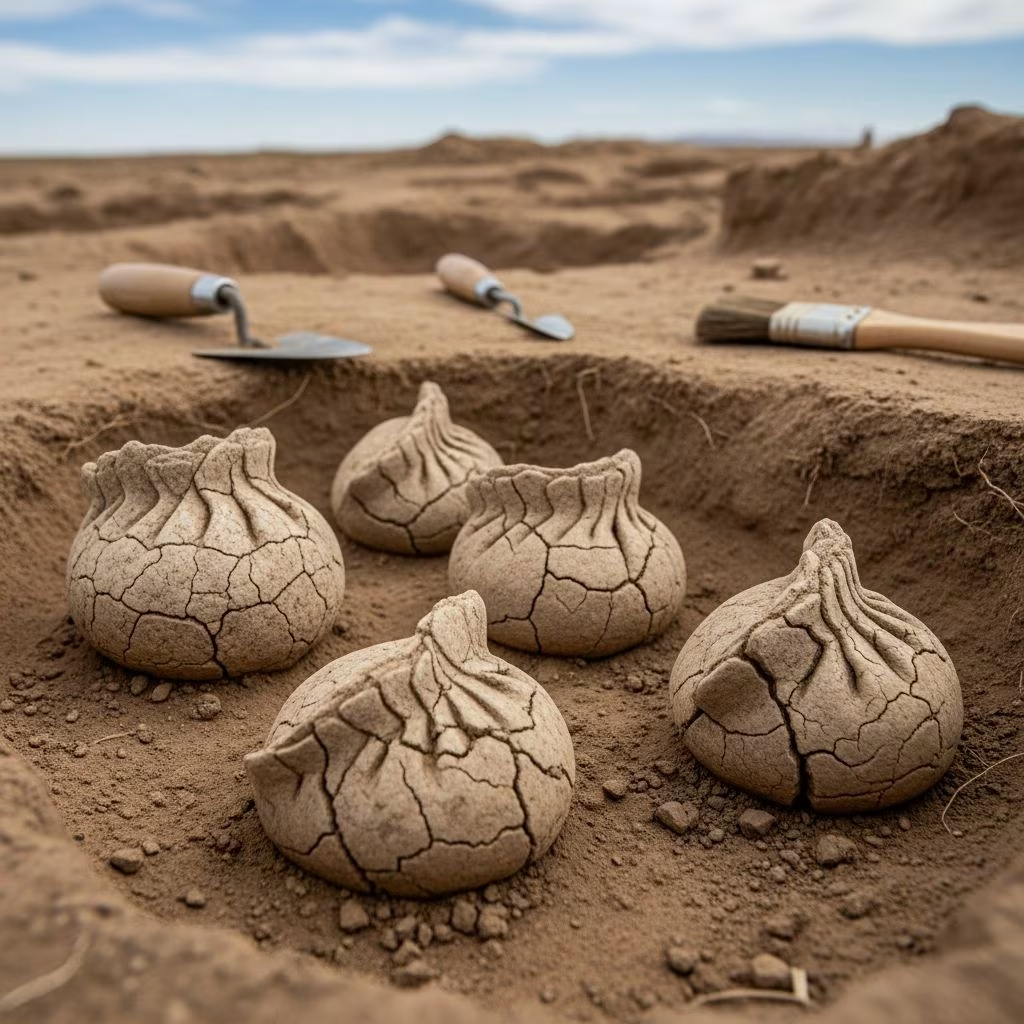
Archaeologists uncover remarkably preserved dumplings from 3500 years ago in western China, shedding light on ancient diets, preservation techniques, and cultural exchanges via the Silk Road.
 Travel Essentials
Archaeological excavations in the arid regions of western China have revealed remarkably preserved dumplings dating back approximately 3,500 years, offering a tantalizing glimpse into the dietary habits of ancient inhabitants along key trade routes.
In the Astana Cemetery near Turpan, part of China’s Xinjiang Uyghur Autonomous Region, teams of archaeologists stumbled upon bundles of ancient dumplings remarkably intact due to the region’s extreme dryness. These finds, nestled within tombs from multiple eras, include specimens from the Six Dynasties period (220-589 CE) and the Tang Dynasty (618-907 CE), demonstrating an evolution in dumpling-making over centuries.
The dumplings appear as crescent-shaped parcels, filled with meat and wrapped in wheat flour dough—strikingly similar to contemporary jiaozi enjoyed across China today. This preservation is no accident; Turpan’s hyper-arid climate, one of the driest on Earth, naturally mummifies organic remains, shielding them from decay.
Analysis shows these ancient dumplings contained meat fillings, likely lamb or mutton, encased in thin dough wrappers made from local wheat. Variations across finds suggest experimentation: some boiled, others possibly steamed or pan-fried, mirroring modern cooking methods for shui jiao, zheng jiao, and jian jiao.
During the Tang Dynasty, similar items called “bian shi” or flat food were common, with a bowl of jiaozi even discovered intact in Turpan tombs from the 7th or 8th century. These revelations challenge assumptions about ancient diets, proving that staple foods like dumplings were not novelties but everyday sustenance.
| Era | Dumpling Features | Similar Modern Equivalent |
|---|---|---|
| Six Dynasties (220-589 CE) | Crescent-shaped, meat-filled wheat wrappers | Traditional pork jiaozi |
| Tang Dynasty (618-907 CE) | Bowl-preserved, possibly boiled | Shui jiao in broth |
| Bronze Age (~1500 BCE) | Oldest known, basic dough parcels | Proto-dumpling forms |
Jiaozi, the iconic Chinese dumpling, boast roots potentially stretching to the Eastern Han Dynasty (25-220 CE), credited to physician Zhang Zhongjing. Legend holds that Zhongjing created them as a remedy for frostbitten ears during a harsh winter, stuffing dough with lamb, peppers, and herbs to warm patients until Chinese New Year.
Earlier references appear in the Western Han (206 BCE-9 CE), termed “jiaozi” or horn-shaped foods, and by the Three Kingdoms (220-280 CE), noted in texts like Guangya. Northern Qi scholar Yan Zhitui (550-577 CE) described them as ubiquitous crescent-moon snacks. By the Yuan Dynasty, they were dubbed “flat food,” solidifying their place in northern Chinese cuisine.
Regional differences persist: northerners favor handmade, hearty versions for daily meals and festivals, while southern styles emphasize thin skins with generous fillings, often dipped in vinegar and served steamed or fried.
The Turpan finds highlight dumplings’ role in Silk Road exchanges. Turkic traders likely introduced proto-dumpling concepts around 2,000 years ago, blending with local wheat-based wrappers. As nomads and merchants traversed Central Asia, these portable foods fueled journeys from Siberia to the Mediterranean.
Mongol conquests further disseminated them westward, influencing Eastern European pelmeni and Italian ravioli. In China, they transcended origins to become symbols of prosperity, their gold-ingot shape evoking wealth during Lunar New Year.
Today, dumplings symbolize good fortune, especially on Lunar New Year and winter solstice. Families gather to wrap jiaozi, embedding coins in some for luck. This tradition echoes ancient tomb offerings, where food ensured sustenance in the afterlife.
In northern China, boiled dumplings with pork and cabbage dominate New Year’s Eve feasts; southern variants lean toward shrimp or veggie fillings in wonton soups. Their versatility—boiled, steamed, fried—mirrors ancient adaptability.
Beyond dumplings, Astana tombs yielded grains, meats, and fruits, painting a picture of a diverse Silk Road diet. Wheat from Central Asia mixed with local mutton, reflecting trade’s culinary impact.
These discoveries affirm continuity: ancient Chinese prized portable, nutritious foods much like today. Preservation techniques, unintentional yet effective, allow modern scientists to study microbial remains and reconstruct recipes.
Turpan’s Taklamakan Desert environment, with minimal rainfall and constant winds, desiccates remains swiftly. Similar to mummies in Egypt, these organic artifacts provide DNA samples, revealing migration patterns and health via isotopic analysis.
Modern recreations draw from these finds: wheat dough (flour, water, salt), filled with minced lamb, onions, and spices, then boiled. Experiment with ancient twists—add ginger or fennel for authenticity.
Classes in China now teach “archaeological dumplings,” blending history with hands-on cooking to preserve heritage.
Interpreting residues requires advanced tech like mass spectrometry to identify proteins and starches. Debates persist on exact ages and fillings, but consensus points to meat-centric originals.
The oldest preserved dumplings date to about 3,500 years ago in western China’s Turpan region.
Crescent-shaped with meat fillings in wheat dough, much like today’s jiaozi.
Turpan’s extreme aridity naturally mummified them.
Yes, symbolizing wealth and warmth, with roots in medicinal legends.
Indeed, influencing global filled-dough foods through trade and conquests.
These finds underscore the need for protecting Xinjiang sites amid climate shifts threatening preservation. Museums showcase replicas, educating on how food weaves through history.
