

 Travel Essentials
 Travel Essentials

Discover Colombia's most biodiverse protected areas through a carefully planned itinerary combining Caribbean coastal wilderness and cloud forest alpine valleys.
 Travel Essentials
Colombia’s conservation network encompasses 59 distinct protected areas, representing some of South America’s most remarkable natural landscapes. For travelers with limited time, a strategically planned four-day expedition offers an opportunity to experience two fundamentally different environments that showcase the country’s extraordinary biodiversity and geographic diversity.
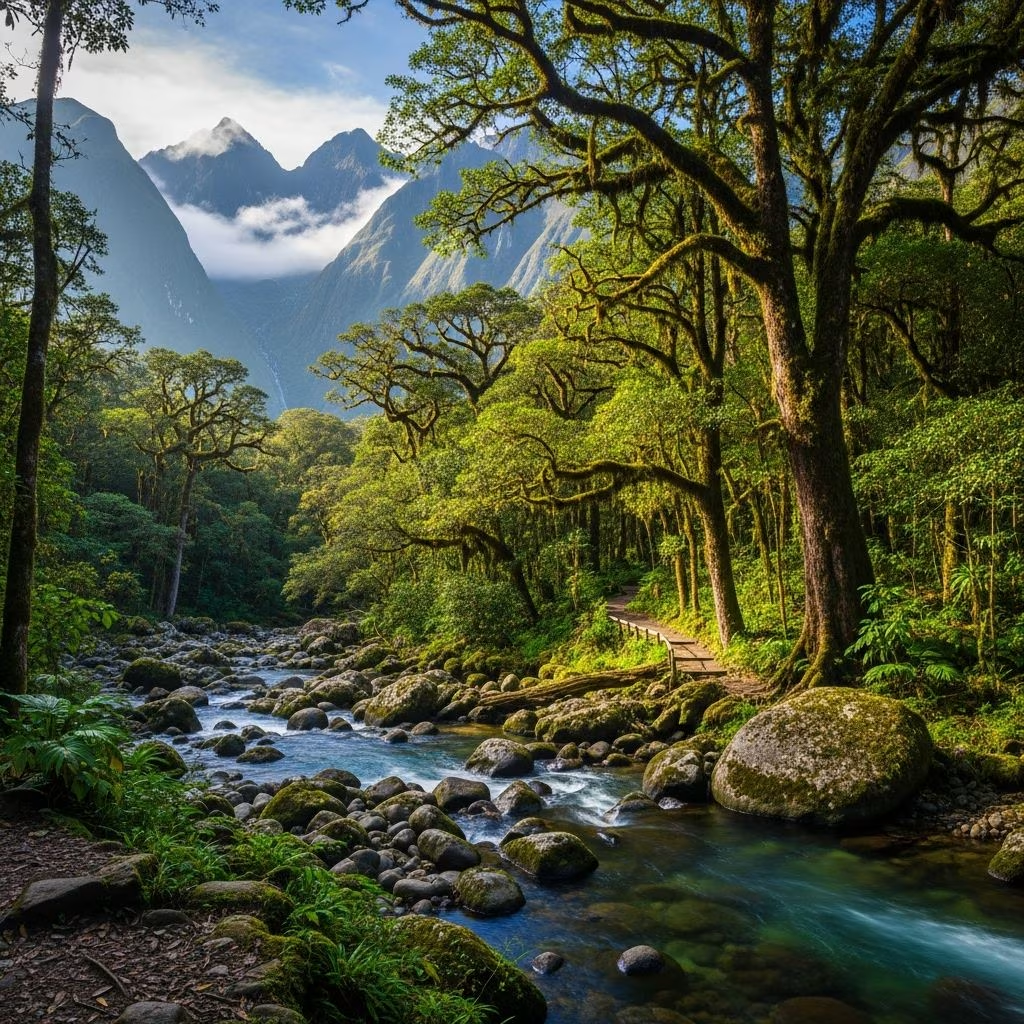
The nation’s protected areas represent multiple ecosystem types, from tropical rainforests descending to turquoise Caribbean waters to high-altitude cloud forests populated by rare endemic species. These preservation zones protect not only wildlife but also indigenous cultures that have inhabited these regions for centuries. The contrast between coastal and mountain environments within a short distance makes Colombia uniquely suited for multi-ecosystem exploration.
Santa Marta serves as the optimal starting point for this four-day journey. Located on Colombia’s Caribbean coast, this historically significant city—Colombia’s first Spanish settlement—provides easy access to the country’s most celebrated protected areas. The city’s strategic positioning at the base of the Sierra Nevada de Santa Marta mountain range creates an ideal hub for both coastal and inland adventures.
The city itself offers practical amenities including international airport connections, accommodation options ranging from budget hostels to upscale hotels, and numerous tour operators experienced in organizing multi-day expeditions. Arriving in Santa Marta allows travelers to acclimate to tropical conditions before embarking on more strenuous activities.
The first phase of this itinerary focuses on Parque Nacional Natural Tayrona, a 150-square-kilometer protected zone where jungle-covered mountains descend steeply into the Caribbean. The park occupies the lower elevation territories of the world’s largest coastal mountain system, creating distinctive geological formations and rugged cove beaches unparalleled throughout Latin America’s Caribbean coastline.
Initial Exploration and Beach Access
Upon arrival at Tayrona, visitors encounter white-sand beaches interspersed with rainforest remnants and archaeological significance. The park’s most photographed location, Cabo de San Juan, represents the culmination of a two-hour hiking expedition through thick tropical vegetation. This trek provides opportunities to observe exotic wildlife including tamarin monkeys and green iguanas while navigating through diverse topography.
The Cabo de San Juan destination area features accommodation options including tent rentals and hammock installations suspended over gentle waves. An on-site restaurant provides sustenance featuring locally caught seafood specialties, offering visitors authentic Caribbean coastal cuisine prepared fresh daily.
Extended Hiking and Archaeological Discoveries
The second day permits deeper park exploration through the El Pueblito trail system, which accesses an archaeological site representing a former bustling Tayrona settlement. This four-to-five-hour hiking expedition traverses jungle terrain while showcasing substantial wildlife diversity. Iguanas, basilisks—remarkable lizard species capable of running atop freshwater bodies—inhabit this region alongside jaguars and howler monkeys, though both large felids and primates rarely present themselves to observers.
The El Pueblito experience can be extended into a complete loop incorporating Playa Brava, requiring comprehensive preparation including adequate hydration and solar protection due to extended exposure during the entire journey.
For adventurers seeking more intensive archaeological immersion, longer four-to-five-day treks departing from Santa Marta reach the “Lost City” or Ciudad Perdida—frequently characterized as Colombia’s equivalent to Machu Picchu. This terraced stone settlement, constructed approximately 800 CE, features multiple circular plazas positioned among jungle-covered mountainous terrain offering spectacular panoramic views. Indigenous communities still inhabit nearby areas, providing opportunities for cultural exchange and learning about traditional lifeways sustained across centuries.
The second phase transitions from coastal environments to high-altitude ecosystems through exploration of Valle de Cocora, situated within the expansive Parque Nacional Natural Los Nevados. This requires travel to the town of Salento, accessible from Tayrona through overland transportation spanning multiple hours.
Journey Logistics and Regional Geography
Transportation from coastal regions to Salento necessitates planning but rewards travelers with dramatically altered environmental conditions. Jeep services from Salento’s main plaza depart with predictable frequency (approximately 30-minute journeys; minimal costs) toward trailheads, filling as passenger capacity permits.
The Wax Palm Ecosystem
Valle de Cocora’s signature feature comprises towering groves of Quindío wax palms—the planet’s tallest palm species, reaching heights exceeding 200 feet. These remarkable plants exist only within specific altitude ranges between 2,000 and 3,000 feet, demonstrating specialized ecological adaptation. Colombia designates these palms as the national tree, reflecting their cultural and environmental significance.
Entry into the valley system requires nominal fees at designated checkpoints, with portions of the trail system crossing private agricultural lands. The complete loop experience requires five-to-six-hour commitment, demanding appropriate footwear and substantial hydration reserves.
Trail Experience and Terrain Variation
Initial trail sections present relatively gentle, flat topography traversing wide-open valley landscapes bordered by distant mountains and small-scale farming operations. This initial phase permits physical warm-up before encountering more challenging ascents.
The trail ascends toward Finca la Montaña, an elevated point providing spectacular vistas alongside refreshment and dining services featuring fresh locally harvested trout. Timing considerations matter, as lunch availability typically concludes by early afternoon.
The descent represents the journey’s emotional and scenic pinnacle—traversing beneath the towering wax palms while navigating streams crossing verdant landscapes. This section justifies the entire expedition’s physical demands, offering unparalleled communion with endemic flora and pristine mountain environments. Travelers may alternatively execute abbreviated versions commencing at trail termination points, enabling relatively quick circuit completion without full-loop commitment.
Both protected areas host distinct fauna assemblages reflecting their different elevations and climatic conditions. Coastal zones harbor marine species and specialized beach fauna alongside rainforest inhabitants adapted to humidity and dense vegetation. Alpine regions support different species compositions, including high-altitude specialists and endemic birds accessible primarily through patient observation.
Wildlife observation varies considerably based on timing, weather, and visitor presence. Early morning departures maximize wildlife encounter probabilities as animal activity peaks during cooler periods.
Physical Preparation and Requirements
The itinerary encompasses moderate-to-challenging hiking with sustained elevation changes. Adequate cardiovascular fitness, appropriate footwear, and previous hiking experience enhance enjoyment and safety. Sun protection, hydration management, and insect repellent constitute essential preparations.
Seasonal Timing
Colombian tropical and subtropical regions experience consistent conditions year-round compared to temperate zones. Rainfall patterns vary regionally, potentially affecting trail conditions and visibility. Consultation with local guides regarding current conditions informs optimal timing decisions.
Accommodation and Meals
Both protected areas offer varied accommodation options from basic camping to modest lodges. Meal provisions range from on-site restaurants to packed lunch arrangements. Dietary restrictions require advance communication with tour operators or accommodation providers.
Both protected areas exist within territories historically and contemporaneously inhabited by indigenous peoples. Respectful interaction, adherence to community guidelines, and compensation for services represent important ethical travel practices. Many organized expeditions incorporate direct engagement with indigenous guides and communities, providing authentic cultural perspectives and supporting local economies.
Protecting these ecosystems requires visitor conscientiousness regarding waste management, trail adherence, and wildlife disturbance minimization. Using designated accommodations, hiring local guides, and supporting conservation-focused tour operators contribute positively to long-term environmental preservation. Travelers should leave no trace, pack out all non-organic materials, and avoid removing wildlife specimens or archaeological artifacts.
This four-day exploration through contrasting Colombian ecosystems introduces visitors to the nation’s conservation achievements while providing intimate contact with remarkable landscapes and indigenous cultures. The combination of Caribbean coastal experiences and alpine valley environments demonstrates Colombia’s environmental diversity within a compact timeframe. Following this initial expedition, many travelers find themselves motivated to undertake longer explorations of the country’s additional 57 protected areas, each offering distinctive geological, ecological, and cultural narratives awaiting discovery.
