

 Travel Essentials
 Travel Essentials

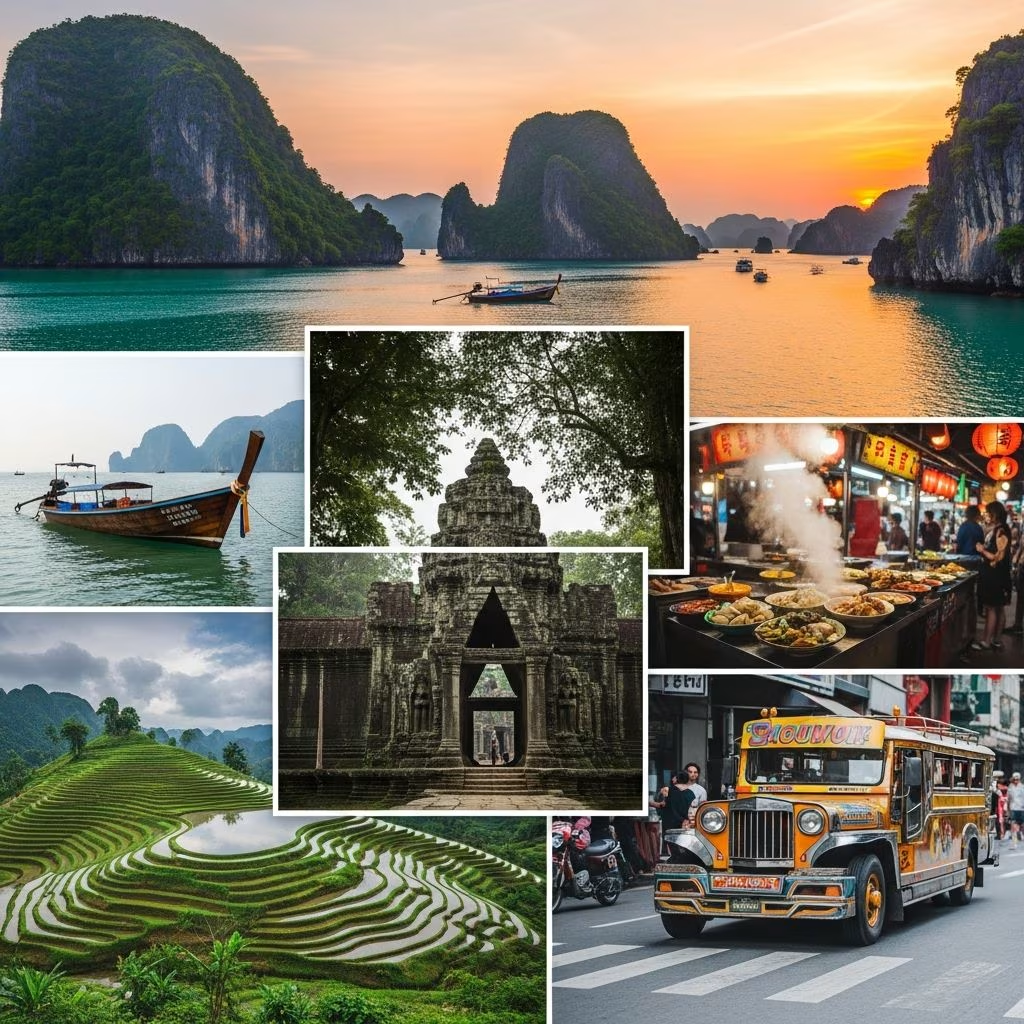
Plan your ultimate Southeast Asia adventure with this detailed 4-week travel guide covering mainland destinations and island escapes.
 Travel Essentials
Southeast Asia stands as one of the world’s most captivating destinations, offering travelers an intoxicating blend of ancient traditions, modern energy, breathtaking landscapes, and culinary excellence. This diverse region encompasses fascinating contrasts—from bustling metropolitan centers to serene spiritual sanctuaries, from pristine coral reef ecosystems to dramatic jungle terrain. A four-week expedition through this remarkable corner of the world provides the perfect balance between cultural immersion and natural exploration, allowing visitors to transition seamlessly between urban excitement and tranquil countryside retreats.
Southeast Asia’s appeal lies fundamentally in its geographic variety. The region comprises both substantial mainland territories and thousands of scattered islands, each offering distinct experiences and attractions. Mainland destinations typically feature impressive historical monuments, densely populated cities, and accessible transportation networks. Island regions, conversely, provide opportunities for water-based adventures, marine biodiversity encounters, and beach relaxation. A well-structured itinerary balances both elements, ensuring travelers experience the full spectrum of what Southeast Asia offers.
The region’s infrastructure has developed significantly, making multi-country exploration increasingly feasible. Regular flight connections between major cities reduce travel time considerably, while bus and train networks provide budget-friendly alternatives for those prioritizing immersion over speed. This combination of accessibility and diversity makes Southeast Asia exceptionally suited for extended regional journeys.
Most Southeast Asia itineraries begin in Thailand’s capital, a sprawling metropolis that perfectly encapsulates the region’s energy and contradictions. This city serves as the ideal launching point for several practical reasons: extensive international flight connections, highly developed tourism infrastructure, and an overwhelming array of activities that can occupy travelers for days without repetition.
The initial phase of your journey should prioritize orientation and acclimatization. Plan to spend approximately four to five days in the capital, allowing time to recover from long-haul flights while simultaneously absorbing the city’s distinctive character. This duration provides sufficient opportunity to experience major attractions without feeling rushed.
After establishing your bearings in the capital, the journey naturally progresses toward Cambodia, home to some of humanity’s most extraordinary archaeological sites. The transition between countries marks a significant shift in atmosphere and pace. While the capital represents energy and contemporary vitality, Cambodia’s attractions emphasize historical grandeur and spiritual contemplation.
Plan approximately five to six days for Cambodia exploration, with the majority focused on the northwestern region. This timeframe allows meaningful engagement with primary attractions without excessive rushing. Transportation between countries typically involves either brief domestic flights or extended bus journeys—each option presents different advantages regarding cost, comfort, and travel experience.
Cambodia’s most famous attraction constitutes a sprawling complex of temples representing architectural achievement and spiritual significance. This site, among the world’s largest ancient urban centers, rewards extended exploration. Visitors often discover that initial visits capture iconic temples while subsequent days reveal lesser-known structures of equal magnificence. The experience transforms as you move beyond crowded morning hours into afternoon tranquility.
Beyond this primary monument, the provincial city serving as your base offers restaurants, markets, and accommodations catering to various budget levels. The juxtaposition of tourism infrastructure with developing-nation characteristics creates an intriguing atmosphere where ancient and modern intersect.
From Cambodia’s temples, the journey typically shifts toward Indonesia’s island territories, representing a dramatic environmental and cultural change. This transition introduces travelers to maritime Southeast Asia, where ocean ecosystems, island communities, and beach-based tourism create entirely different travel experiences.
Indonesia comprises thousands of islands stretching across vast distances. Strategic island selection prevents excessive travel time and maintains journey coherence. Most itineraries focus on two to three primary islands, allowing deeper exploration rather than superficial sampling.
| Island Type | Primary Activities | Duration | Best For |
|---|---|---|---|
| Tourist Development Level: High | Beaches, nightlife, dining | 3-4 days | First-time visitors, comfort-seekers |
| Tourist Development Level: Medium | Diving, local culture, nature | 4-5 days | Balanced experience-seekers |
| Tourist Development Level: Low | Trekking, authentic villages, isolation | 3-4 days | Adventure travelers, culture enthusiasts |
Island experiences encompass diving expeditions among coral reef ecosystems, snorkeling in tropical waters teeming with marine life, beach relaxation, and inland trekking through tropical forest environments. The variety ensures that different traveler preferences find suitable activities.
As your journey progresses, returning to mainland Southeast Asia provides opportunities to experience different national contexts and geographic regions. Thailand’s northern provinces offer mountainous terrain, cooler climates, and cultural practices distinct from southern coastal areas.
This phase of travel, occurring roughly two weeks into your itinerary, suits travelers seeking natural landscapes, hill tribe encounters, and mountain trekking. The shift from island relaxation to more active adventure hiking and exploration provides energetic variation from previous phases.
Neighboring Laos presents perhaps the region’s most contemplative travel experience. This nation emphasizes natural beauty, spiritual devotion, and slower pace deliberately contrasting with busier regional destinations. Budget approximately four to five days for Laos exploration, focusing on the northern region’s major population center and riverside surroundings.
UNESCO-designated heritage sites combine religious and architectural significance. Ancient temples showcase distinctive architectural styles reflecting centuries of Laotian Buddhist tradition. River cruises along the Mekong River provide transportation, scenic beauty, and opportunities to observe daily riverside life largely unchanged by tourism.
Cave systems containing thousands of religious statues represent spiritual destinations and geological wonders simultaneously. These formations developed over millennia and reflect cultural practices spanning centuries.
Vietnam, your final major destination, offers diverse experiences spanning from northern mountains to southern deltas and coastal regions. This nation’s geographic diversity rivals any regional destination, providing multiple landscape types within a single country.
Budget five to six days for Vietnam, strategically selecting regions based on your accumulated travel experiences. If your journey has emphasized beaches and islands, consider northern mountainous areas or traditional village experiences. Conversely, if temples and cultural monuments have dominated previous weeks, coastal relaxation may provide welcome contrast.
Regional connectivity has expanded substantially, with multiple transportation options connecting major cities. Domestic flights offer speed and comfort but carry higher costs. Overland travel by bus or train provides budget-friendly alternatives with opportunities for landscape observation and spontaneous discoveries along routes. Strategic transportation choices balance journey cost, time allocation, and experiential preferences.
Southeast Asia accommodates every budget level and preference. Luxury resorts offer amenities and service standards matching international standards. Mid-range hotels provide comfortable environments with cultural authenticity. Budget hostels facilitate social connection among travelers while minimizing expenses. Strategic accommodation choices throughout your journey can significantly impact overall travel costs without compromising experience quality.
Regional cuisine represents unified diversity—each country maintains distinctive food traditions while sharing foundational ingredients and preparation techniques. Street food offers authentic flavors at minimal cost, while restaurants provide comfortable dining environments. Food allergies or dietary restrictions require communication strategies, though regional cuisine accommodates most preferences with advance notice.
Southeast Asia’s tropical location means consistent warmth year-round, but seasonal variations significantly impact experience quality. Rainy seasons bring high humidity and occasional flooding in certain regions, yet simultaneously create dramatic landscapes and reduce tourism crowds. Dry seasons feature comfortable weather and optimal conditions for outdoor activities, resulting in higher visitor volumes and premium pricing.
Optimal travel timing balances personal preferences regarding crowds, weather, and costs. Extended journeys like four-week itineraries benefit from flexibility regarding exact travel dates, allowing adjustment based on seasonal conditions and personal schedules.
International travel through multiple countries requires standard health precautions. Vaccinations against region-specific diseases vary based on individual risk factors and itinerary specifics—consult healthcare providers regarding recommended immunizations. Travel insurance protects against medical emergencies, flight cancellations, and baggage complications.
Visa requirements differ by nationality and destination. Most Southeast Asian nations offer tourist visas for extended stays, though specific requirements and durations vary. Early visa investigation prevents travel complications and ensures proper documentation.
November through February generally offers the most comfortable weather conditions throughout the region, though this period experiences peak tourism and elevated pricing. Travelers seeking lower costs and fewer crowds may prefer shoulder seasons or rainy periods, accepting weather trade-offs.
Daily costs vary dramatically based on travel style. Budget travelers may spend $25-40 daily, mid-range travelers $50-100, and comfort-focused travelers $100-200 or more. Four-week totals range from $700-5,600+ depending on accommodation choices, dining preferences, and activity selections.
Yes, extensive flight connections, bus networks, and train services facilitate movement between Southeast Asian nations. Transportation infrastructure has improved significantly, making multi-country journeys increasingly accessible and affordable.
Southeast Asia maintains generally good safety records for tourists. Standard travel precautions regarding valuables, nighttime navigation, and health practices apply. Popular tourist routes have well-established traveler communities providing peer support and information.
English is widely spoken in tourism areas and among younger residents. Learning basic phrases in local languages enhances interactions with local communities and demonstrates cultural respect, though language barriers rarely prevent meaningful travel experiences in major destinations.
