

 Travel Essentials
 Travel Essentials

Explore a compact 48-hour itinerary in Nagasaki, featuring atomic bomb memorials, historic temples, panoramic views from Mount Inasa, and local cuisine in a city blending tragedy with triumph.
 Travel Essentials
Nagasaki, a port city on Japan’s Kyushu island, masterfully intertwines its harrowing past with a forward-looking spirit. This 48-hour guide takes you through its poignant memorials, ancient shrines, colonial legacies, and jaw-dropping landscapes, all accessible by efficient trams and short walks. Compact and walkable, Nagasaki rewards visitors with profound reflections and sensory delights in just two days.
Reach Nagasaki via a quick flight from Tokyo (about 2 hours) or a scenic Shinkansen journey (around 7 hours total with transfers). The Japan Rail Pass covers much of the rail travel. Upon landing at Nagasaki Airport or arriving at JR Nagasaki Station, grab a one-day tram pass for 600 yen—ideal for hopping between sites on the four tram lines crisscrossing the city.
Stay centrally near the station or in the harbor area for convenience. Trams run frequently, but Nagasaki’s small size means walking is often faster. Download a tram map app and plan routes to avoid unnecessary fares; single rides cost 140 yen. For meals, seek out champon noodles and castella sponge cake, Nagasaki’s signature eats reflecting its Chinese and Portuguese influences.
Begin north of the station in the Urakami district, ground zero for the August 9, 1945, atomic bombing—the second and final nuclear strike on Japan. Start at the Nagasaki Atomic Bomb Museum, a compact yet harrowing exhibit of melted artifacts, survivor testimonies, and photos of the devastation that claimed over 70,000 lives instantly.
Adjacent, stroll through Nagasaki Peace Park, a tranquil green space symbolizing hope. Admire the 10-tonne Peace Statue by Kitamura Seibō, its right hand raised in prayer for peace, left extended in protection, and eyes closed in contemplation of those lost. The dove-shaped Fountain of Peace offers a moment for reflection amid blooming cherry trees.
From Peace Park, walk 5 minutes to the ruined Urakami Cathedral, once Asia’s largest Christian church, rebuilt partially after the bomb reduced it to rubble. Its story underscores Nagasaki’s hidden Christian history during centuries of persecution.
Nearby, the One-Pillar Torii Gate at Sanno Shrine stands defiantly, its single pillar surviving the blast amid the leveled shrine—now rebuilt. This iconic symbol draws pilgrims and photographers. Continue to the Takashi Nagai Memorial Museum, honoring Dr. Nagai, a physician who treated victims while battling leukemia from radiation, producing art and writings on peace.
Wrap up with the 26 Martyrs Museum and Monument, commemorating 26 Christians crucified in 1597 during Japan’s Christian ban. Exhibits detail their faith amid persecution. These sites form a poignant 2-3 hour loop, mostly walkable.
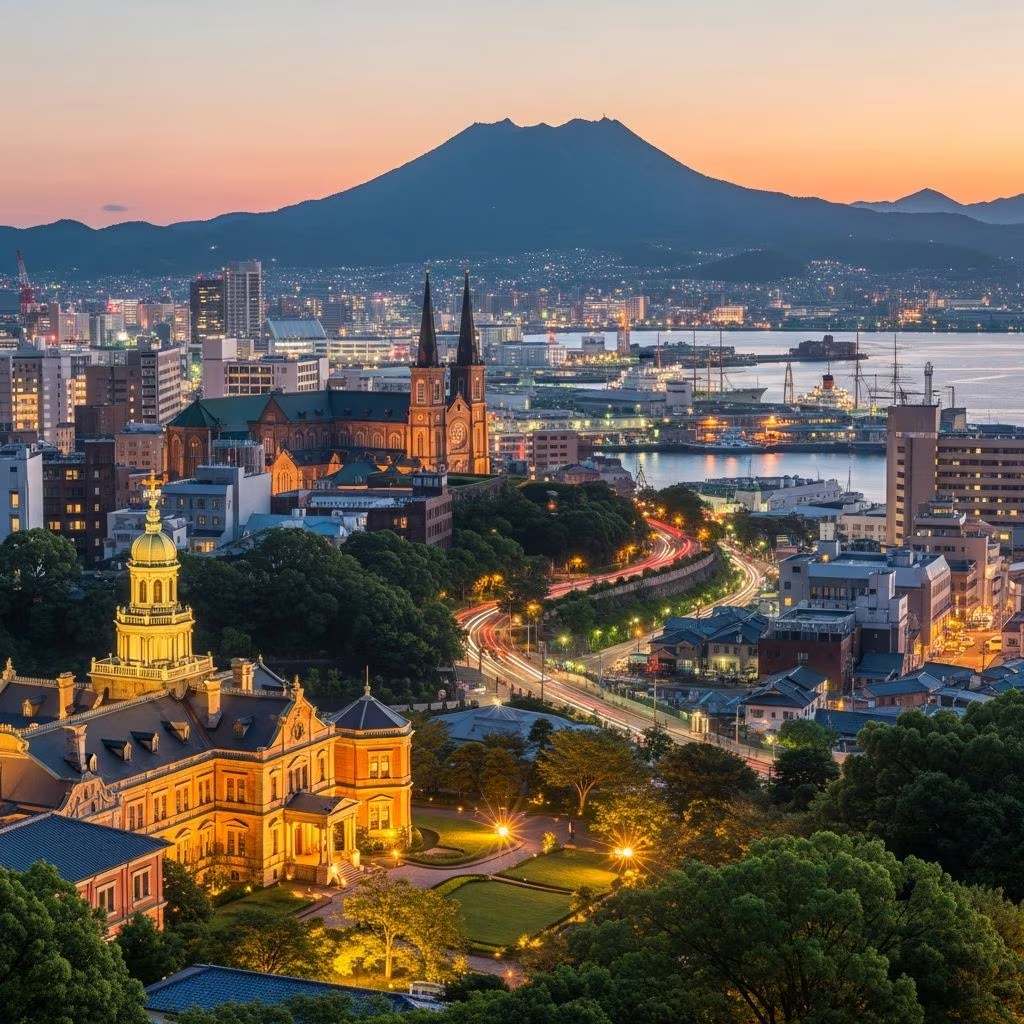
As sunset approaches (plan 1.5 hours early), tram or bus to Fuchi Shrine Station at the base of Mount Inasa (333 meters). Ride the glass-walled Nagasaki Ropeway (5 minutes, ~1,300 yen round-trip) to the summit for one of Japan’s top three night views, rivaling Hong Kong and Monaco.
Gaze over Nagasaki’s glittering harbor, bridges, and 1,000+ isles. Dine at the summit observatory’s restaurant on fresh seafood with vistas. Return via ropeway; last cars around 10 PM. This caps Day 1 with awe-inspiring serenity.
Shift to central Nagasaki. Tram to Suwa Shrine, a 600-year-old hilltop complex with vibrant vermillion torii and lanterns. Climb stone steps for harbor panoramas and join seasonal festivals.
Descend to the Nagasaki Museum of History and Culture, showcasing the city’s role as Japan’s gateway to the West during isolationist eras. Interactive displays cover Dutch and Chinese traders.
Stroll the picturesque canals and Meganebashi Bridge (Spectacles Bridge, 1634), Japan’s oldest stone arch bridge, mirroring like eyeglasses in the water—miraculously blast-surviving. Nearby, Sofukuji Temple, China’s oldest wooden structure in Japan (1629), boasts Ming dynasty gates and a massive bell.
| Site | Highlight | Time Needed |
|---|---|---|
| Suwa Shrine | Festival vibes, views | 45 min |
| History Museum | Trade exhibits | 1 hour |
| Meganebashi & Sofukuji | Bridge reflection, temple architecture | 1 hour |
Head to reconstructed Dejima, the fan-shaped artificial island where Dutch traders were confined in the 17th-19th centuries. Wander timbered warehouses, Philips House replica, and gardens evoking Edo-period exchanges.
Climb to Dutch Slope (Oranda-zaka), a photogenic incline of Western-style homes from the 1860s boom. At the top, Oura Cathedral (1864), Japan’s oldest wooden Gothic church, honors the 26 Martyrs and survived the bomb.
Tram to Chinatown (Shinchi), Kyushu’s largest, for street food like gyoza and champon amid red lanterns and lion dances. Sample at local spots for an authentic bite.
For thrill-seekers, book a boat to Gunkanjima (Battleship Island), a UNESCO-listed abandoned coal mine (closed 1974). Its crumbling concrete skyline resembles a warship; tours (~4,000 yen, 1 hour sail) offer eerie history. Book ahead, weather-dependent.
Alternatively, explore Teramachi Temple District, a serene lane of 20+ temples reflecting Chinese Zen influences. End with harbor strolls or kaiseki dinner.
Trams are king—buy a one-day pass. Walking complements for short distances.
Yes, for highlights; add a day for Gunkanjima or Glover Garden.
Champon soup, sara udon, and castella cake—fusion flavors abound.
Yes; maintain silence, no photos of victims without permission.
Mount Inasa at night—one of Japan’s best.
From Nagasaki, bus to Unzen for hot springs or Huis Ten Bosch theme park. For nature, hike Mount Unzen.
This itinerary balances reflection, culture, and beauty, leaving you inspired by Nagasaki’s resilience. Safe travels!
