

 Travel Essentials
 Travel Essentials

Discover how to maximize your time in Tbilisi with a strategic two-day itinerary covering Old Town architecture, cultural museums, traditional cuisine, and vibrant nightlife.
 Travel Essentials
Tbilisi, Georgia’s vibrant capital, presents a fascinating contradiction—a city where ancient traditions coexist seamlessly with contemporary innovation. For travelers with limited time, 48 hours offers enough opportunity to experience the essence of this Eurasian crossroads without rushing through its most significant attractions. This guide provides a strategic approach to maximizing your visit by balancing historical exploration with modern cultural experiences.
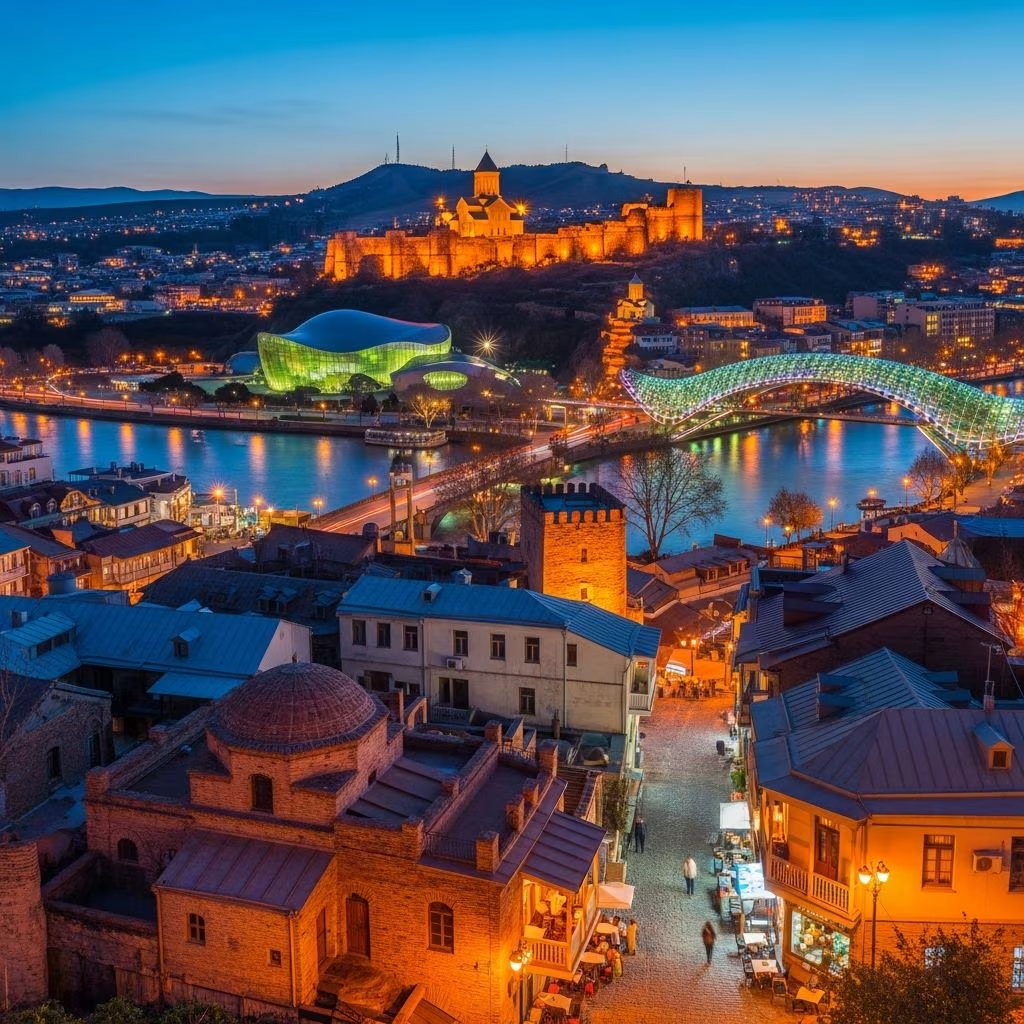
Before diving into specific attractions, understanding Tbilisi’s physical structure enhances navigation and planning. The city stretches along the Mtkvari River valley with significant elevation changes throughout different neighborhoods. The Old Town hugs the riverbank on the south side, while newer developments occupy the higher elevations to the north and west. Key reference points include Freedom Square (Tavisuplebis moedani) in the central business district and the Narikala Fortress overlooking the ancient quarter from a commanding hillside position.
The Mtkvari River effectively divides the city into distinct zones, each with unique architectural character and cultural significance. Modern infrastructure like the Bridge of Peace and cable car systems connect these areas efficiently, making exploration manageable even for first-time visitors unfamiliar with the terrain.
Begin your Tbilisi experience early, allowing maximum daylight hours for exploration. Fuel yourself at a local bakery in the Old Town district, sampling traditional Georgian bread alongside strong coffee. This initial meal sets the cultural tone for your visit while providing practical energy for the morning’s activities.
The centerpiece of your first morning should be Narikala Fortress, which has dominated Tbilisi’s skyline since the 4th century AD. Rather than hiking directly up the steep hillside, take advantage of the cable car system departing from Rike Park. This transportation method offers two immediate benefits: it preserves energy for the extensive exploration ahead, and the aerial journey itself provides unobstructed views across the city’s valleys and rooflines. During the cable car ascent, observe how Tbilisi’s architectural vocabulary changes with elevation—from intimate old-town proportions at ground level to sprawling modern development on the higher ridges.
At the fortress, dedicate time to both the remaining stonework and the surrounding vantage points. The site’s historical significance extends beyond its physical structure; understanding that Tbilisi has been contested and rebuilt multiple times helps contextualize the city’s present-day diversity. Take photographs from various angles, noting how the Mtkvari River curves through the valley below, essentially defining the city’s original settlement pattern.
Descend from the fortress and enter the Old Town’s pedestrian network. Unlike many historic quarters that feel artificially preserved, Tbilisi’s ancient streets pulse with ongoing life—residents inhabit these buildings, businesses operate in ground-floor spaces, and the environment evolves organically rather than remaining frozen in time. This living quality means you’ll encounter authentic details rather than staged authenticity.
Walk slowly through narrow lanes, observing the carved wooden balconies that characterize Georgian residential architecture. Many buildings show visible age—peeling paint, weathered stonework, corroded iron fixtures—yet this deterioration is part of their charm rather than a sign of neglect. The architectural layering reveals different construction periods: some structures date to the medieval period, others were renovated during Russian imperial rule, and some represent post-Soviet interventions.
The Sioni Cathedral and Anchiskhati Basilica, both dating from the 6th century, deserve interior exploration. Beyond their religious function, these structures represent artistic and engineering achievements of their era. The iconography, stone carving, and spatial organization reveal how faith and aesthetics intertwined in medieval Georgian culture.
Tbilisi’s famous sulfur baths merit early experience rather than relegation to a rushed evening visit. Located at street level in the Old Town, these establishments offer more than physical relaxation—they represent a cultural practice spanning centuries. The naturally heated mineral-rich water maintains consistent temperature without modern heating systems, reflecting geological features beneath the city.
Book private bath chambers for genuine comfort. The traditional scrubbing treatment, while intense, provides authentic cultural immersion that casual visitors often miss. Allow approximately 90 minutes for the complete experience, including water acclimation, bathing, and recovery time. Many visitors emerge from the baths with unexpected clarity about their travel priorities—the combination of physical relaxation and meditative environment generates perspective.
After the baths, explore the Sololaki neighborhood, which preserves grand staircases, ornate courtyards, and architectural details that showcase Tbilisi’s pre-Soviet elegance. Unlike heavily touristed areas, these streets require intentional effort to navigate, rewarding the curious explorer with spaces that feel undiscovered despite their proximity to major attractions.
Georgian cuisine deserves dedicated attention as a cultural expression rather than simple food consumption. Seek restaurants offering live musical performance alongside dining—this combination provides sensory immersion into Georgian social traditions. Traditional dishes like khachapuri (cheese-filled bread) and khinkali (meat dumplings) appear on most menus, but regional variations and specialty preparations distinguish exceptional dining experiences.
The dining culture emphasizes communal eating and extended conversation. Many establishments remain open late, and patrons typically linger well beyond meal completion. Embrace this pace rather than rushing through multiple locations.
Dedicate your second morning to Rustaveli Avenue, Tbilisi’s principal boulevard laid out during Russian imperial administration in the 19th century. This tree-lined avenue concentrates most major cultural institutions within walkable distance, maximizing efficiency without sacrificing depth.
Begin at the Fine Arts Museum near Freedom Square, which houses Georgia’s most significant religious artworks—icons, ecclesiastical crosses, and liturgical jewelry spanning centuries. These pieces represent not just artistic achievement but also spiritual heritage, offering insight into how faith shaped aesthetic expression.
Continue along Rustaveli to the Georgian National Museum, which presents comprehensive collections documenting the nation’s historical trajectory. Pre-Christian gold artifacts from Colchis (western Georgia) demonstrate sophisticated ancient craftsmanship, while later exhibits trace medieval development and more recent history.
The National Gallery’s collection of works by Niko Pirosmani provides insight into early 20th-century Georgian artistic movements. Pirosmani’s distinctive style, developed largely outside formal academy systems, influenced subsequent generations of Georgian artists and remains central to national cultural identity.
The Dry Bridge Fleamarket offers an unfiltered perspective on Georgian material culture—a vast assemblage of objects reflecting historical layers and individual narratives. Soviet-era memorabilia, traditional shepherds’ garments, musical instruments, ornamental daggers, and countless other items create an overwhelming visual and sensory environment.
Rather than purchasing specific items, use this space as a cultural archive. Conversations with vendors reveal personal histories and attitudes toward recent transformations. The market functions as informal museum where individuals curate collections of objects they find meaningful or commercially viable.
Cross the Bridge of Peace, an unmissakable modern structure that juxtaposes steel and glass against historic stone surroundings. This architectural tension—deliberately created rather than accidental—symbolizes Tbilisi’s contemporary identity as a city negotiating between preservation and innovation.
Rike Park, accessed via the Bridge of Peace, houses the Exhibition Hall, a distinctive glass and tube structure hosting temporary displays. The park itself provides urban green space, pedestrian pathways, and commercial venues reflecting 21st-century urban design principles.
Tbilisi’s evening culture extends well beyond sunset, with venues operating until early morning hours. Wine bars, traditional dance clubs, and contemporary music venues coexist without apparent conflict, reflecting the city’s cultural pluralism. Many establishments feature both local and international clientele, creating environments where travelers and residents mingle naturally.
Georgian wine, produced through ancient methods involving extended skin contact and earthenware vessel fermentation, offers unique flavor profiles distinct from international wine regions. Wine bars typically offer by-the-glass selections allowing comparative tasting without excessive alcohol consumption.
Georgian hospitality extends beyond commercial transactions into genuine social interaction. Establishing brief conversations with vendors, guides, and service workers enriches the experience beyond transactional exchanges. Georgian society values directness combined with warmth—casual friendliness is genuine rather than performative.
Religious sites deserve respectful comportment. While not requiring extensive religious knowledge, visitors should observe basic courtesies: modest clothing when entering churches, silence during prayer periods, and general awareness that these spaces function as active worship environments rather than purely tourist attractions.
While structured itineraries provide valuable organization, the most memorable Tbilisi experiences often emerge from unplanned encounters. Allow yourself time for random exploration, unexpected conversations, and serendipitous discoveries. The city’s charm extends beyond major attractions into residential neighborhoods, small cafes, and informal gathering spaces where daily life unfolds authentically. Two days proves sufficient for introducing yourself to Tbilisi’s complexity while leaving elements unexplored, creating foundation for future visits.
