

 Travel Essentials
 Travel Essentials

Navigate Vienna's best attractions, museums, palaces, and neighborhoods in a strategic 48-hour itinerary with practical travel tips.
 Travel Essentials
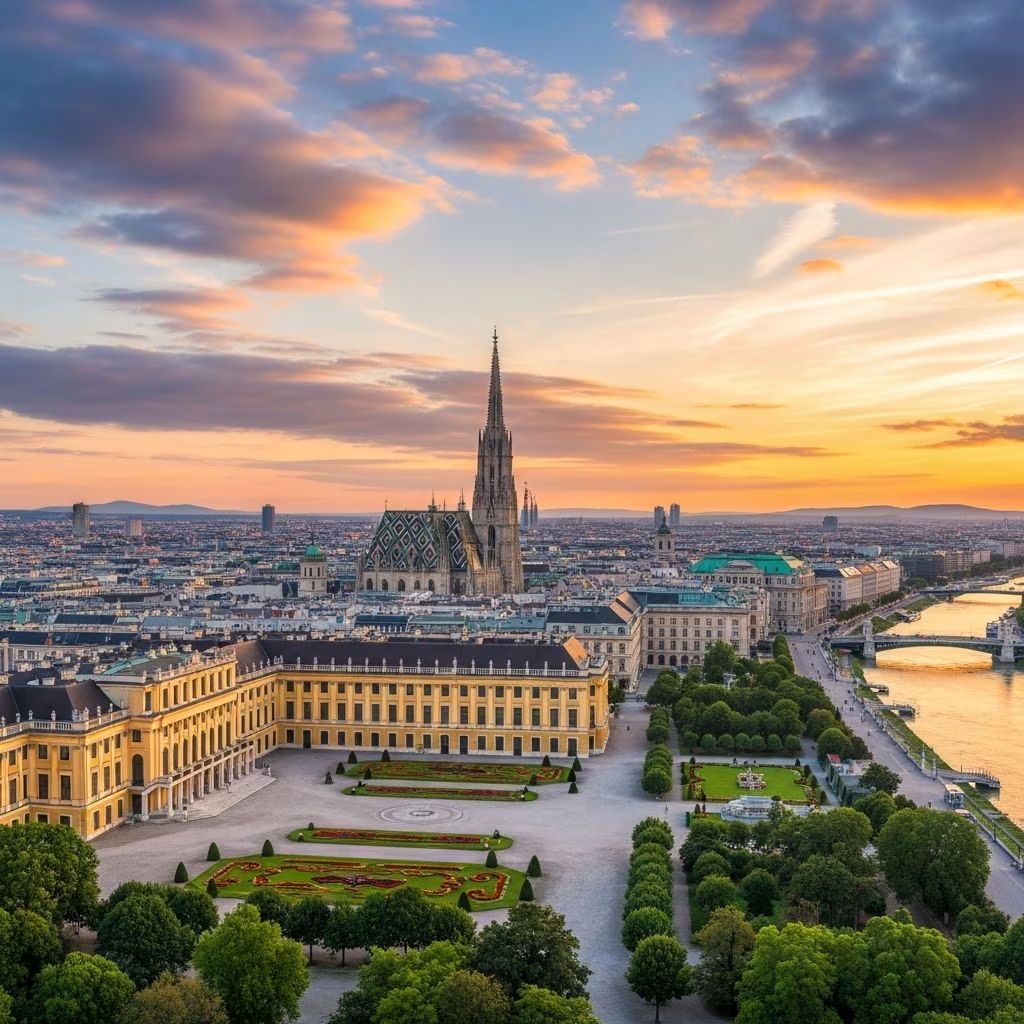
Vienna stands as one of Europe’s most sophisticated capitals, offering visitors an intoxicating blend of imperial grandeur, artistic excellence, and vibrant café culture. With only 48 hours at your disposal, strategic planning becomes essential to maximize your experience without feeling rushed or overwhelmed. This guide provides a thoughtfully designed itinerary that balances major historical attractions with intimate neighborhood discoveries, ensuring you capture Vienna’s essence whether you’re a first-time visitor or returning explorer.
Vienna’s administrative structure follows a distinctive radial pattern that simplifies navigation considerably. The city comprises 23 districts that fan outward from the Innere Stadt (District 1), the historic city center where many major attractions cluster together. This geographic organization means visitors can quickly understand the city’s layout by noting that district numbers correspond to postal codes—for example, the seventh district appears as 1070.
The city center is encircled by the Ring, a famous circular boulevard system that functions as a major transport corridor. This route carries trams and buses along its perimeter, making it an efficient way to connect attractions without extensive walking. Unlike the Ring’s concentric structure, the districts themselves are numbered outward from the center, a distinction worth understanding to avoid confusion when navigating.
Vienna’s walkable nature encourages exploration on foot, particularly within the inner districts where attractions cluster densely. However, for travelers with limited time wanting to see multiple major sites, public transportation becomes invaluable. The city offers convenient time-stamped passes allowing unlimited travel on U-Bahn (subway), trams, and buses. These passes come in 24, 48, and 72-hour options, with validation required at machines before first use.
Beyond basic transportation, Vienna provides the Vienna City Card, which offers comprehensive public transport access plus over 210 benefits including museum discounts and attraction reductions. For budget-conscious travelers, this represents exceptional value during a concentrated visit. The pass structure allows choosing the duration that best fits your schedule—crucial when every hour matters in a 48-hour stay.
Begin your Vienna experience as locals do—with unhurried coffee appreciation. Vienna’s thriving café culture extends beyond traditional establishments to innovative alternative spaces offering specialty beverages and locally-sourced options. This leisurely morning ritual sets the city’s contemplative pace and provides an authentic introduction to Viennese lifestyle before transitioning into sightseeing mode.
After fortifying yourself with coffee, head toward the Ring and its constellation of architectural landmarks. This grand boulevard represents Vienna’s transformation during the 19th century when Emperor Franz Joseph commissioned its development, replacing medieval fortifications with monumental buildings. Walking the Ring’s perimeter or riding the tram along its route provides both orientation and artistic context for understanding Vienna’s hierarchical society during the Austro-Hungarian Empire.
Vienna’s most iconic religious structure, St. Stephen’s Cathedral, demands inclusion in any 48-hour itinerary. This magnificent Gothic edifice dominates the city center, and its interior reveals hidden dimensions beyond the exterior’s ornate spires. The cathedral’s interior features the remarkable “Stairway to Heaven,” an intricate spiral staircase that exemplifies the craftsmanship characterizing Vienna’s medieval heritage. Entry remains free, making this a universally accessible experience regardless of budget constraints.
From the cathedral, the scenic walk along Herengasse toward the Hofburg Palace creates a compelling narrative arc through Vienna’s political evolution. The Hofburg represents centuries of Austro-Hungarian imperial residency and continues serving as the official workplace and residence of Austria’s current president. This massive complex has expanded and evolved across generations, creating architectural layers that reveal political priorities and aesthetic preferences of different eras.
The Hofburg’s scale can overwhelm visitors with limited time, necessitating strategic choices. The Imperial Treasury, centrally located within the complex, displays accumulated imperial regalia and artifacts representing centuries of European monarchy. The museum provides essential context for understanding how Vienna maintained continental influence during tumultuous historical periods.
The Volksgarden (People’s Garden), adjacent to the Hofburg, offers welcome respite and photographic opportunities. This accessible green space allows contemplation of the imperial architecture from landscaped perspectives while providing mental breaks from intensive sightseeing.
Vienna City Hall, located near the Ring, showcases neo-Gothic architectural styling with particularly impressive arches and courtyards. A free rooftop elevator access (via the Felderstraße entrance) permits visitors to experience the building’s scale without admission charges. The interior spaces, decorated in 19th-century splendor, offer photographic opportunities and historical appreciation.
If visiting on a Sunday, Wiener Rathauskeller, the basement restaurant within City Hall, provides traditional Vienna dining in atmospheric 19th-century surroundings. Roast beef appears as a favorite menu option, reflecting local culinary preferences. The formal setting juxtaposes rustic traditional cuisine, creating memorable gastronomic experiences that extend cultural appreciation beyond museums and monuments.
Day two optimizes the tram system for efficient museum access. Taking the Number 1 tram along the city’s edge provides both practical transportation and scenic views during transitions between cultural institutions. This approach minimizes walking time while maximizing museum hours—a critical trade-off when time constraints exist.
Vienna’s museum landscape extends far beyond fine art collections. The Freud Museum, Leopold Museum, and Jewish Museum each represent distinct cultural narratives while maintaining exceptional curatorial standards. The Jewish Museum particularly receives recognition for innovative exhibition design presenting comprehensive Austrian-Jewish history and contemporary cultural perspectives.
Vienna’s art scene centers significantly on Gustav Klimt’s legacy, with major works residing in the Upper Belvedere. While “The Kiss” predictably draws crowds, the collection extends far beyond this celebrated piece. Overlooked Rodin sculptures and Renoir oils demonstrate the institution’s comprehensive European art holdings. The permanent Avant-Garde collection occupying the upper floors provides deliberate artistic contrast, offering contemporary viewers gritty counterpoints to Impressionist aesthetics.
Depending on gallery exploration duration, afternoon hours accommodate Schönbrunn Palace, requiring U-Bahn transit to the palace grounds. This imperial summer residence presents visitors with options matching available time and energy. The shorter option combines formal garden and fountain viewing with tea service at Café Gloriette, positioned at the grounds’ highest point. This approach captures essential Schönbrunn experience without palace interior exploration.
Alternatively, guided tours through the 18th-century mansion’s gilded state rooms and apartments provide immersive encounters with imperial Austria under Maria-Theresa’s expansive aesthetic preferences. The extensive interior decorative schemes reveal personal tastes influencing public architectural expression during the enlightened absolutism period.
Hotel selection significantly impacts 48-hour Vienna experiences. While central positioning tempts convenience-minded travelers, Vienna’s excellent transportation infrastructure permits productive neighborhood stays at lower price points. The Altstadt Vienna hotel exemplifies this approach, situating in the lively seventh district with walkable proximity to parliament, museum quarter, and well-connected Ring access.
This art-focused hotel features individually designed rooms created by guest collaborators, ensuring distinctive interiors and creatively appointed corridors. The rooftop bar, daily afternoon tea service, and comprehensive breakfast spread elevate the accommodation from basic lodging to characterful experience, worthy of independent exploration beyond mere sleep function.
For budget travelers, districts numbered 1-9 generally offer reasonable pricing while maintaining proximity to central attractions, eliminating excessive public transport time consumption during limited stays.
Shopping constitutes a significant activity gap on Sundays when Austrian shops close entirely. This timing reality necessitates weekend itinerary adjustments. Sunday becomes the optimal day for concentrated museum and monument visitation while shops remain inaccessible. Weekday mornings permit market exploration and boutique browsing, experiences that add cultural dimension to architectural tourism.
| Time Block | Day One Activity | Day Two Activity |
|---|---|---|
| Morning | Café experience + Ring orientation | Museum circuit via tram |
| Midday | St. Stephen’s Cathedral | Upper Belvedere art collection |
| Afternoon | Hofburg complex exploration | Schönbrunn Palace visit |
| Evening | City Hall and traditional dinner | Neighborhood exploration or relaxation |
Vienna’s district structure reveals distinctive neighborhood characters beyond Ring-encircled attractions. The seventh district (Neubau) demonstrates this principle distinctly, combining museum access and Ring connectivity with independent café culture and boutique shopping. Deliberate neighborhood wandering uncovers local preferences and contemporary artistic expression existing parallel to imperial monuments.
Abundant restaurants, cafés, and shops throughout Vienna’s districts eliminate reliance on overpriced tourist zones. District positioning decisions eliminate downside effects while enabling discovery of authentic local spaces rather than exclusively tourist-oriented establishments.
Forty-eight hours permits concentrated engagement with Vienna’s primary attractions while introducing neighborhood character. Rather than comprehensive exploration, this duration facilitates strategic sampling of imperial architecture, major museums, and café culture sufficient for satisfying first visits or nostalgia-inducing returns.
Combination approaches work optimally. Walking within the Innere Stadt and immediate surrounding districts provides intimate exploration, while public transport efficiently connects distant attractions like Schönbrunn Palace. The 48-hour transit pass provides economical unlimited access, eliminating transport cost concerns.
Districts 1-9 maintain central proximity while offering reasonable pricing. The excellent tram and U-Bahn systems mean seventh-district locations remain minutes from major attractions via convenient transit, with neighborhood character offsetting slight distance from absolute center.
Strategic pacing balances sightseeing with café breaks and leisurely meals. Vienna’s café culture expects unhurried engagement, transforming dining into contemplative experience rather than rushed refueling. This approach simultaneously conserves energy and deepens cultural immersion.
Sunday shop closures necessitate Sunday concentration on museums and monuments. Weekday visits enable market exploration and boutique browsing in addition to standard tourist attractions. Plan major shopping on non-Sundays if this activity matters to your itinerary.
