

 Travel Essentials
 Travel Essentials

Explore Yerevan's architectural gems, cultural landmarks, and culinary treasures with this practical 48-hour itinerary for first-time visitors.
 Travel Essentials
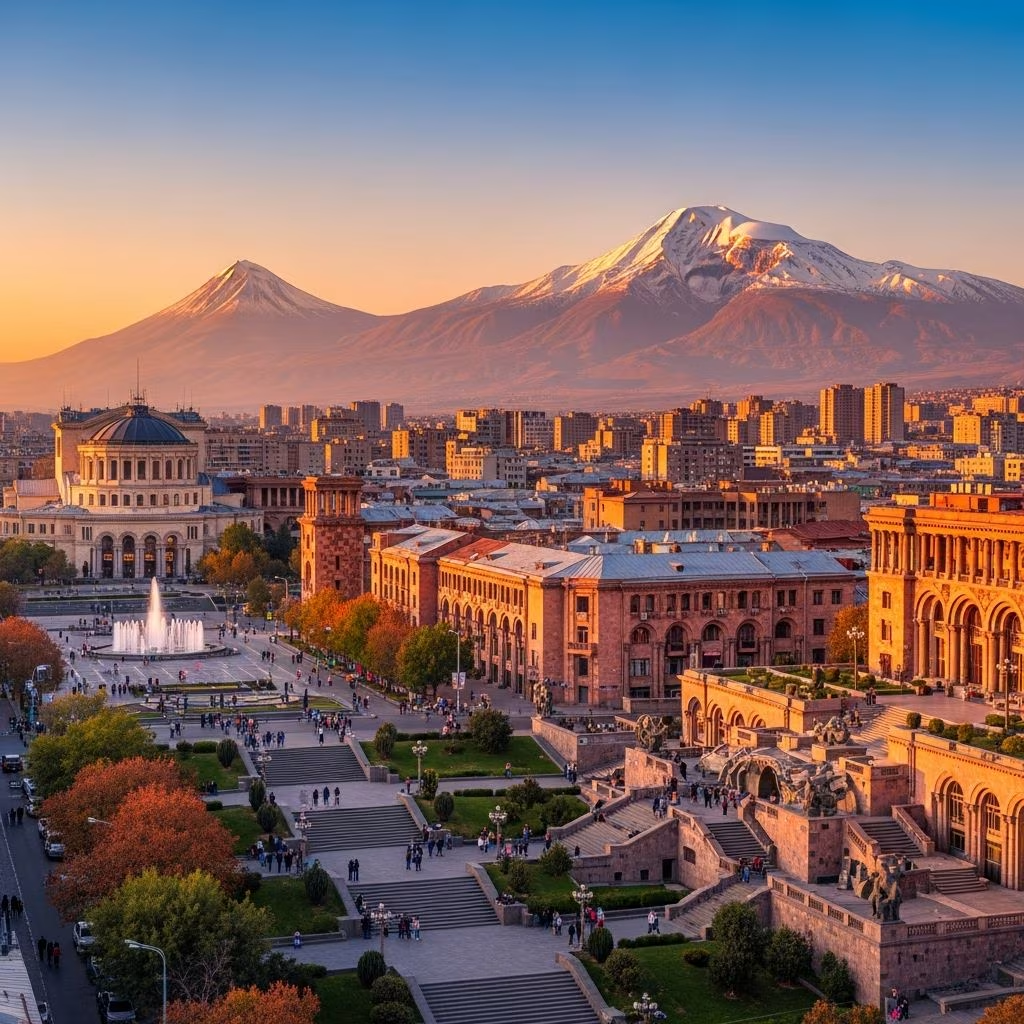
Armenia’s capital city offers far more than meets the eye. With its distinctive pink-hued buildings crafted from volcanic tuff, tree-lined streets, and welcoming residents, Yerevan presents a compelling destination for travelers seeking authentic cultural experiences. Within a compact 48-hour window, visitors can absorb the city’s architectural splendor, delve into its profound historical narratives, sample extraordinary regional cuisine, and engage with its vibrant contemporary arts scene. This guide provides a thoughtful framework for making the most of your weekend visit to one of the world’s oldest continuously inhabited cities.
Before diving into a specific itinerary, it helps to understand what makes this capital distinctive. The city presents a fascinating juxtaposition of influences and eras. Soviet-era apartment blocks coexist alongside meticulously planned neoclassical avenues that echo European sensibilities. The iconic pink stone that dominates the urban landscape creates an unmistakable aesthetic that justifies the city’s reputation as the “Pink City.” Recent urban renewal initiatives have introduced modern infrastructure including cable car systems and contemporary art venues, breathing fresh vitality into traditionally underutilized areas.
What surprises many first-time visitors is how walkable and navigable Yerevan proves to be. The city’s manageable size and logical layout mean most major attractions lie within reasonable distances of one another, making it possible to experience significant highlights without excessive travel time.
Begin your exploration at Republic Square, an urban planning triumph that emerged during the 1920s when architect Alexander Tamanyan envisioned an entirely new capital city. This magnificent plaza functions as the geographic and symbolic center of Yerevan. The square’s harmonious proportions, surrounded by government buildings with their distinctive pink stone facades, create an immediate impression of order and grandeur.
From here, embark on a walking exploration toward the north of the city. This approach allows you to experience the urban fabric gradually while discovering unexpected details—boutique shops, historical markers, and local gathering spaces that reveal how contemporary Armenians inhabit their historic city. The botanical and cultural elements woven throughout the streets provide natural stopping points for observation and photography.
The morning’s architectural survey should give way to deeper historical understanding. Yerevan possesses multiple institutions dedicated to preserving and presenting Armenia’s complex past. Beyond generic overview museums, seek out specialized repositories of knowledge. The city’s manuscript collections and archaeological exhibits showcase civilizations that flourished in this region for millennia.
These institutional spaces often feel unexpectedly intimate despite their grand missions. Rather than overwhelming visitors with exhaustive collections, thoughtfully curated presentations allow for meaningful engagement with individual artifacts and their stories. Plan to spend 90 minutes to two hours in this environment, permitting yourself to linger over items that capture your particular interests.
The dramatic change in elevation as you move through Yerevan provides both physical exercise and visual rewards. The Cascade represents far more than a simple staircase; it functions as an open-air gallery, cultural venue, and vantage point simultaneously. The 572 steps connecting lower Yerevan with elevated parks present an opportunity for gradual ascent while encountering contemporary sculptures and artistic installations.
The Cafesjian Center for the Arts occupies this elevated complex, showcasing both classical and contemporary artistic expressions. International artists share exhibition space with celebrated Armenian creators, reflecting the city’s position as a cultural crossroads. As afternoon transitions toward evening, the quality of light transforms these spaces, casting long shadows across stone surfaces and illuminating distant mountain profiles.
From this vantage point, Mount Ararat becomes visible on the horizon. Though located across the Turkish border, this sacred peak dominates Armenian consciousness and geography. Its presence in the landscape underscores the region’s complex geopolitical situation while providing a powerful visual anchor for understanding Armenia’s sense of place.
Yerevan fundamentally transforms as evening approaches. The city adopts a slower pace; residents emerge to stroll, socialize, and transition from daytime activities to nocturnal pleasures. This cultural rhythm deserves respect and participation rather than resistance. Dinner represents more than simple fuel consumption; it constitutes a social event where families gather and friends reconnect.
Seek establishments that emphasize traditional Armenian preparations rather than internationalized fusion cuisines. Regional specialties like khashlama (slow-cooked meat stew), dolma (grape leaves stuffed with rice and meat), and lavash (flatbread traditionally baked in underground tandoor ovens called tonir) provide authentic gustatory experiences unavailable elsewhere. Wine selections should emphasize local production; Armenia boasts ancient winemaking traditions that predate European viticulture.
Begin the second day with a leisurely breakfast at a local café rather than rushing immediately into structured tourism. This pause permits reflection on the previous day’s experiences while preparing mentally and physically for the day ahead. Many establishments offer traditional Armenian breakfast components—fresh cheeses, preserved fruits, yogurts, and breads—that sustain without overwhelming.
Following breakfast, pursue a walking route through parks dotted with cherry and apricot trees. These green spaces provide breathing room within the urban environment and connect residents to seasonal rhythms often obscured in modern cities. Morning light filtering through flowering branches creates especially photogenic conditions while the crowd density remains minimal.
Armenia’s historical trajectory encompasses profound tragedy alongside remarkable resilience. The Armenian Genocide Museum and Memorial occupy Tsitsernakaberd Hill, a location chosen deliberately to overlook the city while maintaining physical and emotional separation. This institution presents material that many visitors find emotionally challenging; approach with appropriate reverence and allow sufficient time for contemplation.
The memorial functions not merely as a repository of historical documentation but as a space for collective remembrance and national identity affirmation. The eternal flame burns continuously, acknowledging losses while asserting continuation. Visitors from diverse backgrounds often find this environment provokes reflection on broader questions of historical memory, cultural survival, and human resilience.
Vernissage Market represents a fascinating intersection of commerce, artisanal tradition, and social gathering. Unlike standardized shopping centers, this vibrant bazaar functions as an open-air exposition of Armenian craftsmanship. Vendors display handmade jewelry, carpets, paintings, antiques, and decorative objects accumulated from decades or centuries of cultural production.
Market exploration requires particular skills: patience, genuine interest in artisan stories, willingness to negotiate respectfully, and acceptance that not everything merits purchase. The social dimension often proves as valuable as acquisitions themselves. Conversations with vendors reveal perspectives on contemporary Armenian life, family histories, and cultural values that no guidebook could adequately convey.
Victory Park contains monuments and memorials reflecting Armenia’s twentieth-century military history. The Mother Armenia statue dominates the landscape, a symbolic figure representing both national motherhood and resilient strength. The monument’s commanding position and scale create visceral impact; standing before it produces immediate emotional responses even for visitors unfamiliar with the specific historical contexts it commemorates.
This park functions as both memorial space and contemporary recreation area. Local families gather for leisure activities, children play beneath historic monuments, and visitors walk pathways lined with testimonials to national endurance. This simultaneity of remembrance and present-day life reflects how Armenians navigate their relationship with history—honoring the past while actively inhabiting the present.
Gallery spaces and artist cafés scattered throughout Yerevan provide opportunities for quieter engagement with contemporary creative expression. These venues—often combining exhibition space, gift merchandise, and café service—lack the institutional formality of major museums while maintaining serious commitment to artistic presentation. Discovering these independent spaces requires wandering somewhat aimlessly or following local recommendations; their informal character rewards such exploratory approaches.
Yerevan’s evening scene accommodates diverse preferences, from contemplative to celebratory. Northern Avenue represents a carefully developed pedestrian thoroughfare connecting major urban nodes while creating a theater of contemporary social life. The illuminated walkway functions as promenade, shopping district, and social venue simultaneously.
For those seeking cultural programming, live music venues ranging from intimate jazz clubs to larger concert spaces offer performances spanning genres and eras. The Club restaurant combines dining, beverages, and artistic presentations in a subterranean setting that encourages lingering and conversation. These venues reflect Armenia’s vibrant contemporary music scene while maintaining connection to historical artistic traditions.
Visitors preferring active evening entertainment encounter numerous dance clubs and lounges catering to varied musical tastes. The city’s nightlife scene emphasizes local patronage rather than tourist orientation, meaning prices remain reasonable while authenticity remains paramount. Smoke-free venues have expanded in recent years, accommodating those seeking modern amenities while maintaining convivial atmosphere.
Rather than consuming meals at times dictated by external schedules, align eating patterns with local customs. Armenians traditionally enjoy lighter midday meals with more substantial evening dining. This adjustment not only improves gastronomic experiences but facilitates better social integration. Restaurant reservations prove advisable for evening dining at established venues; many popular establishments accommodate walk-in visitors only during off-peak periods.
The suggested itinerary provides structure without demanding rigid adherence. Unexpected discoveries—a neighborhood café with exceptional pastries, a street musician performing compelling arrangements, a local offering impromptu historical narrative—often constitute travel’s most memorable elements. Budget approximately 20-30% of your time for serendipitous exploration rather than scheduled activities.
Yes, the city’s manageable size and concentrated attractions permit substantive engagement within 48 hours. Visitors gain solid understanding of major sites, cultural context, and contemporary character. However, deeper specialization—extended archaeological study, artistic immersion, culinary intensive learning—would require extended duration.
The Cascade and Victory Park involve elevation changes and extended walking, necessitating reasonable mobility and stamina. Visitors with physical limitations can navigate central attractions while skipping elevated sites or utilizing cable car alternatives. Advance planning addressing specific mobility concerns enables appropriate adjustments.
Yerevan offers exceptional value relative to Western European equivalents. Dining, accommodation, and attraction admission cost substantially less than comparable experiences in Vienna, Prague, or Budapest. This economic advantage permits more extensive engagement with cultural offerings within fixed budgets.
Armenia’s historical experiences with genocide, displacement, and ongoing territorial disputes create emotionally charged contexts. Respectful engagement with memorial sites, sensitive conversation about political matters, and acknowledgment of national experiences constitute basic courtesy. Most Armenians appreciate genuine interest in their nation’s story alongside recognition that Armenia occupies a complex geopolitical position.
A 48-hour Yerevan visit extends beyond checking boxes on predetermined attraction lists. The experience fundamentally involves encountering a city inhabited by people navigating contemporary life while honoring profound historical consciousness. The pink-stone architecture, magnificent parks, world-class museums, and exceptional cuisine combine to create compelling reasons for visitation. Yet equally important are the unplanned conversations, unexpected neighborhoods, and moments of quiet reflection that define transformative travel experiences. Yerevan welcomes those willing to move beyond tourism into genuine cultural engagement, rewarding such openness with memories extending far beyond the weekend itself.
