

 Travel Essentials
 Travel Essentials

Explore hiking trails and stargazing spots across Arizona's dark sky regions, from Flagstaff caves to Sedona red rocks and Scottsdale deserts, in this immersive 5-day itinerary.
 Travel Essentials
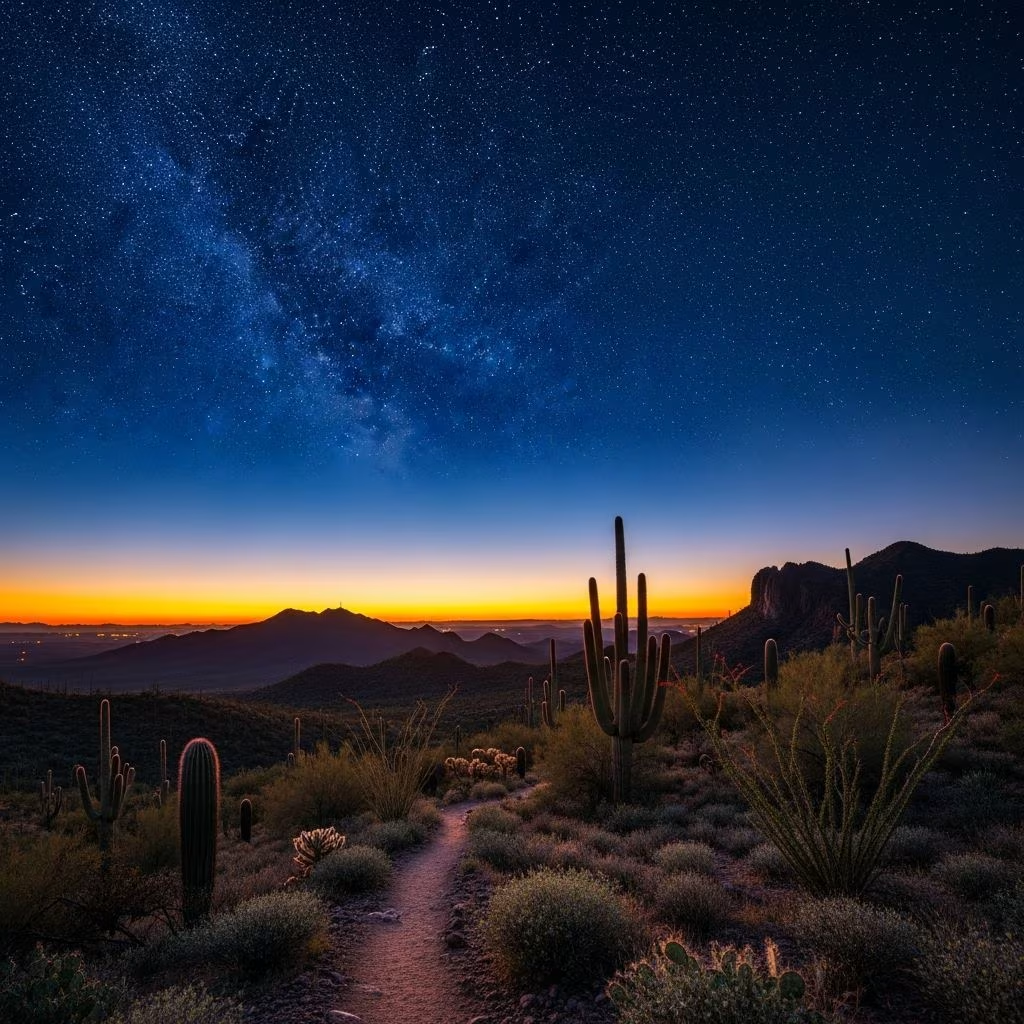
Arizona stands out as a premier destination for those seeking the perfect fusion of physical adventure and celestial wonder. With over 20 areas certified by DarkSky International for their minimal light pollution, the state offers unparalleled opportunities to hike through dramatic landscapes by day and gaze at the unspoiled cosmos by night. This comprehensive guide outlines a five-day itinerary that maximizes both experiences, traversing from high-elevation forests to red rock canyons and vast deserts.
The Grand Canyon State’s commitment to preserving night skies dates back decades, beginning with Flagstaff’s pioneering efforts in the 1950s. Today, it boasts the world’s first International Dark Sky City and numerous sanctuaries, parks, and communities dedicated to this cause. Low humidity, high altitudes, and strict lighting ordinances create conditions where the Milky Way can cast shadows on moonless nights. Hikers benefit from world-class trails in national parks, monuments, and state lands, many adjacent to these dark sky zones, making it an ideal spot for dual-purpose trips.
Participation in stargazing has surged, with millions visiting annually for astrotourism. Events like star parties at observatories and ranger-led night programs enhance the experience, blending education with awe-inspiring views.
Begin your journey in Flagstaff, perched at nearly 7,000 feet, the state’s loftiest urban center. This certified Dark Sky Community serves as an ideal launchpad due to its proximity to trails and astronomical landmarks.
Morning Exploration: Lava River Cave
After settling into cozy accommodations like a forested bed-and-breakfast, drive 20 miles through pine-scented foothills toward Humphreys Peak. The Lava River Cave, a mile-long lava tube formed thousands of years ago, offers a cool, otherworldly hike. Temperatures stay around 40°F (4°C) year-round, so pack sturdy shoes, a headlamp, and layers. Descend into the subterranean passage, marveling at jagged walls and echoing silence—perfect preparation for the starry night ahead.
Afternoon Refuel
Return to downtown Flagstaff for casual dining. Savor farm-fresh dishes and robust brews at local eateries emphasizing regional ingredients.
Evening Highlight: Lowell Observatory
As dusk falls, head to the Lowell Observatory, birthplace of Pluto’s discovery in 1930. Guided tours provide access to historic and modern telescopes, including open-air decks for unobstructed views of planets and deep-space objects. Learn about the universe from expert astronomers in this cradle of dark sky preservation.
Descend from Flagstaff’s pines into Sedona’s iconic red rock formations, another Dark Sky Community since 2014. Its 4,360-foot elevation and arid climate yield crystal-clear skies.
Morning to Afternoon: Sedona Trail Network
Lodge in a boutique hotel blending luxury with rustic charm. Then, tackle moderate hikes like Fay Canyon (2.1 miles round trip), where towering walls frame potential stargazing vantage points even by day. Or opt for Red Rock State Park’s evening-accessible paths, entry $16 per person, open until 9:30 PM for night hikes.
| Stargazing Hike Spot | Distance | Fee | Best For |
|---|---|---|---|
| Fay Canyon | 2.1 miles | Free | Trailhead views |
| Red Rock State Park | Varies | $16/person | Guided night programs |
| Two Trees Observation Area | Minimal walk | Free | Photographers |
| Aerie Trail | 5.2 miles | $15/car | Astrophotography |
Evening Adventure: Verde Canyon Starlight Train
Drive 40 minutes to Clarkdale for the Verde Canyon Railroad’s Starlight Ride. Board a vintage train for a four-hour journey through river valleys at sunset, transitioning to moonlit canyons. Enjoy first-class perks like appetizers, champagne, and open-air cars for prime stargazing as constellations emerge overhead.
Take a leisurely drive south (about 130 miles, 2 hours) to Scottsdale, with optional stops for deeper exploration.
En Route: Montezuma Castle
Pause at Montezuma Castle National Monument in Camp Verde. Hike the short Monument Trail and Montezuma Well Trail to see Sinagua cliff dwellings from 700 years ago, carved into limestone cliffs. These easy paths offer shaded respite and historical context amid the journey.
Arrival in Scottsdale
Check into a Sonoran Desert resort. Use the afternoon for relaxation or a visit to nearby Taliesin West, Frank Lloyd Wright’s desert architecture haven and UNESCO site, just off trailheads for evening prep.
Dive into Scottsdale’s blend of culture and cosmos.
Daytime: Taliesin West and Trails
Tour the organic architecture of Taliesin West, then hike adjacent Sonoran paths for cactus-dotted vistas.
Evening: Desert Stargazing Tour
Join a resort-led Sunset Stargazing Tour into the Sonoran Desert. Guides use powerful telescopes to reveal Jupiter’s moons, Saturn’s rings, and the Milky Way’s core. The remote setting ensures Bortle Scale Class 2 skies—among the darkest possible.
Extend to the Grand Canyon South Rim (2-3 hours drive) for a finale, or adapt based on flights.
Prime Spots: Mather Point, Desert View, or Lipan Points for South Rim; Cape Royal on North Rim. Dark-adapt eyes for 30 minutes to see thousands of stars; the Milky Way can shadow the ground.
Conclude with ranger programs or self-guided awe before heading out.
Prepare for variable weather: layers for cool caves and nights, sun protection for days. Essential gear includes headlamps, binoculars, portable chairs, and apps like Stellarium for star identification.
Strict ordinances, high elevation, and dry air minimize light pollution; 20+ certified areas by DarkSky International.
Yes, with guides or lit paths like Red Rock State Park; start short and use proper gear.
Yes, key points like Mather are always accessible; best moonless nights.
Use wide-angle lenses, tripods; spots like Two Trees excel for astrophotography.
Observatories like Lowell have indoor options; check forecasts via NPS apps.
Visitors play a key role: use red flashlights, stay on trails, support local dark sky initiatives. This ensures future generations enjoy these pristine views.
