

 Travel Essentials
 Travel Essentials

Plan your perfect five-day Asheville adventure with hiking trails, waterfall hikes, river activities, and mountain vistas in the Blue Ridge Mountains.
 Travel Essentials
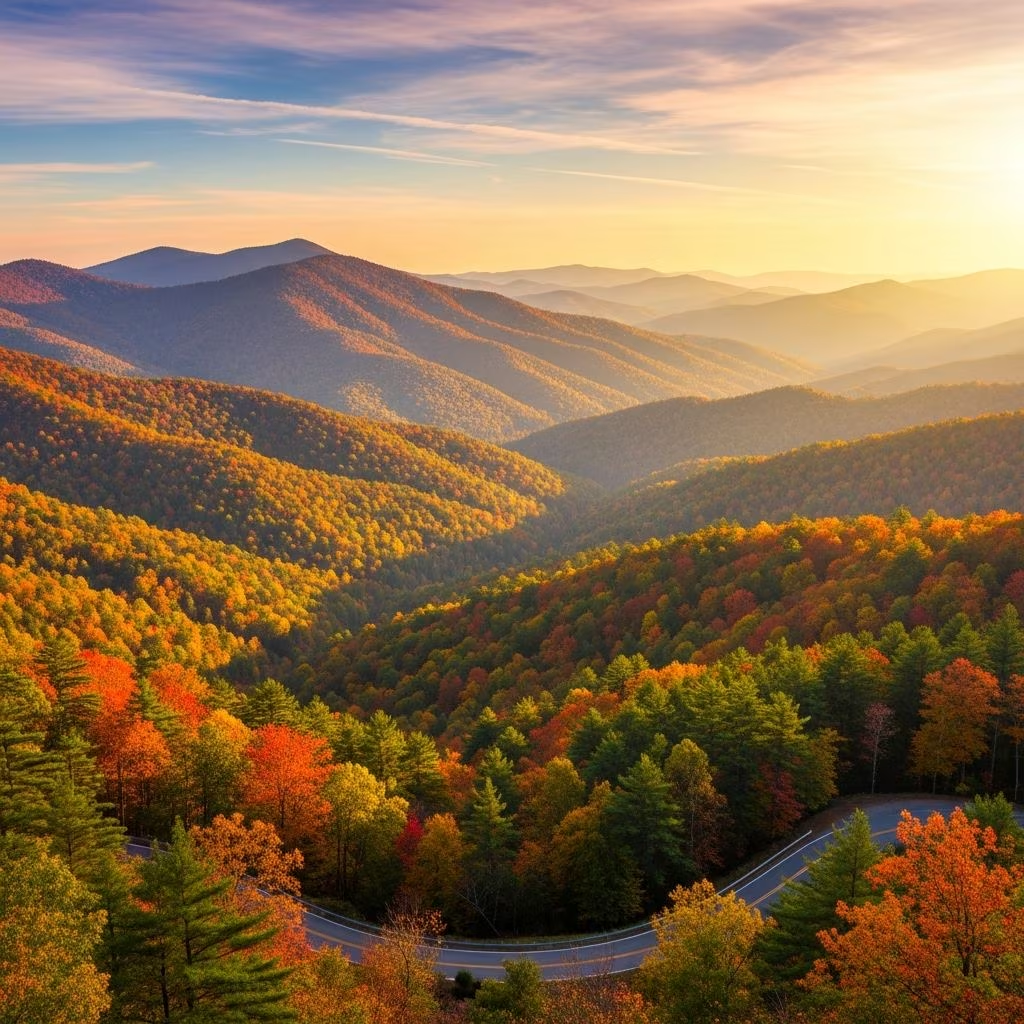
The Blue Ridge Mountains of Western North Carolina offer an unparalleled outdoor playground for adventurers seeking natural beauty, challenging terrain, and serene landscapes. Asheville serves as an ideal basecamp for exploring this region, with one million acres of protected forest and parkland surrounding the city in all directions. Whether you’re a seasoned hiker or a casual nature enthusiast, a five-day journey through this area promises unforgettable experiences among some of the most dramatic scenery in the Eastern United States. This guide outlines a strategic approach to maximizing your time in Asheville’s spectacular natural environment.
Begin your adventure by easing into Asheville’s outdoor culture through water-based experiences that provide both relaxation and scenic enjoyment. The French Broad River winds through the heart of the city, offering a peaceful introduction to the region’s natural features. Rather than launching directly into strenuous hiking, consider a guided float or paddling excursion that allows you to acclimate while absorbing the landscape.
Several outfitters in the Asheville area facilitate this experience through tubing, kayaking, or canoeing options. Tubing presents the most relaxing option, as the river’s current carries you past notable landmarks including the historic Biltmore House and the vibrant River Arts District. This leisurely approach suits visitors of all ages and fitness levels, providing context about the region while energizing you for upcoming adventures.
Following your water activity, redirect your attention to botanical exploration. The Asheville Botanical Garden and North Carolina Arboretum offer cultivated trails that showcase native plant species and horticultural heritage. These venues provide intermediate-difficulty walking paths through well-maintained landscapes, allowing you to extend your time outdoors while building stamina for more challenging terrain ahead. The Arboretum’s extensive trail system offers flexibility for extended exploration or brief strolls, depending on your energy levels and interests.
Dedicate your second day to pursuing waterfall hikes that showcase the region’s hydrological features and demonstrate varying difficulty levels. Catawba Falls represents an excellent starting point, located just a short distance from Asheville’s central areas. This multi-tiered cascade descends across moss-covered rocks, presenting photogenic opportunities and accessible routes suitable for diverse skill levels.
The trail to Catawba Falls has undergone recent reconstructions, with newly engineered stairs facilitating access to the Upper Falls section. This infrastructure improvement makes the hike considerably more manageable for visitors who might otherwise avoid moderately steep terrain. The overall experience delivers rejuvenation and visual reward without requiring advanced technical skills or extreme physical conditioning.
For those seeking additional waterfall experiences within the same day, Hickory Nut Falls located inside Chimney Rock State Park provides complementary adventure. This route covers just under 1.5 miles each way with generally level terrain, making it accessible for families and less experienced hikers. The park’s infrastructure and maintained pathways ensure safe passage while delivering impressive views of this natural feature.
The third day transforms your experience by ascending to significant elevations, where expansive vistas reward your physical effort. The Blue Ridge Parkway provides vehicular access to numerous overlook hikes offering 360-degree mountain views and exceptional photographic opportunities. This section of your itinerary emphasizes varied terrain and graduated difficulty options.
Craggy Pinnacle, accessed via the Blue Ridge Parkway, represents a short yet steep hike delivering outstanding summit views, particularly during golden hour periods when warm light bathes the surrounding peaks. Despite its brevity, the trail’s incline provides genuine challenge while remaining achievable for visitors with moderate fitness levels. The reward justifies the exertion, as the panoramic vista encompasses multiple ridgelines fading into distant horizons.
Black Balsam Knob offers an alternative or complementary route, featuring a bald mountain summit with unobstructed 360-degree views. This trail, accessed via the Art Loeb Trail corridor, combines accessibility with expansive scenery. Many visitors time their visit to coincide with sunset, positioning themselves for one of the region’s most expansive high-elevation sunsets, where the landscape transitions through vivid color spectrums as daylight yields to twilight.
Additional scenic overlook options include Mount Mitchell State Park, which leads to the highest peak east of the Mississippi River, and Max Patch, another bald mountain summit offering 360-degree views without forest obstruction. Each venue presents distinct aesthetic qualities and varying challenge levels, allowing customization based on remaining energy and preference.
For visitors possessing advanced hiking experience and seeking genuine challenge, day four introduces more demanding terrain and longer distance options. The Art Loeb Trail system encompasses challenging sections across diverse scenery, combining technical footwork with alpine meadow traversal. This long-distance trail appeals to adventurers comfortable with exposure and demanding navigation.
Grandfather Mountain Trails present rugged terrain with rewarding summit views, including the distinctive Mile High Swinging Bridge attraction. This route combines legitimate hiking challenge with unique experiential elements unavailable on typical mountain trails. The bridge spans a significant chasm, providing thrilling exposure and perspective on the surrounding topography.
Mount Sterling, located within Great Smoky Mountains National Park, offers strenuous hiking leading to a historic fire tower. This route suits experienced hikers seeking substantial elevation gain and extended duration challenges. The historic fire tower summit provides functional advantages for extended views while connecting visitors with the region’s conservation and forestry heritage.
| Safety Element | Recommended Practice |
|---|---|
| Navigation | Carry detailed topographic maps and GPS devices; do not rely exclusively on phone batteries |
| Weather Preparedness | Check forecasts and mountain-specific weather patterns; bring rain gear and layered clothing |
| Physical Conditioning | Assess personal fitness realistically; challenging routes demand sustained cardiovascular performance |
| Time Management | Begin hikes early; avoid technical terrain during darkness or reduced visibility periods |
| Communication | Inform others of your planned route and expected return time |
Conclude your five-day adventure with moderate-difficulty routes that balance activity with recovery, allowing reflection on previous days’ experiences while maintaining outdoor engagement. The Pink Beds Loop within Pisgah National Forest offers relatively flat terrain through scenic valley environments, delivering visual rewards without excessive physical demand. This route accommodates tired legs while maintaining nature immersion.
The Bent Creek Experimental Forest trail network provides accessible options for leisurely walks and potential bicycle riding, suitable for visitors seeking gentler activity after several days of strenuous climbing. These trails serve research and educational purposes, offering interpretive value alongside recreational benefit.
For those preferring urban trail experiences with natural scenery, the River Arts District Greenway provides an easy paved route through the arts community, combining river views with cultural engagement. This option suits visitors prioritizing minimal physical strain while still maintaining outdoor connectivity. The district’s artistic infrastructure and local vendor density offer complementary experiences beyond pure hiking.
Asheville’s outdoor environment varies considerably across seasons, with each period presenting distinct advantages and constraints. Spring months feature emerging wildflowers and comfortable temperatures but potentially unpredictable weather patterns. Summer offers extended daylight hours and warm conditions, though afternoon thunderstorms develop frequently at higher elevations. Fall delivers spectacular foliage and stable weather, making it an optimal visitation period. Winter, while less popular, provides clear visibility and snow-enhanced aesthetics at higher elevations, though weather unpredictability increases hazard exposure.
National Park Service resources provide current information regarding trail conditions, weather patterns, and access status. Road conditions shift seasonally, particularly on the Blue Ridge Parkway where winter closures and spring maintenance periods affect planning. Consulting these resources before departing ensures safe passage and prevents disappointing encounters with inaccessible areas.
Beyond traditional hiking, the Asheville region supports diverse outdoor pursuits suitable for specific interests and preferences. The Nantahala Outdoor Center offers family-friendly activities including rafting, ziplining, mountain biking, and paddle sports on their 500-acre campus within the Nantahala Gorge. These options accommodate visitors seeking water-based adventures or unique aerial perspectives unavailable through terrestrial hiking alone.
Additional pursuits include horseback riding through mountain terrain, natural hot spring bathing, fishing, skiing, camping, and exploration of the region’s unspoiled wilderness areas. Many outfitters facilitate these activities through guided experiences, eliminating logistical complexity for first-time visitors unfamiliar with specific locations or regulations.
Asheville offers trails across all difficulty spectrums, from gentle valley walks to strenuous mountain ascents. Day-one water activities and day-five moderate routes accommodate visitors with limited hiking experience, while days three and four scale upward appropriately for more conditioned adventurers. Customizing your itinerary based on honest self-assessment ensures enjoyable experiences.
Fall offers optimal conditions with stable weather, clear visibility, and spectacular foliage. Spring provides comfortable temperatures and wildflower displays. Summer extends daylight hours but brings afternoon thunderstorms at elevation. Winter reduces crowds but increases weather unpredictability.
Quality hiking boots with substantial traction prevent injuries on steep, wet terrain. Layered clothing accommodates elevation-driven temperature variations. Navigation tools beyond smartphone apps provide insurance against connectivity failures. Other essentials include water, snacks, sun protection, and weather-appropriate gear.
Day-one water activities, day-two Hickory Nut Falls, and day-five gentle routes accommodate younger hikers. Days three and four present challenges for families with younger children, though older adolescents comfortable with sustained climbing may participate successfully.
Yes, trail infrastructure throughout the region supports self-guided exploration. Navigation resources, topographic maps, and digital apps facilitate independent travel. However, first-time visitors unfamiliar with specific locations may benefit from professional guides offering contextual knowledge and logistical support.
