

 Travel Essentials
 Travel Essentials

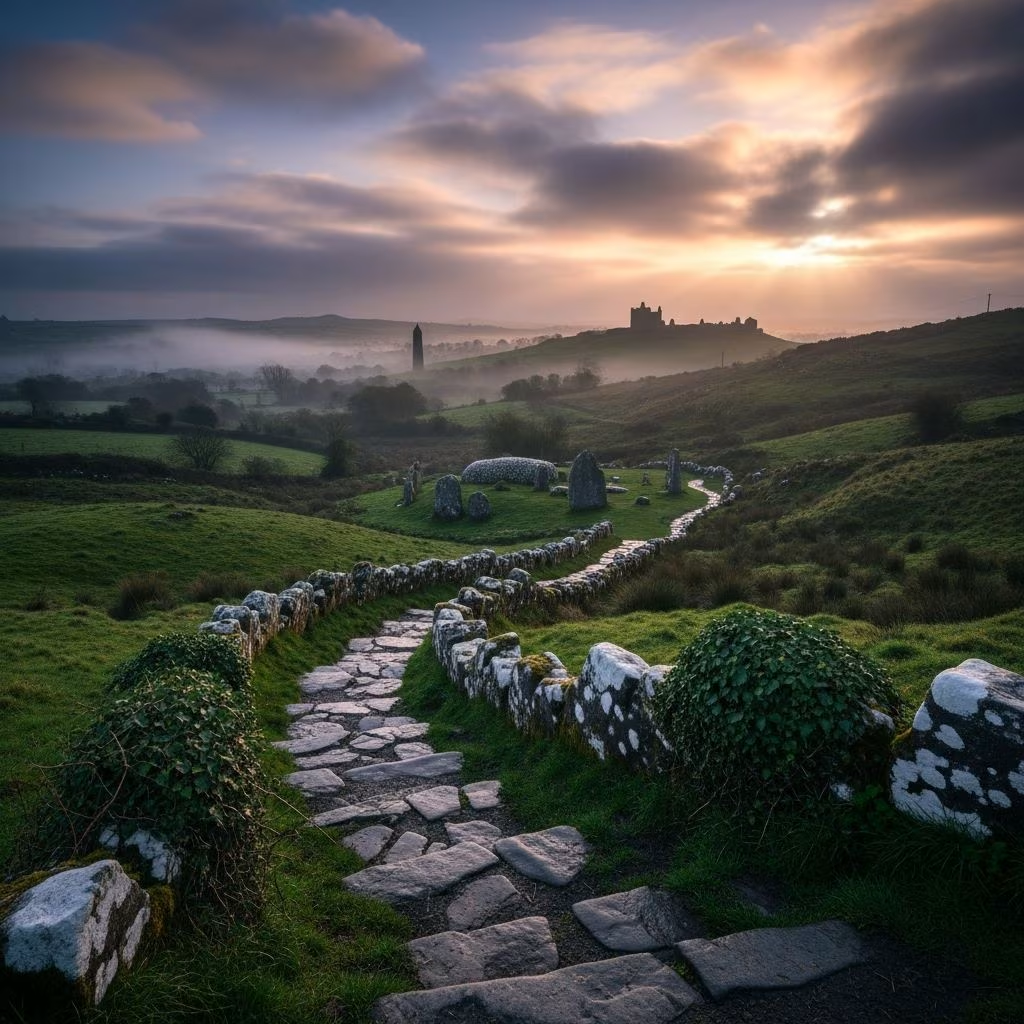
Embark on a 5-day journey through Ireland's Ancient East, exploring Neolithic tombs older than the pyramids, medieval high crosses, Viking forts, and royal castles across stunning landscapes.
 Travel Essentials
Spanning over five millennia, Ireland’s Ancient East offers a compact yet profound dive into the island’s layered past. This 5-day self-drive itinerary covers approximately 560km from Dublin to Waterford, weaving through lush valleys, rolling hills, and historic towns packed with prehistoric monuments, early Christian sites, medieval fortresses, and Viking settlements.
Begin your adventure in bustling Dublin, where the echoes of Celtic, Viking, and medieval eras converge. Start at the National Museum of Ireland – Archaeology, established in 1877, housing unparalleled treasures like the world’s finest medieval Celtic metalwork collection and remarkably preserved Iron Age bog bodies, complete with skin, hair, and nails. Exhibits on Medieval and Viking Ireland showcase artifacts from Dublin’s Wood Quay excavations, providing a perfect primer for the journey ahead.
After immersing in these artifacts, rent a car and head north on the M1 motorway toward the Boyne Valley. The drive is straightforward, offering glimpses of Ireland’s verdant countryside as you approach sites that predate written history.
The heart of ancient Ireland beats in the Boyne Valley at Brú na Bóinne, a UNESCO World Heritage site from around 3200 BC. This sprawling Neolithic complex surpasses Stonehenge by 1,000 years and the Great Pyramids by 500, featuring passage tombs like Newgrange—a massive 80m-wide, 13m-high mound faced with white quartzite that lights up precisely at winter solstice. Nearby, Knowth boasts intricate passage grave art, while Dowth invites peaceful walks amid grazing sheep.
Continue to the Hill of Slane, legendary for St. Patrick’s defiant Easter fire in 433 AD. Defying the high king’s ban, Patrick lit the blaze atop this hill and used a shamrock to explain the Holy Trinity, igniting Christianity across Ireland. Just 24km south lies the Hill of Tara, ancient seat of high kings and druids. This sacred 5,000-year-old landscape includes burial mounds, a Stone Age passage tomb, and folklore-rich grounds—entry is free, allowing unstructured exploration of its mystical atmosphere.
Drive west into County Wicklow’s monastic heartland. En route, pause at the Moone High Cross, an 8th- or 9th-century masterpiece amid ruins, carved with vivid biblical narratives that served as open-air Bibles for the illiterate. About 20km south, marvel at Browne’s Hill Dolmen, a 5,000-year-old portal tomb crowned by Europe’s largest capstone—over 100 tonnes of granite balanced impossibly.
Nearby, detour 10km north to Dunmore Cave, a glittering limestone cavern where stalactites and stalagmites frame a grim Viking tale. In 928 AD, raiders massacred locals at ring forts; survivors hid here but were smoked out. 1973 digs revealed bones and Viking coins, underscoring the site’s dark history. End the day in Glendalough’s glacial valley, home to a 6th-century monastic city with round towers, churches, and serene lakes— a testament to early Celtic Christianity.
| Site | Era | Key Feature | Distance from Previous |
|---|---|---|---|
| Moone High Cross | 8th-9th Century | Biblical carvings | 50km from Tara |
| Browne’s Hill Dolmen | 3000 BC | 100-tonne capstone | 20km south |
| Dunmore Cave | Viking Age | Stalactite formations & artifacts | 10km north |
Southward to Tipperary’s iconic Rock of Cashel, a limestone outcrop crowned by fortifications that dominated for over 1,000 years. Enter through the 15th-century Hall of the Vicars Choral, explore the ruined 13th-century cathedral, climb the 11th-century round tower, and admire Cormac’s Chapel—the 1127 Romanesque gem and Ireland’s earliest of its kind. This was a nexus of kings and clergy, blending secular and sacred power.
20km south, visit Cahir Castle (1142), one of Ireland’s grandest moated fortresses with turrets, dungeons, and intact battlements. Contrast its medieval might with the nearby Swiss Cottage—a whimsical 1810 Regency thatched villa amid gardens, evoking romantic escapism. Overnight in Kilkenny or nearby, sampling local craft beers in a historic pub.
Conclude in Waterford, Ireland’s oldest city founded as a Viking port in 914 AD. The Viking Triangle clusters three museums: Reginald’s Tower (13th-century, Ireland’s oldest complete building) with Viking exhibits; the Medieval Museum housing Europe’s only full medieval vestments set; and the Bishop’s Palace tracing 1700-1970 history in a Georgian mansion. This waterfront finale ties the trip’s threads from Neolithic to Norse.
This route suits self-drivers with an automatic car for ease on left-side roads. Total driving: 560km over 5 days, averaging 110km daily. Best May-September for weather; pack layers for unpredictable rain. Stay in guesthouses or B&Bs for authentic charm—book via official tourism sites.
Yes, public transport skips many rural sites; self-drive offers flexibility.
Winter solstice for Newgrange’s light show (lottery tickets); otherwise, anytime via guided tours.
Absolutely—interactive museums and open landscapes engage all ages.
Moderate walking; hilly sites like Tara involve gentle hikes.
Focus on Days 1-2 (Boyne Valley) and Day 5 (Waterford), skipping interiors.
Beyond stones and ruins, this region reveals Ireland’s soul: resilient communities building amid invasions, blending pagan mysticism with Christian fervor. Each stop—from Newgrange’s cosmic alignments to Waterford’s sturdy towers—narrates resilience, innovation, and cultural fusion. As you drive ancient paths, the landscape itself becomes a storyteller, inviting reflection on humanity’s enduring quest.
