

 Travel Essentials
 Travel Essentials

Experience Park City's best winter activities across five days, from mountain exploration and stargazing to cultural attractions and outdoor pursuits.
 Travel Essentials
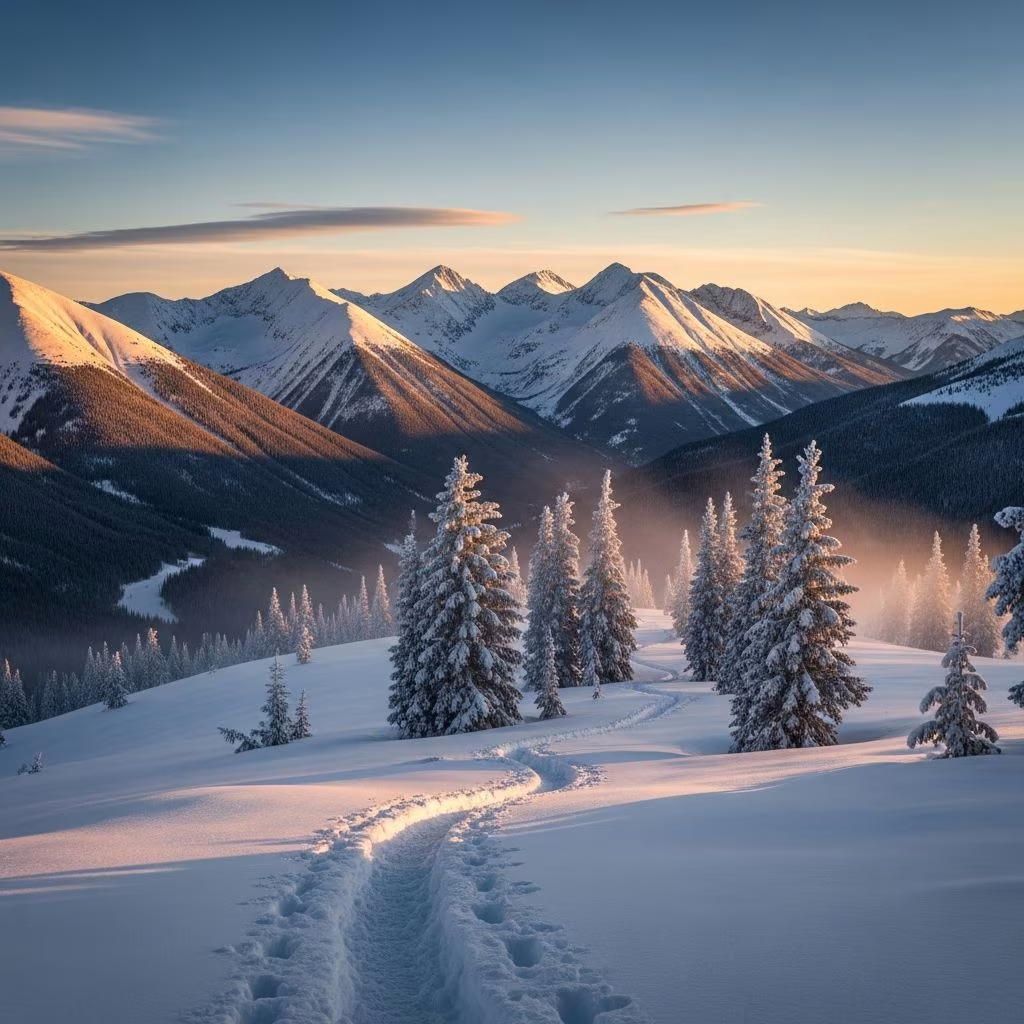
Park City, Utah, transforms into a world-class mountain destination during winter, offering visitors an exceptional blend of outdoor adventure, cultural exploration, and natural beauty. Nestled in the Wasatch Range at an elevation that provides crisp mountain air and snow-covered peaks, this former mining town has evolved into one of North America’s premier alpine retreats. A five-day visit allows travelers to experience the region’s most compelling attractions while maintaining a comfortable pace that balances activity with relaxation. This itinerary combines outdoor pursuits with historical sites, creating a well-rounded experience that captures the essence of Park City’s unique character.
Begin your Park City adventure by acclimating to the mountain environment and embracing one of the region’s most enchanting natural phenomena. The high elevation and minimal light pollution make Park City an ideal location for observing celestial events. Spend your first afternoon exploring the downtown area to understand the town’s layout and historical significance. Historic Main Street preserves 19th-century architecture from the silver mining era, lined with galleries, restaurants, and shops that reflect both the area’s heritage and contemporary culture.
As evening approaches, prepare for an astronomy experience that takes advantage of Park City’s elevation and clear skies. The surrounding mountains create a natural amphitheater that enhances visibility of constellations, planets, and meteor showers depending on the season. Many visitors find that beginning with stargazing creates a sense of connection to the landscape and establishes the week’s contemplative tone. Consider visiting a local observatory or finding a quiet vantage point away from downtown lights for optimal viewing conditions.
Park City sits near several pristine waterways that remain fishable throughout winter, offering a meditative contrast to more active pursuits. The region’s rivers and streams, including the Provo River designated as a Blue Ribbon trout fishery, provide opportunities for both experienced anglers and beginners. Winter fly-fishing requires specialized equipment and technique, but local guide services offer instruction for those new to the sport.
The morning fishing expedition should take you to accessible water where local guides can help identify species, teach casting techniques, and explain the ecological relationship between the watershed and surrounding mountains. Mid-afternoon transitions to exploring the natural systems that support these fisheries. The Swaner Preserve and EcoCenter offers boardwalk trails through protected wetlands that demonstrate how Park City’s landscape manages water resources and supports wildlife. An observation tower at the preserve’s terminus provides panoramic views of the ecosystem and the surrounding peaks.
This combination of activities creates understanding of Park City’s environmental complexity—from the historical mining landscape to contemporary conservation efforts. The transition from water-based fishing to boardwalk exploration mirrors the region’s shift from extractive industries to sustainable recreation.
Cross-country skiing represents one of winter’s most accessible alpine activities, requiring minimal equipment while providing exceptional cardiovascular benefit and intimate mountain contact. Park City’s trail system accommodates skiers of varying abilities, from groomed beginner routes to challenging backcountry routes. The activity offers a profound silence that distinguishes it from resort skiing, allowing visitors to hear wind through trees and observe wildlife more easily.
Following morning skiing, an afternoon visit to a local distillery provides cultural context and warming refreshment. Park City’s craft spirits producers offer tastings and distillery tours that explain the minerality of local water sources—itself a product of the mountain geology visible from the ski trails earlier that morning. These facilities often occupy restored historic buildings, connecting contemporary creative enterprises with the town’s mining heritage.
The distillery experience extends beyond alcohol tasting to encompass how communities transform historical identity into modern enterprise. Staff members can explain how Park City evolved from a mining economy through the ski industry’s development and into its current position as a year-round resort destination. This historical perspective enriches subsequent days’ activities by providing context for the landscape and infrastructure you’ll encounter.
The 2002 Winter Olympic Games permanently altered Park City’s trajectory, leaving behind world-class facilities and infrastructure that now serve public recreation. Utah Olympic Park, located just outside downtown, preserves bobsled tracks, ski jumping hills, and cross-country skiing courses that hosted Olympic competition. These venues now offer visitor experiences that range from observation to actual participation.
A full day at the Olympic Park begins with a guided tour explaining the facilities’ construction, operational requirements, and the athletes who trained there. The bobsled experience allows visitors to ride in an actual competition bobsled piloted by Olympic athletes or professional drivers, providing visceral understanding of the sport’s intensity and precision. For those seeking less extreme experiences, ski jumping observation from the landing hill offers appreciation for the sport’s scale and athlete capability without personal participation.
The park’s cross-country skiing courses, maintained to Olympic standards, provide opportunities to ski on the same terrain where athletes competed at the highest level. This experience often inspires visitors to improve their own technique and physical conditioning. The cultural legacy of hosting the Olympics extends beyond facilities to encompass the town’s identity and infrastructure investments that benefited residents long after the games concluded.
Additional activities at the park’s base area include exploring exhibits about Olympic history, watching athlete training sessions if available, and visiting the café facilities where seasonal menus often feature local ingredients and regional specialties.
The final day allows flexibility based on your emerging preferences and interests developed during the first four days. Some visitors choose to revisit favorite locations, while others explore activities not yet attempted. Mountain coasters, zip lines, and adventure parks operate year-round at the Park City Mountain base area, offering options for those seeking additional adrenaline-based experiences.
Alternative options include snowshoeing on beginner trails, visiting the Park City Museum to deepen historical understanding, or simply enjoying final meals at favorite restaurants discovered during the week. Some travelers use this day for spa treatments and wellness activities, recognizing that five days of mountain activity can inspire desire for recovery and relaxation.
The flexibility of day five serves an important function in any well-designed itinerary—it prevents over-scheduling and allows for spontaneous discoveries. Park City visitors frequently find that the town’s character reveals itself through unplanned moments as much as through structured activities.
Park City’s elevation, typically between 7,000 and 10,000 feet depending on your activity location, requires acclimatization that many visitors underestimate. Arriving a day early, hydrating continuously, and pacing physical activities appropriately prevents altitude-related illness. The intense sun reflection off snow can cause unexpected sunburn even on cloudy days, necessitating high-SPF sunscreen and quality sunglasses.
Transportation within Park City remains relatively simple due to the town’s compact downtown and efficient transit systems. However, accessing some trailheads and remote areas requires either a rental car with winter tires or participation in guided tours that handle transportation. Winter driving in mountain environments demands caution and appropriate vehicle preparation.
Lodging options range from luxury resorts adjacent to ski areas to boutique hotels in historic downtown to vacation rentals offering full kitchens and living spaces. Booking accommodations several months in advance ensures availability at competitive rates, particularly during peak seasons around major holidays and the Sundance Film Festival in January.
While this itinerary emphasizes winter activities, Park City operates as a year-round destination. Summer and fall months bring mountain biking, hiking, and cultural events. Spring typically features skiing early in the season with increasingly mixed conditions as the snowpack diminishes. Each season offers distinct advantages and requires adjusting activity selections accordingly.
Summer visitors might replace skiing with hiking on the same mountain trails and substitute mountain biking for cross-country skiing. The Swaner Preserve remains equally appealing across seasons, though seasonal wildlife varies with migration patterns. The stargazing experience differs between seasons due to changing constellations and atmospheric conditions.
Five days in Park City allows sufficient time to move beyond surface-level tourism to develop genuine connection with the landscape, community, and culture. The itinerary’s structure—moving from contemplative stargazing through active pursuits to cultural exploration—mirrors the process of gradually understanding a complex destination. Each activity builds understanding of how Park City functions as both a natural environment and human community.
The combination of outdoor adventure, historical sites, and contemporary recreational facilities creates a multifaceted experience that appeals to diverse interests. Whether you’re motivated by physical challenge, natural beauty, cultural heritage, or peaceful reflection, Park City provides the landscape and infrastructure to satisfy these desires across five memorable days.
