


 Food & Culture
Food & Culture
5-Day Quebec City and Charlevoix Travel Guide
Experience French Canadian culture across Quebec City and Charlevoix with this comprehensive 5-day travel itinerary featuring historic landmarks, cuisine, and outdoor activities.
 Food & Culture
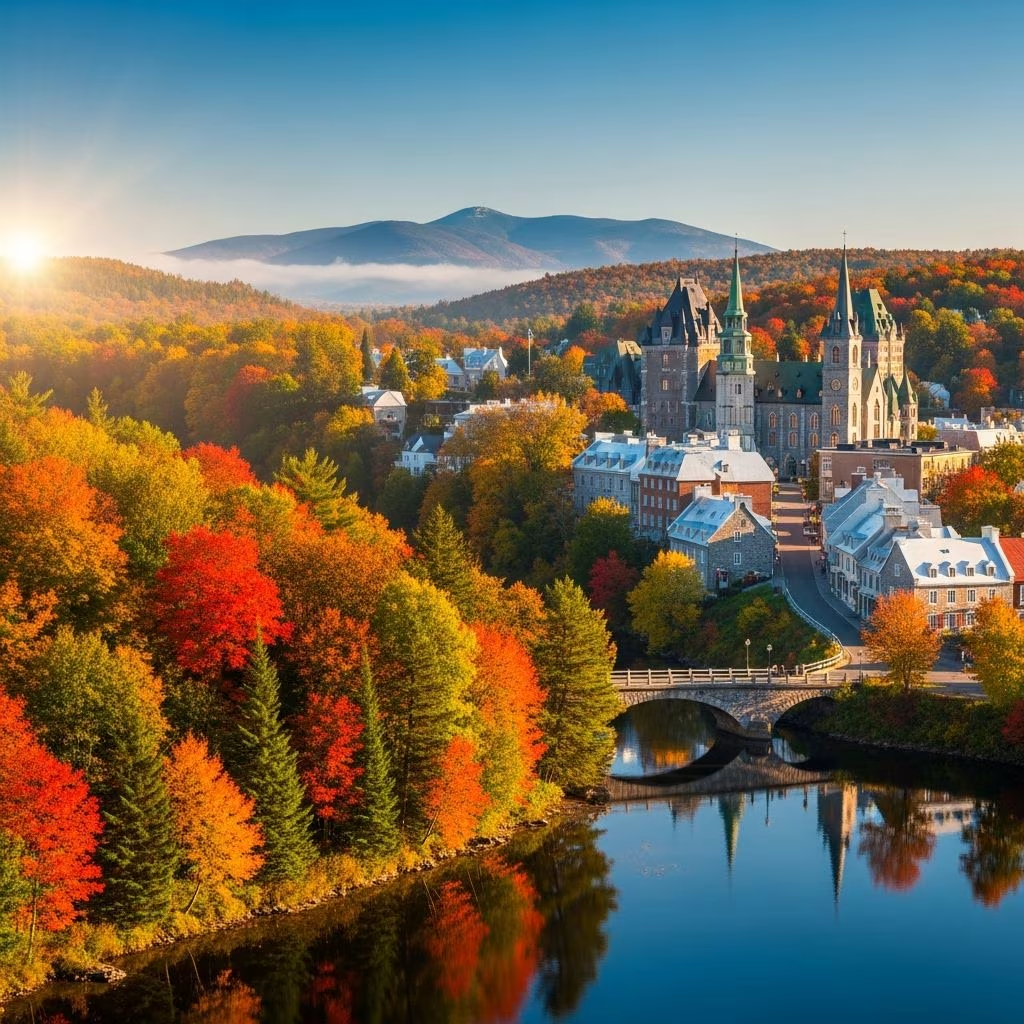
French Canada represents a unique blend of European heritage and North American natural beauty, offering travelers an immersive experience into a distinct cultural region. Quebec, particularly its historic cities and picturesque regions, stands as the epicenter of Francophone culture in North America, where centuries-old traditions continue to thrive alongside contemporary attractions. This comprehensive travel guide outlines a five-day exploration designed to showcase the most compelling aspects of Quebec’s rich history, world-class cuisine, and stunning landscapes.
Understanding Quebec’s Cultural Significance
Quebec City holds distinction as North America’s sole remaining urban center with fully preserved defensive ramparts, a feature that fundamentally shapes its character and historical importance. The city functions simultaneously as the cultural nucleus and political seat of French-speaking Quebec, making it an essential destination for anyone seeking to understand Canadian heritage. The region’s influences span from early French colonial settlement through British conquest to modern multicultural identity, creating layers of history visible throughout the province’s architecture, cuisine, and traditions.
The broader region surrounding Quebec City encompasses diverse landscapes and communities, each contributing distinctive elements to the visitor experience. From the St. Lawrence River valleys to the Laurentian Mountains, the geography itself tells stories of geological processes and human settlement patterns spanning over four centuries.
Day One: Discovering the Historic Nucleus
Upon arrival in Quebec City, travelers typically establish their base in the Upper Town, a section of the city that preserves much of its original colonial character while offering modern accommodations and services. The first day focuses on orientation and immersion into the city’s most iconic historical sites and architectural landmarks.
Initial Orientation and Accommodation
The journey begins with settling into lodging that reflects the grandeur of the city’s heritage. The Upper Town serves as the logical starting point, offering views across the St. Lawrence River and access to major historical attractions within walking distance. The promenade provides an excellent venue for initial exploration, allowing visitors to absorb the atmosphere while adjusting to the local pace and geography.
Religious and Institutional Landmarks
The Upper Town contains multiple religious structures representing different denominational traditions. These buildings showcase architectural styles spanning several centuries and serve as tangible connections to the region’s spiritual history. Visitors encounter both grand cathedral structures and smaller religious institutions, each offering insights into the community’s religious diversity and artistic heritage.
Historical institutions within this district preserve artifacts and documentation spanning the colonial period through contemporary times. The Augustinian Monastery functions both as a religious institution and community gathering space, with dining facilities serving traditional fare that reflects regional culinary traditions. These institutions often employ knowledgeable staff capable of providing context for architectural details and historical events.
Military History and Public Spaces
A pivotal location within the Upper Town marks the site of a decisive military engagement that fundamentally altered the region’s political trajectory. This area, now transformed into public green space, encompasses extensive grounds suitable for walking and reflection. The transformation from military battlefield to recreational area demonstrates how historical sites evolve to serve contemporary community needs while maintaining historical significance.
The region also contains museums dedicated to visual arts, housed within structures that themselves merit architectural appreciation. These institutions provide climate-controlled environments for viewing collections spanning various artistic movements and cultural traditions.
Evening Dining Experience
The first evening concludes with fine dining at an establishment recognized for excellence in French and Québécois cooking. Located within reasonable walking distance from accommodations, such restaurants offer menus featuring regional ingredients and traditional preparation methods alongside contemporary culinary innovations.
Day Two: Navigating the Lower Town’s Historic Quarters
The second day transitions to the Lower Town, accessible via a unique transportation method that connects the Upper and Lower sections of the city. This descent provides opportunities to observe how the city’s geography influenced settlement patterns and urban development.
Transportation and Arrival
The funicular railway represents both a practical transportation solution and historical artifact, having served the community for generations. The descent itself offers visual perspective on the relationship between the upper plateau and lower riverine areas, illustrating the strategic advantages that influenced settlement patterns.
Ancient Settlement Sites and Significance
The Lower Town contains the most extensively preserved examples of early colonial architecture in North America north of St. Augustine, Florida. Cobblestone streets and narrow alleyways reflect planning principles from seventeenth-century European cities, adapted to accommodate local topography and commercial needs. A particular plaza represents the symbolic center of the provincial identity and commemorates the founding of the original settlement in the early seventeenth century.
Commercial Districts and Merchant Activities
Contemporary commercial activities within the Lower Town include antique shops, boutiques featuring local artisans’ work, and specialty food establishments. One particular street earned renown for concentrating antique dealers and collectors’ shops, making it essential for visitors interested in historical artifacts and period furnishings.
Food Markets and Culinary Exploration
A historic port market continues to function as both tourist attraction and working marketplace where local merchants offer regional food products. The market environment provides opportunities to purchase authentic food items ranging from traditional maple confections to preserved local berries, creating memorable edible souvenirs. The market also contains restaurants and food stalls where visitors can sample prepared dishes.
Museums and Scholarly Resources
Two significant museums within walking distance of the market offer different perspectives on regional history and culture. One institution focuses specifically on French American heritage and recent archaeological discoveries from colonial settlement sites. The other provides broader cultural context through international exhibitions and thematic displays examining how human societies develop and transmit values across generations.
Evening Culinary Adventure
Dinner on the second evening occurs at a restaurant combining historical ambiance with innovative contemporary approaches to regional cuisine. Housed within a historic inn, the establishment balances respect for architectural heritage with modern amenities and forward-thinking culinary philosophy.
Day Three: Extended Urban Exploration
The third day allows deeper investigation into areas not fully explored during the first two days, with flexibility to pursue interests developed during initial exposure to the city.
Shopping and Leisure Districts
Several streets throughout the city offer shopping opportunities ranging from international brand retailers to local artisan producers. Areas outside the historic preservation district contain different architectural styles and contemporary commercial developments, providing contrast to the colonial-era quarters visited previously.
Culinary Specialization
The final dinner in Quebec City features a restaurant dedicated to cooking methods and ingredient sources emphasizing sustainability and local production. The dining establishment specializes exclusively in regional, seasonally-available food items, extending this principle even to beverage selections and dessert preparations. This approach ensures menus change throughout the year based on harvest cycles and ingredient availability.
Transition Preparation
The final hours in Quebec City provide opportunity for last walks through favorite areas, last-minute shopping, or revisiting particularly appreciated locations before departing for the next phase of the journey.
Days Four and Five: The Charlevoix Adventure
Journey and Arrival
Departure from Quebec City toward Charlevoix involves approximately one hour of travel through countryside displaying gradually increasing topographical variation. The Charlevoix region occupies territory between significant water bodies and mountain ranges, creating distinctive landscapes shaped by glacial geological processes and contemporary ecological dynamics.
Natural Attractions and Outdoor Activities
The region contains national parks featuring hiking trails, scenic overlooks, and interpretive programs explaining geological and ecological characteristics. Mountain ranges provide dramatic backdrops to water-level vistas, and multiple elevation changes create diverse hiking experiences suitable for varying fitness levels. Marine environments within adjacent water bodies support whale watching and other aquatic recreational pursuits, seasonally available depending on migration patterns and weather conditions.
Village Character and Commerce
Small communities within Charlevoix maintain distinctive characters shaped by geography and historical development patterns. Art galleries, craft studios, and boutiques concentrate in village centers, reflecting the region’s appeal to artists and artisans. These communities provide contrasts to larger urban centers, offering glimpses into how French Canadian culture manifests in smaller-scale settlements.
Beverage and Culinary Innovation
Specialized beer production facilities offer educational tours combining technical information about brewing processes with tasting opportunities. Pub-style dining accompanies such experiences, featuring regional cooking traditions adapted to casual service settings.
Return Options
The fifth day provides flexibility to either depart for home or extend the journey deeper into Quebec’s numerous other attractions, accommodations, and experiences. Many travelers use this decision point to evaluate their remaining time, energy levels, and emerging interests developed during the four-day exploration.
Seasonal Considerations
Quebec’s climate varies significantly across seasons, affecting both activity availability and visitor comfort. Spring through fall months offer optimal conditions for outdoor activities, while winter transforms the landscape dramatically but presents unique recreational opportunities for cold-weather enthusiasts. Travel timing influences which restaurants operate at full capacity, which outdoor attractions remain accessible, and which festivals or cultural events coincide with visits.
Practical Travel Information
Getting There
Quebec City contains an international airport served by major carriers, with ground transportation options connecting to downtown accommodations. Train service connects Quebec City to other major Canadian cities, offering alternative arrival methods with scenic journey components.
Language Considerations
French language predominance in the region requires varying levels of accommodation depending on visitor French fluency. Many service industry workers in tourist areas speak English, while rural areas and smaller communities may present communication challenges for non-French speakers. Learning basic French phrases enhances cultural appreciation and facilitates smoother interactions.
Currency and Payments
Canadian currency is standard throughout Quebec. Credit cards receive broad acceptance in commercial establishments, though some smaller vendors prefer cash or may offer discounts for cash transactions.
Frequently Asked Questions
What is the best time to visit Quebec?
The late spring through early fall months offer ideal weather for outdoor activities and exploration. Summer provides warmest temperatures and longest daylight hours, while spring and fall offer pleasant temperatures with fewer crowds.
How much time is necessary to adequately experience Quebec City?
Three days allows comfortable exploration of major historical sites and neighborhoods. Additional days permit deeper investigation of museums, dining experiences, and surrounding regions.
Are guided tours necessary, or can independent exploration suffice?
The city layout permits independent navigation, though guided tours provide historical context and access to sites that might otherwise remain unknown. Many visitors combine independent exploration with selective guided experiences.
What dining options exist for visitors with dietary restrictions?
Quebec’s restaurant scene accommodates various dietary requirements, particularly in larger establishments and contemporary restaurants. Communication with restaurant staff typically facilitates appropriate meal preparation.
Is winter a viable travel season?
Winter transforms the region dramatically, offering winter sports, festive holiday decorations, and reduced crowds. Cold temperatures require appropriate clothing, and some outdoor activities become less accessible.
References
- A Taste of French Canada: Five Days in Québec City and Charlevoix — AFAR Media. Accessed 2026. https://www.afar.com/journeys/a-taste-of-french-canada-five-days-in-quebec-city-and-charlevoix
- Best 7-day road trip in Quebec — Authentik Canada. Accessed 2026. https://www.authentikcanada.com/gb-en/blog/best-7-day-road-trip-in-quebec
- Eastern Canada by Train: Toronto, Ottawa, Montréal, Quebec City — KimKim. Accessed 2026. https://www.kimkim.com/c/eastern-canada-by-train-14-days
- Cuisine of Quebec — Wikipedia. Accessed 2026. https://en.wikipedia.org/wiki/Cuisine_of_Quebec
On This Page
Understanding Quebec's Cultural Significance Day One: Discovering the Historic Nucleus Day Two: Navigating the Lower Town's Historic Quarters Day Three: Extended Urban Exploration Days Four and Five: The Charlevoix Adventure Seasonal Considerations Practical Travel Information Frequently Asked Questions← Previous
Mediterranean Coastal Journey Through Spain, France & Italy
Next →
Thailand Elephants and Islands: Ethical Wildlife and Tropical Escape
Related Reading
More in Food & Culture
Food & Culture Food & Culture
 Food & Culture
Best Places to Eat in Rome: Neighborhood Dining Guide
 Food & Culture
 Food & Culture