

 Travel Essentials
 Travel Essentials

A comprehensive 5-day road trip through southern Scotland featuring historic castles, scenic lochs, and charming seaside towns with practical driving tips.
 Travel Essentials
Scotland’s southern regions offer travelers a compelling mix of historical architecture, dramatic landscapes, and charming villages that rival any destination in Europe. Rather than focusing exclusively on the famous Highlands, a road trip through the southern areas provides a more intimate experience of Scottish culture, heritage, and natural beauty. This five-day journey takes visitors from Scotland’s urban center through mountains, past ancient strongholds, and concludes at a peaceful seaside retreat. The entire route can be completed in a manageable timeframe, making it ideal for travelers with limited vacation days who still want a substantial Scottish experience.
Beginning your adventure in Glasgow allows visitors to acclimate to Scotland’s rhythm while enjoying one of the country’s most vibrant cities. Glasgow serves as an excellent launching point for southern exploration, offering cultural institutions, excellent dining options, and essential services for road-trippers preparing for multi-day journeys. Spend your first day becoming acquainted with the city’s character, from its Victorian architecture to its modern galleries and museums. Take time to plan your route, check vehicle conditions if you’re renting a car, and gather information about the upcoming stops. Exploring Glasgow properly requires at least a full day, so resist the urge to rush through this introduction. The city provides crucial opportunities to stock up on supplies, purchase appropriate clothing layers (as Scottish weather can change rapidly), and ensure your accommodation for subsequent nights is confirmed.
Recommended activities in Glasgow include visiting the Kelvingrove Art Gallery and Museum, exploring the Glasgow Cathedral, and strolling through the city’s distinctive neighborhoods. Spend the evening enjoying local restaurants and pubs to get a genuine sense of Scottish hospitality.
The second day involves a circular loop journey that returns to Glasgow by evening, though flexible travelers might choose to conclude this day in Edinburgh instead. This day is dedicated to experiencing Scotland’s remarkable collection of castles, each representing different periods of Scottish clan history and architectural evolution. The castle-hopping expedition requires early departure from Glasgow to maximize time at each location, as rushing through these historic sites diminishes the experience considerably.
The circuit traverses the Fife region, where several significant fortifications dot the landscape. Travel times between destinations typically range from 30 to 50 minutes, allowing visitors to spend meaningful hours exploring the diverse castle grounds, touring interior rooms filled with historical artifacts, and absorbing the narratives embedded in these structures. Each castle tells distinct stories of Scottish nobility, military strategy, and domestic life across centuries.
Key characteristics of Day Two include:
Day Three marks a transition from architectural history to natural landscape appreciation. Loch Lomond, Scotland’s largest freshwater lake by surface area, becomes the focal point for this portion of the journey. Located approximately 45 minutes from Glasgow’s center (though travel time extends if you’re staying at the northern end of the lake), Loch Lomond represents a dramatic shift in scenery and available activities.
The locale offers multiple recreational opportunities suited to different energy levels and preferences. Active travelers can engage in water sports such as kayaking and paddleboarding, experiencing the loch from an intimate perspective. Hiking trails around the perimeter provide alternative ways to connect with the landscape, offering viewpoints inaccessible by vehicle. For those preferring more leisurely engagement, boat cruises range from casual ferry rides to upscale champagne experiences, with options including journeys to Inchmurrin, an island featuring a bar and inn accessible only by water.
After spending quality time at Loch Lomond, the journey continues southward toward Dean Castle Country Park, approximately one hour’s drive away. This expansive property offers free admission, including access to its namesake castle and maintained hiking trails. The marked pathways allow visitors to stretch their legs after hours of driving while enjoying maintained natural areas. The subsequent drive southward along the A77 corridor presents some of the trip’s most photogenic views, particularly vistas across the Firth of Clyde.
Troon provides a strategic stopping point, particularly for golf enthusiasts. The town has gained prominence as host to multiple British Open Championships, with 2024 being the most recent occasion, making it a significant pilgrimage site for golf-related tourism.
This day is structured as a transition period, allowing travelers to move from central Scottish locations toward the eastern coastline. The journey prioritizes accessibility and manageable driving distances while introducing seaside experiences and smaller communities that showcase Scottish life beyond major tourist centers.
The coastal areas accessed on Day Four offer distinctive character compared to inland locations. Small villages provide authentic dining opportunities, local shopping, and perspectives on how modern Scotland balances traditional culture with contemporary needs. The emphasis shifts from monumental attractions to experiential engagement with regional communities.
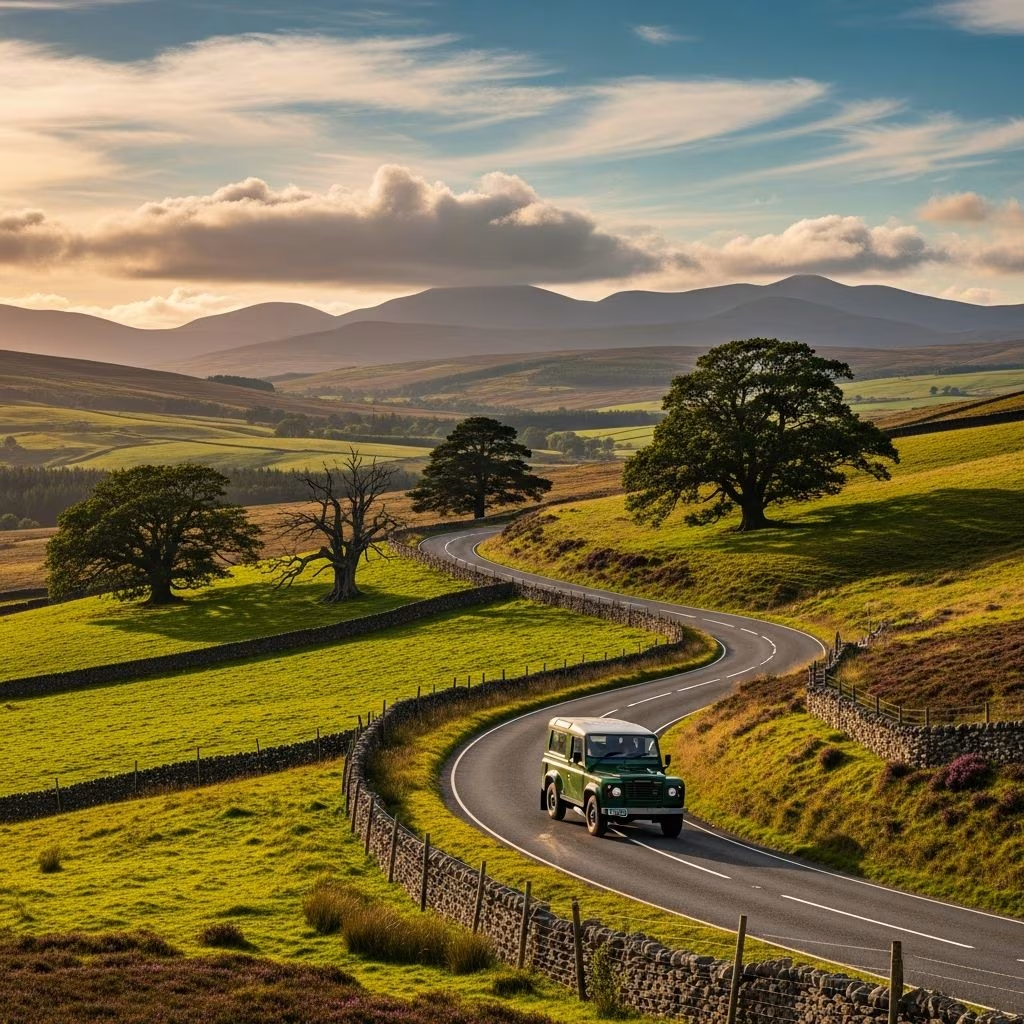
The final day encompasses the trip’s most demanding driving, with approximately 2.5 hours of continuous travel through the Scottish Borders region. However, the distance is justified by both the journey itself and the destination. The route utilizes the ultra-scenic A708, recognized as one of Scotland’s most visually compelling roads, comparable to more famous Highland driving routes.
Travelers following this corridor encounter continuous visual rewards, including rolling agricultural landscapes, dramatic topography, and abundant wildlife. The region is internationally famous for its sheep populations, which inhabit hillsides at varying elevations. Photography opportunities abound throughout this stretch, making it worthwhile to plan for several photograph stops rather than treating the drive as mere transportation.
Breaking up this extended drive, the Grey Mare’s Tale Waterfall offers both a physical break and a worthwhile detour. The dramatic 60-foot cascade can be reached via a full three-mile hike or accessed more quickly through a shorter walk from the parking area, accommodating different fitness levels and time constraints.
The journey’s principal destination is Traquair House, Scotland’s oldest continuously inhabited residence. This exceptional property merits two to three hours of exploration, featuring actual historical artifacts connected to Mary Queen of Scots and distinctive maze gardens reminiscent of contemporary entertainment properties. The house represents a remarkable survival of Scottish heritage, combining architectural significance with intimate historical connections.
Following lunch at the property, the final leg extends to North Berwick in East Lothian, approximately one hour’s journey from Traquair House. This charming seaside town serves as an ideal conclusion to the five-day circuit, offering relaxed coastal atmosphere and excellent dining establishments. A minor detour to Seacliff Beach provides an appropriate sunset-watching location before dinner service begins.
Southern Scotland distinguishes itself through several defining features. The region encompasses approximately 500 miles of road if traveled in comprehensive fashion, though this five-day itinerary covers a more concentrated route. The landscape transitions dramatically across relatively short distances—from urban environments to alpine scenery to pastoral countryside to dramatic coastline.
The Scottish Borders region, traversed on the final day, is particularly renowned for historical significance. The area contains exceptional concentrations of ruins, castles, and heritage sites documenting Scottish-English border conflicts, ecclesiastical history, and noble family developments spanning centuries. The rolling valleys and mountain ranges create visually distinctive environments compared to both the Highlands and lowland Scottish areas.
Several logistical considerations enhance the road trip experience. Driving in Scotland follows left-hand traffic patterns, which requires adjustment for visitors from right-hand driving countries. Road surfaces vary from modern highways to narrow country lanes, necessitating cautious navigation, particularly on less-traveled routes like sections of the A708. Weather conditions can change rapidly, so carrying layers and waterproof outerwear remains essential regardless of season.
Vehicle rental services are readily available in Glasgow and Edinburgh, with numerous companies offering compact cars suitable for Scottish roads. Fuel stations are distributed throughout the route, though travelers should avoid allowing fuel reserves to deplete completely, particularly when traveling less-developed areas.
Scottish hospitality extends through both lodging and dining establishments. Traditional breakfast items feature prominently, with Scottish baps (soft rolls) serving as popular bread bases for breakfast sandwiches. These hearty morning meals prepare travelers for active days of exploration and extensive driving.
Lunch options range from casual café service to pub meals, with many locations offering seasonal soup and sandwich selections. Quality varies but generally reflects regional ingredients and traditional preparation methods. Evening dining provides opportunities to experience Scottish cuisine at varying price points, from casual establishments to fine dining venues.
Accommodation reservations should be confirmed well in advance, particularly during peak travel seasons (summer months and school holidays). Smaller towns like North Berwick and areas surrounding Loch Lomond fill quickly, potentially leaving last-minute travelers with limited options or extended driving to find available rooms.
Southern Scotland remains accessible year-round, though different seasons offer distinct experiences. Summer months provide extended daylight hours, warmer temperatures, and full operational status for all attractions. Spring and autumn offer shoulder-season advantages including smaller crowds and pleasant temperatures, though some minor attractions operate on reduced schedules.
Winter travel is possible but requires consideration of reduced daylight hours, potentially challenging weather conditions, and occasional weather-related closures. However, winter travel provides exceptional solitude and unique atmospheric qualities, particularly valuable for photography and peaceful contemplation.
While this five-day structure provides a logical progression, travelers with more time can extend stays at particular locations or add intermediate stops. The route can accommodate adjustments based on personal interests—additional time at Loch Lomond for water activities, extended castle exploration, or deeper engagement with border region history and heritage sites.
Travelers returning to Glasgow rather than concluding in North Berwick can reroute on the final day, accessing accommodation and transportation services in the larger city. This adjustment requires approximately one additional hour of driving from Traquair House.
Every day of this itinerary offers substantial photography potential. Castle architecture, landscape vistas, wildlife encounters, and coastal scenes provide diverse subject matter. Early morning and late afternoon light produces optimal photographic conditions, particularly for landscape and architectural photography. Travelers should budget additional time at particularly photogenic locations, especially along the A77 corridor and A708 route.
