

 Travel Essentials
 Travel Essentials

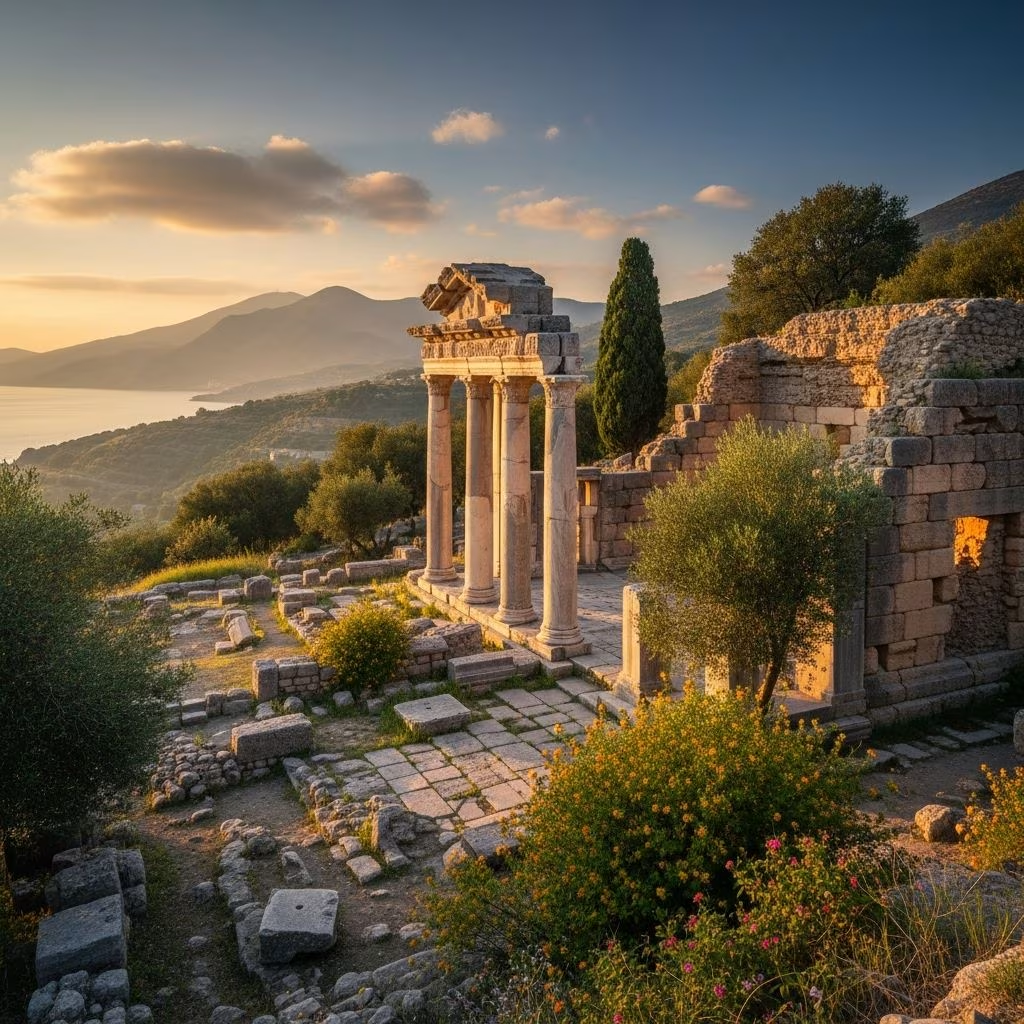
Explore hidden Roman ruins and archaeological treasures across the Mediterranean and beyond, offering authentic historical experiences away from crowded tourist hotspots.
 Travel Essentials
The Roman Empire once stretched across three continents, leaving behind an extraordinary legacy of architectural marvels, temples, theaters, and urban centers. While many travelers flock to iconic sites like Rome’s Colosseum and the Roman Forum, numerous equally impressive archaeological destinations remain relatively undiscovered by mainstream tourism. These hidden gems offer visitors the opportunity to experience authentic Roman history in a more intimate setting, often with fewer crowds and a deeper sense of connection to the ancient world.
Beyond the well-trodden paths of Italy’s capital city, a remarkable collection of preserved ruins tells the story of Rome’s vast influence and sophisticated civilization. From the North African coast to the Middle East and across Europe, these lesser-known sites showcase the architectural brilliance, engineering prowess, and cultural sophistication that defined the Roman period. Exploring these destinations provides a more nuanced understanding of how Romans lived, worked, worshipped, and entertained themselves across diverse regions.
North Africa served as one of the Roman Empire’s most prosperous provinces, producing grain, olive oil, and other essential commodities that sustained Rome itself. The region contains some of the most remarkably preserved Roman ruins outside of Italy, offering visitors a vivid picture of daily life in provincial towns.
Located in present-day Algeria, Timgad represents one of the finest examples of Roman urban planning and military architecture. Founded in approximately 100 CE as a settlement for retired soldiers, this city exemplifies the systematic approach Romans took to establishing communities in frontier regions. The site features a distinctive grid layout with wide streets intersecting at right angles, a design principle that influenced countless Roman settlements throughout the empire.
The archaeological remains at Timgad include impressive public buildings, a well-preserved theater, temples dedicated to various deities, and an extensive library that once housed thousands of scrolls and manuscripts. The theater, built into a hillside using the natural topography, could accommodate thousands of spectators for theatrical performances and public gatherings. Visitors exploring Timgad can walk through residential quarters, observe the remains of shops and markets, and gain insight into the social hierarchy and daily routines of Roman provincial citizens.
In Tunisia, the town of El Jem contains one of North Africa’s most stunning architectural achievements: a massive amphitheater that rivals many structures found in Italy itself. Built in the third century CE, this colossal arena once hosted gladiatorial combats, wild beast hunts, and public spectacles that entertained the city’s population of approximately 30,000 residents during the Roman period.
The amphitheater’s construction demonstrates the advanced engineering knowledge possessed by Roman architects and builders. The structure features multiple levels of arches, intricate underground passages where animals and gladiators waited before entering the arena, and sophisticated systems for managing crowds. Despite centuries of weathering and partial destruction, the monument remains remarkably intact, allowing modern visitors to appreciate its original grandeur and understand the entertainment culture that was central to Roman society.
Also located in Tunisia, Bulla Regia showcases a unique architectural adaptation developed by wealthy Roman residents in response to the region’s intense Mediterranean heat. Rather than constructing traditional homes above ground, prosperous citizens built elaborate underground dwellings that maintained cooler temperatures throughout the year. These subterranean residences featured courtyards, multiple rooms, decorative mosaics, and sophisticated water systems.
The excavated ruins reveal the ingenuity and adaptability of Roman civilization, demonstrating how residents modified standard architectural practices to suit local environmental conditions. Visitors can explore the underground chambers, observe the decorative elements that adorned these homes, and appreciate the craftsmanship involved in creating functional yet luxurious living spaces beneath the surface.
Modern-day Turkey preserves remarkable examples of how Roman civilization flourished in Asia Minor, integrating Greek cultural traditions with Roman administrative and military systems.
Perched in the mountainous interior of Turkey, Sagalassos represented a thriving commercial and cultural center during the Roman period. The city’s most celebrated feature is the nymphaeum, or ornamental fountain, commissioned during the reign of Emperor Antoninus Pius. This elaborate water feature showcased Roman engineering capabilities through its intricate system of channels, basins, and decorative elements.
The fountain’s design included multiple tiers with sculptural niches designed to display statues of emperors and deities. Water flowed through carefully constructed conduits into large pools, creating a spectacle that served both functional and decorative purposes. Recent restoration efforts have returned this fountain to working condition, allowing visitors to witness torrents of water cascading into turquoise pools, reminiscent of the elaborate fountains that would later adorn European palaces during the Renaissance and Baroque periods.
Beyond the fountain, Sagalassos contains a well-preserved theater, temples, public baths, and residential quarters that illustrate the sophistication of Roman urban life in provincial Asia Minor. The site’s mountainous location provided natural fortifications while allowing residents access to trade routes that connected the Mediterranean with interior regions.
In present-day Jordan, Jerash (ancient Gerasa) stood as one of the Roman Empire’s most important commercial centers, strategically positioned along trade routes connecting Arabia, Persia, and the Mediterranean. The city flourished during the second and third centuries CE, accumulating wealth from the spice trade and other commercial activities.
The archaeological site encompasses a remarkable collection of structures including a forum surrounded by shops and administrative buildings, two temples dedicated to Zeus and Artemis, a sprawling complex of public baths, theaters, and a hippodrome for chariot racing. The city’s layout reflects typical Roman urban planning principles adapted to the local topography, with paved streets connecting major public buildings and residential areas.
Walking through Jerash provides an authentic sense of how commerce, religion, and public entertainment organized daily life in a prosperous Roman provincial city. The preserved structures reveal the economic importance of the location and the civic pride residents took in constructing impressive public monuments.
Often overshadowed by Rome’s more famous attractions, Ostia Antica served as the principal port through which supplies, goods, and personnel flowed into the capital city. Located approximately 25 kilometers from Rome, this ancient harbor town was essential to sustaining the empire’s largest metropolis.
The archaeological remains at Ostia provide an exceptionally well-preserved glimpse into ordinary Roman urban life during the imperial period. The site contains twenty-six distinct bathing complexes, demonstrating the central role public baths played in Roman social and civic culture. These facilities served not only hygienic purposes but functioned as social centers where citizens gathered to exercise, socialize, conduct business, and relax.
Among Ostia’s most notable features is the Baths of Neptune, decorated with an exceptional mosaic depicting the Roman god of the sea surrounded by marine creatures and mythological scenes. The craftsmanship evident in this mosaic exemplifies the decorative sophistication that even provincial bath houses could achieve during the Roman period.
Beyond the baths, visitors can explore residential buildings that housed workers and merchants, storage warehouses where goods awaited transport to Rome, temples, markets, and other structures that composed a functioning Roman urban center. The site’s excellent preservation allows archaeologists and visitors alike to reconstruct daily life in a prosperous Roman trading city.
| Location | Primary Historical Significance | Key Architectural Features | Best For |
|---|---|---|---|
| Timgad, Algeria | Military settlement and urban planning | Grid street layout, theater, library | Understanding Roman colonial infrastructure |
| El Jem, Tunisia | Entertainment and civic pride | Third-century amphitheater | Appreciating Roman engineering |
| Sagalassos, Turkey | Commercial center and water management | Ornamental fountain, theater, baths | Witnessing Roman technological advancement |
| Jerash, Jordan | Trade and commerce hub | Forum, temples, hippodrome | Exploring provincial prosperity |
| Ostia, Italy | Harbor and supply center | Baths, warehouses, residential quarters | Experiencing daily life and commerce |
Each of these lesser-known Roman sites contributes essential perspectives to our understanding of one of history’s most influential civilizations. While Rome itself offers unparalleled grandeur and density of historical monuments, these peripheral locations reveal how Roman culture, administrative systems, and architectural principles adapted to diverse geographic, climatic, and economic contexts.
Visiting these destinations offers several advantages beyond crowded mainstream tourist attractions. First, the reduced visitor numbers allow for more contemplative exploration and closer observation of archaeological details. Second, many sites offer accommodation and dining options that provide authentic local experiences. Third, the archaeological sites themselves often provide better interpretive materials and recent restoration efforts that help visitors understand what these places looked like during antiquity.
Furthermore, exploring these lesser-known ruins contributes to more sustainable tourism practices by distributing visitor impact across multiple sites rather than concentrating pressure on a few famous locations. This approach benefits local communities through broader economic distribution and helps preserve these irreplaceable historical resources for future generations.
Accessibility and Transportation: Most of these sites remain accessible by public transportation or organized tours from nearby major cities. Timgad and El Jem are reachable from Algerian and Tunisian cities respectively, while Sagalassos connects to Turkish transportation networks. Jerash lies within reach of Amman, Jordan, and Ostia is just outside Rome.
Preservation Status: These sites vary in their preservation condition and interpretation. Some benefit from recent restoration projects and modern visitor facilities, while others offer more basic amenities. Travelers should research current conditions and available interpretive resources before planning visits.
Climate Considerations: North African and Middle Eastern sites experience extreme heat during summer months, making spring and autumn optimal visiting seasons. Proper sun protection, hydration, and appropriate clothing are essential for comfortable site exploration.
A: These destinations provide broader perspective on how Roman civilization functioned across diverse regions and contexts. They showcase adaptation, commerce, military strategy, and daily life in ways that concentrated Rome sites cannot fully illustrate.
A: Yes, most maintain excellent preservation that allows substantial understanding of original functions and layouts. Recent archaeological work and restoration efforts have enhanced many sites’ interpretive value.
A: Spring (March-May) and autumn (September-November) offer ideal conditions in North Africa and the Middle East, avoiding summer heat and winter precipitation.
A: While archaeological background enhances experience, these sites offer value to general visitors. Guidebooks, audio tours, and site interpretive panels provide sufficient context for meaningful exploration.
