

 Travel Essentials
 Travel Essentials

Explore the world's most serene cities where modern infrastructure, natural beauty, and wellness culture create perfect retreats from urban chaos.
 Travel Essentials
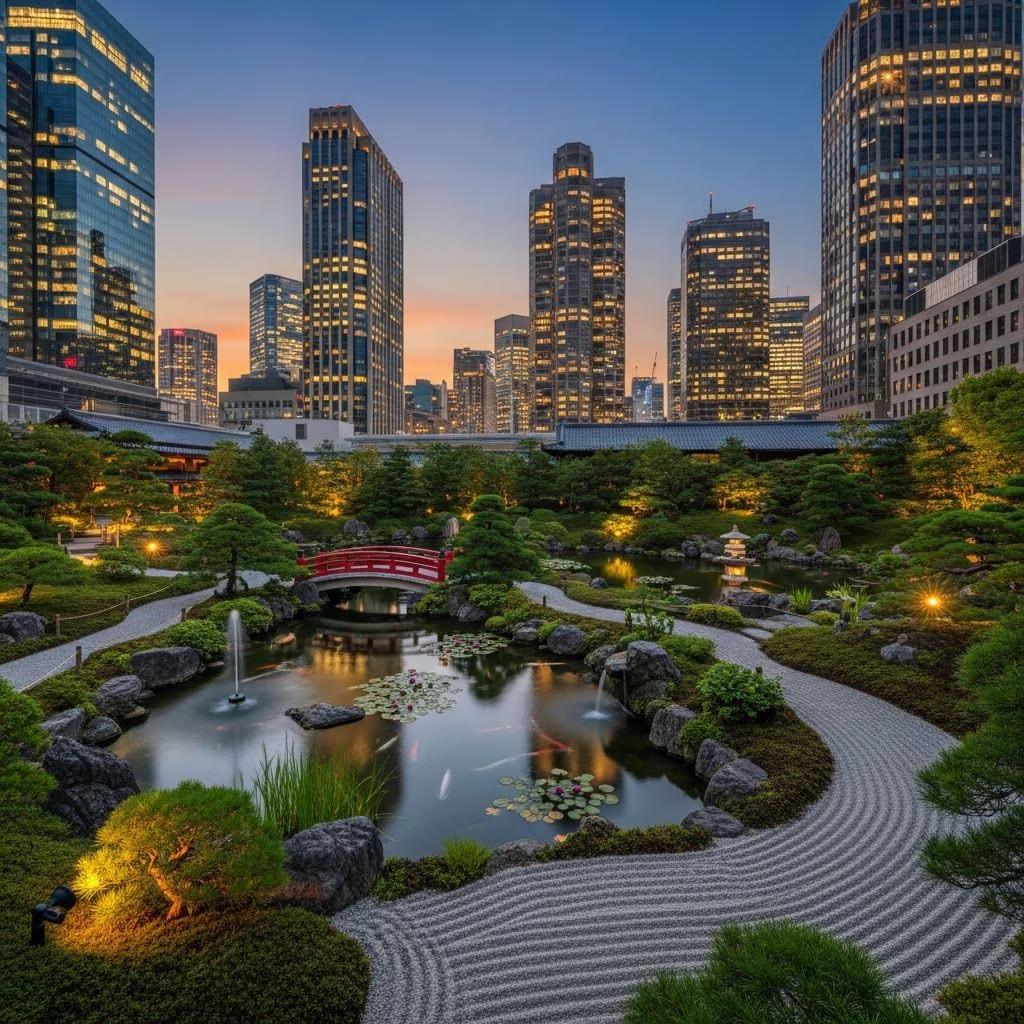
In an increasingly fast-paced world, the desire to escape metropolitan stress has driven travelers to seek destinations that offer more than just tourist attractions—they want environments that actively promote well-being and tranquility. The modern city no longer needs to be synonymous with chaos, congestion, and cacophony. A new generation of global urban centers has demonstrated that sophisticated infrastructure, cultural richness, and peaceful living can coexist harmoniously. These destinations prove that metropolitan areas can serve as havens for both the body and mind, offering visitors respite without requiring them to sacrifice access to excellent amenities, dining, and cultural experiences.
Understanding what transforms an urban area from merely functional to genuinely restorative requires examining multiple interconnected factors. Researchers have identified key metrics that distinguish serene cities from their more chaotic counterparts. These metrics extend far beyond subjective impressions, encompassing measurable environmental conditions, infrastructure quality, and community satisfaction indicators.
The composition of a truly relaxing city includes several critical elements: abundant green spaces that provide natural breathing room within dense urban layouts; accessible wellness facilities that cater to both body and mind; minimal air and noise pollution that allows residents and visitors to experience environmental clarity; efficient traffic management that reduces daily frustration and time waste; and consistent natural light that positively influences mood and energy levels. Additionally, the intangible factor of community happiness—how satisfied residents are with their overall quality of life—significantly impacts the atmospheric quality of a destination.
When these factors combine effectively, they create cities that feel fundamentally different from typical metropolitan areas. Rather than demanding adaptation from visitors, these destinations naturally encourage relaxation and psychological restoration.
Dominating rankings of the world’s most peaceful urban destinations, San Diego represents an ideal synthesis of natural endowment and progressive urban planning. This southern California metropolis has secured its position as the premier relaxation destination through an exceptional combination of environmental and infrastructural advantages.
The city’s supremacy rests on several distinguishing characteristics. San Diego boasts an extraordinary 266 parks and nature reserves scattered throughout its metropolitan area, providing unparalleled access to outdoor recreation and natural restoration. This abundance of green infrastructure ensures that residents and visitors never feel disconnected from nature, even in urban cores. The Torrey Pines Nature Reserve stands as a particularly notable example of the city’s commitment to preserving natural landscapes within developed areas.
Complementing its natural assets, San Diego offers 359 dedicated wellness centers where visitors can engage in spa treatments, fitness activities, and therapeutic services. The city experiences approximately 3,054.6 hours of annual sunshine, significantly exceeding most global competitors and creating an environment where outdoor activities remain consistently accessible. This abundance of natural light contributes substantially to residents’ psychological well-being and aligns with scientific understanding of how sunlight exposure influences mood regulation and overall health.
The lifestyle ethos pervading San Diego actively encourages outdoor engagement rather than passive entertainment consumption. Morning runs along coastal cliffs, beach swimming, hiking through nature reserves, and al fresco dining represent the cultural norm rather than exceptional activities. This orientation toward outdoor living naturally facilitates stress reduction and physical wellness.
Singapore demonstrates that extreme urban density need not preclude environmental quality and resident satisfaction. This city-state has achieved a remarkable feat: maintaining one of the world’s highest population densities while simultaneously providing extensive green space and exceptional livability standards.
Despite its reputation for rapid development and technological advancement, Singapore strategically incorporates 242 parks and nature areas throughout its landscape, creating what residents affectionately call the “garden city” designation. This ecological planning philosophy ensures that urban residents maintain psychological connection to natural environments despite living in one of Asia’s most developed metropolises. The city features 698 wellness and spa facilities, providing residents and visitors with abundant opportunities for therapeutic services and health-conscious activities.
What distinguishes Singapore is its achievement of something often thought impossible: combining the efficiency and innovation of a modern financial hub with the peace and environmental quality typically associated with smaller, less developed communities. Singapore consistently ranks highest for resident happiness among comparable urban centers, suggesting that its residents genuinely appreciate their living environment rather than simply tolerating it as a necessary compromise.
The city receives over 2,000 hours of annual sunshine, contributing to the environmental brightness that characterizes its streets and public spaces. Traffic congestion, while occasionally significant, remains manageable at approximately 40 minutes average during peak periods, substantially lower than most comparable global metropolises.
Vienna represents a different model of urban relaxation: one built on cultural richness, architectural heritage, and the European tradition of valuing leisure as essential to civilized life. This Austrian capital demonstrates that peace emerges not merely from natural elements but also from intentional cultural design and preservation of spaces for human connection.
The city maintains exceptional air quality, ranking among Europe’s cleanest metropolitan areas, with minimal traffic congestion averaging just 21.5 minutes—the lowest among major global cities studied. Vienna features 91 parks and nature reserves, combined with 137 wellness centers offering both traditional and contemporary therapeutic approaches.
What truly distinguishes Vienna is its psychological approach to urban living. With over 100 galleries and museums, the city invites visitors and residents to embrace a culture of leisurely cultural engagement rather than rushed sightseeing. Historic cafés serve as refuges from modern stress, while classical music emanating from concert halls and even street performances creates a sonic environment conducive to relaxation. The city’s walkable layout encourages pedestrian movement rather than vehicular transit, fundamentally altering how residents and visitors experience the urban environment.
Vienna receives over 2,000 hours of annual sunshine, contributing to the bright atmosphere that characterizes European spring and autumn seasons. The city represents a model where historical preservation, architectural beauty, and cultural values actively create peaceful environments without requiring abandonment of urban sophistication.
Sydney achieves relaxation through a distinctive relationship with its natural water environment. This Australian metropolis demonstrates that urban centers adjacent to significant natural features can leverage these assets to fundamentally alter their atmospheric quality.
The city offers 239 parks and nature reserves, but its defining characteristic remains its exceptional coastal access and aquatic culture. Residents and visitors embrace the ocean as central to daily life: morning swims along iconic beaches, cliff-top running trails, and water-based recreational activities define the cultural norm. This deep psychological connection to water creates a naturalizing effect that counteracts typical urban stress.
Sydney experiences 2,468 hours of annual sunshine, supporting its outdoor-oriented lifestyle throughout the year. The city features 368 wellness and spa facilities, complementing its natural water-based therapeutic resources. The reputation for relaxed living emerges authentically from infrastructure that actively facilitates and encourages low-stress lifestyles rather than merely permitting them.
Melbourne completes the list of premier peaceful cities through a distinctive blend of cultural engagement, culinary excellence, and environmental quality. This Australian metropolis offers a different flavor of urban relaxation compared to its coastal counterpart, emphasizing cultural sophistication and community connection alongside natural amenities.
The city provides 215 parks and nature reserves, along with 249 wellness and spa facilities. Melbourne receives over 2,360 hours of annual sunshine and maintains excellent air quality standards. The city’s international reputation centers on its coffee culture and culinary scene, attracting food-conscious travelers and reflecting a community that values quality of life and sensory experience.
Melbourne’s welcoming atmosphere and emphasis on arts, music, and gastronomy create an environment where visitors feel immediately comfortable and psychologically at ease. The combination of natural accessibility, cultural richness, and community warmth produces a distinct form of urban tranquility that appeals particularly to culturally-oriented travelers.
Beyond the five leading peaceful cities, several additional destinations merit attention for travelers seeking relaxation. Berlin combines artistic vitality with extensive green spaces and peaceful neighborhoods. Auckland offers New Zealand’s combination of natural beauty with sophisticated urban amenities. Portland represents a smaller-scale North American city successfully balancing environmental consciousness with urban functionality. Rome provides cultural and historical immersion within a manageable urban environment. Helsinki demonstrates Nordic efficiency combined with access to natural Nordic environments. Madrid offers Spanish lifestyle culture with expanding green infrastructure. Barcelona stands out for exceptional wellness facilities, including 725 spas and wellness centers, the highest among all surveyed cities.
Travelers sensitive to seasonal variation should prioritize cities offering consistent annual sunshine. San Diego’s 3,054.6 hours and Sydney’s 2,468 hours substantially exceed European counterparts, creating fundamentally different psychological environments during winter months. Conversely, those preferring temperate climates may find European cities more comfortable during summer travel seasons.
Travelers prioritizing spa services and wellness facilities should note the substantial variation among destinations. Barcelona’s 725 facilities far exceed Vienna’s 137, though Vienna’s quality and integration of traditional therapeutic approaches may appeal to certain travelers. Singapore’s 698 facilities similarly reflect this city-state’s comprehensive wellness ecosystem.
The quantity and distribution of parks significantly impact daily relaxation potential. San Diego’s 266 parks distributed throughout the metropolitan area create more consistent access than cities with fewer but larger green spaces. Proximity to parks rather than total quantity often matters most for practical stress reduction.
Vienna’s minimal traffic congestion and pedestrian-friendly layout appeal to travelers who find driving stressful. Conversely, those comfortable with vehicular transit but seeking reduced congestion should note Vienna’s 21.5-minute average traffic time compared to Singapore’s 40 minutes or typical American cities exceeding 60 minutes.
While sunshine hours indicate annual patterns, seasonal variations significantly impact visitor experience. San Diego and Sydney maintain relatively consistent conditions year-round, making them reliable choices regardless of travel timing. European cities like Vienna and Berlin offer superior conditions during spring and autumn months, with winter darkness potentially reducing relaxation benefits. Singapore’s equatorial location ensures consistent weather throughout the year.
Selecting among these premier relaxation destinations requires honest assessment of personal preferences regarding climate, cultural engagement level, natural environment type, and budget considerations. Travelers should reflect on whether they seek primarily physical relaxation through spa and wellness services, psychological restoration through natural immersion, cultural engagement as primary relaxation method, or integrated experiences combining multiple elements.
The modern world increasingly recognizes that genuine relaxation requires more than temporary escape—it demands environments supporting sustained well-being through thoughtful infrastructure, environmental quality, and cultural values prioritizing quality of life. These five cities and their secondary-tier companions represent proof that urban sophistication and peaceful living represent complementary rather than contradictory goals.
Whether drawn by San Diego’s unmatched combination of sunshine and natural abundance, Singapore’s remarkable achievement of density without stress, Vienna’s intellectual and cultural elegance, Sydney’s distinctive water-based culture, or Melbourne’s culinary and artistic vitality, travelers now possess documented evidence that transformative urban relaxation remains genuinely achievable in the modern world.
