

 Travel Essentials
 Travel Essentials

Explore five of Mexico City's most beautiful churches, from the iconic Metropolitan Cathedral to the modern Basilica of Our Lady of Guadalupe, revealing their history, art, and cultural significance.
 Travel Essentials
Mexico City boasts a rich tapestry of sacred architecture that reflects centuries of faith, artistry, and cultural fusion. These churches stand as testaments to the nation’s colonial past and indigenous influences, drawing millions of visitors annually. From towering cathedrals in the historic center to modern basilicas on sacred hills, each structure offers unique insights into Mexico’s spiritual heritage. This guide highlights five extraordinary churches, detailing their histories, architectural highlights, and visitor tips to enhance your exploration.
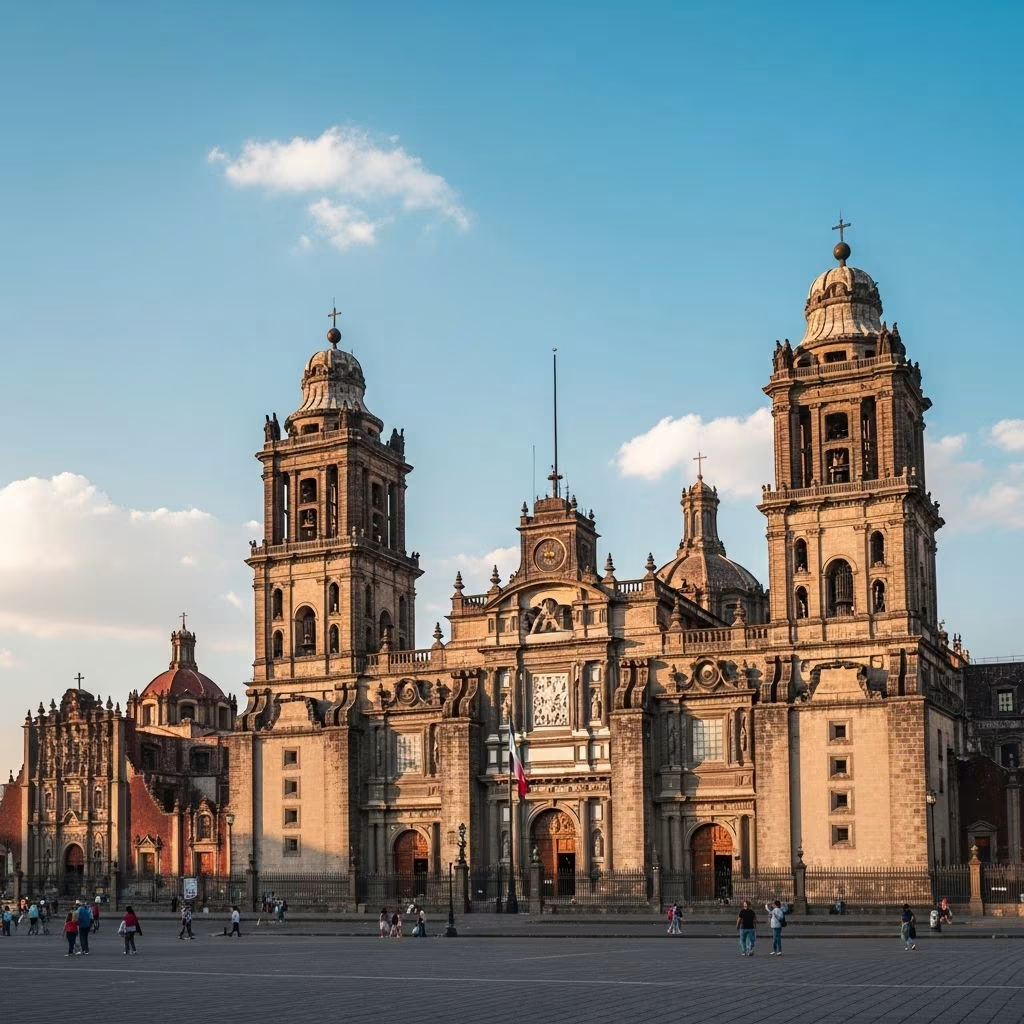
Dominating the expansive Zócalo square, the Mexico City Metropolitan Cathedral represents the pinnacle of colonial religious construction in Latin America. Construction began in 1573 on the site of the Aztec Templo Mayor, symbolizing the overlay of Spanish Christianity on indigenous foundations. Spanning nearly three centuries to complete in 1813, it incorporates Renaissance, Baroque, and Neoclassical styles, creating a visual symphony of evolving European influences adapted to New World contexts.
The cathedral’s facade features twin towers flanking a grand entrance adorned with intricate stone carvings of saints and biblical scenes. Inside, vast naves supported by 16 towering pillars lead to 18 ornate chapels, each a miniature masterpiece. The altar mayor, crafted from bronze and crystal, gleams under stained-glass windows that filter colorful light across marble floors. Notable treasures include the Kings’ Choir with its massive pipe organ and 16th-century altarpieces painted by indigenous artists blending European techniques with native motifs.
Visitors should allocate at least two hours to wander its labyrinthine interiors. Free entry is available, though donations support preservation efforts against the city’s subsidence, which has tilted the structure slightly over time. Best visited early morning to avoid crowds and witness morning mass.
Perched on Tepeyac Hill, the Basilica of Our Lady of Guadalupe is the world’s most visited Catholic pilgrimage site, attracting over 20 million devotees yearly. The current modern basilica, inaugurated in 1976, replaced earlier structures to accommodate surging pilgrims after the 1531 apparitions to Juan Diego. Architect Pedro Ramírez Vázquez designed this circular, open-plan edifice to hold 10,000 worshippers, its roof resembling a tent or indigenous temazcal.
Gold leaf covers every surface inside, from the vaulted ceiling to altars, complemented by intricate carvings and vivid murals depicting the Virgin’s miracle. The focal point is the tilma—or cloak—of Juan Diego, enshrined above the main altar, displaying the iconic image that defies scientific explanation. Flanking the basilica are the striking old basilica (1709) with its domed Baroque splendor and the striking Chapel of the Well, evoking indigenous healing traditions.
| Feature | Description |
|---|---|
| Capacity | Over 10,000 people |
| Architect | Pedro Ramírez Vázquez |
| Key Relic | Juan Diego’s tilma |
| Annual Visitors | 20+ million |
Pilgrims ascend the hill via the moving walkways or scenic paths lined with chapels recounting the apparition story. Photography is permitted, but respectful silence honors ongoing worship. Combine with a visit to the museum showcasing ex-votos—grateful offerings—from healed devotees.
Adjoining the Metropolitan Cathedral, the Sagrario Metropolitano elevates sacred spaces with unparalleled Baroque extravagance. Completed in 1767, this parish church served as the cathedral’s sacristy before becoming a standalone gem. Its facade bursts with estípite columns—twisted, inverted pyramids unique to Mexican Churrigueresque style—framing doorways sculpted with floral motifs and angelic figures.
Step inside to a riot of gold: walls sheathed in gilded woodwork, frescoed ceilings depicting divine triumphs, and altarpieces encrusted with mirrors and shells. The baptistery features a 16th-century font used for nobility, while the sacristy boasts canvases by colonial masters. This church exemplifies New Spain’s artistic zenith, where European Baroque met Aztec craftsmanship.
Open daily, it’s often quieter than its neighbor, ideal for contemplative photography. Entry is free, with guided tours available via the cathedral complex.
Nestled amid skyscrapers, the Templo de la Profesa (Temple of the Professed) honors the Jesuit order with 18th-century restraint compared to flashier peers. Built between 1714 and 1734, it withstood the 1767 expulsion of Jesuits, later repurposed before restoration. Its pink-tejamanil stone facade presents a sober Neoclassical portal, belying the opulent interior.
Ultra Baroque unfolds within: undulating altarpieces in crimson and gold, trompe-l’oeil paintings simulating three-dimensional architecture, and a dome painted with illusionistic heavens. The church famously sheltered independence hero Miguel Hidalgo in 1810, adding revolutionary lore. Its museum displays colonial relics, including silver processional items.
Compact yet profound, it’s perfect for a 45-minute visit. Free access, with occasional concerts highlighting its acoustics.
Contrasting colonial giants, the Parroquia de la Divina Providencia embodies 20th-century innovation. Consecrated in 1967 in the Polanco district, this Modernist church features undulating concrete walls evoking sails or prayerful hands. Architect Enrique Yáñez drew from Le Corbusier’s influence, using exposed aggregate and geometric forms to symbolize divine providence.
Inside, light floods through asymmetrical stained-glass panels by Chilean artist Claudio Pizarro, casting ethereal patterns on minimalist altars. Brutalist elements harmonize with sacred geometry, including a hovering bell tower. It’s a serene counterpoint to ornate traditions, appealing to contemporary worshippers.
Free and accessible, visit post-morning service for the best light show.
Navigating Mexico City’s churches requires strategy amid traffic and crowds. Start at the Zócalo for the Metropolitan Cathedral and Sagrario, then taxi to Guadalupe (20 minutes north). Afternoon suits La Profesa and Divina Providencia in upscale areas. Wear modest attire; photography flashes are often prohibited.
| Church | Location | Best Time | Entry |
|---|---|---|---|
| Metropolitan Cathedral | Zócalo | Early AM | Free |
| Basilica Guadalupe | Tepeyac Hill | Morning | Free |
| Sagrario Metropolitano | Zócalo | Midday | Free |
| Templo de la Profesa | Centro Historico | Afternoon | Free |
| Divina Providencia | Polanco | Late PM | Free |
Combine with nearby sites like the Templo Mayor museum or Chapultepec Park. Metro and Uber simplify transit; download offline maps.
Yes, all five offer free admission, though some museums charge nominal fees (under $5 USD).
Shoulders and knees covered; no shorts or tank tops in main areas.
Generally yes, without flash; respect signs and services.
English tours at major sites like the cathedral and basilica; book via INAH or apps.
Stick to tourist zones, daytime visits; vibrant but vigilant in crowds.
These churches endure earthquakes, subsidence, and urban sprawl through meticulous restorations funded by UNESCO and Mexican heritage bodies. Your visit supports ongoing conservation, ensuring future generations marvel at these icons. Whether seeking solace, art, or history, Mexico City’s churches deliver transcendent experiences amid pulsating city life. Plan your pilgrimage today for an enriching journey through faith and stone.
