

 Travel Essentials
 Travel Essentials

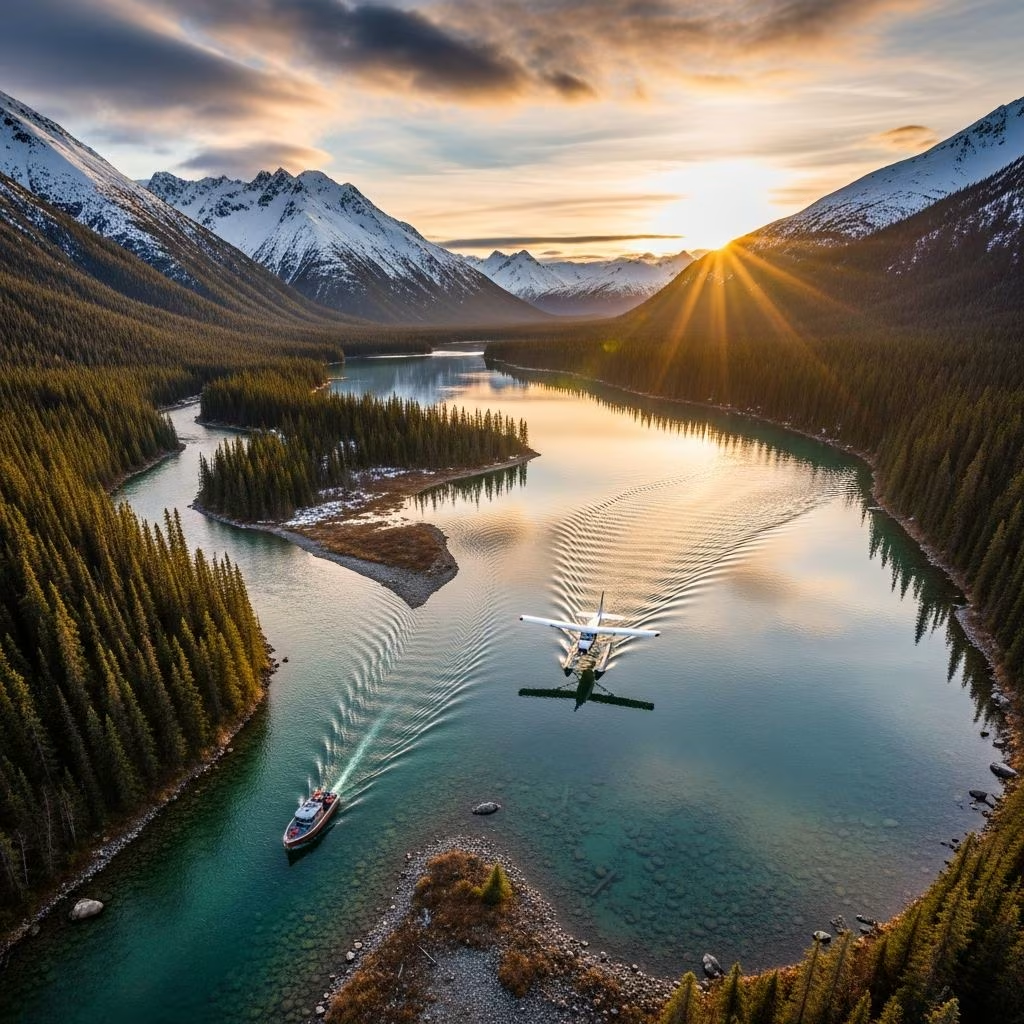
Explore secluded US national parks like Channel Islands, Isle Royale, and Dry Tortugas that demand boat or plane travel for access, revealing pristine nature and unique ecosystems.
 Travel Essentials
America’s national park system safeguards some of the planet’s most spectacular natural wonders, but a select few stand apart due to their extreme isolation. These destinations, cut off from road networks, require visitors to arrive by boat or plane, ensuring minimal human impact and maximum immersion in raw wilderness. From volcanic landscapes in Alaska to coral-fringed islands in the Gulf of Mexico, these parks promise solitude, diverse wildlife, and adventures unmatched by more accessible sites.
These remote areas preserve ecosystems in near-pristine condition. Without roads or vehicles, parks like Katmai and Isle Royale maintain biodiversity levels rare elsewhere. Visitors gain exclusive encounters with wildlife—think grizzly bears fishing salmon or wolves prowling forested isles—while hiking pristine trails or paddling untouched waters. The journey itself heightens the experience, turning travel into an integral part of the adventure.
Suspended off Southern California’s coast, Channel Islands National Park spans five rugged isles—Santa Cruz, Santa Rosa, San Miguel, Anacapa, and Santa Barbara—dubbed the “Galápagos of North America” for their evolutionary uniqueness. No bridges or roads connect them to the mainland, so ferries from Ventura or Oxnard provide the primary link, with trips lasting 1-2 hours depending on the island. Island Packers, the authorized concessioner, operates year-round services, while private boats need permits.
Once ashore, expect car-free terrain. Hike fox trails on Santa Cruz, where endangered island foxes scamper amid oak groves, or snorkel kelp forests teeming with garibaldi fish and spiny lobsters. Sea caves on Santa Cruz offer kayaking thrills, accessible only at low tide. Camping is primitive; pack all gear, water, and food, as no facilities exist beyond basic restrooms. Wildlife spectacles include elephant seals hauling out on beaches and blue whales migrating offshore in summer.
Nestled in Michigan’s Lake Superior, Isle Royale emerges as one of the least-visited national parks, averaging under 20,000 annual visitors. Spanning 72 miles long, this forested archipelago demands a 3-6 hour ferry from Houghton or Copper Harbor, or a swift 45-minute seaplane from the same ports. No cars mar the 165 miles of trails; exploration relies on foot, canoe, or kayak.
The park’s fame rests on its wolf-moose predator-prey study, ongoing since 1958 by Michigan Technological University researchers. Spot moose grazing bogs or hear wolf howls echoing through old-growth forests. Greenstone Ridge Trail challenges hikers with 1,800-foot climbs yielding panoramic lake views. For water lovers, paddle to over 200 inland lakes or the isolated outer islands. Ranger-led programs cover ecology, while Rock Harbor Lodge offers rustic cabins for those eschewing tents.
Seventy miles west of Key West, Dry Tortugas National Park encircles seven coral cayes, dominated by massive Fort Jefferson on Garden Key. Yankee Freedom ferries depart Key West daily for a 2.25-hour voyage, or seaplanes from Key West Airport zip there in 40 minutes. Private vessels require free permits via the park service.
Over 99% water, the park excels in marine pursuits: snorkel vibrant reefs alive with parrotfish, rays, and turtles, or dive historic wrecks. Fort Jefferson, a half-finished Civil War-era brick behemoth, houses exhibits on its role imprisoning Dr. Samuel Mudd. Loggerhead Key’s beaches host sea turtle nesting; night paddles reveal bioluminescent waters. Day-trippers must return same-day, but campers savor starry skies unpolluted by mainland lights. Bring ample water—desalination is unavailable.
In southwestern Alaska, Katmai sprawls across 4 million acres of volcanoes, glaciers, and tundra, epitomized by the Valley of Ten Thousand Smokes. Air taxis from Anchorage, Homer, or King Salmon land on gravel strips near Brooks Camp; floatplanes offer scenic approaches over fjords. Water access via skiffs from Naknek reaches coastal zones.
Prime attraction: brown bears congregating at Brooks Falls, leaping salmon in July. Elevated platforms allow close viewing without disturbance. Hike to the 1912 Novarupta eruption site, where ash flows fossilized landscapes. Backcountry pilots drop hikers at remote lakes for multi-day treks amid grizzlies and caribou. Fishing rivals anywhere, with rainbow trout and king salmon abundant. Permits are essential for overnight stays; bear safety courses recommended.
Arctic Alaska’s Gates of the Arctic lacks trails, roads, or facilities, spanning six wilderness rivers between the Brooks and Phillip Smith Mountains. Bush planes from Fairbanks or Bettles alight on rivers or lakes; experienced hikers enter via Dalton Highway. Flightseeing tours reveal glacial valleys without landing.
Challenge yourself with river floats on the Noatak or Alatna, Class II-III rapids threading permafrost canyons. Summer brings 24-hour daylight for extended forays; autumn paints tundra gold. Wildlife includes Dall sheep on cliffs, wolves, and migrating caribou. Total self-sufficiency rules—no rangers patrol this vastness. Pack rafts, tents, and satellite communicators for safety.
Preparation defines success in these roadless realms. Book ferries and flights months ahead, especially summer peaks. Weather dominates: Channel Islands fogs delay boats, Alaska storms ground planes. Pack layers, rain gear, and sun protection; water purification is vital where potable sources scarce.
| Park | Access Time (from Hub) | Best Season | Key Gear |
|---|---|---|---|
| Channel Islands | 1-2 hrs ferry (Ventura) | Spring-Fall | Kayak, snorkel |
| Isle Royale | 3-6 hrs ferry (Houghton) | Summer | Hiking boots, bug dope |
| Dry Tortugas | 2.25 hrs ferry (Key West) | Year-round | Snorkel mask, dry bag |
| Katmai | 1-2 hrs flight (Anchorage) | June-Aug | Bear spray, waders |
| Gates of the Arctic | 1 hr flight (Fairbanks) | June-Sept | Packraft, sat phone |
Costs vary: ferries $100-200 round-trip, flights $300+. National Park Service entry fees apply ($15-35/person). Leave No Trace principles are non-negotiable—pack out all waste.
Isolation breeds rarity. Channel Islands shelter endemic foxes and spotted skunks. Isle Royale’s wolves number 20-30, preying on 1,000 moose. Dry Tortugas reefs support 300 fish species. Katmai bears peak at 6,000 during salmon runs. Gates hosts calving caribou herds. Birders tally seabirds, raptors, and migrants continent-wide.
Hazards loom: hypothermia in Alaska, dehydration in tropics, marine stings in Florida. Bears demand respectful distance; use food hangs. Navigation apps falter without signal—carry maps, compasses. Medical evacuations are costly and slow; travel insurance with adventure coverage is prudent. Group travel mitigates risks for novices.
Yes, with permits. Dry Tortugas and Channel Islands allow private vessels; check NPS sites for mooring rules and no-wake zones.
Ferries to Isle Royale or Channel Islands cost $80-150 round-trip, cheaper than seaplanes ($300+).
Limited: Isle Royale has a lodge; others mandate camping. Book early.
July at Brooks Falls, coinciding with sockeye salmon spawn.
Recommended for backcountry; guided tours ease entry for beginners.
