

 Travel Essentials
 Travel Essentials

Explore the most pedestrian-friendly cities in America, from historic Philadelphia to trail-rich Boulder, highlighting their walkable paths, neighborhoods, and benefits for travelers.
 Travel Essentials
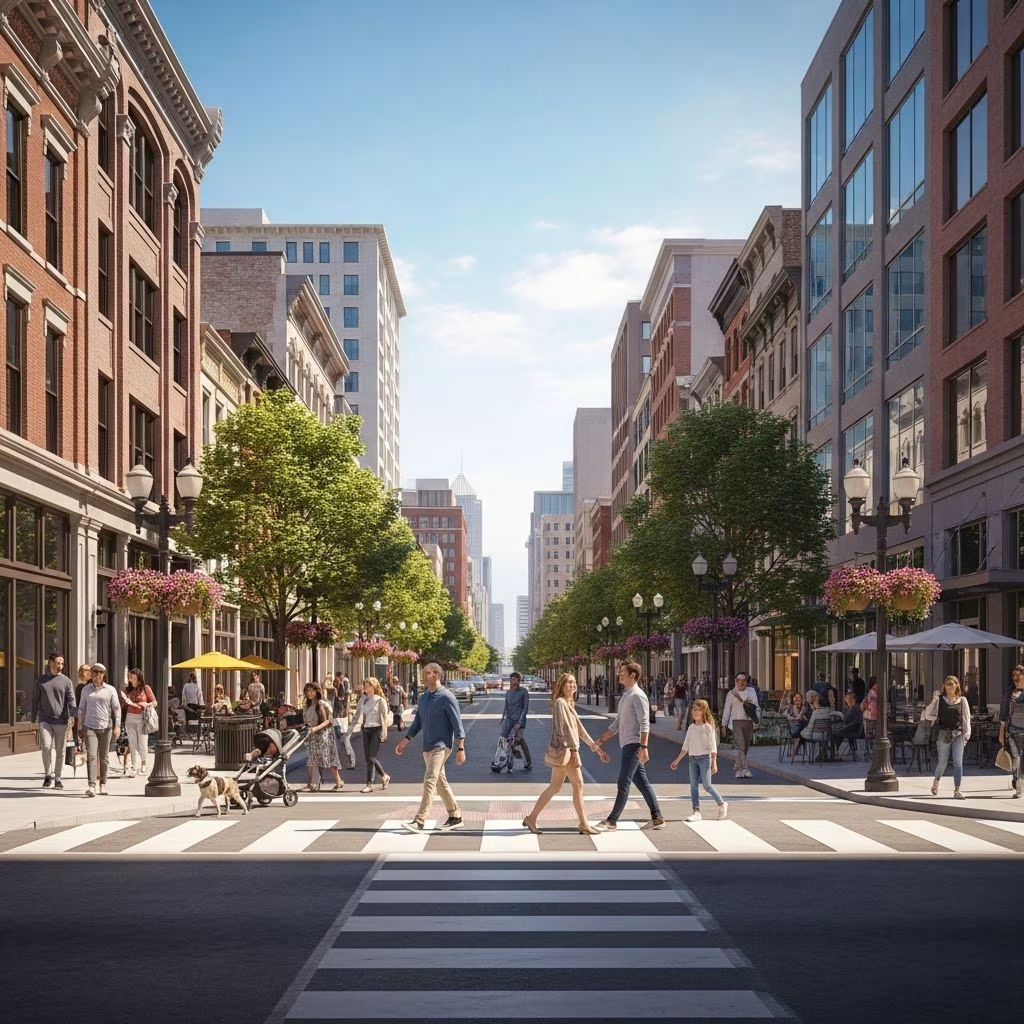
Pedestrian-friendly urban environments offer travelers the joy of discovering hidden gems, savoring local flavors, and soaking in cultural vibes without the hassle of traffic or parking. These cities prioritize sidewalks, trails, and compact layouts, making every step an opportunity for adventure. This guide spotlights standout destinations across the US, drawing on infrastructure strengths, neighborhood charm, and health benefits backed by research.
Walkable cities enhance travel by fostering spontaneous discoveries and deeper connections to place. Beyond convenience, they promote physical activity, reduce carbon footprints, and boost local economies through increased foot traffic to shops and eateries. Studies link walkable designs—featuring mixed land uses, connected streets, and ample green spaces—to higher physical activity levels and stronger social ties among residents. For visitors, this translates to safer, more enjoyable explorations. In the US, where many areas prioritize cars, these standout spots buck the trend, offering scores above average on walkability metrics like those from Walk Score, where national averages hover around 48 out of 100.
The Federal Highway Administration notes challenges in making streets pedestrian-safe, yet cities investing in sidewalks and crossings see marked improvements in accessibility. Environmentally, ditching cars for feet cuts emissions, while economically, vibrant pedestrian zones attract tourism dollars. Health-wise, routine walking combats sedentary lifestyles, with walkable neighborhoods linked to better overall wellness.
Nestled against the Flatirons’ rugged backdrop, Boulder exemplifies livability through its commitment to movement. This university town boasts over 150 miles of natural trails, 70 miles of multi-use paths, and 500 miles of sidewalks, ideal for blending city strolls with outdoor escapes. The heart is Pearl Street Mall, a vibrant pedestrian zone shaded by trees and buzzing with boutiques, cafes, and street performers—perfect for a leisurely afternoon.
Boulder’s layout encourages daily walks, from campus loops around the University of Colorado to hillside paths offering panoramic views. Cyclists share space harmoniously, but foot traffic dominates, supporting its top rankings in happiness and health metrics. Visitors can tackle the Boulder Creek Path for a 5-mile urban-nature hybrid or wander Valmont City Park for picnics amid wildflowers.
William Penn’s 17th-century grid endures as Philly’s walkability secret. Center City spans just 26 blocks east-west, traversable in under an hour, linking gems like Independence Hall, the Liberty Bell, and Elfreth’s Alley—America’s oldest residential street. This compact core pulses with energy, from Reading Terminal Market’s food stalls to Rittenhouse Square’s green respite.
Beyond history, neighborhoods like Fishtown thrum with murals, breweries, and indie shops along easy sidewalks. Fairmount’s museum row and Schuylkill River Trail add scenic miles. Philly’s pedestrian focus shines in its density of landmarks, making it a history lover’s dream without transit needs.
Boise’s small footprint belies its walkable prowess, with seamless connections for potato-themed eats, Basque heritage sites, and public art. The Greenbelt—a 25-mile riverside path—winds through downtown, linking parks and neighborhoods. Pioneer Village offers a taste of 19th-century Idaho amid modern eateries.
Freemont’s quirky art installations and the Basque Block’s festivals draw crowds on foot. With wide sidewalks and low traffic, Boise suits families and foodies, proving even inland spots can rival coastal walkability.
Seattle’s 2,400 miles of sidewalks span diverse hoods: Pioneer Square’s brick arches, Belltown’s waterfront views, Fremont’s troll sculpture, and Ballard’s maritime vibe. Puget Sound trails and over 400 acres of parks provide escapes, with expansions underway for more paths. The city’s hilly terrain builds in inclines for calorie-burning strolls, balanced by ferries and streetcars for hybrid trips.
Discovery Park’s 11-mile loops contrast urban Pike Place Market rambles, where fishmongers toss catches steps from coffee roasters. Seattle’s walkability thrives on variety, from tech hubs to trailheads.
Encircling Lake Mendota, Madison prioritizes safety with 1,200 miles of sidewalks and 200 miles of trails. University of Wisconsin’s campus buzzes with student pedestrians, while car-free experiments create pop-up plazas. Crossing guards and kid-walk programs underscore family-friendliness.
State Street’s 10-block pedestrian stretch links capitol square to dorms, lined with co-ops and live music. Olbrich Gardens and Tenney Park add floral detours. Madison’s infrastructure earns it top pedestrian safety nods.
| City | Key Walkable Miles | Signature Feature | Best For |
|---|---|---|---|
| Boulder | 720+ (trails/paths/sidewalks) | Pearl Street Mall | Nature + Shopping |
| Philadelphia | Compact 26-block core | Independence Historic Sites | History Buffs |
| Boise | 25-mile Greenbelt | Basque Block | Culture + Food |
| Seattle | 2,400 sidewalks | Puget Sound Trails | Diverse Neighborhoods |
| Madison | 1,400+ (sidewalks/trails) | State Street Ped Zone | Families + Students |
Walkable designs counter auto-centric sprawl, promoting mixed uses that place daily needs within blocks. Mueller in Austin exemplifies this with dense, connected streets and open spaces fostering activity. Economically, these areas see thriving retail; environmentally, less driving means lower emissions. For health, connected networks boost outdoor exercise, enhancing social cohesion.
A blend of safe sidewalks, short distances to amenities, low crime, and inviting public spaces defines walkability, often scored by proximity to services and infrastructure quality.
Most offer indoor attractions and milder seasons, but check weather—Boulder’s summers shine, Philly’s fall colors dazzle, Seattle’s layers handle drizzle.
Tools like Walk Score rate based on errands completable on foot, factoring population density and intersection safety.
Yes, with playgrounds, flat paths, and programs like Madison’s guards making them kid-friendly.
Reducing car use cuts personal emissions significantly, supporting greener urban growth.
