

 Travel Essentials
 Travel Essentials

Embark on a 6-day train itinerary exploring Germany's top art destinations: Frankfurt, Wiesbaden, Cologne, Düsseldorf, Leipzig, and Berlin. Enjoy museums, street art, and architecture without a car.
 Travel Essentials
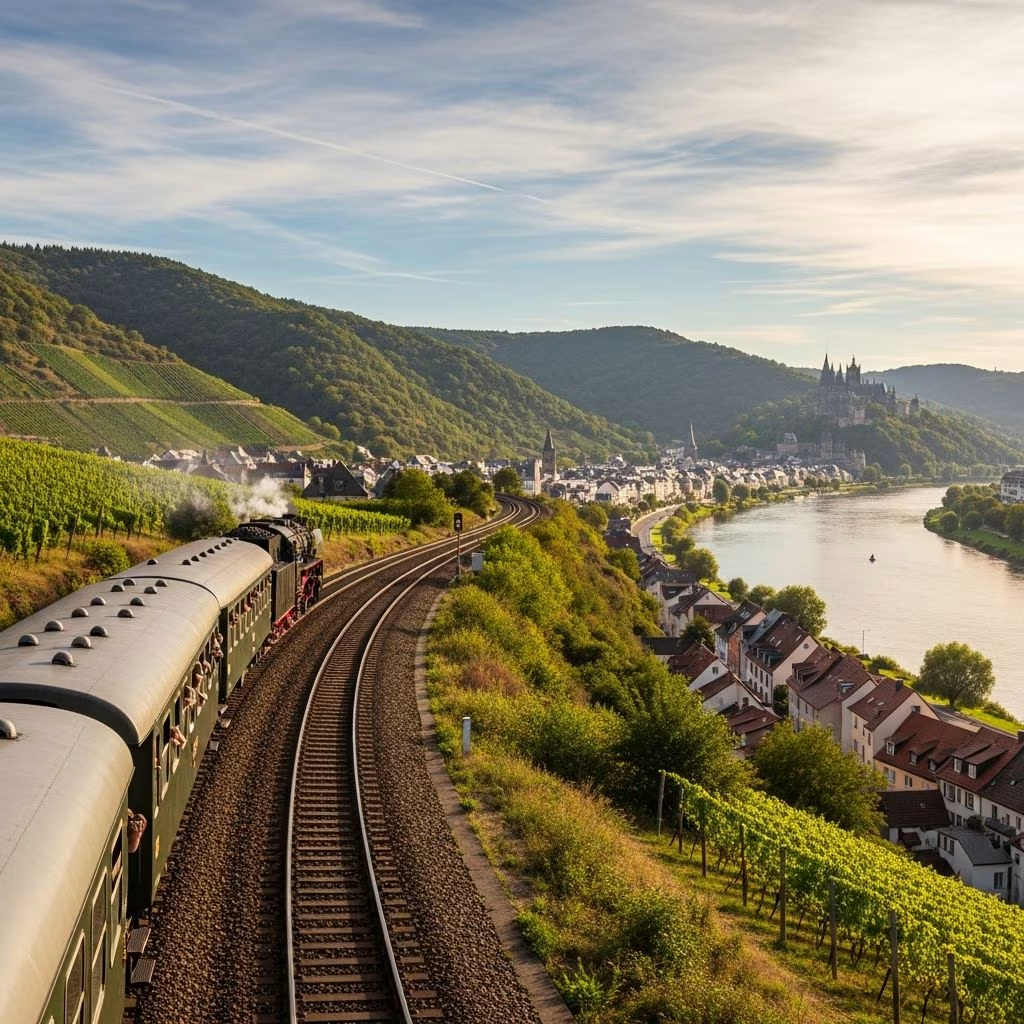
Germany’s extensive rail network makes it an ideal destination for art enthusiasts seeking a car-free adventure. This carefully crafted 6-day itinerary connects key cultural cities, highlighting world-class museums, innovative galleries, and architectural gems. Starting in Frankfurt and culminating in Berlin, travelers can immerse themselves in centuries of artistic evolution while enjoying efficient, scenic train rides between stops.
Germany boasts over 25,000 kilometers of railway tracks, linking urban centers with ease. Trains like the ICE (InterCity Express) offer high-speed comfort, Wi-Fi, and panoramic views of rolling countryside and rivers. This route prioritizes art-focused experiences, from classical masterpieces to cutting-edge installations, accessible via short hops of 30 minutes to 2 hours. No driving stress means more time for galleries and cafes. Budget approximately €200-300 for a Eurail Germany Pass covering all segments.
Begin in Frankfurt, arriving via its international airport. Dedicate the day to the Museumsufer (Museum Embankment), a UNESCO-recognized district along the Main River housing over a dozen institutions. Start at the Städel Museum, renowned for its collection from the 14th century to today, featuring Rembrandt, Monet, and Picasso. Its modern extension by Schneider + Schumacher blends seamlessly with the riverside path.
Cross to the Schirn Kunsthalle for rotating contemporary exhibits in a striking neoclassical facade. Lunch on Apfelwein (apple wine) and regional sausages at a nearby tavern. Afternoon: Explore the Liebieghaus, specializing in world sculpture from antiquity to Art Nouveau. Evening stroll reveals illuminated facades reflecting on the water. Overnight in Frankfurt’s Sachsenhausen district for authentic ambiance.
| Frankfurt Highlights | Why Visit | Travel Tip |
|---|---|---|
| Städel Museum | 500+ years of European art | Book timed tickets online |
| Schirn Kunsthalle | Bold modern shows | Free on Wednesdays after 3 PM |
| Liebighaus | Global sculptures | Garden cafe for breaks |
A quick 40-minute S-Bahn ride north brings you to Wiesbaden, a spa city elevated as part of the 2026 European Capital of Culture. Head straight to the Museum Reinhard Ernst, a treasure trove of American abstract expressionism. Collector Reinhard Ernst amassed the globe’s largest Helen Frankenthaler holdings, plus icons like Frank Stella and Lee Krasner. The minimalist space amplifies the bold colors and gestures.
Post-museum, join the Art Nouveau trail through Rheingauviertel, where ornate villas showcase swirling facades and ironwork from 1900. The Museum Wiesbaden’s Jugendstil wing delves into this era’s mythical motifs. Sample local mineral springs before a 1-hour train to Cologne. Dine on Kölsch beer and Himmel un Ääd (potatoes, apples, blood sausage).
Cologne’s duality shines: Gothic grandeur meets gritty creativity. Morning in Ehrenfeld, a former industrial zone now pulsing with street art. Guided tours unveil murals by international artists on factory walls and underpasses, transforming urban decay into vibrant canvases. Themes range from social commentary to abstract whimsy.
Afternoon at the Museum Ludwig, home to Europe’s top Pop Art collection: Warhol, Lichtenstein, and Oldenburg. Its riverside location offers Rhine views. Climb the iconic Dom Cathedral for panoramas. Evening train (40 minutes) to Düsseldorf.
Düsseldorf’s Kunstsammlung NRW spans K20 and K21 buildings, curating 20th-21st century masterpieces. K20’s stark modernism houses Mondrian, Klee, and Picasso; walk via Daniel Libeskind’s fluid Kö-Bogen to K21’s underground expanse with immersive installations. Spot the Ehrenschild von Rautenstrauch in its kinetic sculpture garden.
Lunch in Little Tokyo on Immermannstrasse—sushi and ramen rival Tokyo’s. If energy remains, train to Essen’s Folkwang Museum (30 minutes), redesigned by David Chipperfield with free admission and Impressionist gems. Overnight in Düsseldorf’s Altstadt.
| Museum | Signature Collection | Distance by Train |
|---|---|---|
| K20 Grabbeplatz | Picasso, Kirchner | City center |
| K21 Gleuelstrasse | Contemporary video art | 15-min walk |
| Folkwang (Essen) | Van Gogh, Monet | 30 min |
From Düsseldorf, a 4-hour ICE ride east to Leipzig, Saxony’s creative dynamo. Once Bach’s home, it’s now a hub for New Leipzig School artists like Neo Rauch. Start at the Spinnerei, a vast cotton mill reborn as ateliers and galleries. Peer into studios, browse fairs, and visit G2 (contemporary focus).
Museum der Bildenden Künste showcases local talents amid rotating international shows. Evening: Street art hunt in Plagwitz or a concert at the Gewandhaus. Leipzig’s affordable vibe invites lingering in craft beer bars.
The grand finale: 1-hour train to Berlin. Dive into Mitte’s gallery scene—Auguststrasse brims with spaces like Eigen + Art. The Sammlung Boros hides in a WWII bunker: four floors of provocative contemporary works by Marmu, Erwin Wurm, and Ai Weiwei in raw concrete vaults.
Alternatives: Charlottenburg Palace’s baroque opulence or Potsdam’s New Palace with Gentileschi restorations. End with East Side Gallery’s Berlin Wall murals. Berlin’s nightlife pulses with art openings.
Yes, it balances iconic sites with offbeat art, using beginner-friendly trains.
Opt for regional RE trains for more scenery; add overnight stops.
Most yes, but check for holidays; winter offers fewer crowds.
Select family-friendly spots like interactive exhibits; shorten days.
Highly—DB runs on renewables; offsets car emissions significantly.
This route traverses eras: Romanticism in Frankfurt, Abstract Expressionism in Wiesbaden, Pop in Cologne, Modernism in Düsseldorf, New Leipzig abstraction, and Berlin’s post-wall experimentation. Each stop reveals Germany’s role bridging Old World tradition and avant-garde innovation.
