

 Travel Essentials
 Travel Essentials

Explore Germany's top art destinations via efficient train routes: Frankfurt, Wiesbaden, Cologne, Düsseldorf, Leipzig, and Berlin. Immerse in abstract expressionism, street art, and modern collections without a car.
 Travel Essentials
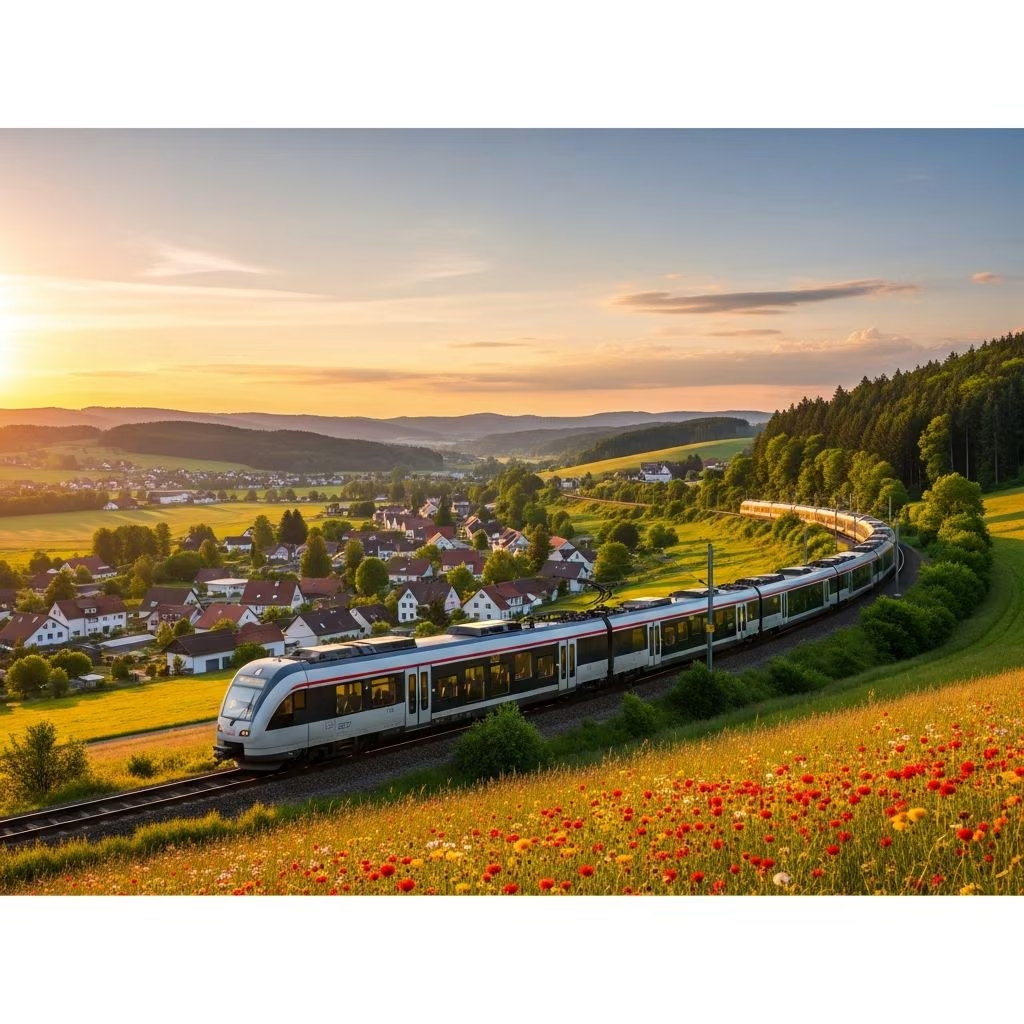
Germany’s rail network offers an ideal way to dive into its world-class art heritage. This carefully planned 6-day itinerary connects key cultural centers—Frankfurt, Wiesbaden, Cologne, Düsseldorf, Leipzig, and Berlin—using comfortable, scenic trains. Skip the hassle of driving and focus on masterpieces from abstract expressionism to contemporary installations, paired with local flavors and architecture.
Germany boasts over 6,000 museums, with many concentrated along efficient rail corridors. Trains like those from Deutsche Bahn run frequently, often hourly, linking cities in under an hour. This route emphasizes art-focused stops, blending renowned institutions with emerging scenes. Benefits include eco-friendly travel, city-center stations, and time for relaxation between visits.
Begin in Frankfurt, a major rail hub with direct flights from Europe and beyond. Head straight to the Museumsufer, or Museum Embankment, along the Main River. This district houses over a dozen institutions in striking modern buildings.
Start at the Städel Museum, featuring European art from the 14th to 20th centuries, including Rembrandt and Monet. Its floating extension over the river offers panoramic views. Nearby, the Schirn Kunsthalle showcases rotating contemporary exhibits in a minimalist space.
For a broader view, stroll the embankment’s paths, passing the German Film Museum and Architecture Museum. Evenings bring riverside cafes serving Apfelwein, Frankfurt’s tart apple wine, paired with Handkäs mit Musik—a pickled cheese dish with onions.
Overnight: Frankfurt. Book near Hauptbahnhof for easy Day 2 access.
A quick 40-minute S-Bahn ride north reaches Wiesbaden, co-designated a 2026 design capital. Focus on the Museum Reinhard Ernst, dedicated to abstract art. This gem holds the world’s largest private collection of Helen Frankenthaler works, alongside Frank Stella, Lee Krasner, and color field pioneers like Morris Louis.
The museum’s sleek design enhances the vibrant canvases, emphasizing post-1945 American abstraction. Afterward, wander Culture Route 65, linking cultural sites like the Bellevue-Saal art association.
Dive into Wiesbaden’s Art Nouveau legacy via a self-guided tour of Rheingauviertel. Ornate facades with floral motifs adorn villas from the early 1900s. The Museum Wiesbaden displays Jugendstil pieces evoking mythic harmony.
Evening: Train to Cologne (1 hour). Sample Kölsch beer in tiny glasses at a Brauhaus, with Heaven und Erde (potatoes, apples, blood sausage).
Overnight: Cologne.
Cologne blends Gothic grandeur with urban creativity. Morning in Ehrenfeld district: Join a street art walk tracing murals by international and local artists. Vibrant walls depict social themes in this former industrial area, now a hipster hub.
Afternoon at Museum Ludwig, home to Pop Art icons like Warhol and Lichtenstein, plus Europe’s top Picasso collection. Its Brutalist architecture complements the bold works.
Climb the Kölner Dom for city views before a 40-minute regional train to Düsseldorf.
Overnight: Düsseldorf.
Düsseldorf’s Kunstsammlung NRW spans K20 and K21 buildings. K20, near Königsallee, features post-1945 stars like Paul Klee and Jackson Pollock in a 1960s fan-shaped hall.
Walk to K21 via Daniel Libeskind’s flowing Kö-Bogen mall. Inside K21, spatial installations challenge perceptions. Lunch in Little Tokyo on Immermannstraße: Authentic ramen from Düsseldorf’s large Japanese community.
Optional: 30-minute train to Essen’s free Folkwang Museum, redesigned by David Chipperfield, with Impressionists and Expressionists.
Evening train to Leipzig (1.5 hours).
Overnight: Leipzig.
Leipzig pulses with contemporary energy. Explore Spinnerei, a vast cotton mill turned artist studios and galleries. Over 100 creators open doors here, showcasing everything from installations to paintings.
Visit the Museum der Bildenden Künste for rotating exhibits in a glass cube atop a historic base. Afternoon: Galerie für Zeitgenössische Kunst for cutting-edge video and performance art.
Savor Leipzig’s coffee culture—try a round of Leipziger Allerlei vegetables with local beer. Evening train to Berlin (1 hour).
Overnight: Berlin.
Cap your trip in Berlin’s Mitte district. Galleries line Auguststraße; pop into Eigen + Art or Sprüth Magers for emerging talents.
Highlight: Sammlung Boros, a WWII bunker transformed into a private collection space. Five floors host immersive sculptures, light works, and site-specific pieces by artists like Ai Weiwei.
Alternatives: Charlottenburg Palace for Baroque treasures, or Potsdam’s New Palace with restored Gentileschi paintings and the ‘Return of the Paintings’ exhibit.
Berlin’s rail links make departures easy.
| Route | Train Type | Duration | Approx. Cost (Eurail) |
|---|---|---|---|
| Frankfurt-Wiesbaden | S-Bahn | 40 min | €5-10 |
| Wiesbaden-Cologne | RE/IC | 1 hr | €20-30 |
| Cologne-Düsseldorf | RE | 40 min | €10-15 |
| Düsseldorf-Leipzig | ICE | 1.5-3 hrs | €40-60 |
| Leipzig-Berlin | ICE | 1 hr | €20-30 |
Purchase a Eurail Germany Pass for flexibility. Book high-speed ICE seats in advance. Most museums offer audio guides; check for combo tickets.
| City | Key Museum | Focus |
|---|---|---|
| Frankfurt | Städel | European classics |
| Wiesbaden | Reinhard Ernst | Abstract Expressionism |
| Cologne | Museum Ludwig | Pop & Picasso |
| Düsseldorf | Kunstsammlung | Post-1945 modern |
| Leipzig | Spinnerei | Contemporary studios |
| Berlin | Sammlung Boros | Immersive installations |
Yes, a 3- or 4-day Eurail Germany Pass covers all legs flexibly, saving 30-50% vs. point-to-point tickets.
Most are, but verify hours; many close Mondays. Summer has special exhibits.
Extend days or swap street art for palace gardens in Berlin/Potsdam.
Regional specialties shine: Frankfurt green sauce, Cologne Kölsch, Düsseldorf ramen, Leipzig beer gardens.
Deutsche Bahn runs on 70% renewables, emitting far less CO2 than flying or driving.
